Click the blue text to follow us
On November 19, He Yaqiong, Director of the Consumer Goods Industry Department of the Ministry of Industry and Information Technology, stated at a press conference that they will collaborate with multiple departments to introduce the “Implementation Plan for Promoting the Adaptability of Supply and Demand in Consumer Goods,” focusing on guiding toy companies to apply AI technology to create new demand and promote the industry’s upgrade towards intelligence and emotional engagement. This policy is backed by China’s dual advantages as the world’s largest toy producer and consumer market—by 2024, domestic toy retail sales are expected to exceed 97.85 billion yuan, with exports reaching 39.87 billion USD, while the AI toy sector is surging at an annual growth rate of 18%, with a projected market size of 29 billion yuan by 2025.
01
Core of the Policy: Reconstructing the Industrial Ecosystem in Three Dimensions

Standard Upgrades: Revising GB 6675 “Toy Safety” series standards, adding limit indicators for ten types of harmful substances such as formaldehyde and TVOC, creating the world’s strictest standard for toy product TVOC release at ≤0.5mg/m³, and strengthening the control of boron elements in “crystal mud” toys to ≤300mg/kg, effectively closing safety loopholes in “internet celebrity toys” from the source.
Technological Integration: Promoting deep integration of AI large models with toys to create interactive, memory-capable, and developmental smart toys. For example, the CocoMate series launched by Yue Ruan Innovation, equipped with an end-to-end voice model, supports multi-turn dialogue and achieves personalized companionship through emotional computing, targeting users from children to all age groups.
Scenario Innovation: Encouraging companies to develop blockbuster products that integrate traditional cultural IP with AI technology. For instance, the AI plush toy “Ai Xiaoban” can clone parental voices to achieve emotional intergenerational transmission, and the Palace Museum has collaborated with companies to launch AI interactive cultural and creative toys, allowing millennia-old artifacts to “come alive” in the palm of your hand through AR technology.
02
Market Revolution: From “Toys” to “Emotional Carriers”

AI toys are redefining traditional perceptions:
-
Educational Value: UBTECH’s Alpha series educational robots provide programming enlightenment, covering the 3-18 age group, achieving immersive learning through play;
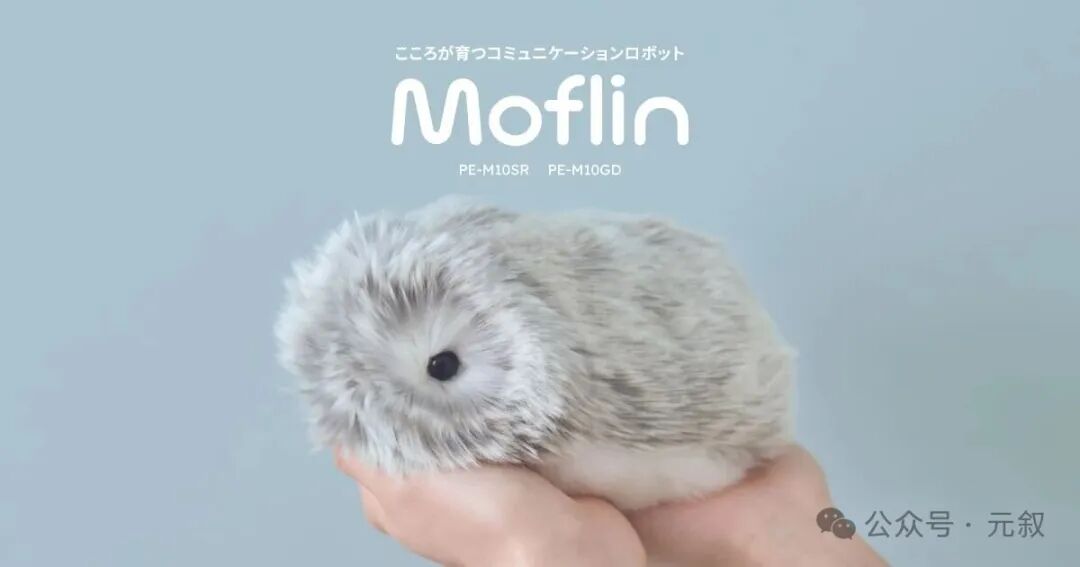
Emotional Companionship: Casio’s Moflin pet robot uses highly sensitive sensors for human-like interaction, becoming an “electronic pet” for empty nesters;
-
Commercial Monetization: Starbucks’ “Starbucks Odyssey” program combines NFTs with its membership system, allowing users to unlock exclusive coffee experiences by collecting digital collectibles, resulting in a 40% increase in user engagement after launch.
03Challenges and Breakthroughs: Balancing Safety and Innovation
Despite the rapid development of the industry, challenges such as data privacy and technological bottlenecks must be addressed:
-
Safety Protection: The Ministry of Industry and Information Technology will jointly formulate data security standards for AI toys, requiring companies to adopt edge-side large model deployment solutions to ensure that sensitive information such as children’s voiceprints and facial images is not leaked;
-
Technological Breakthroughs: Focusing on solving the multi-modal interaction delay issue, aiming to compress response time to within 500 milliseconds while enhancing the safety of hardware design to avoid overheating risks;
-
User Education: Cultivating market awareness through “Scenario Innovation Labs,” such as Shenzhen’s pilot AI toy experience centers, allowing parents to intuitively experience the technological value.
04
Empowerment of the Metaverse: A Bidirectional Journey Between Virtual and Reality

Metaverse technology is opening new dimensions for the toy industry:
-
Virtual Tryouts: IKEA Place uses AR technology to allow users to “try out” furniture, increasing user satisfaction by 30%;
-
Digital Twins: BMW’s Rida factory shortens production line construction cycles by six months through digital twin technology, and this “virtual planning – real implementation” model is being introduced into toy development;
-
Brand Marketing: Gucci created a virtual town on the Roblox platform, attracting 49 million users in two years, with over 1 billion brand interactions, proving that virtual scenarios can effectively convert into real consumption.
When AI meets toys, it is not only a technological revolution but also an evolution of emotional needs. The new policies from the Ministry of Industry and Information Technology act as a key to unlock the trillion-yuan smart toy market. In this industrial transformation, whoever can first achieve a balance of “safety-innovation-experience” will gain an advantage in the future consumer landscape.
END Scan the QR code to follow us Using the Metaverse to Narrate Beauty