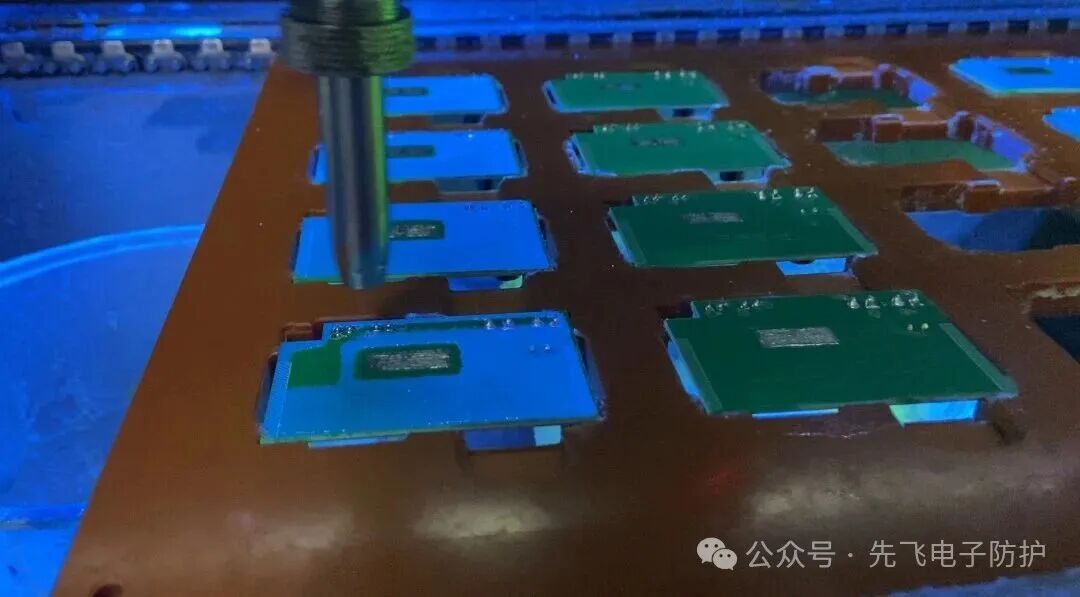
Typically, UV coating on PCB boards does not negatively impact the circuits, but the following considerations should be noted:
Impact on Electrical Performance
The heat generated during the curing process of UV adhesive is relatively low and generally does not cause overheating damage to the circuits. Its chemical composition is compatible with PCB materials (such as FR-4 substrates) and possesses electrical insulation properties, effectively protecting the circuits from environmental corrosion such as moisture and salt spray.
Impact on Signal Transmission
Some cases have shown that signal anomalies may occur after applying UV conformal coating; however, testing has verified that this is mainly related to uneven coating thickness or improper curing processes. It is recommended to control the coating thickness (suggested not to exceed 0.2mm) and ensure uniformity to avoid hindering high-frequency signal transmission.
Long-term Reliability
High-quality UV adhesives can maintain stable performance under normal operating conditions (such as a temperature range of -40°C to 85°C), but extreme temperatures or prolonged overload may lead to adhesive aging. It is advisable to choose products that meet UL certification and regularly check the condition of the coating.