
With the development of the information age, people are spending more and more time in front of screens.Although we may encounter screens every day, many people do not understand them well.

In most people’s perception, the higher the screen resolution number, the better the screen quality. But is that really the case?
In fact, determining the quality of a screen is influenced not only by resolution but also by several other factors. Let’s take a look at them.
1. Resolution
Resolution, also known as pixel density, can be subdivided into display resolution, print resolution, image resolution, and scan resolution, which determines the detail level of bitmap images.
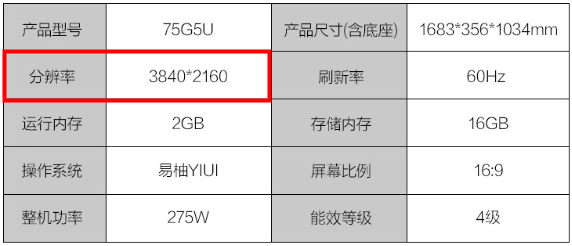
Generally speaking, the higher the image resolution, the more pixels it contains, resulting in a clearer image, and thus better screen quality, such as the difference between 4K and 8K TVs.
The resolution of 4K is 3840×2160 pixels, while 8K has a resolution of 7680×4320 pixels, which is four times that of 4K.

Therefore, the images displayed on an 8K TV can present text, landscapes, and details in videos with maximum clarity.
2. Refresh Rate
The refresh rate refers to the number of times the electron beam scans the screen per second. A higher refresh rate results in better stability of the displayed image.
Since the human eye has a limited range for perceiving frequency, when the screen refresh rate is too low, the displayed image may flicker and stutter, severely affecting the viewing experience. A higher refresh rate provides a smoother visual experience.
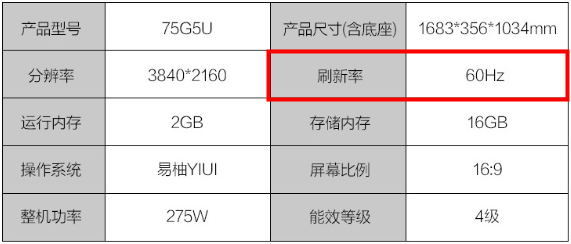
Typically, the refresh rate of TVs is 60Hz, while high-end or specialized products may use a refresh rate of 120Hz, such as gaming TVs.
3. Color Gamut
The color gamut refers to the range of colors that a specific color representation model can express. It also refers to the range of colors that a specific device, such as a monitor, can display.
The size of a device’s color gamut is usually related to the device, medium, and observation conditions, and is typically expressed as a percentage.
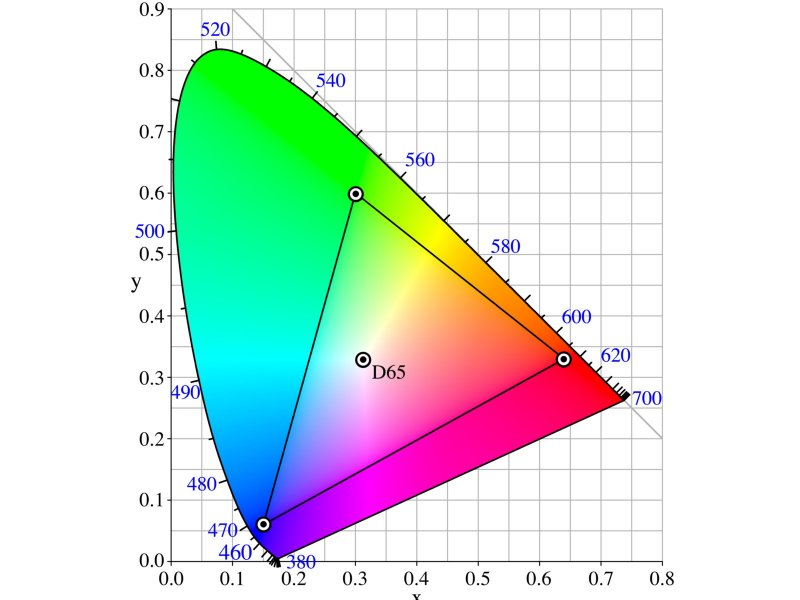
The larger the color gamut of a device, the more colors it can reproduce.
Currently, most LCD TVs on the market have a color gamut range of around 72% to 75%, while high color gamut TVs can reach 90% or even higher.
4. Screen Material
Modern monitor screens are generally divided into LCD, OLED, and QLED.
LCD (Liquid Crystal Display) primarily uses electric currents to stimulate liquid crystal molecules to create images with points, lines, and surfaces, combined with backlight tubes. It features energy efficiency, a thin body, and a soft image that is easy on the eyes.
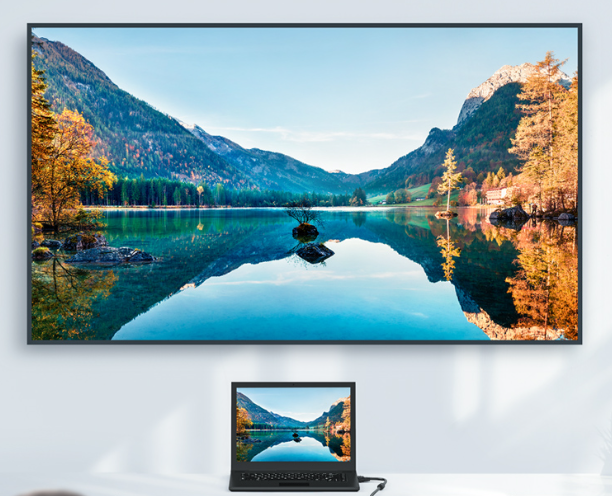
OLED screens are made using organic light-emitting diodes.
This type of screen is not only lighter, thinner, brighter, more energy-efficient, and has better light emission, but it can also display pure black and can be curved, widely used in TVs, computers, and mobile devices.
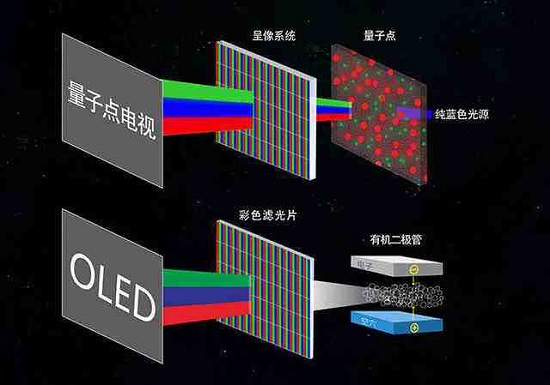
QLED, or Quantum Dot LED, is essentially an LED TV equipped with quantum dots.
Quantum dots are a new type of luminescent material, and when combined with LEDs, QLED TVs exhibit stunning color performance, even exceeding 100% of the color gamut.
5. Bitrate
If a monitor has excellent image quality but the video quality displayed is poor, the issue is not with the monitor itself but with the video’s bitrate.
Bitrate, also known as “binary bit rate” or “data rate,” is measured in bps and is used to measure the speed of digital image information transmission.
The higher the bitrate, the more data is transmitted per second, resulting in clearer image quality. However, if the network is poor, a higher bitrate can negatively affect video playback smoothness.

In addition, sharpness, color dispersion, color purity, and pixel pitch also affect screen quality. However, as long as we remember these five important factors, it will be sufficient when choosing a product.
Through the above content, do you have a clearer understanding of monitors now?
What factors do you consider when choosing a monitor? Feel free to leave a comment!
You might be interested in
Discover digital products you didn’t know about; knowing one is a loss for me! Uncommon yet practical.
Is your internet speed always slow? It might be the cable’s fault! The absurdity of buying the wrong cable.
Hidden tricks in Apple phones that many people don’t know; learn them quickly!