
Click the blue text

Follow us
This
Issue

Highlights

In recent years, the field of tumor immunotherapy has welcomed an important new target—DLL3. As a ligand of the Notch signaling pathway, DLL3 (Delta-like ligand 3) plays a key role in the progression of various malignant tumors, particularly in small cell lung cancer (SCLC) and neuroendocrine tumors. Due to its overexpression and selective expression characteristics in tumor cells, DLL3 has become an ideal target for tumor therapy. As a potential target, Heng Rui, Xin Da ADC have successively BD, Amgen’s bispecific antibody has been approved, and Zai Ding also announced results at the 2025 ASCO conference. This article will further introduce the latest cutting-edge developments in DLL3 ADC/bispecific antibodies.
Content of this issue
|
01 |
Heng Rui Pharmaceutical丨DLL3 ADC丨SHR-4849 |
|
02 |
Xin Da Biologics/Zai Ding Pharmaceutical丨DLL3 ADC |
|
03 |
DLL3/CD3 Bispecific Antibody |
|
04 |
Summary and Outlook |
【01 Heng Rui Pharmaceutical丨DLL3 ADC丨SHR-4849】
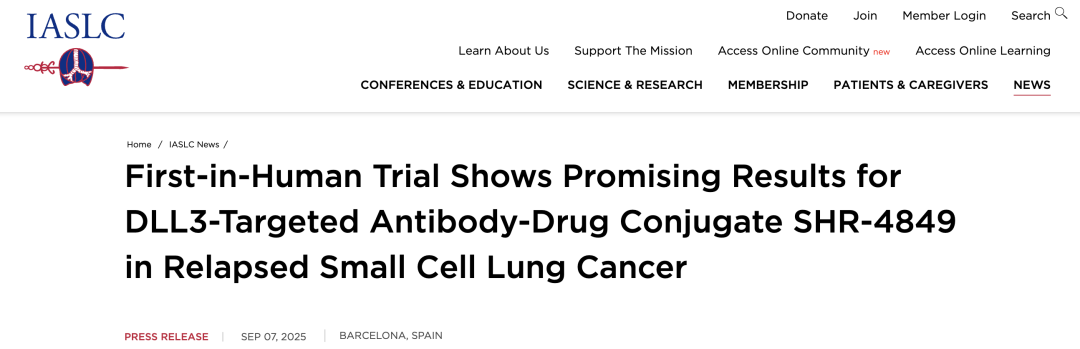
SHR-4849 (DLL3-ADC) Phase I preliminary report in relapsed SCLC: considerable activity, controllable safety (WCLC 2025)
Study Design and Population
Open-label, multicenter, first-in-human Phase I (NCT06443489), enrolling DLL3-positive, standard treatment-failed relapsed/metastatic SCLC or other neuroendocrine cancers, ECOG ≤1.
Administration: Q3W intravenous infusion; accelerated titration + Bayesian escalation. Evaluated doses: 0.8, 2.4, 3.0, 3.5, 4.2, 5.0 mg/kg; primary endpoints are safety/MTD/MAD/RP2D, secondary endpoints are efficacy/PK/immunogenicity.
As of 2025-06-20: a total of 100 cases; 0.8 (n=1), 2.4 (25), 3.0 (29), 3.5 (42), 4.2 (3). One DLT (grade 4 thrombocytopenia) occurred at 4.2 mg/kg. The expansion cohort selected 2.4/3.0/3.5 mg/kg; median follow-up 3.5 months (IQR 1.4–5.8).
Efficacy (focusing on ≥2.4 mg/kg)
All subjects (n=71): ORR 73.2%; confirmed ORR 47.9%; pending confirmation 14.1%; DCR 93.0%.
Second-line subgroup (n=35): ORR 77.1%; confirmed ORR 60.0%; pending confirmation 11.4%; DCR 97.1%.
Brain metastases (n=18): ORR 83.3%; confirmed ORR 66.7%; DCR 100%.
Progression-free survival (n=86): median PFS 6.7 months (95%CI 4.4–not reached); 3/6 months PFS rates 83.3%/55.3%. In the second-line subgroup (n=42), median PFS not reached; 3/6 months PFS rates 93.3%/59.0%.
Safety
TEAEs: any grade 92.0%; ≥3 grade 52.0%.
TRAEs: ≥3 grade 48.0%; serious 16.0%; dose reduction 15.0%; discontinuation 2.0%; no fatal events.
Major ≥3 grade toxicities: hematological (leukopenia/neutropenia, anemia). Gastrointestinal mainly nausea, mostly low grade.
Conclusion and Follow-up
Conclusion:
In relapsed SCLC, SHR-4849 shows tolerable safety and early anti-tumor activity, with particularly good signals in second-line and brain metastasis populations.
Heng Rui Pharmaceutical丨SHR-4849丨BD
On December 29, 2024, Heng Rui Pharmaceutical licensed the overseas rights (outside Greater China) of its self-developed DLL3 ADC drug SHR-4849 to IDEAYA Biosciences in the United States, with a total agreement amount of up to $1.045 billion (initial payment of $75 million + milestone payments).
SHR-4849 uses a topoisomerase I inhibitor (TOPOi) as an effective payload, killing both DLL3 high/low expressing cells through the “bystander effect,” overcoming the challenge of tumor heterogeneity.
SHR-4849 has initiated a Phase I trial for advanced solid tumors in China (NCT06443489) and plans to combine it with IDEAYA’s PARG inhibitors for treatment. In the Phase I clinical trial, SHR-4849 achieved an objective response rate (ORR) of 73% (8 out of 11 patients with partial response), showing significant efficacy.
【02 Xin Da Biologics/Zai Ding Pharmaceutical丨DLL3 ADC】
On January 2, 2025, Xin Da Biologics reached an agreement with Roche to license the global rights of DLL3 ADC drug IBI3009 to the latter, with an initial payment of $80 million and a potential total amount exceeding $1 billion (including milestone payments and sales sharing).
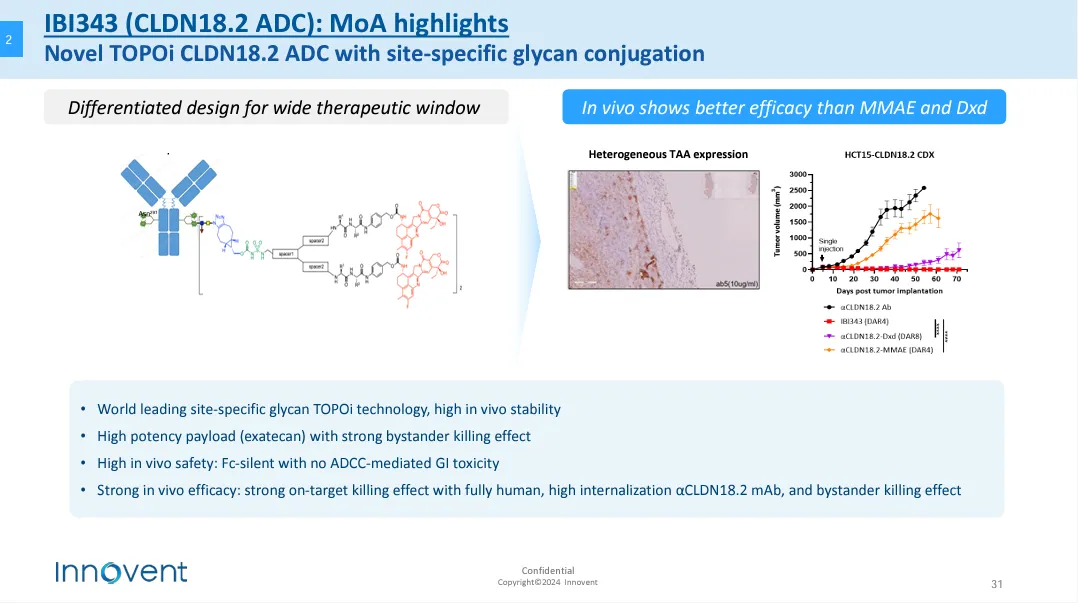
IBI3009 is designed based on Xin Da’s proprietary new topoisomerase I inhibitor platform, with preclinical data showing significant activity and good safety in chemotherapy-resistant tumor models.
IBI3009 completed its first patient dosing in December 2024, with Phase I studies progressing simultaneously in China, the US, and Australia, and may enhance efficacy in combination with PD-1/PD-L1 inhibitors in the future.
In addition to Heng Rui and Xin Da’s ADC layout, Zai Ding’s ZL-1310 (DLL3-ADC) has also reported data on the latest progress in relapsed/refractory ES-SCLC at the 2025 ASCO conference.
Design:Monotherapy dose escalation → randomized dose optimization/expansion; endpoints include safety, ORR/DOR/DCR under RECIST v1.1, PK; exploratory assessment of DLL3 expression (H-score).
Enrollment:As of January 28, 2025, a total of 28 cases entered Phase 1A escalation (0.8–2.8 mg/kg); median age 66 years, 75% with ECOG 1, 93% progressed after anti-PD-L1; 36% with baseline brain metastases.
Efficacy
Overall: ORR 68% (19/28, including 1 case pending confirmation), DCR 93%.
Subgroup signals: responses observed at all doses and DLL3 expression levels; brain metastasis patients ORR 80%, DCR 100%; responses also observed in patients previously treated with tarlatamab.
Durability:74% of the 19 responders are still on treatment (at the time of follow-up).
Safety
Any grade TRAE 89%, ≥3 grade 39%; common ≥3 grade toxicities include anemia, neutropenia/thrombocytopenia/leukopenia, with a small number of interstitial lung disease.
DLT: 1 case at 2.4 mg/kg (neutropenia + thrombocytopenia); 5 cases with dose reduction, 5 cases discontinued due to TRAE.
Pharmacokinetics (PK)
ADC exposure increases dose-dependently; payload systemic exposure is relatively low, with no significant accumulation.
Conclusion
ZL-1310 shows acceptable safety and promising anti-tumor activity in r/r ES-SCLC, including brain metastases and tarlatamab pre-treated populations, with response signals even in DLL3 low-expressing cases.
Regulatory and Planning:In January 2025, received FDA orphan drug designation; advancing registration studies, aiming for submission in 2026, earliest approval in 2027; and has initiated exploration of new indications for neuroendocrine tumors.

03 DLL3/CD3 Bispecific Antibody
DLL3, as an inhibitory ligand of the Notch signaling pathway, is highly enriched on the surface of neuroendocrine tumor cells such as small cell lung cancer (SCLC), while almost not expressed on normal cells, making it a highly promising tumor-selective therapeutic target.
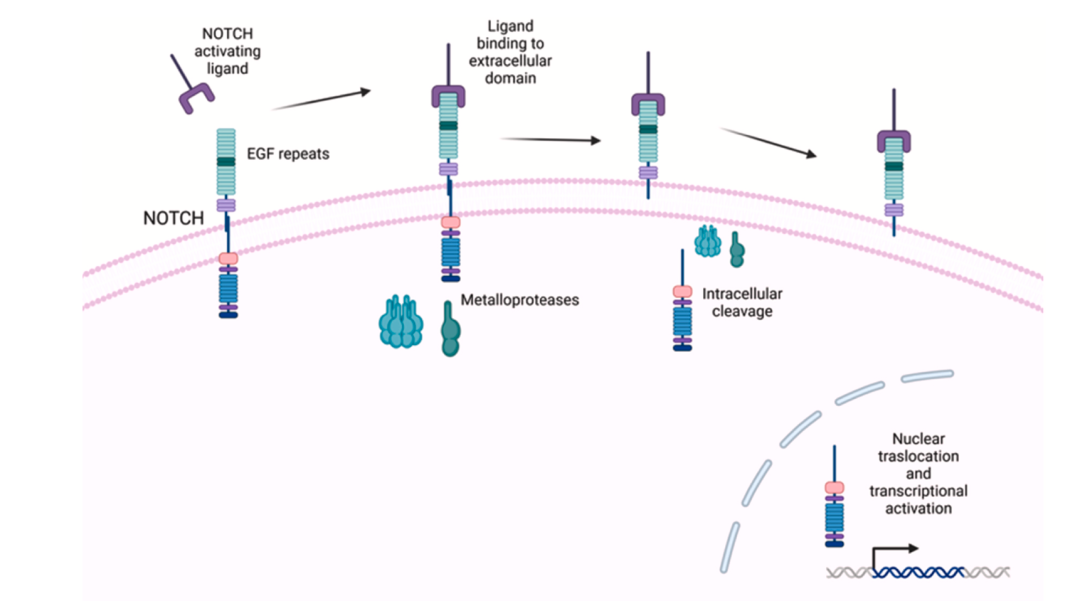
Figure 1. Notch activation pathway. After ligand binding, the receptor is cleaved by intracellular metalloproteinases. The resulting intracellular domain then translocates to the nucleus to regulate the transcription of Notch-responsive genes.
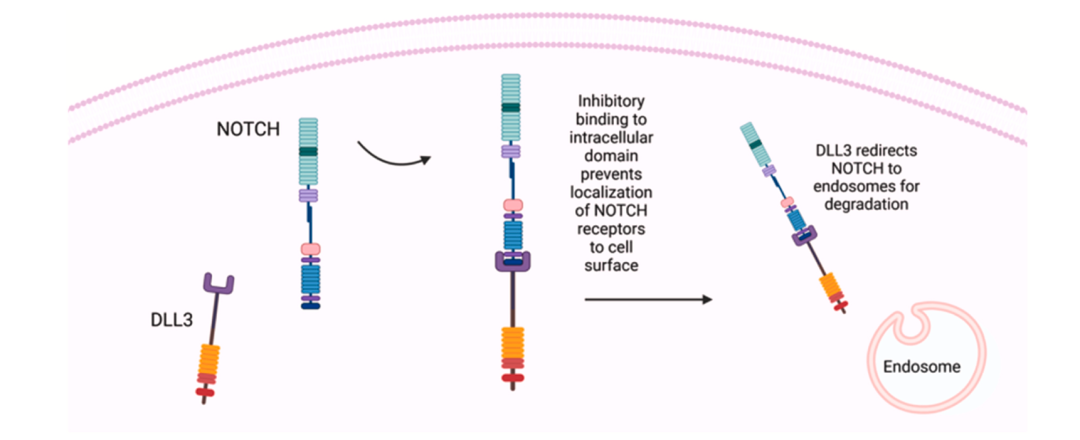
Figure 2. Notch inhibition pathway. After DLL3 binds to its intracellular domain, it prevents the Notch receptor from localizing to the cell surface, leading to its degradation by the endosome.
The bispecific antibody targeting DLL3 that is progressing the fastest isAmgen’s DLL3/CD3 bispecific antibody Tarlatamab (brand name Imdelltra), which can simultaneously bind DLL3 and CD3, recruiting T cells to the vicinity of SCLC cells and activating T cells to kill DLL3-expressing SCLC cells. DLL3 is expressed on the surface of approximately 85-96% of SCLC tumor cells, but is almost not expressed on healthy cells.It was granted accelerated approval by the FDA in May 2024 for the treatment of adult patients with extensive-stage small cell lung cancer (ES-SCLC) who have disease progression during or after platinum-based chemotherapy.
DeLLphi-301 Study
The approval for this indication is based on the DeLLphi-301 study, an open-label, multicenter, multi-cohort Phase II clinical study. A total of 99 patients with relapsed or refractory extensive-stage small cell lung cancer who experienced disease progression after platinum-based chemotherapy were enrolled.
At a dose of 10 mg every two weeks, Imdelltra achieved an objective response rate (ORR) of 40% (95% confidence interval: 31%, 51%), with a median duration of response (DoR) of 9.7 months (range: 2.7 to 20.7+ months). Among 69 patients with platinum sensitivity status data, the ORR for 27 platinum-resistant SCLC patients was 52% (95% confidence interval: 32%, 71%), while the ORR for 42 platinum-sensitive SCLC patients was 31% (95% confidence interval: 18%, 47%). The median overall survival (mOS) was 14.3 months, with final and complete survival data still maturing.
Notably, Imdelltra carries a black box warning indicating the potential for severe or life-threatening cytokine release syndrome and neurological toxicity, including immune effector cell-associated neurotoxicity syndrome (ICANS).
04 Summary and Outlook
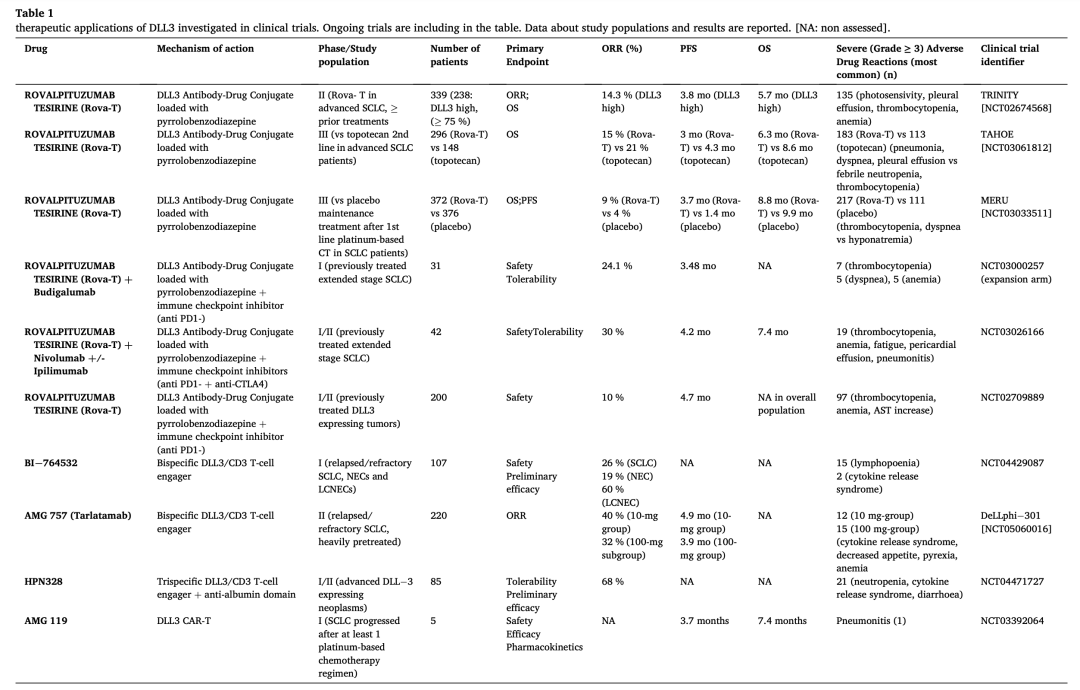
In addition to the ADCs and bispecific antibodies mentioned above, drug development targeting DLL3 is also being explored in various forms such as bispecific antibodies, trispecific antibodies, T cell engagers, and CAR-T. The table below lists DLL3 therapies currently in clinical trials.
Table 1. DLL3 therapies currently in clinical trials
Despite the significant biological importance of DLL3 in tumors such as SCLC, challenges remain in clinical application, such as the heterogeneity of DLL3 expression levels and the lack of standardized detection methods. Further efforts are needed to overcome these challenges.
In the future, with more clinical data disclosure and exploration of combination therapies, DLL3 ADCs are expected to provide better options for patients with refractory tumors such as small cell lung cancer and become a benchmark field for Chinese innovative drugs going global.
★