
GPU Mali-G71
The Mali-G71 graphics processor (GPU) is the latest top product launched by the Mali high-performance GPU family. Based on the new Bifrost architecture, the Mali-G71 represents the highest level of high-end mobile image processing performance, further solidifying Mali’s leading position in the fiercely competitive GPU market.
During the development of Mali-G71, extensive references were made to the core needs of high-end mobile applications, including Virtual Reality (VR), Augmented Reality (AR), and 3D gaming, which will continue to develop rapidly. Modern APIs, including Vulkan and OpenCL 2.0, were also key points in the development. The era of ‘Snake’ games is long gone, and the rapid development of the mobile gaming industry is astonishing; even high-end devices are increasingly unable to meet the demands of the next generation of mobile games. To address this issue, the Mali-G71 focuses on next-generation mobile image processing technology, making devices equipped with Mali-G71 more powerful, efficient, and outstanding. Devices using the Mali-G71 GPU can even match the image processing performance of mid-range laptops.
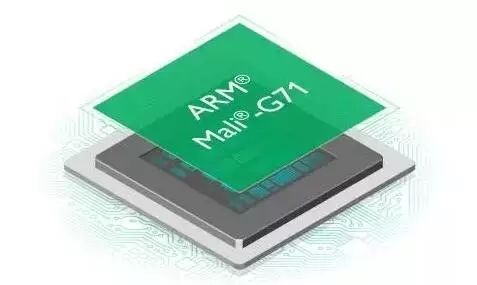
About the Bifrost Architecture
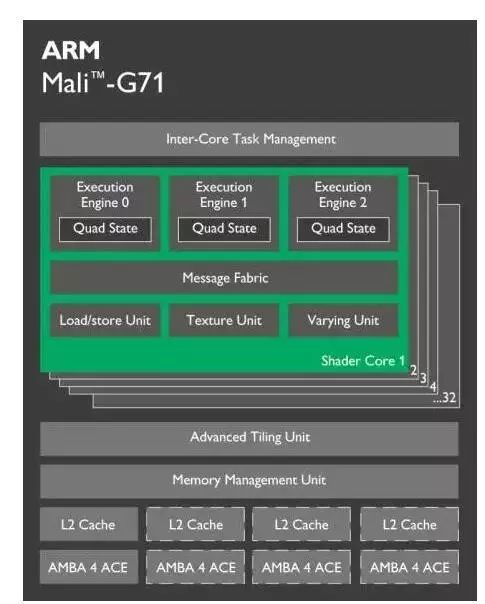
The new Bifrost architecture of Mali marks a leap in the GPU field and the future of mobile image processing technology. The design of the Bifrost architecture contains numerous innovations and optimizations, which will be briefly explained below.
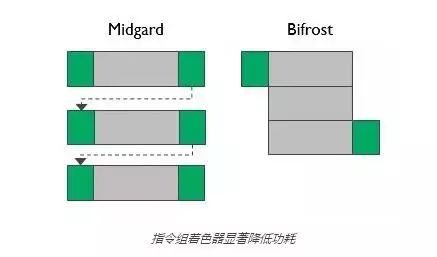
The Claused Shader groups instruction sets into pre-set program blocks, allowing the instruction groups to execute automatically without interruption. Based on this, we can ensure that all external dependencies are ready before the clause execution. By designing execution units, temporary results do not need to access the register file. This alleviates the pressure on the register file and significantly reduces power consumption; by simplifying the control logic of the execution units, the area of the GPU can also be reduced.
Instruction Group Shader Significantly Reduces Power Consumption
Another innovation of the Bifrost architecture is its use of Quad-based vectorization technology. The Midgard GPU employs Single Instruction Multiple Data (SIMD) vectorization technology, executing only a single thread at a time in the pipeline stage; it heavily relies on shader code to execute vector instructions. The Quad vectorization technology supports up to four threads executing synchronously, sharing control logic, reducing the difficulty of filling execution units, and achieving nearly 100% utilization, closely matching the latest methods developers use to write shader code.
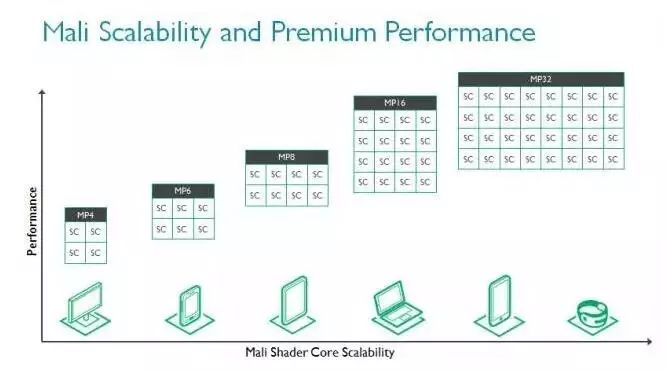
High Scalability
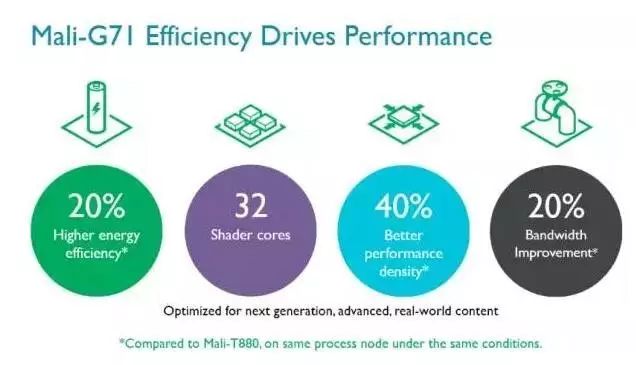
Previous generations of high-performance mobile GPUs only supported 1 to 16 core expansion. To meet the increasing performance demands of mobile devices, the new Mali-G71 supports 1 to 32 core expansion. With the high scalability of the Mali-G71, whether it’s DTV devices, high-performance smartphones, or the latest VR devices; whether mobile versions or standalone versions, strong image processing performance can be achieved. The scalability of the Mali-G71 and the 40% improvement in area efficiency help partners develop systems according to their target requirements, balancing power consumption, efficiency, and cost, and more accurately positioning products in target markets.
Suitable for High-End Gaming
Mobile gaming is rapidly becoming the preferred gaming platform for players around the world. In 2017, the mobile gaming market exceeded $40 billion, an increase of $10 billion from 2016. The continuous improvement of mobile device performance lays the foundation for the sustained growth of the mobile gaming market. As complexity increases year by year, the growth of the mobile gaming market also faces challenges. The vertex count of game demos released years ago was only half of what it is now, leading to higher demands for power consumption and efficiency. If applications continue to develop at this rate, 32-core scalability will become standard for high-end mobile devices. In addition, the Mali-G71 has a 20% higher energy efficiency compared to the Mali-T880 under similar conditions, allowing high-end devices limited by heat dissipation to maintain more sustained performance.
Supports Vulkan and OpenCL 2.0
We must pay close attention to the development of APIs, as APIs define how developers interact with the underlying hardware. As a GPU and CPU technology company, we need to continuously meet the needs of developers to ensure that end users have the best device experience. In recent years, a major trend has been to allow developers low-level access to hardware. As a result, the Khronos Group has launched the new Vulkan 1.0 API. Similarly, OpenCL 2.0 has improved the friendliness of heterogeneous computing for developers. In the future, as OpenCL 2.0 devices enter the market, more typical use cases will gradually emerge. Thanks to complete hardware consistency, the Mali-G71 not only supports Vulkan 1.0 and OpenCL 2.0 Full Profile but also supports fine texture buffering and shared virtual memory, while reducing software development difficulty and optimizing end-user experience.

Designed for Virtual Reality (VR)
Virtual Reality is a hot topic in the field of image processing, including how VR is implemented, what conditions are needed, and how to provide the best VR experience for users; the Mali-G71 GPU is tailored to meet these demands. The comprehensive performance requirements of VR technology mean that high-end device GPU technology must have higher energy efficiency; additionally, components like cameras and screens are developing at an unprecedented speed, and the thermal performance of devices is facing severe challenges. Therefore, GPUs must strive to reduce energy consumption.
The Mali GPU series supports multiple advanced VR optimization features to create the best mobile VR experience. Utilizing front buffer technology, data can be submitted directly to the front cache without needing an off-screen buffer, saving time and reducing latency. Mali also supports the API’s “multi-view” extension, allowing applications to submit a single frame drawing command to the driver each time, with the driver assigning specific tasks for each eye, significantly reducing processing time for both the application and driver CPU. For Mali GPUs based on Midgard and Bifrost, we have further optimized vertex processing technology, allowing single vertex processing with dual eyes sharing results. In addition to these features, there are many other characteristics that make the Mali-G71 the preferred choice for future mobile VR.

Powerful Content Protection
Nowadays, we are using mobile phones more frequently. For many people, desktop or laptop computers are no longer a necessity, as mobile phones can handle everything, such as downloading, browsing content, transferring files to other devices, etc. The recently launched Mali-DP650 display processor can handle 4K content, and the Mali-G71 seamlessly and faithfully transmits content to the TV. Although 4K has not yet become popular on mobile phones, there will be no performance loss when browsing content on other 4K devices.
The mobile image processing performance of the Mali-G71 is currently at the highest level, with minimal power consumption and chip area. Partners can enjoy the most scalable and personalized technology while achieving the pinnacle of mobile image processing technology. The Mali-G71 is expected to hit the market in 2017, bringing the next generation of mobile gaming and image processing technology within reach.

1.As an embedded engineer, you must know how great the potential of MCUs is!
2.What are the qualities of a system engineer?
3.Who can we trust when designing?
4.If you are a programmer, please turn; if you are a programmer’s friend, please read!
5.You always think the elderly are outdated, but they can also use black technology like this!
6.Gather in Chengdu to discuss embedded technology and industry development!GIF
Disclaimer: This article is a network reprint, and the copyright belongs to the original author. If there are copyright issues with the work, please contact us, and we will confirm the copyright based on the copyright certificate you provide and pay the manuscript fee or delete the content.