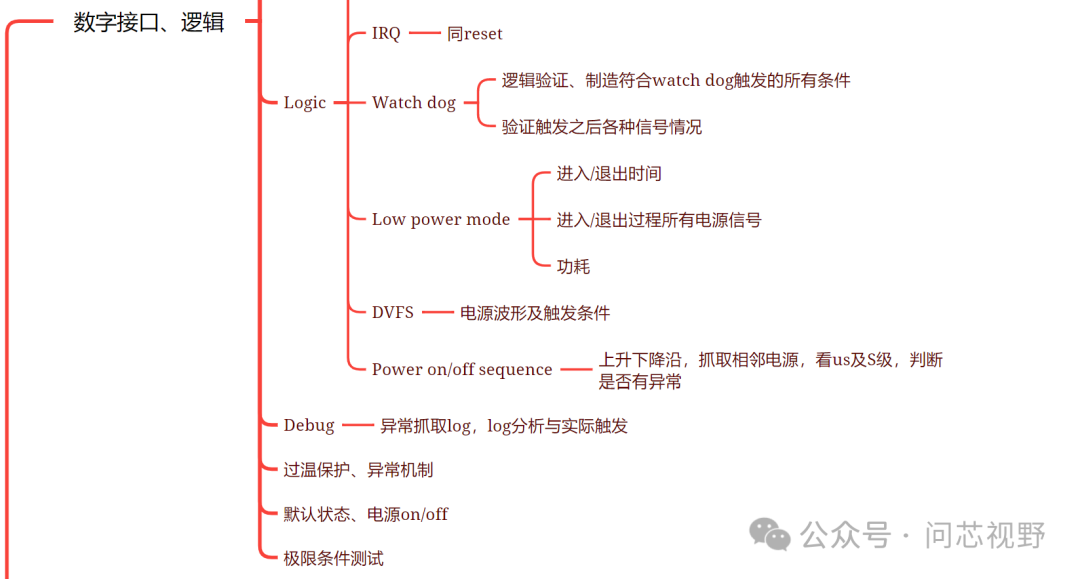
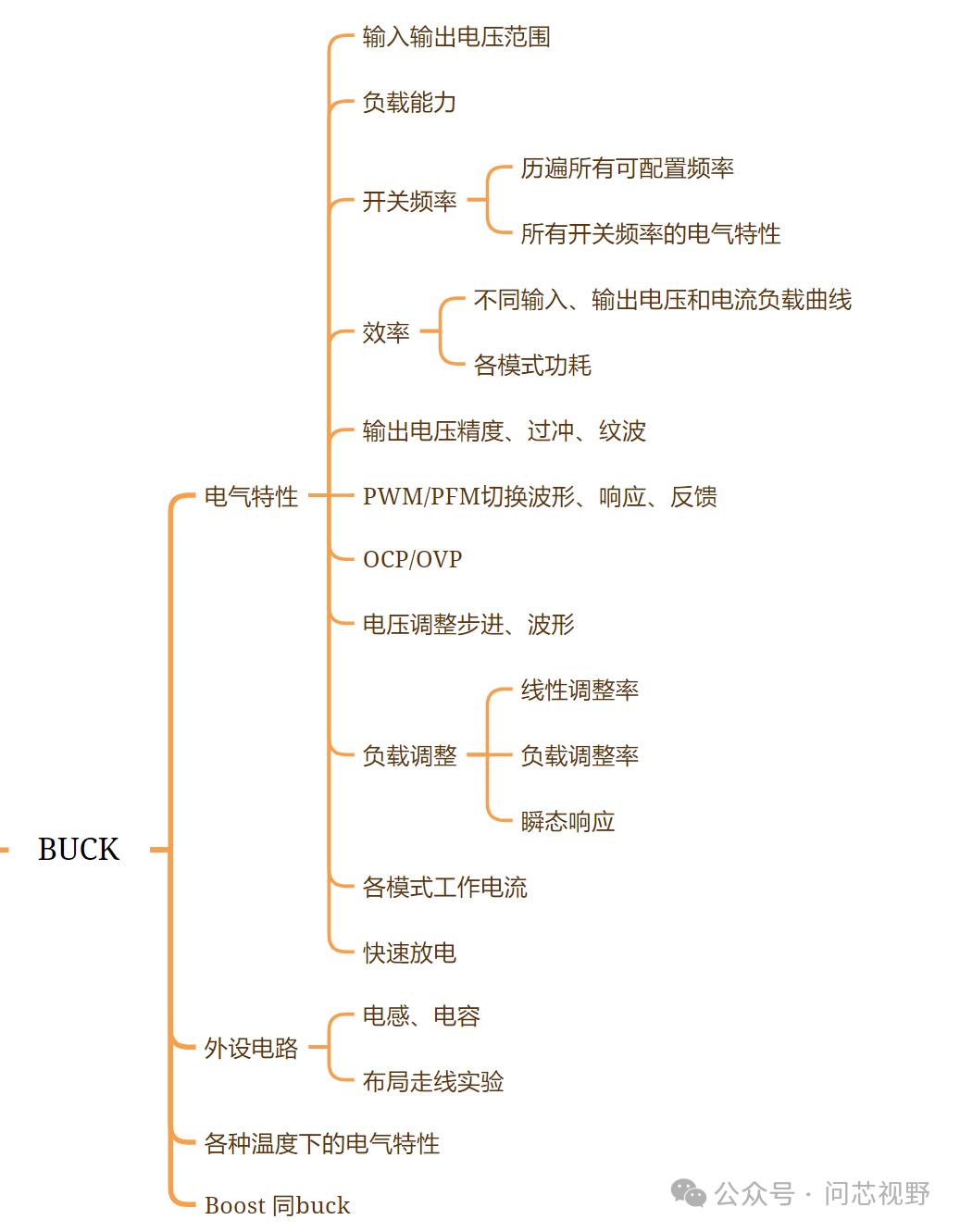
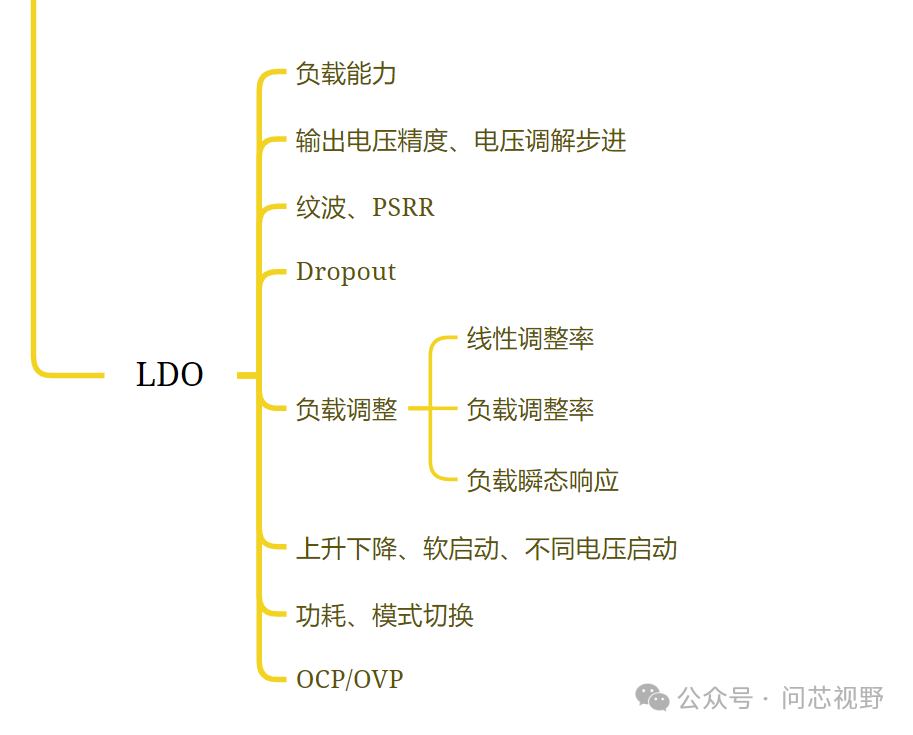
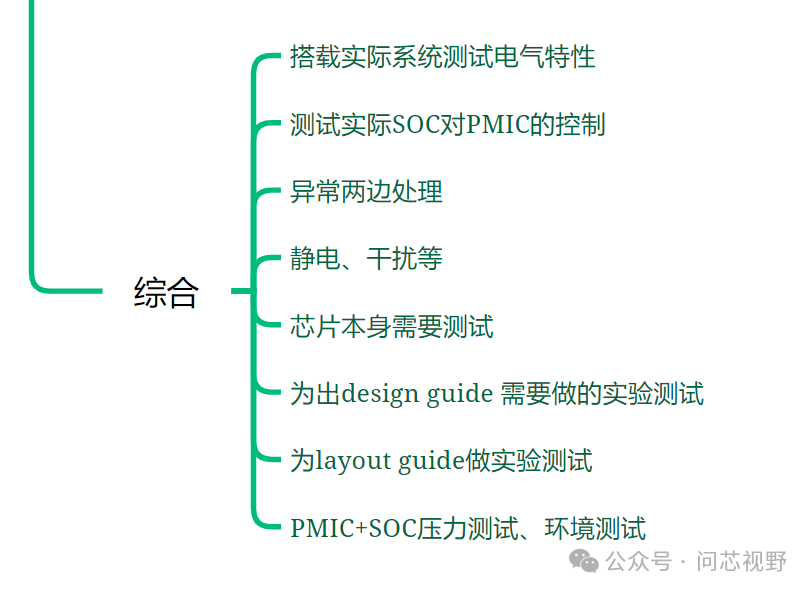
Following the previous SOC test cases, which garnered significant attention, we will add some considerations for PMIC testing. Combining the previously discussed requirements for PMIC, this article will provide a preliminary discussion from a testing perspective: after the definition and design of the PMIC, how to conduct testing. There is a wealth of information available online regarding various parameters and testing methods for power supplies; specific testing details can be further explored through online searches and by reviewing specifications of similar products. Testing Objective: The goal is to verify whether the PMIC’s return chip aligns with all defined specifications, to check for any unknown risks associated with the chip, and to determine if there are any unforeseen issues when the PMIC powers the actual SOC. Therefore, the test cases must reference conventional parameters of the power supply industry while also considering the specific characteristics of this chip (specifications) and the application scenarios (SOC) to design rigorous and comprehensive test cases that are practical.Testing Plan: Organize tests by functionality, prioritize verification of critical design risk points, focus on major functionalities, and conduct tests across a range of conditions from room temperature to extreme temperatures, from functionality to performance, and under extreme conditions, transitioning from default states to configurable registers, with a tiered approach to the testing plan.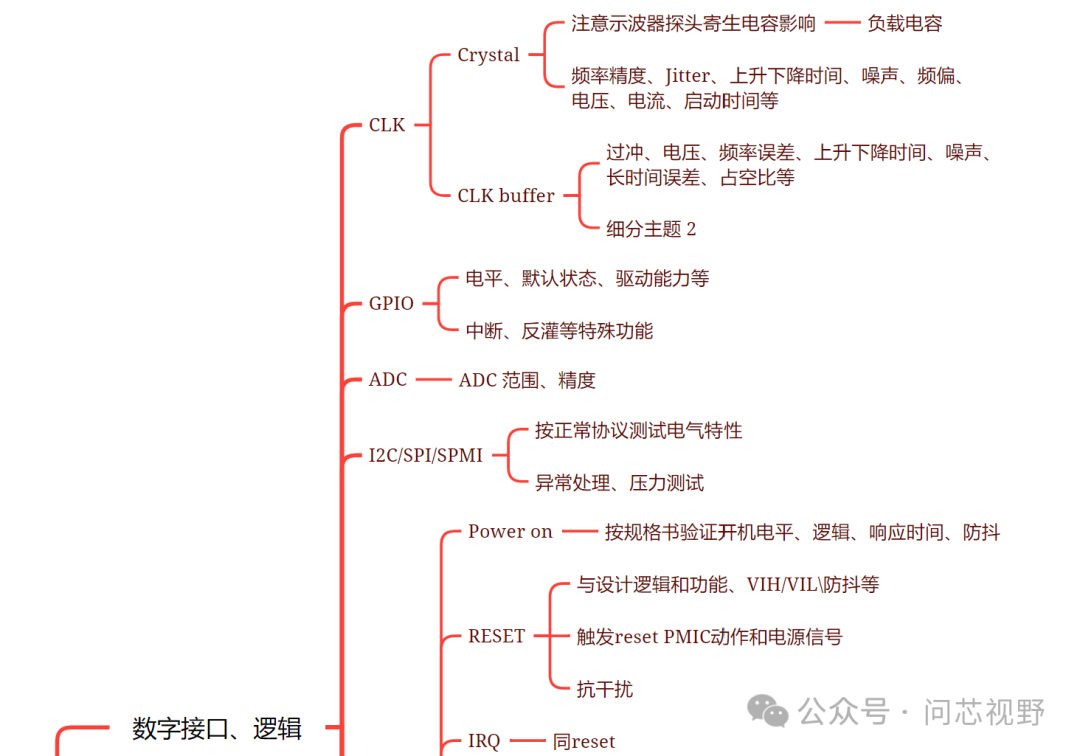
 Related historical articles that may be of interest:Defining Power Management IC (PMIC) for a Master Control (SOC)PMIC Requirement Mind Map – Designing for Master Control (SOC)