Design of a Temperature Control System Based on Siemens S7-200 PLC
——Graduation Project Sharing
Includes: Design documentation; Program; Circuit diagram
Abstract
Currently, the Siemens S7-200 PLC is widely used in the industrial control field due to its small size, light weight, and powerful logical operation capabilities. This paper designs a PID temperature control system based on the Siemens S7-200 PLC, aiming to achieve precise control of boiler temperature. The system uses temperature sensors to convert the boiler temperature signal into an analog signal, which is sent to the PLC for PID computation. By comparing the deviation between the set temperature and the actual temperature, the output signal controls the on/off state of the solid-state relay, thereby regulating the operation of the heater to achieve stable temperature control.
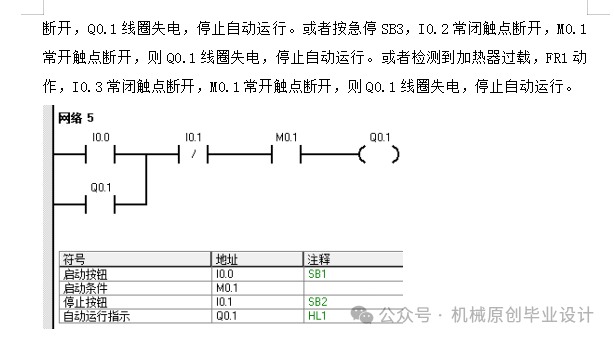
In terms of hardware design, this paper selects the Siemens S7-200 PLC as the main controller and expands the EM231 analog input module to receive the analog signals from the temperature sensors. The design of the main circuit and control circuit is reasonable, ensuring stable operation of the system, and includes short-circuit and overload protection features. The input and output port allocation of the PLC is clear, connecting input devices such as the start button, stop button, emergency stop switch, and heater overload feedback, as well as output devices for solid-state relay control, automatic operation indication, and fault indication.
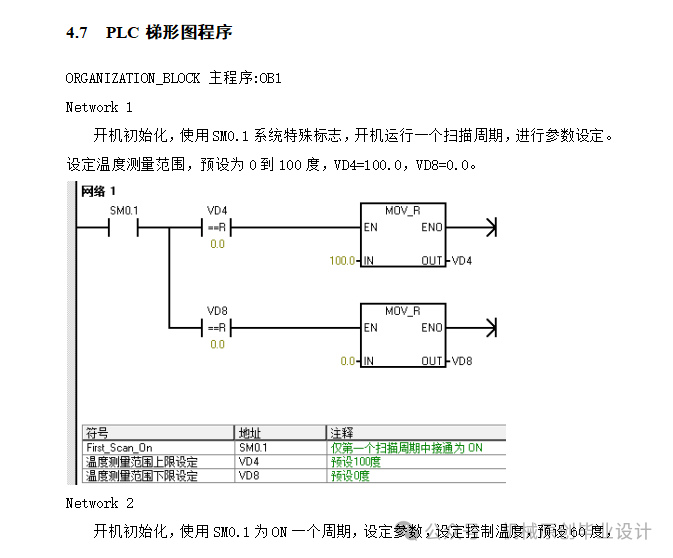
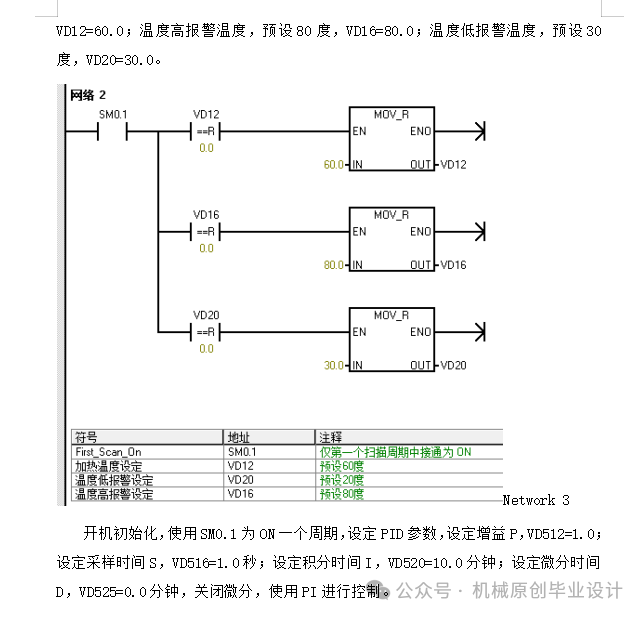
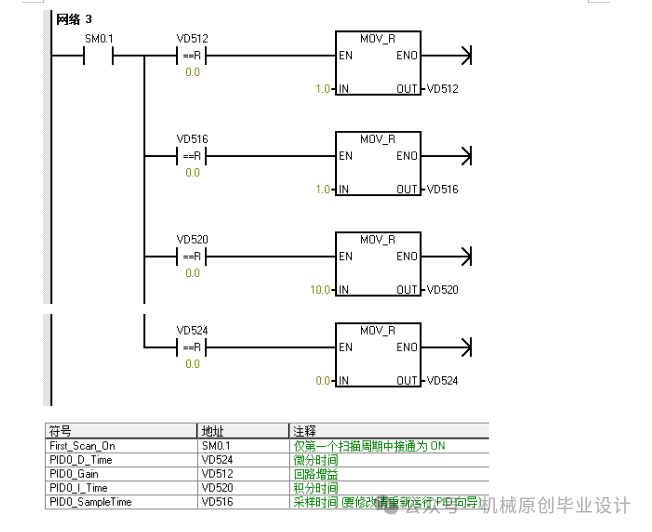
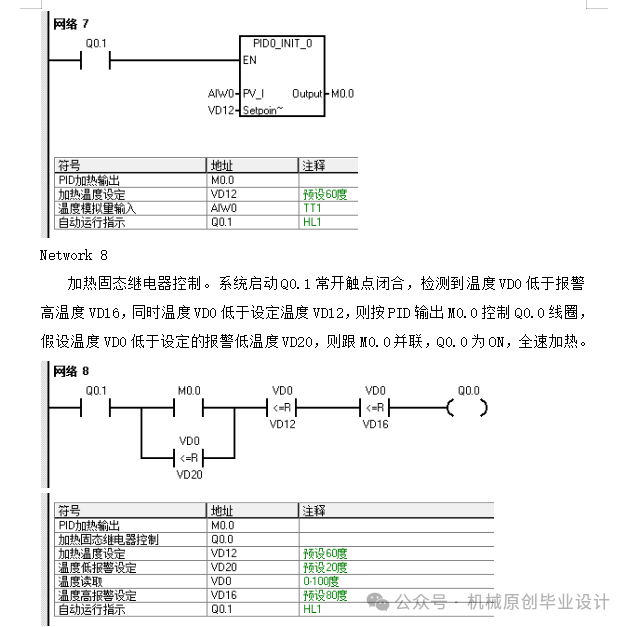
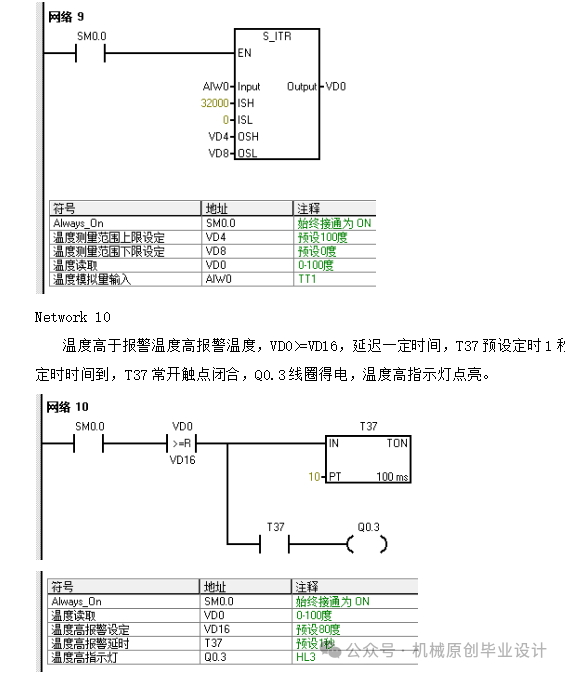
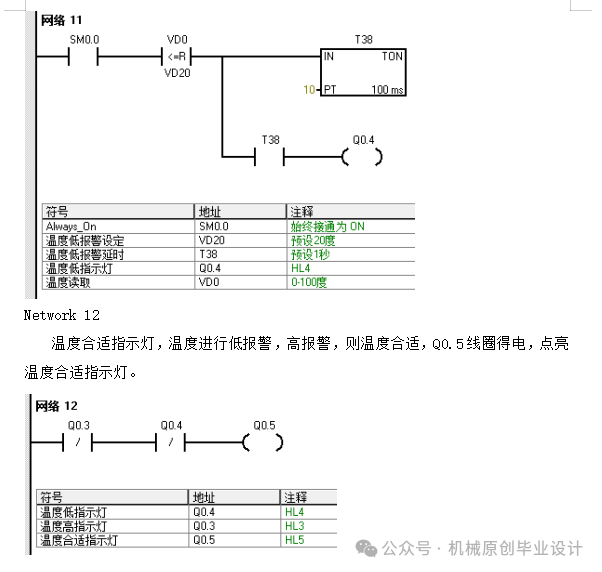
In terms of software design, this paper elaborates on the PLC programming process, including initialization settings, PID parameter settings, temperature reading and conversion, temperature comparison and alarm functions. By utilizing Siemens’ PID wizard command, the programming process for PID control is simplified, requiring only parameter settings to achieve precise temperature control. The program flowchart clearly illustrates the operational logic of the system, while the ladder diagram program and statement table program detail the functions and implementation methods of each network.
Experimental results show that the system can accurately control the boiler temperature, with a small temperature fluctuation range and stable control effects. Additionally, the system features temperature pre-warning and fault alarm functions, enhancing the safety and reliability of the equipment. Through practical application verification, the system meets design requirements and can effectively improve the precision and efficiency of temperature control in industrial production.
Looking ahead, further enhancements could include adding upper computer monitoring functions, such as using software like KingView or MCGS for real-time monitoring and parameter settings, thereby increasing the intelligence level of the system. Furthermore, more advanced control algorithms, such as cascade control or fuzzy control, could be considered to further optimize the control performance of the system. The PID temperature control system designed based on the Siemens S7-200 PLC has high practical value and significance for promotion.
Keywords: Boiler; PLC; PID Control; Temperature Control; Ladder Diagram Programming
Please open in the WeChat client
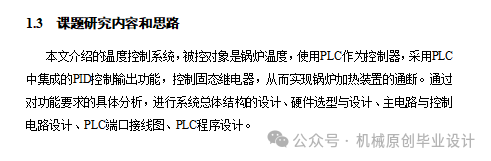
01|Project Ideas and Control Theory
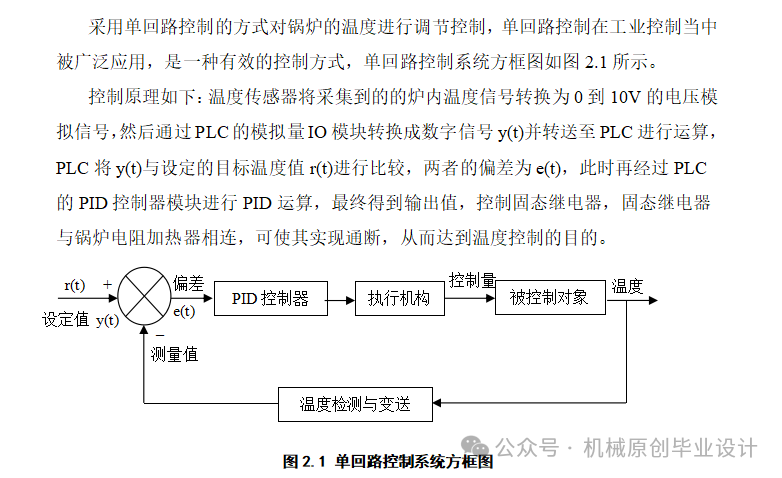
02|Overall Design
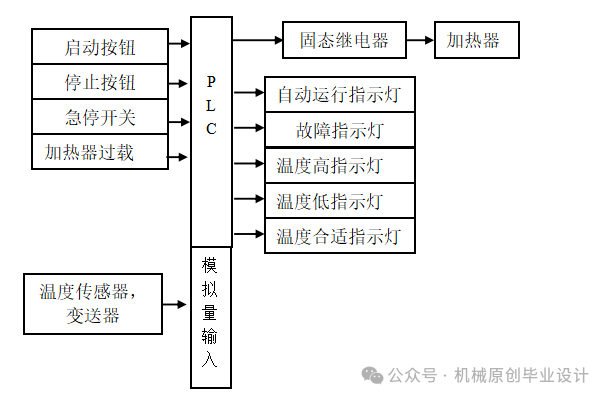
PLC Composition Block Diagram
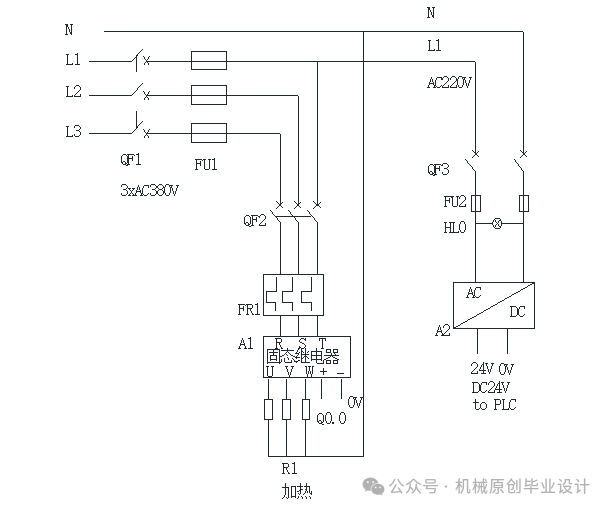
Main Circuit and Control Circuit Diagram
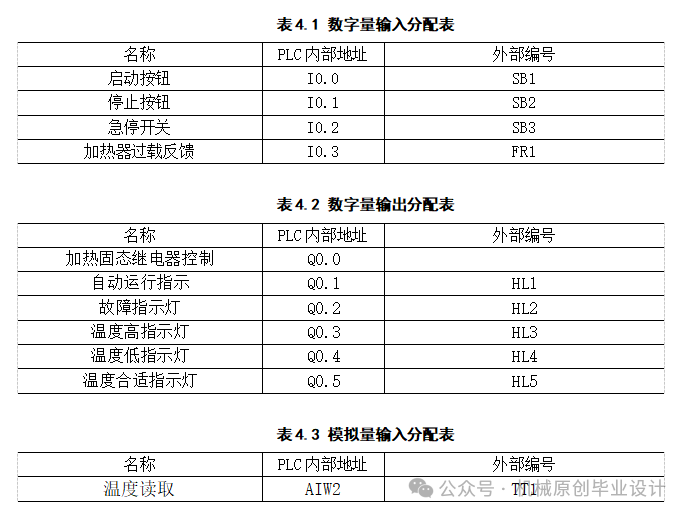
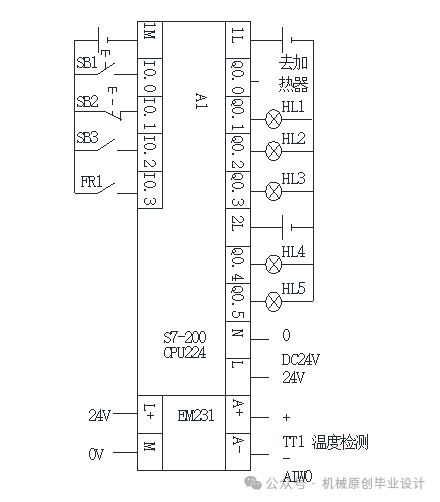
PLC Input and Output Wiring Diagram
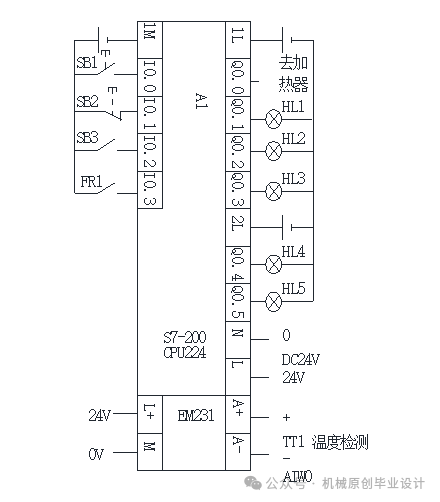
PLC Wiring Diagram
03|System Software Design
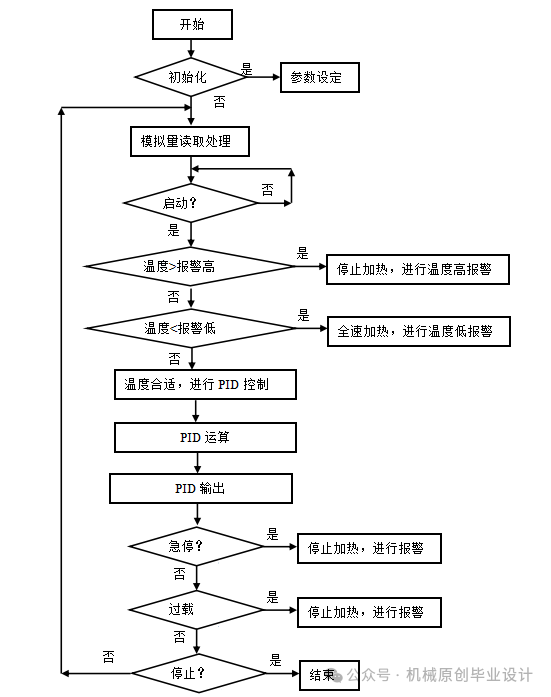
System Program Control Flow
 Note
Note
Text | Original Paper
Prohibited for commercial use, violators will be prosecuted
Previous Recommendations:
Free Sharing!!—1900 Sets of Mechanical Graduation Designs;
How to Write a Graduation Proposal? This article is enough (with a universal template at the end)!!!!
What to do for Gearbox Course Design? Teach you to complete it in 1 day!
Complete Microcontroller Graduation Design Topics in 5 Minutes (with reference topics at the end)