The application of self-organizing network radios in drone swarms significantly enhances the operational effectiveness, survivability, and mission flexibility of the swarm by constructing a decentralized, dynamically adaptive communication network, as reflected in the following aspects:
1. Core Function: Building the Swarm’s “Nervous System”
-
Decentralized CommunicationSelf-organizing network radios utilize Ad Hoc networking technology, eliminating the need for fixed base stations or satellites. Each drone acts as both a communication node and a relay station. This architecture allows the swarm to maintain communication through multi-hop relaying even in complex electromagnetic environments or when some nodes are damaged, preventing total failure due to single points of failure. For example, during the Russia-Ukraine conflict, the Russian military’s “Witness-136” drones achieved coordinated formations through self-organizing networks, allowing the remaining drones to reconfigure the network and continue their missions even after some were shot down.
-
Dynamic Topology AdaptationIn swarm operations, drones frequently need to adjust formations (such as wedge breakthroughs or dispersed encirclements). Self-organizing network radios use distributed routing protocols (like OLSR, DSR) to perceive network changes in real-time, completing link switching and route re-selection within milliseconds. For instance, a cluster of 200 Chinese drones dynamically adjusted their topology during exercises to achieve seamless coordination in complex formations.
-
Interference Resistance and RobustnessSelf-organizing network radios integrate technologies such as frequency hopping, spread spectrum, and COFDM (Coded Orthogonal Frequency Division Multiplexing) to effectively counter enemy electromagnetic interference. For example, the U.S. “Coyote” drones employed frequency-hopping radios to successfully break through Russian electronic suppression on the Syrian battlefield, maintaining stable communication. Additionally, MIMO (Multiple Input Multiple Output) technology enhances signal reliability through spatial diversity, allowing data transmission to continue even if some antennas are damaged.
2. Key Technical Support: Achieving Efficient Coordination
-
Intelligent Frequency Selection and Interference AvoidanceSelf-organizing network radios autonomously select the optimal frequency for communication by real-time detection of interference and background noise at various frequency points. For example, the self-organizing network radios from He Feng Technology utilize intelligent frequency selection technology, allowing nodes to dynamically choose different frequency points to avoid interference and ensure optimal overall network performance.
-
Low Latency and High Reliability TransmissionSwarm coordinated operations rely on real-time information exchange (such as target coordinate sharing and tactical command distribution). Self-organizing network radios control end-to-end latency to within 100 milliseconds through ARQ (Automatic Repeat reQuest) and FEC (Forward Error Correction) mechanisms, achieving a key information transmission success rate of over 99.9%. For instance, during synchronized penetration missions, drones need to coordinate actions precisely, and low-latency communication can prevent operational failures due to uncoordinated movements.
-
Lightweight and Low Power Design
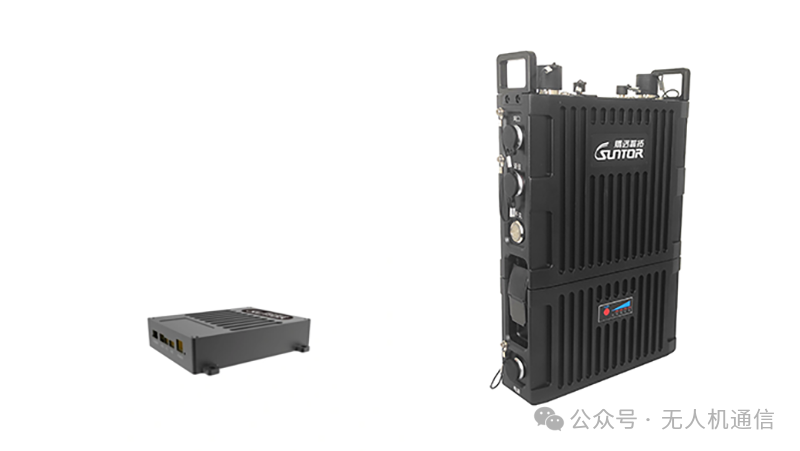
Small drones have limited payloads, so self-organizing network radios must meet requirements for lightweight (weight < 100 grams) and low power consumption (standby power < 5 watts).
For example, the backpack-style individual self-organizing network radio uses a detachable lithium battery,
supporting 8 hours of continuous operation while enhancing spectrum utilization through efficient modulation and demodulation technologies (such as OFDM) to achieve high-speed data transmission within limited bandwidth.
3. Typical Application Scenarios: Reshaping Combat Modes
-
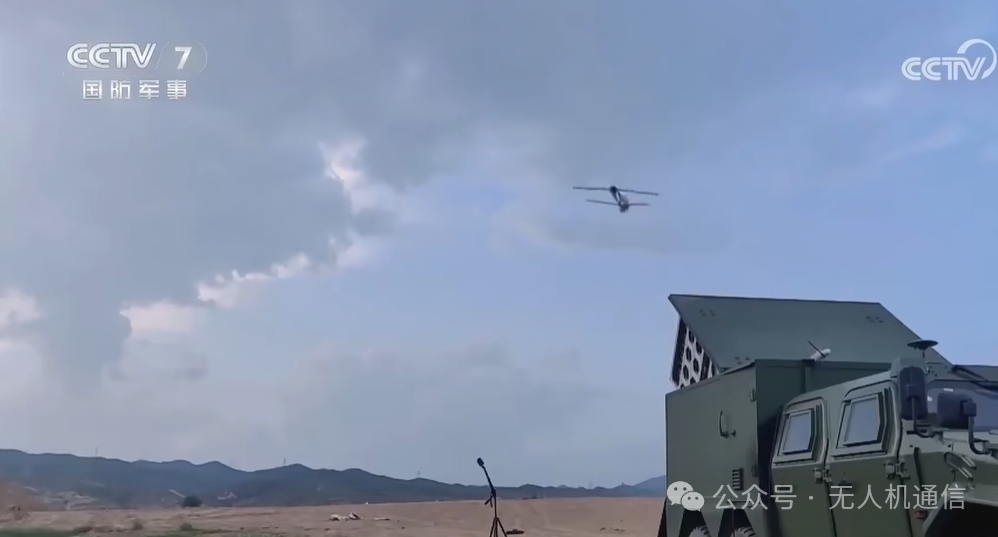
Cluster Attacks and Saturation StrikesSelf-organizing network radios support hundreds of drones in coordinated formations to break through air defense systems through saturation attacks. For example, the Russian military used a cluster of 355 drones on the Ukrainian battlefield, achieving target allocation and firepower coordination through self-organizing networks, with some drones acting as decoys to attract fire while others attacked from the flanks or rear, successfully destroying Ukrainian air defense positions.
-
Covert Reconnaissance and Intelligence SharingSmall drones transmit reconnaissance data in real-time to command centers via self-organizing network radios, forming a comprehensive situational map. For instance, China’s “Rainbow-7” drone, equipped with a self-organizing module, can transmit high-definition images and target coordinates from 100 kilometers away, providing precise guidance for long-range strikes.
-
Cross-Domain Coordination and Systematic OperationsSelf-organizing network radios enable interconnectivity between drones and unmanned ground vehicles, unmanned surface vessels, and other platforms, constructing an integrated network across air, land, and sea. For example, the 76th Group Army of the Chinese Army demonstrated a joint operation mode of drone swarms and robotic wolf packs during exercises, achieving information sharing and task coordination through self-organizing networks, significantly enhancing operational efficiency in complex environments.
4. Future Trends: Intelligence and Integration
-
AI-Driven Dynamic OptimizationFuture self-organizing network radios will integrate AI algorithms to automatically adjust network topology, spectrum resources, and power distribution based on battlefield conditions. For example, by using deep learning to predict enemy interference patterns, the system can preemptively switch frequency bands or adjust transmission paths to enhance network robustness.
-
Integration with Satellite CommunicationIn environments without ground communication infrastructure, such as oceans and deserts, self-organizing network radios will combine with low-earth orbit satellites (like Starlink) to achieve global coverage. For instance, maritime unmanned vessels can communicate with rear command centers via satellite links while utilizing self-organizing networks for inter-vessel coordination to complete anti-submarine and reconnaissance tasks.
-
Support for Ultra-Large Scale SwarmsWith technological advancements, self-organizing network radios will support thousands of drones in coordinated operations. For example, China plans to deploy over 1000 drones in swarms, achieving efficient management through a hierarchical networking architecture (self-organizing networks within the swarm, collaborative networks between swarms, and remote communication with command centers), further compressing enemy defense space.