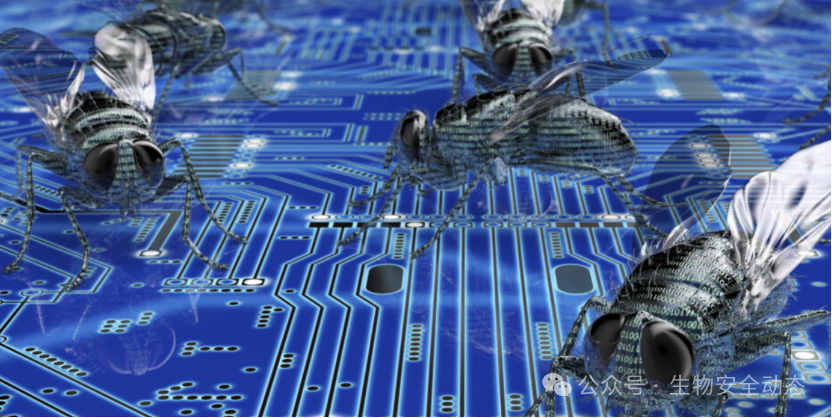
The National Interest reported on September 20 that the Defense Advanced Research Projects Agency (DARPA) is heavily investing in insect-scale micro-robot technology. From Harvard’s robotic bees to underwater robots mimicking jellyfish, and six-legged robots resembling cockroaches, these biologically inspired devices aim to achieve military objectives such as reconnaissance and surveillance. Among them, robotic bees utilize piezoelectric actuators to achieve high-frequency wing flapping, enabling them to infiltrate complex environments for intelligence gathering; robotic jellyfish use hydrogen-oxygen fuel to power artificial muscles, allowing for silent monitoring of marine areas; and the DASH (Dynamic Autonomous Stretchable Hexapod) robot adapts to battlefield scenarios by leveraging the compression resistance characteristics of cockroaches. A more radical concept, the “semi-mechanical insect,” involves implanting microcontrollers within insects for artificial control, raising ethical concerns regarding life. Although these technologies face challenges such as power supply and autonomous control, they demonstrate the potential to break through the limitations of traditional military equipment.
END