 For more exciting content, please click aboveGlobal Intelligent ManufacturingFollow us!“The robotic arm performs ballet under 3D vision, and the Chinese Kando robot completes the world’s first intercontinental surgery at half the price of international competitors, having received orders from 21 countries— from the Ice City laboratory to the world stage, Chinese intelligent manufacturing is rewriting the landscape of surgical robots.”
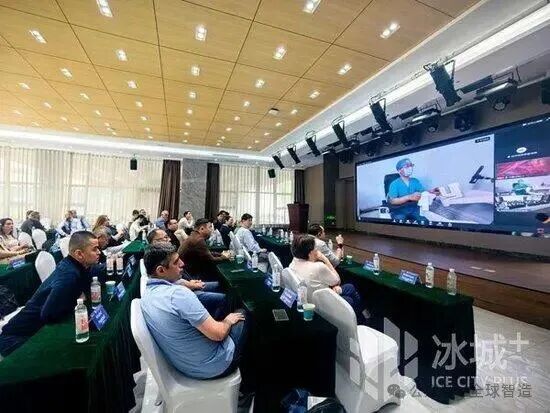
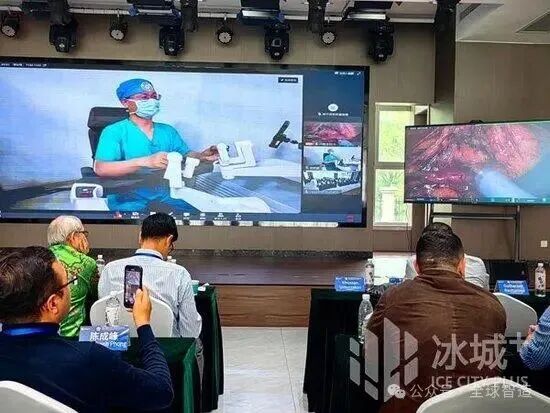
The renal pelvis valve is precisely formed at the mechanical fingertips, and the ureter seamlessly fits under 3D vision… On August 29, in the operating room of Peking University First Hospital, Professor Li Xuesong was operating the Kando Robot® SR2000 to perform a highly difficult renal pelvis valve plasty. This surgery was live-streamed in real-time to the conference room of Harbin Sizerui, where medical experts from four continents and nearly 20 countries and regions witnessed the impressive “performance” of the Chinese robot, often recording the robot’s agile multi-arm collaboration with their phones, expressing their hope for this “intelligent therapy” model to be applied in their own countries as soon as possible.
On-site Highlights: International Experts Ask Questions While Watching, Live Surgery Becomes a Remote Training Classroom
The renal pelvis plasty is a highly difficult surgery in the field of urology, requiring extreme precision and stability in operation. In the live broadcast, the Kando robot’s mechanical arms moved flexibly, completing a series of delicate suturing operations.
“It’s like the robotic arm is dancing ballet,” exclaimed a medical device agent from Italy while recording a video. The room was filled with gasps of amazement, and when the robot completed an extremely delicate anastomosis step, applause erupted from the experts. While discussing and exchanging techniques, experts even bet on the type of needles and threads used in the surgery, while Professor Li Xuesong took the opportunity during surgical breaks to answer everyone’s questions, turning the viewing session into a joyful remote learning classroom.
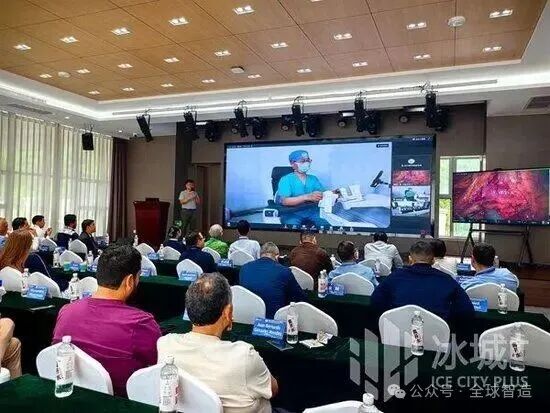
During the live surgery, Professor Li Xuesong also shared his operational experience: “Using other robots, after a morning of surgery, my eyes feel sore and fatigued, while Kando’s 3D naked-eye open operating platform alleviates the visual fatigue caused by long surgeries.”
Origin of Entrepreneurship: Participating in National Project, Ice City Team Vows to Create China’s Own Surgical Robot
The entrepreneurial story of Sizerui dates back to 2007. The founding team realized the monopolistic position of foreign surgical robots in the global market and conceived the idea of independent research and development.
“We can no longer be ‘choked’ by foreign technology; we need to create our own medical robots,” said the founding team led by Professor Du Zhijiang. That year, they collaborated with 301 Hospital, Harbin Institute of Technology, Tianjin University, and Nankai University to undertake a key national 863 project, starting the path of focusing on the development of the doctor control console, robotic arms, and system integration.
In 2013, the team successfully completed project acceptance, passing animal experiments and human specimen experiments. However, the team was acutely aware of the significant gap between laboratory results and marketable products, leading to the establishment of Harbin Sizerui that year.
Ten Years of Refinement: From ‘Three No’s’ to Global Leader, Ice City Intelligent Manufacturing Overcomes System Complexity Limits
Surgical robots are among the most complex systems and the most challenging to develop among various types of robots. In its early days, Sizerui faced the “three no’s” dilemma: no talent reserve, no technical accumulation, and no industrial chain support.
Sizerui insisted on not taking shortcuts through imitation and plagiarism. “We aim to achieve true technological transcendence and go global through independent innovation,” said the head of R&D. Surgical robots require the integration of precision machinery, automatic control, medical imaging, and sensor technology across multiple fields, necessitating deep interdisciplinary integration. The team’s commitment to independent innovation is to avoid intellectual property risks and ensure controllability and flexibility in technology iteration.
After ten years of hard work, Sizerui successfully developed the Kando Robot®, which has completely independent intellectual property rights, becoming the domestic surgical robot system with the highest level of clinical evidence. Its 4+1 mode five-arm system’s “four-hand coordination” function can even speed up complex surgeries by three hours.
Clinical Breakthrough: From the First Autologous Kidney Transplant to Intercontinental Surgery, Chinese Robots Achieve Multiple ‘Firsts’
In June 2022, the Kando Robot® obtained a Class III medical device registration certificate, officially entering clinical use. Now, this robot has set multiple ‘first’ records.
In August 2025, Peking University First Hospital’s Miyun Hospital used the Kando Robot® SR2000 to successfully perform the first domestic robot-assisted ureteral tumor resection autologous kidney transplant surgery for a 65-year-old patient with ureteral cancer. This surgery combined three high-difficulty techniques: tumor resection, lymphadenectomy, and organ transplantation, showcasing the Kando robot’s astonishing precision and stability in critical steps like vascular anastomosis.
Even more exciting, at the 2025 Annual Meeting of Robotic Surgery in Strasbourg, France, the Kando surgical robot successfully completed the world’s first foreign dual-linked, intercontinental remote surgery, connecting control consoles in China, France, and Kazakhstan, achieving multi-point collaborative robot-assisted remote surgery, attracting global attention and marking that Chinese surgical robot technology has reached an internationally advanced level.
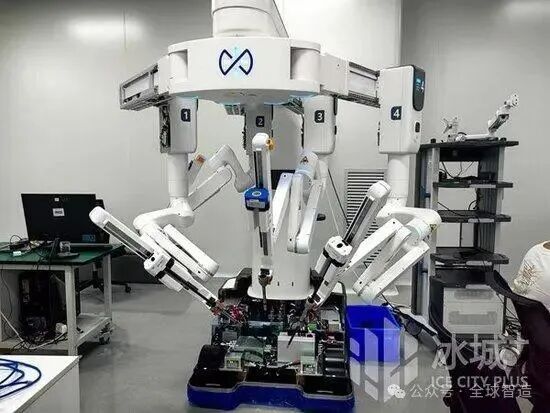
In recent years, the Kando Robot® has pioneered major technological breakthroughs such as 5G remote surgery, remote three-console teaching surgery, and dual-console dual-robot joint surgery, fully demonstrating the innovative strength of “Chinese intelligent manufacturing” in linking global surgical robots.
Global Layout: Prices Only Half of Major International Competitors, Chinese Intelligent Manufacturing Has Received Orders from Over 20 Countries
Sizerui has not only achieved technological breakthroughs but is also committed to reducing the cost of surgical robots. “We not only want to be innovators of surgical robots but also popularizers of robotic surgery,” said the company leader, emphasizing that allowing more patients to benefit from advanced medical technology is the company’s unchanging entrepreneurial mission.
It is reported that the price of the Kando robot is currently only about half that of major international competitors, and this high cost-performance strategy significantly lowers the threshold for using advanced robotic surgical technology. “Sizerui’s technological innovations have never stopped,” said the company leader, “We are currently working on increasing the usage frequency of the robotic arms, extending their lifespan, and further reducing surgical costs by lowering consumable costs.”
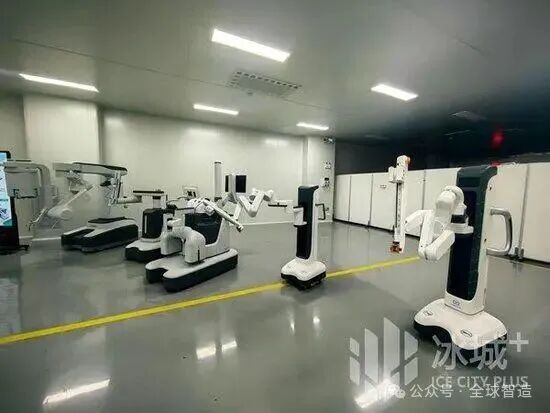
Currently, Sizerui has signed sales contracts with 21 countries in Asia, Europe, South America, and Africa, securing 60 confirmed orders and over 100 intended orders, truly beginning its journey from China to the world.
“It is expected that by 2030, the domestic surgical robot market will reach 35 billion yuan, with a global potential scale of over 100 billion yuan,” the company leader projected, “We will continue to adhere to the dual-drive of technological innovation and commercialization, making high-end surgical robots accessible and promoting the accessibility of global medical resources.”
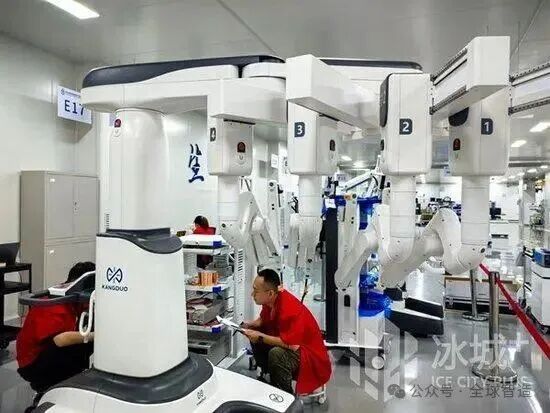
From the laboratory to the operating room, from Harbin to the whole world; from being an innovator of surgical robots to a pioneer in the international market for Chinese surgical robots, Sizerui has completed the full path from scientific research breakthroughs to commercialization in 12 years. The Kando Robot® it developed is showcasing the hard power of Chinese intelligent medical equipment globally. This technology company, emerging from academia, is steadily advancing in this global competition with its pace of independent innovation.
 1Comparison of Automobile Exports from China, Japan, and South Korea in the First Half of the Year: China 3.08 Million, the Gap is Astonishing!2Exports with Higher ‘New Content’! In 2024, the export of the ‘New Three Samples’ increased 2.6 times compared to 20203No Aerial Explosions! One Hour to Fly Half the Globe, Musk’s Starship Succeeded4Electricity Consumption Surpasses 1 Trillion kWh for the First Time in a Month, What Does This ‘Global First’ Mean?5Just Now, Zhejiang Emerged as a Semiconductor Leader, the Domestic No. 1 and Global No. 2 Target Material Supplier!6Robots Grinding Welding Seams, the Power of Technology is the Future of Manufacturing!