Hello everyone, today I would like to introduce an article published by our research group in the journal Coordination Chemistry Reviews titled “Cross-responsive fluorescence sensor arrays combined with machine learning for dietherapeutic phytochemicals recognition in food-medicine homology“. This article systematically summarizes the latest advancements and challenges in the rapid identification of dietherapeutic phytochemicals (Dietherapeutic phytochemicals,DTP) in food-medicine homology (Food-medicine homology, FMH) using fluorescence sensor arrays assisted by machine learning, emphasizing the development and prospects of their dual functions in food and medicine.
The concept of food-medicine homology (Food-medicine homology, FMH) was originally introduced in traditional Chinese medicine (TCM), defining certain naturally sourced substances as having both nutritional value and therapeutic properties. Plant-derived components such as goji berries, yam, and polygonatum have gained widespread recognition in modern nutrition and functional food research due to their significant roles in dietary supplements and disease prevention. The secondary metabolites (SM) in FMH products are crucial for both nutritional value and physiological efficacy. In this vast chemical space, we introduce dietherapeutic phytochemicals (Dietherapeutic phytochemicals,DTP) to describe a functional subset of SM, namely low molecular weight plant-derived compounds that can simultaneously support dietary health and exhibit therapeutic bioactivity. In the context of FMH, the dual functions of many products are primarily attributed to such DTP, including polyphenols, carboxylic acids, and sugar derivatives (Figure 1A). Geographic origin, plant source, and post-harvest processing significantly alter the composition and concentration of DTP. Therefore, the rapid identification and stringent quality control of DTP are essential to ensure the functionality and consistency of FMH products. DTP typically consists of structurally similar components that coexist in a single sample, making rapid identification and accurate quantification particularly challenging.
Conventional methods for evaluating DTP quality mainly include spectrophotometry and chromatographic techniques (Figure 1B). However, these methods have limitations when dealing with complex matrices or conducting high-throughput detection of multiple analytes in a single run. The development of several emerging technologies, including enzyme-linked immunosorbent assays (ELISA), is considered an important complementary method for DTP quality detection. Immunoassays are known for their high sensitivity, specificity, rapid analysis speed, and cost-effectiveness. However, their widespread application is limited by challenges associated with the preparation of highly specific antibodies and their inherent limitations of single-target detection rather than comprehensive analysis. Electrochemical surface-enhanced Raman spectroscopy (EC-SERS) can identify structurally similar compounds through subtle changes in charge distribution and functional group conformation. However, practical implementation remains limited due to persistent signal instability and technical inconsistencies. These traditional and emerging methods primarily target individual DTP, while the biological efficacy of FMH products is often generated by synergistic interactions among multiple DTP. Therefore, the development and application of efficient and accurate detection and screening technologies are considered urgent. In light of the aforementioned challenges, there is an urgent need to construct a new analytical strategy to overcome the limitations of traditional “single analyte detection” and achieve quality assessment of FMH products characterized by multi-responsiveness and cross-reactivity.
To achieve cross-reactivity and parallel identification of multiple analytes, fluorescence sensor arrays have been developed as a new detection strategy to overcome the limitations of traditional techniques. The design of sensor arrays is inspired by the olfactory and gustatory systems of mammals. Sensor elements interact with analytes through specific (Figure 1C) or non-specific interactions (Figure 1D), resulting in fluorescence changes and forming different fingerprint patterns. These arrays rely on various photophysical response mechanisms, including electron transfer, energy transfer, aggregation-induced effects, and coordination interactions. These mechanisms collectively expand the dimensions of the generated signals, thereby enhancing sensor resolution. By integrating machine learning (ML) algorithms, the sensing patterns are further optimized to enhance analytical discernment and facilitate data visualization. These algorithms extract meaningful features and detect potential response patterns, transforming complex fluorescence signals into interpretable and visually intuitive classification results.
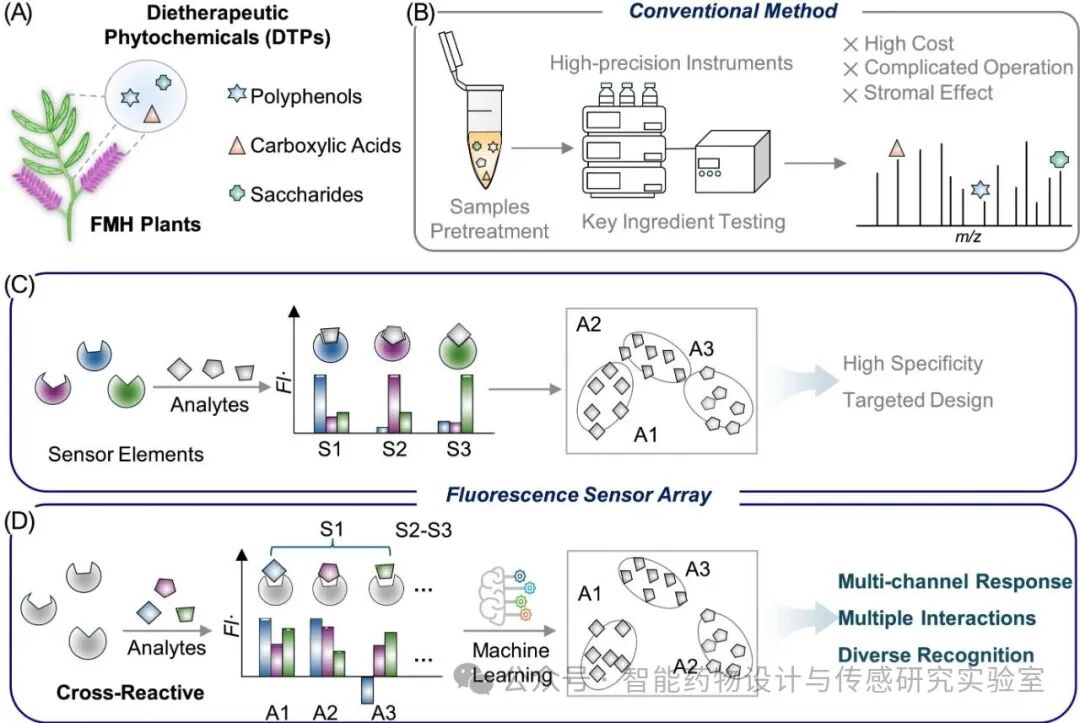
Figure 1 Methods for DTP detection
In recent years, there has been increasing interest in the identification of natural products, particularly through the implementation of advanced analytical strategies aimed at improving efficiency and accuracy. In the 1990s and early 2000s, traditional platforms such as mass spectrometry (e.g., electron ionization (EI-MS) and fast atom bombardment (FAB-MS)), electrophoretic methods (e.g., capillary electrophoresis (CE) and high-performance capillary electrophoresis (HPCE)), and chromatographic techniques (e.g., high-performance liquid chromatography (HPLC) and liquid chromatography-mass spectrometry (LC-MS)) were widely used for qualitative and quantitative analysis. These methods have high analytical resolution but often require complex chemical derivatization steps and lack portability. Around 2011, the emergence of molecular probes and electronic tongue technology brought about a shift towards mechanism-specific recognition and visual signal transduction. In particular, fluorescent probes have garnered increasing attention due to their tunable responsiveness and high integration potential in complex matrices (Figure 2). Meanwhile, interest in integrating machine learning with sensing platforms continues to grow.
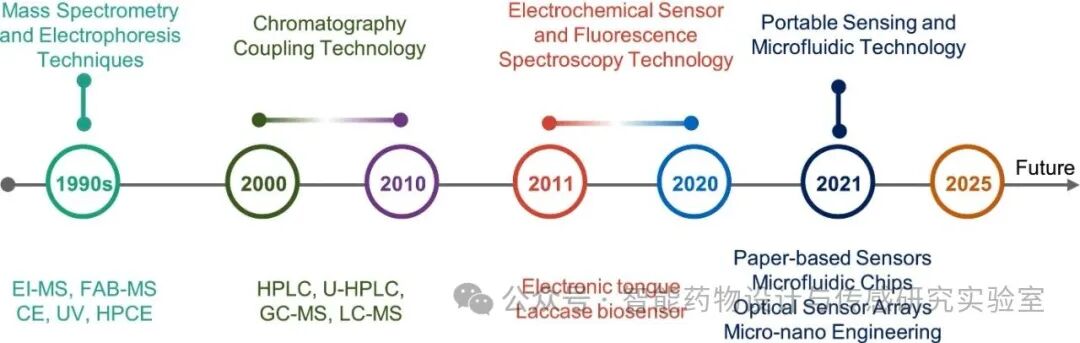
Figure 2 Methods for detecting natural products
Despite these valuable contributions, there has yet to be a review that systematically discusses the use of fluorescence sensor arrays to analyze structurally similar and functionally diverse DTP in FMH products. To address these limitations, this review systematically presents the latest advancements in the rapid detection of DTP within FMH systems using fluorescence sensor arrays. It focuses on recognition mechanisms, array design, response kinetics, and machine learning-assisted recognition methods. Unlike previous reviews that focused on sensing materials or isolated mechanisms, we propose an application-driven detection pipeline tailored for the dual-functional context of FMH, covering theoretical insights and practical considerations. This approach not only consolidates the current state of knowledge but also provides strategic guidance for future high-throughput screening, quality control, and product development efforts in the field of functional natural products.
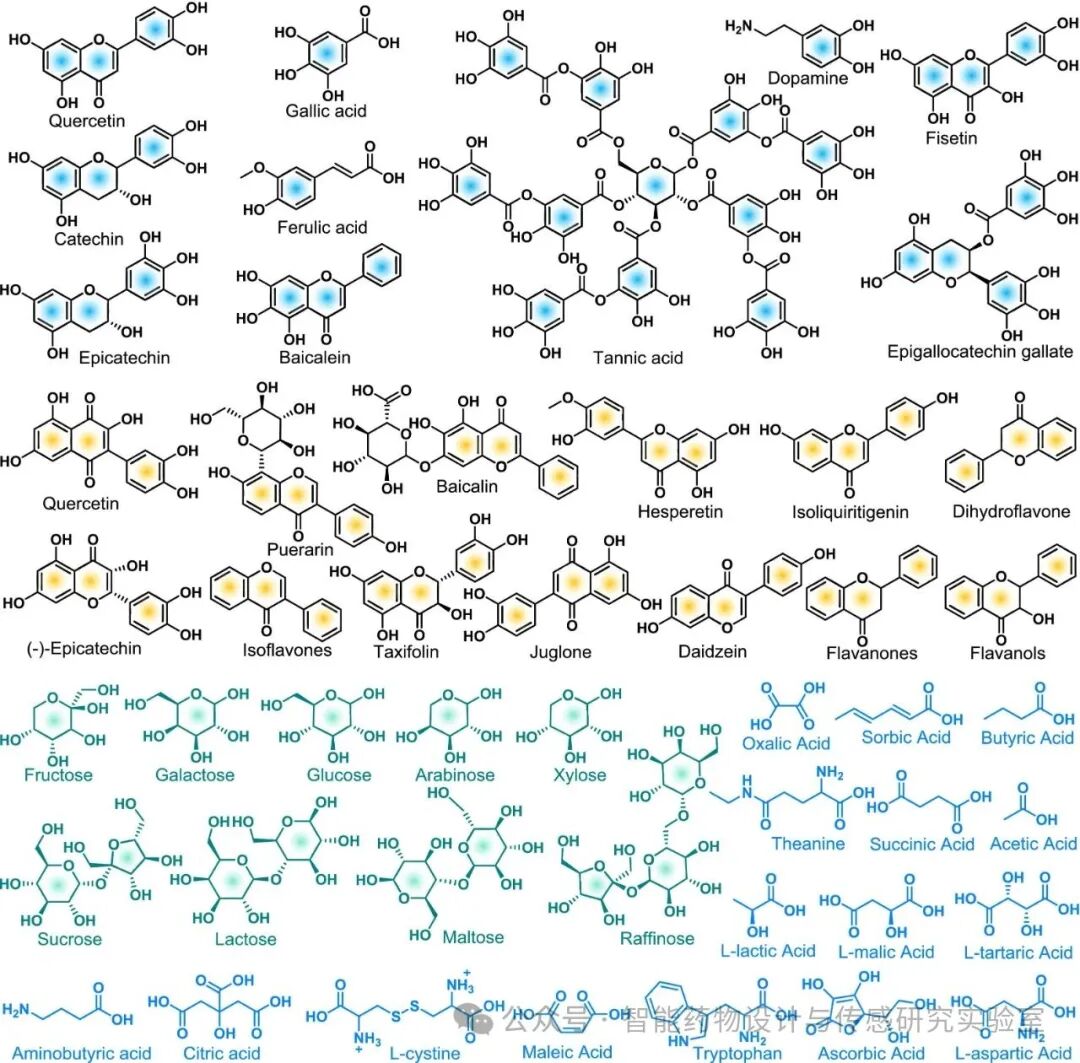 Figure 3 Types of DTP
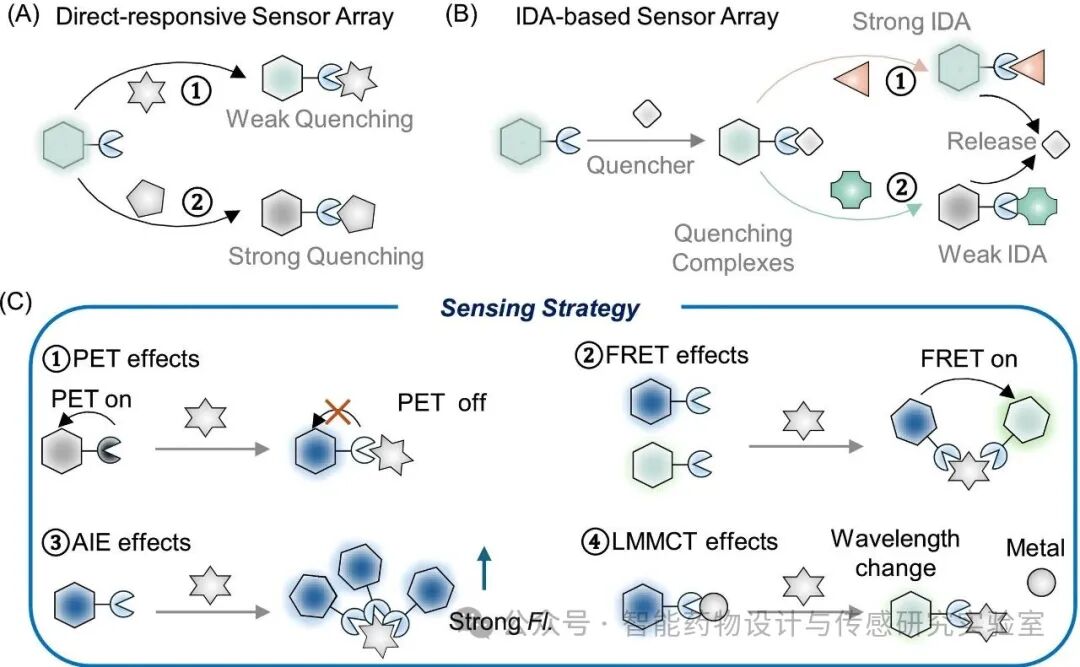 Figure 4 Detection mechanism of fluorescence sensor arrays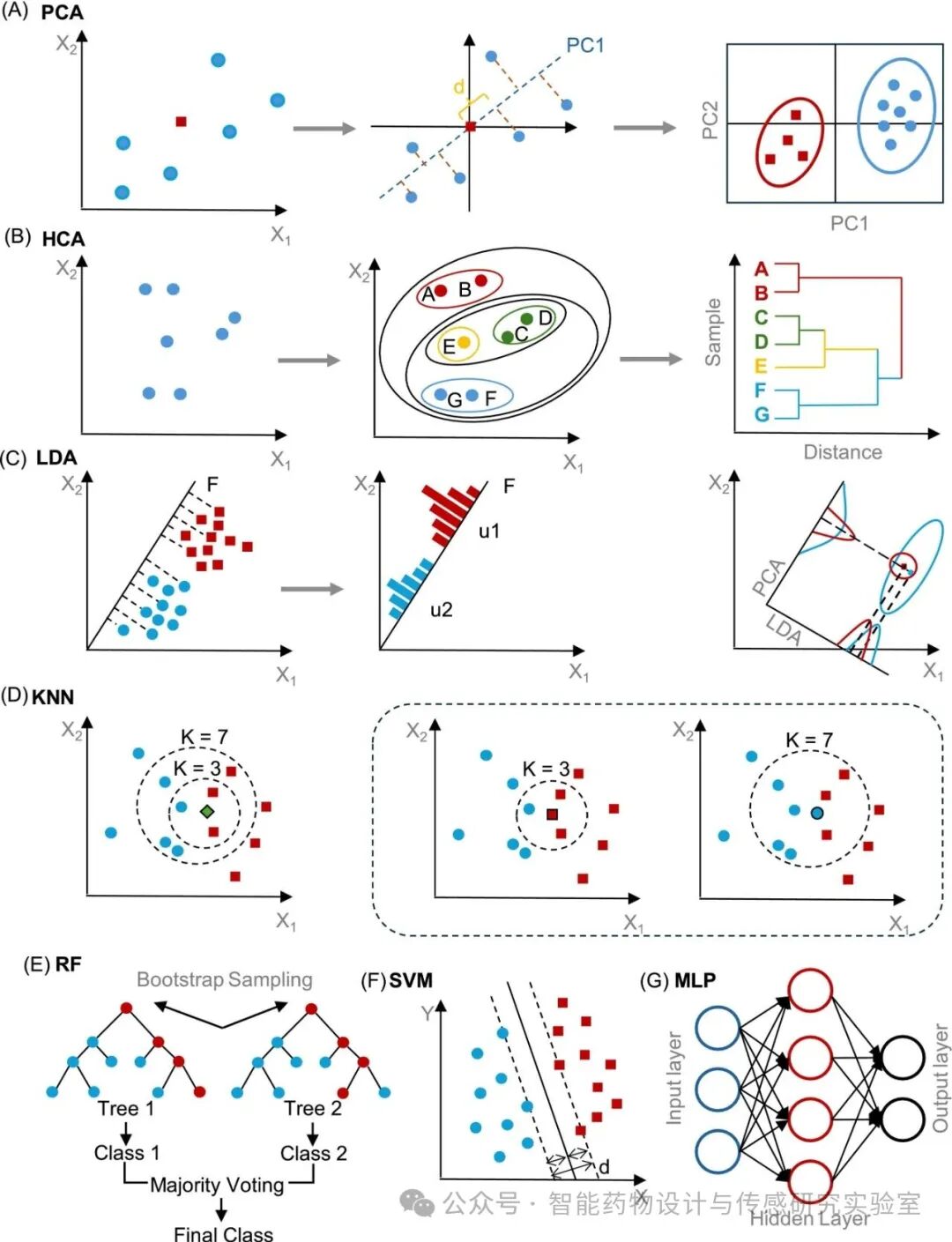
Figure 5 Common types of machine learning-assisted sensor array detection
Article link:10.1016/j.ccr.2025.217196