
Click the blue text to follow us

Common colds (abbreviated as colds) are conditions limited to the upper respiratory tract, clinically manifested by symptoms such as nasal congestion, runny nose, sore throat, and cough, which can be caused by different viral infections. It is a self-limiting disease, with symptoms typically lasting <10 days.
Vitamin C is well-known for its anti-inflammatory, immune-regulatory, antioxidant, and circulation-improving properties, and many people consume vitamin C during peak cold seasons or as a daily habit to prevent colds.


So does vitamin C
really have the effect of preventing colds?
The recommendation for vitamin C to treat common colds originates from the strong advocacy of Nobel Prize winner Linus Pauling in the 1970s, but subsequent clinical studies have not supported this conclusion.
A meta-analysis conducted in 2013, which included 29 clinical trials with 11,306 participants (vitamin C dosage ≥ 200 mg/day), showed that it cannot be confirmed that regular supplementation of vitamin C can shorten the duration of cold symptoms. However, for populations engaged in intense exercise, such as marathon runners, skiers, and soldiers living in subarctic regions, vitamin C can effectively prevent colds, while it has no preventive effect on the general population.
A 2022 DB-RCT study in South Korea showed that vitamin C can prevent colds in new recruits during military training; daily supplementation of 6g of vitamin C (compared to no additional supplementation) can reduce the risk of colds.
Rawat et al.’s meta-analysis (6 COVID-19 related RCT studies) showed that COVID-19 patients do not benefit from vitamin C supplementation (high dose 24g/day or low dose 1g/day) treatment, which does not support the use of vitamin C for treating respiratory viral infections in the general population. This study is particularly relevant as most common colds are caused by viral infections.
Based on current clinical research, the clinical practice guidelines for diagnosing and treating common colds in adults in China (2023) clearly state that regarding the use of vitamin C for prevention and treatment of common colds in adults, it is recommended to follow the principle of individualization, suggesting it for potentially beneficial groups, such as those living in cold areas and regularly engaging in intense exercise (like marathon runners, skiers, or soldiers) and manual laborers, which is consistent with the views of related European guidelines.
Possible Reasons for Guidelines Recommendations
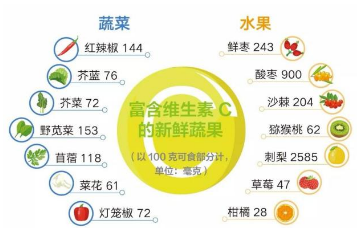
The general population can easily obtain the required daily intake of vitamin C from fresh fruits and vegetables if they maintain a balanced diet.
For those who are advised to consume vitamin C to prevent colds, it may be due to their limited intake of fresh fruits and vegetables, or they consume enough but expend more, leading to a potential deficiency. Additionally, under physiological stress conditions such as infection, trauma, or surgery, plasma vitamin C levels can drop rapidly, leading to significant vitamin C deficiency.
During infections and physiological stress, a higher intake of vitamin C may be needed to correct deficiencies caused by illness, reduce inflammation, enhance interferon (IFN) production, and support the anti-inflammatory effects of glucocorticoids. Therefore, this group may benefit from taking vitamin C for the prevention and treatment of colds.
Vitamin C primarily comes from fresh fruits and vegetables, which are abundant in various produce; thus, it is not recommended to blindly rely on vitamin C supplements for health. Although vitamin C has a high safety profile, excessive intake can lead to discomfort, such as nausea, vomiting, drowsiness, fatigue, phlebitis, and kidney stones. If you really want to supplement vitamin C, it is better to consume fresh fruits and vegetables and increase exercise, as this is the best way to prevent colds.
[References]
[1] Clinical Practice Guidelines for the Diagnosis and Treatment of Common Colds in Adults (2023), Emergency Physician Branch of the Chinese Medical Association, International Journal of Respiratory Medicine, 2023, 43(03): 254-279
[2] Research Progress on the Application of Vitamin C in Respiratory Infections, Xiao Xi, Shi Doufei, International Journal of Medical and Health Guidance, 2023, 29(23): 3330-3335.


Pharmacy Department of Zhongshan Sixth Hospital
Copyright Statement: This is an original article, and reprints must indicate the author and source; this public account is purely for public welfare, focusing on science popularization. Some images in the article come from the internet, and copyright belongs to the original authors. If there are any objections, please inform us for timely deletion.
Author: Liao Xiaomei, Zhongshan University Affiliated Sixth Hospital
Reviewed by: Dai Chunmei, Zhongshan University Affiliated Sixth Hospital
Edited by: Lin Sijin, Zhongshan University Affiliated Sixth Hospital