OM System 50 – 200mm f/2.8 IS Pro: A Highly Portable Lens Combining Telephoto and Large Aperture Advantages
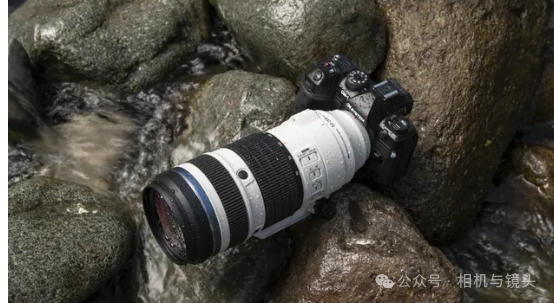
Every time I use a Micro Four Thirds (MFT) camera, I usually have a key consideration: achieving significant zoom without adding too much weight. For telephoto lenses, the shortcomings of the MFT sensor actually become an advantage—OM System provides photographers with another important reason to choose a smaller sensor.
The manufacturer recently announced the launch of the OM System M.Zuiko 50 – 200mm f/2.8 IS Pro lens. This lens offers the flexibility of zoom while featuring a bright large aperture of f/2.8. Typically, such an aperture effect can only be achieved with a prime lens at an equivalent focal length of 400mm.
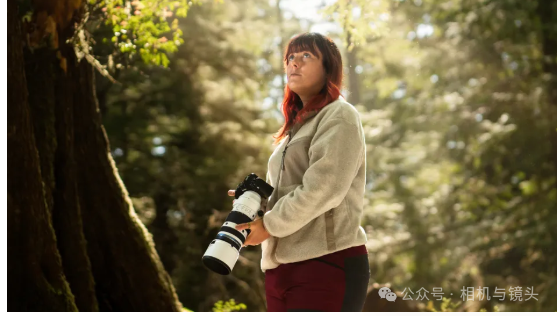
When shooting portraits and weddings, I am a loyal fan of prime lenses, often carrying different prime lenses with me. However, when I go out to capture wildlife or shoot sports scenes, I prefer to use zoom lenses. They allow me to quickly and flexibly capture different compositions, whether it’s a bird on a branch a few feet away or a white-tailed deer running across a field.
Undeniably, I am a professional in portrait and wedding photography, while I consider myself merely an enthusiast in wildlife photography. But this is also one of the reasons I choose a more compact zoom lens. I want to be able to hike comfortably with these lenses, as hiking is a leisure activity for me; it would be quite disappointing to have to visit a chiropractor afterward.
As someone who makes a living reviewing camera equipment, I have encountered full-frame 400mm f/2.8 lenses and optical devices like the OM System 150 – 600mm f/5 – 6.3 IS. (I have yet to try the new 200 – 400mm f/2.8, but the announcement has me eager to try it.)
Indeed, the full-frame 400mm f/2.8 lens can collect more light due to its sensor being twice the size of MFT. Moreover, its depth of field is about half that of the Micro Four Thirds 200mm f/2.8 lens, which means there is a significant difference in bokeh and background blur effects.
Full-frame prime lenses can produce clearer images, and their bokeh effect is excellent, capable of blurring the background into a solid color. However, although the OM System zoom lenses I have tried are slightly inferior in sharpness and bokeh effect, they are much more suitable for hiking—let alone being more affordable.
With the OM System introducing a new f/2.8 aperture on its equivalent 400mm zoom lens, it perfectly combines this flexibility and portability with a brighter aperture.
OM System claims that the brightness of the new lens is twice that of the full-frame 400mm f/2.8. More importantly, it is three times lighter than carrying multiple lenses to cover that focal length range. Even when mounted on a body like the OM – 1 Mark II, the entire camera and lens system weighs less than four pounds.
For a more detailed comparison, the OM System 50 – 200mm f/2.8 can be compared with full-frame 100 – 400mm lenses, including the Nikon Z 100 – 400mm f/4.5 – 5.6 VR S, Sony FE 100 – 400mm f/4.5 – 5.6 G Master OSS, or Sigma 100 – 400mm f/5 – 6.3.
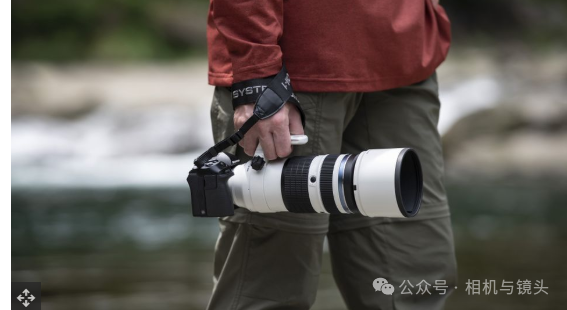
Unlike the full-frame 400mm f/2.8 prime lens, which costs up to $12,000, these 100 – 400mm zoom lenses are priced similarly or even lower than the OM System 50 – 200mm f/2.8. The price tag for the OM System 50 – 200mm f/2.8 is $3,699 / £2,999 / AU$4,999.
The depth of field of the full-frame 400mm f/5.6 is similar to that of the Micro Four Thirds 200mm f/2.8. However, the OM System lens is lighter and has a higher magnification ratio than comparable zoom lenses from Nikon, Sony, and Sigma.
Additionally, this new lens is compatible with OM System’s 1.4x and 2x teleconverters, further enhancing the lens’s versatility while maintaining a compact size.
Indeed, full-frame cameras have many advantages. However, when I choose the Micro Four Thirds system, it is usually for its portability, zoom range, and durability. The weather-sealed 50 – 200mm f/2.8 lens will undoubtedly be a key advantage of the Micro Four Thirds system.
Disclaimer: Respecting originality, the articles and images contained herein are for the purpose of public dissemination. Due to the use of non-original content, it is impossible to contact all copyright holders for permission. This is purely for learning and sharing purposes. If the content copyright holder believes this reprint is inappropriate and involves copyright and portrait rights disputes, please contact us for removal. All rights reserved, please indicate the source when reprinting.