Introduction
“Teacher, I have only learned C language and microcontrollers. Can I find a job with a monthly salary over 10,000?”
This is one of the most frequently asked questions recently. The answer is: absolutely, but the premise is that you must master the right skill set. In the automotive embedded field, a monthly salary over 10,000 is not a myth, but rather the market fair value for engineers with core competitiveness.
Remember, in the automotive electronics industry, salary is not determined by your years of experience, but by your ability to solve problems. When you can independently tackle technical challenges that other engineers find troublesome, a monthly salary over 10,000 is just a starting point.
 01
01
Why Are These Core Skills So ‘Valuable’?
Analysis of Market Demand and Salary Relationship
According to the latest industry salary survey, embedded engineers who master the following skills are in high demand in the talent market:
-
In-depth Understanding of ARM Cortex-M Core: Monthly salary range 12-18K
-
AUTOSAR OS and Multitasking Programming: Monthly salary range 15-22K
-
Functional Safety and ISO 26262 Practices: Monthly salary range 18-25K
-
Automotive Communication Protocol Stack Development: Monthly salary range 13-20K
-
HIL Testing and System Verification: Monthly salary range 14-19K
The logic behind these numbers is simple: the complexity of automotive electronic systems is continuously increasing, and engineers who can ensure the reliable, safe, and efficient operation of these systems are always a scarce resource.
Skill Barriers and Irreplaceability
Unlike the internet industry, embedded development, especially automotive embedded, has a high technical barrier:
-
Strong Hardware Dependency: Requires understanding both software logic and hardware characteristics
-
High Debugging Difficulty: Issues may involve multiple layers of hardware, software, and environment
-
High Safety Requirements: Errors can lead to serious safety incidents
-
Slow Knowledge Update: Core principles change little, making experience accumulation more valuable
These characteristics determine that excellent embedded engineers are hard to replace and cannot be quickly trained through short-term training.
 02
02
Core Skills Map
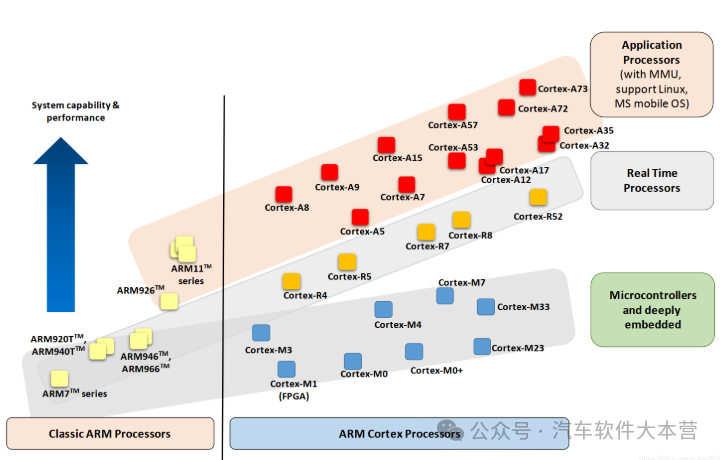
Processor Architecture Layer This is the foundation of all skills. In the automotive field, the ARM Cortex-M series is absolutely mainstream:
-
Cortex-M3/M4: Currently the main core for most ESP systems
-
Cortex-M7: High-performance version used for next-generation domain controllers
-
Cortex-M33: Security-enhanced version with TrustZone
Key concepts to understand in depth include:
-
Working principles and configuration of the Interrupt Controller (NVIC)
-
Usage of Memory Protection Unit (MPU)
-
Power Management Module configuration optimization
-
Debugging interface usage tips
The Art of Memory Management In resource-constrained embedded environments, memory management capability directly determines system stability and performance:
-
Stack Space Management: How to estimate and optimize stack space usage
-
Heap Memory Usage: Usage specifications and limitations in automotive embedded
-
Memory Layout Optimization: Optimizing program performance through linker scripts
-
Memory Leak Detection: Methods and tools usage
Real-Time Operating System Core Most automotive embedded systems are real-time systems:
-
Task Scheduling Principles: Priority inversion issues and solutions
-
Synchronization Mechanisms: Correct usage of semaphores, mutexes, and message queues
-
Interrupt Management: Best practices for ISR design
-
Time Management: Accurate usage of timers
Automotive-Specific Technology Stack This is the unique value of automotive embedded engineers:
-
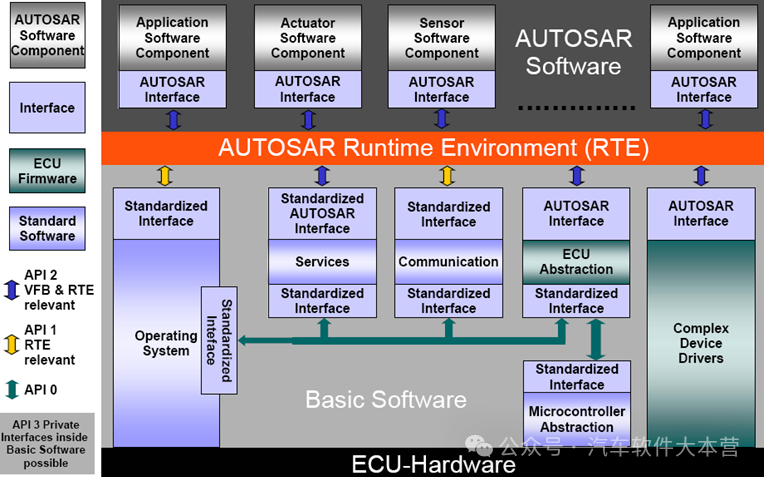
AUTOSAR Architecture: Understanding and practicing layered architecture
-
Functional Safety Mechanisms: From theory to code implementation
-
Diagnostic Protocol Stack: In-depth understanding of UDS protocol
-
Network Management: OSEK NM and AUTOSAR NM
 03
03
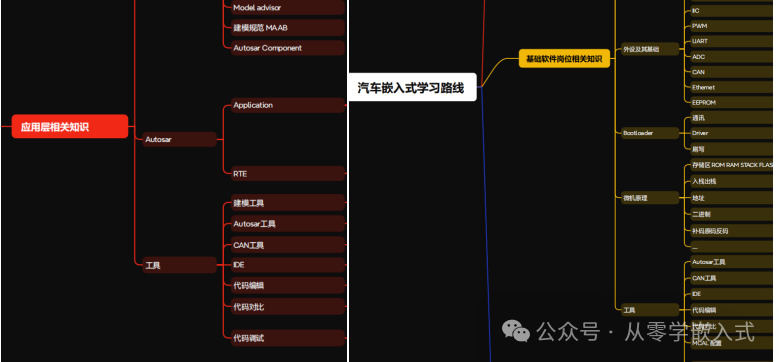
Learning Path Planning: From Beginner to Monthly Salary Over 10,000
Stage One: Foundation Solidification (1-3 months) The goal of this stage is to establish a solid foundation, with an expected salary of 8-12K after completion:
-
Deep Mastery of C Language
-
In-depth understanding and flexible use of pointers
-
Memory layout and data structure optimization
-
Learning and practicing MISRA C standards
-
Using static code analysis tools
Mastery of ARM Cortex-M Core
-
Practice through STM32 or NXP platforms
-
Writing startup files and understanding the startup process
-
Configuring clock trees and power management
-
Implementing interrupt handling and DMA transfers
Basic Peripheral Driver Development
-
Basic peripherals such as GPIO, ADC, PWM
-
Communication interfaces such as SPI, I2C, UART
-
Using timers and watchdogs
-
Implementing low-power modes
Stage Two: Skill Deepening (3-6 months) This stage begins to touch on automotive embedded-specific content, with an expected salary of 12-18K after completion:
-
Real-Time Operating System Practice
-
In-depth use of FreeRTOS or μC/OS
-
Task division and resource management
-
System performance analysis and optimization
-
Debugging techniques and problem localization
Automotive Communication Protocol Development
-
CAN bus protocol stack development
-
LIN bus master-slave node implementation
-
Network management and diagnostic protocols
-
Bus analysis and debugging tool usage
Proficiency in Development Toolchain
-
In-depth use of compilers and linkers
-
Debugging techniques and performance analysis
-
Automated builds and continuous integration
-
Version management and team collaboration
Stage Three: Professional Advancement (6-12 months) This stage targets the core areas of automotive electronics, with an expected salary of 18-25K after completion:
-
AUTOSAR Architecture Practice
-
Software component development methods
-
Basic software module configuration
-
RTE generation and integration
-
Toolchain usage and optimization
Functional Safety Development
-
ISO 26262 process practice
-
Design and implementation of safety mechanisms
-
Fault injection and testing
-
Writing safety cases
System-Level Design and Verification
-
System requirements analysis and design
-
Software architecture design
-
HIL testing and system verification
-
Performance optimization and debugging
04
Common Questions and Coping Strategies
Question 1: What if my theoretical foundation is weak?
-
Coping Strategy: Start from the basics of computer organization and operating systems
-
Specific Method: Systematically learn through online courses, deepening understanding through practice
-
Time Planning: Set fixed study times for theory daily, and practice on weekends
Question 2: What if I lack project experience?
-
Coping Strategy: Create project experience on your own
-
Specific Method: Purchase development boards to implement complete functions, participate in open-source projects
-
Showcase Results: Upload project code to GitHub with detailed documentation
Question 3: What if I encounter difficulties during learning?
-
Coping Strategy: Establish a methodology for problem-solving
-
Specific Method: Use debugging tools to locate issues, consult documentation and communities
-
Resource Utilization: Join technical communities and seek advice from experienced engineers
05
Career Development Advice
Technical Route Planning
-
Junior Engineer (0-2 years): Solidify the foundation, master the development process
-
Mid-Level Engineer (2-5 years): Deepen expertise in specialized fields, form technical advantages
-
Senior Engineer (5-8 years): Possess system design capabilities, lead technical direction
-
Expert Engineer (8+ years): Technical innovation, industry influence
Continuous Learning Plan
-
At least 10 hours of technical study time per week
-
Complete one technical practice project each month
-
Learn a new technology or tool each quarter
-
Participate in one technical certification or training each year
Building Workplace Competitiveness
-
Establish a personal technical blog or GitHub
-
Participate in technical communities and open-source projects
-
Accumulate project experience and success stories
-
Build industry connections and technical circles
06
Conclusion
Mastering core skills in embedded systems to achieve a monthly salary over 10,000 is a path filled with challenges and opportunities. The important thing is to understand that high salary is not the goal pursued, but a natural result of skill enhancement.
Remember, automotive embedded development is a field that requires long-term accumulation; there are no “quick success secrets.” However, as long as you follow the correct path of continuous learning and practice, a monthly salary over 10,000 is just the beginning. When you truly master these core skills, you will find that it is not you looking for a job, but the job looking for you.
Start today by formulating your learning plan, practicing every case, and deeply thinking about every technical issue. Before long, you will find yourself at a new height, seeing a broader landscape.
Follow UsFOLLOWCLOSELY Join the group chat to obtain
Interview
Materials
100+ enterprise interview cases
Learning
Path
Automotive development learning path
Learning
Guidance
Multiple engineers with 10+ yearslarge factory experience
Online guidance
Learning
Communication
Many developers communicate together
Helping you improve your skills
 Like + Follow, scan the code to add friends with remarks (public account) to obtain AUTOSAR materials