In 2023, the Shanghai Municipal Education Commission, the Municipal Development and Reform Commission, and 11 other departments jointly organized the second Shanghai Youth “Carbon Neutral” Proposal Competition. This year’s competition, themed “The Path to Carbon Neutrality Begins with Our Steps,” encourages students to explore and research “green” topics around them, leveraging their academic strengths and interests, and propose corresponding solutions in areas such as waste classification, ecological environment, carbon neutrality, and circular economy. After multiple rounds of selection, 6 special prizes, 6 first prizes, 8 second prizes, 14 third prizes, and 16 merit awards were awarded from 187 submissions from 107 schools.
Students from Xuhui brought excellent works, focusing on themes such as waste classification and circular economy, contributing their innovative ideas. Let’s take a closer look at this issue’s outstanding case!
Smart Reminder Medicine Cabinet for Home Use

Submitted by: Shanghai Xinan Weiyu Middle School
Medicine waste refers to the social phenomenon of waste caused by expired household medications, excessive prescriptions, and oversized packaging. According to the “White Paper on Expired Medicines Recycling in Chinese Households,” about 78.6% of families in China have a small medicine cabinet at home, with 30%-40% of medications exceeding their expiration date by more than three years. However, over 80% of families do not have the habit of regularly cleaning their medicine cabinets, resulting in approximately 15,000 tons of expired medicines generated nationwide each year. To address this issue, the group invented this smart reminder medicine cabinet, which effectively prevents waste of medications at home.
The cabinet features four independent medicine boxes, each capable of automatically triggering a timer when medications are placed inside. Users can view the expiration dates of each box on the main control panel and set expiration dates for any box. As the remaining time for the medications varies, the corresponding box will emit different sounds and light alerts. This smart medicine cabinet is suitable for any household, significantly reducing waste caused by expired medications and reminding users to replace old medicines in a very convenient manner, offering high practical value.
The system uses an Arduino Mega 2560 board as the main control core, with an OLED display connected to show the expiration times of each medicine box. Each box is equipped with its own infrared distance sensor and tri-color LED light. A buzzer connected to the main board emits sounds to alert users of impending expiration dates. Users can manually click buttons on the control panel to select boxes, choose units, increment or decrement values, and start timers, allowing independent setting of expiration dates for each box and controlling the timing. The software is programmed using Mixly. The device’s casing is completed through 3D modeling and printing.
This medicine cabinet not only prevents waste of medications at home but also avoids unnecessary poisoning issues caused by accidental consumption of expired drugs. Future considerations may include electronic means to make operations quicker and more convenient.
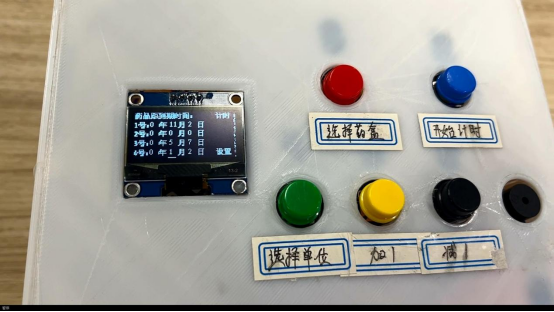
Close-up of the control panel

Top view of the medicine cabinet
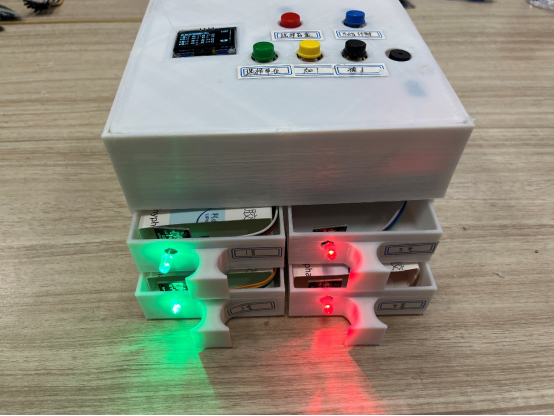
Front view of the medicine cabinet
Green Campus – Feasibility of Campus Photovoltaic Power Applications
Submitted by: Shanghai Xuhui District Jianxiang Primary School
The initial intention of this project is to consider how to use clean energy to reduce carbon emissions and make the campus filled with the sounds of birds and flowers.
The research was conducted through two dimensions: one was to understand information related to clean energy photovoltaic power generation, and the other was to collect relevant data from primary schools in Shanghai, ultimately creating a feasibility proposal.
During their free time, the team visited a company under the China National Machinery Industry Corporation for on-site exploration.
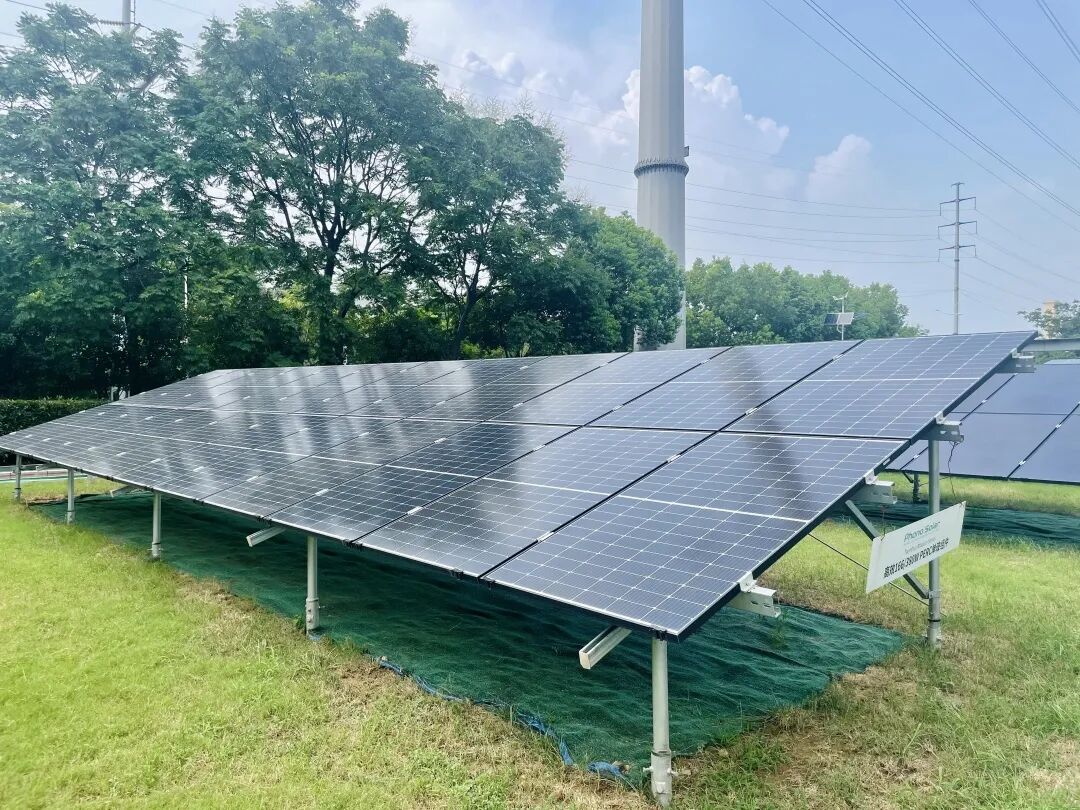
It is understood that the photovoltaic industry chain is mainly divided into the main industry chain and auxiliary material industry chain. The main industry chain includes silicon materials, silicon wafers, battery cells, modules, and photovoltaic power station links, while the auxiliary material industry chain is classified according to different production stages.
The team members discovered that, taking the sample primary school as an example, each primary school has an average annual electricity consumption of about 220,000 kWh, with a total annual electricity consumption of approximately 16,016,000 kWh. Shanghai has an annual sunshine duration of about 1,809 hours, with effective annual sunshine duration around 1,100 hours. The school’s rooftop area is suitable, with no obstructions nearby, and the electricity consumption is stable, making it feasible to build an environmentally friendly and emission-reducing campus.
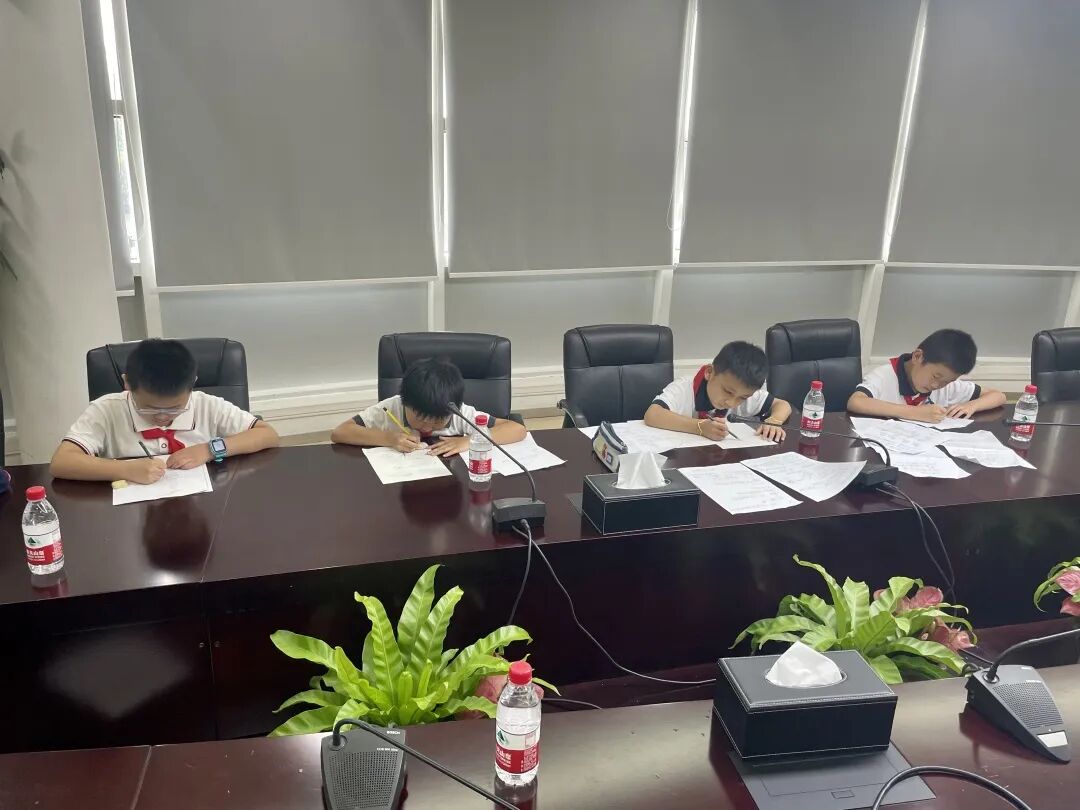
The team found that a primary school only needs a rooftop area of approximately 600 square meters ±20% to install a 50 kW photovoltaic power station. The school can generate about 55,000 kWh of green electricity annually, which is about one-fourth of the school’s total annual electricity consumption. This would reduce carbon emissions by 52.8 tons per year and decrease standard coal consumption by 16.5 tons, making the campus not only more environmentally friendly but also more technologically advanced and beautiful.
Source: Shanghai Education
【Related Links】
Water Quality Changes “Algae” Know, “Sponge Campus” Construction… Students in Shanghai Propose Strategies for “Ecological Environment and Biodiversity”