1. Five Major Pain Points for the Scalability of Autonomous Vehicles
Severe Challenges Behind the Numbers
According to industry data, the current main application areas for autonomous vehicles are distributed as follows: 40% in supermarkets and fast-moving consumer goods, 20% in e-commerce and express delivery, 20% in fresh produce and pharmaceuticals, 15% in wholesale markets, and 5% in C2C moving services. In these application scenarios, autonomous vehicle companies face common scalability bottlenecks:
Extreme Weather Failure Issues: Under adverse weather conditions such as rain, snow, and fog, sensor performance decreases by more than 50%. Data from a leading company shows that the emergency takeover rate of autonomous vehicles increases threefold in heavy rain, while the order fulfillment rate drops by 40%.
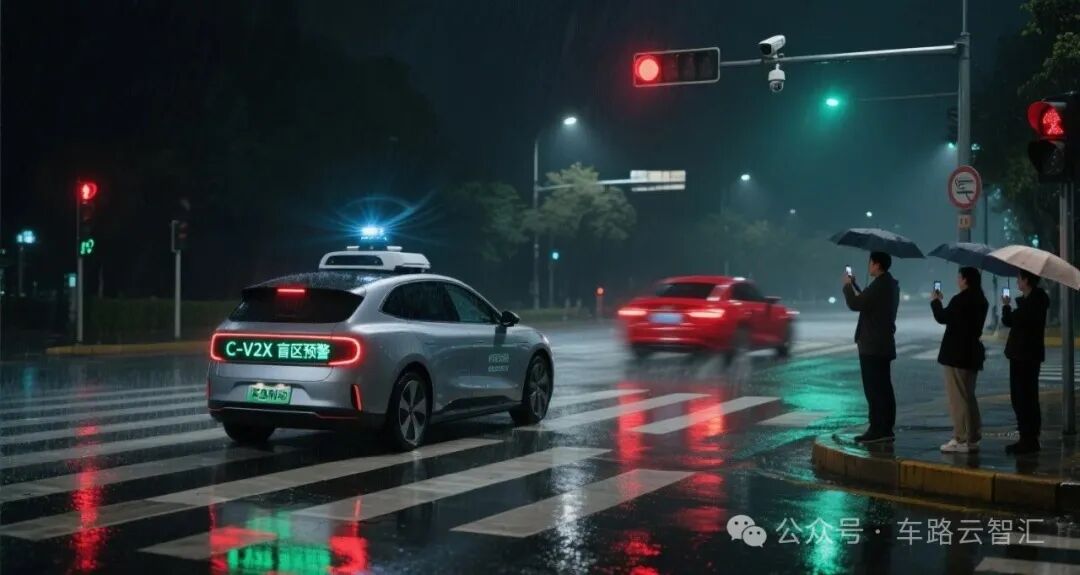
Blind Spot Accident Risks: Accidents in visual blind spots at intersections and curves account for over 60% of incidents. According to operational data, the risk of blind spot accidents is more than five times that of normal road sections.
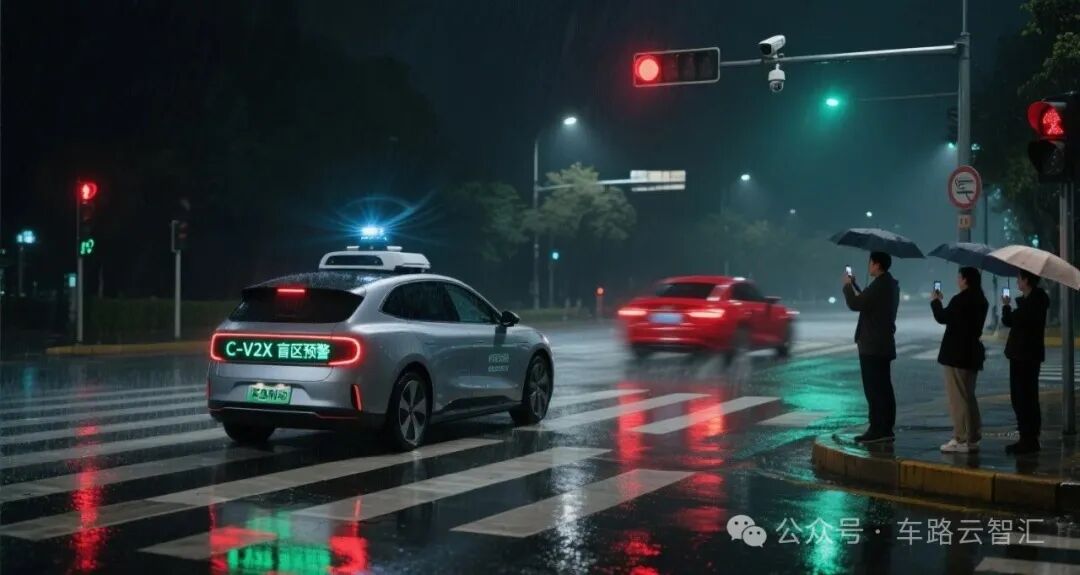
Long Tail Scenario Challenges: Low-frequency scenarios such as temporary construction and road obstacles are difficult to cover comprehensively. Industry statistics show that over 70% of takeover events during testing occur in these “edge scenarios”.

Operational Efficiency Bottlenecks: Pure single-vehicle intelligence cannot achieve collaborative optimization, and the overall efficiency of the fleet encounters a ceiling. Data from an e-commerce platform shows that the intersection passing efficiency of autonomous vehicle fleets during peak hours is 35% lower than that of human drivers.
Cost Control Pressures: To cope with complex road scenarios, autonomous vehicles often need to be equipped with various high-precision sensors (including LiDAR, millimeter-wave radar, camera arrays, etc.), leading to high hardware costs per vehicle. At the same time, limited production scale further restricts hardware cost optimization, posing significant pressure on the commercialization of autonomous vehicles.

2. C-V2X—Autonomous Vehicles
The Key Technology to Break the Scalability Bottleneck of Autonomous Vehicles
C-V2X technology provides comprehensive connectivity through vehicle-to-vehicle (V2V), vehicle-to-pedestrian (V2P), vehicle-to-infrastructure (V2I), and vehicle-to-cloud (V2N), offering autonomous driving a “God’s eye view” and “collective intelligence,” becoming a key pathway to break through scalability bottlenecks:
Revolution in Beyond-Visual-Range Perception: Roadside units (RSUs) equipped with multimodal sensors can cover hundreds of meters, sensing dangers in advance and distributing information in real-time. Data from a demonstration area shows that after deploying C-V2X, the perception distance of autonomous vehicles at intersections increased by more than three times.
Collaborative Decision-Making Intelligence: Multiple vehicles can form collaborative driving strategies through the C-V2X network. Field tests indicate that the efficiency of vehicle groups passing through intersections improves by 40%, with energy consumption reduced by 15%.
Dynamic Digital Twin: Cloud platforms integrate multi-source data to construct real-time updated high-precision maps. Applications in a logistics company show that this enhances the path planning optimization of autonomous vehicles by 25%.
Safety Redundancy Assurance: C-V2X provides a safety channel independent of onboard sensors. Test data shows that in sensor failure scenarios, it can still prevent over 80% of potential accidents.

3. Wangfuda C-V2X Solutions
The Technological Foundation Empowering Autonomous Vehicle Companies
As a leading domestic C-V2X technology provider, Wangfuda leverages years of technical accumulation to provide complete vehicle-road collaboration solutions for autonomous driving companies:
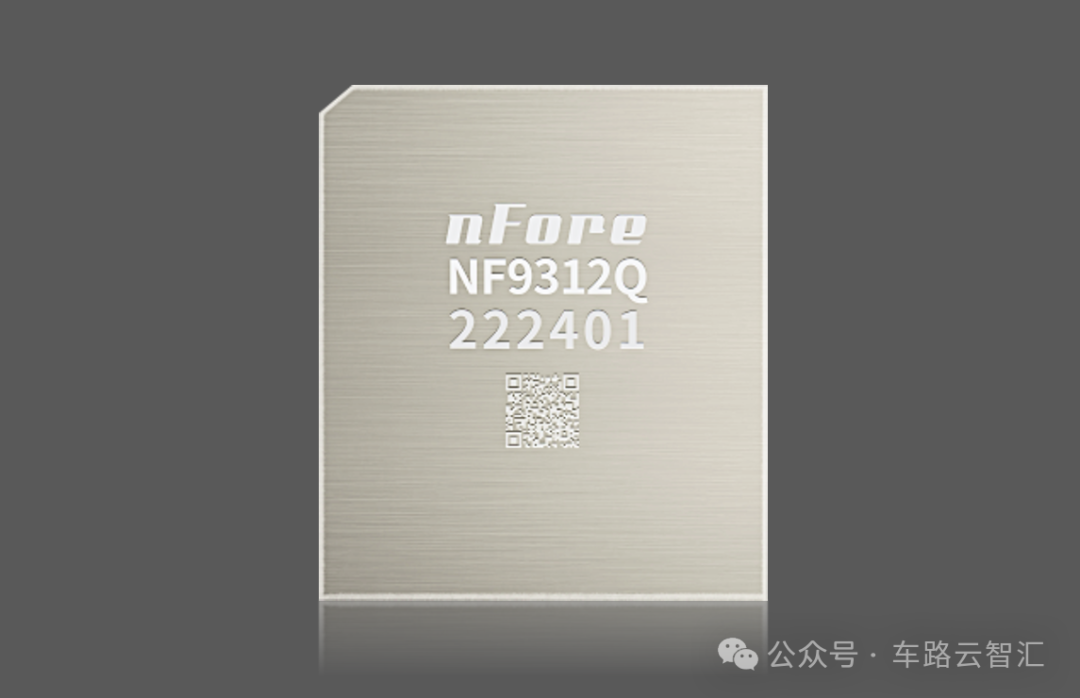
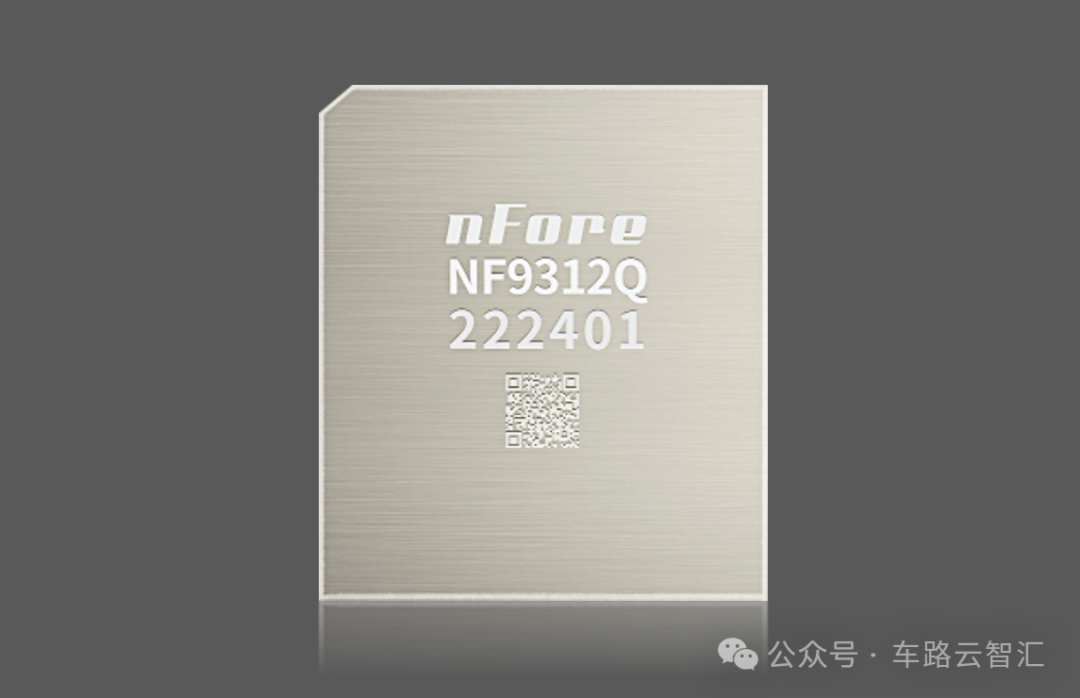
High-Performance Automotive-Grade Module NF9312Q: Developed based on domestic chip platforms, supporting the 5.9GHz national standard frequency band, with PC5 direct communication latency of less than 20ms. It has passed AEC-Q100 Grade 2 certification, with an operating temperature range of -40℃ to +85℃, meeting the all-weather operational needs of autonomous vehicles.
Open Development Platform NFD2301: Provides a complete software and hardware development kit, supporting rapid integration with various autonomous vehicle platforms. A customer case shows that the integration cycle was shortened from 6 months to 2 months.
Full-Stack Technical Support: Supports over 30 V2X application scenarios, including forward collision warning, intersection collision warning, emergency electronic brake lights, etc. After application by a certain autonomous vehicle company, the accident rate was reduced by 90%.
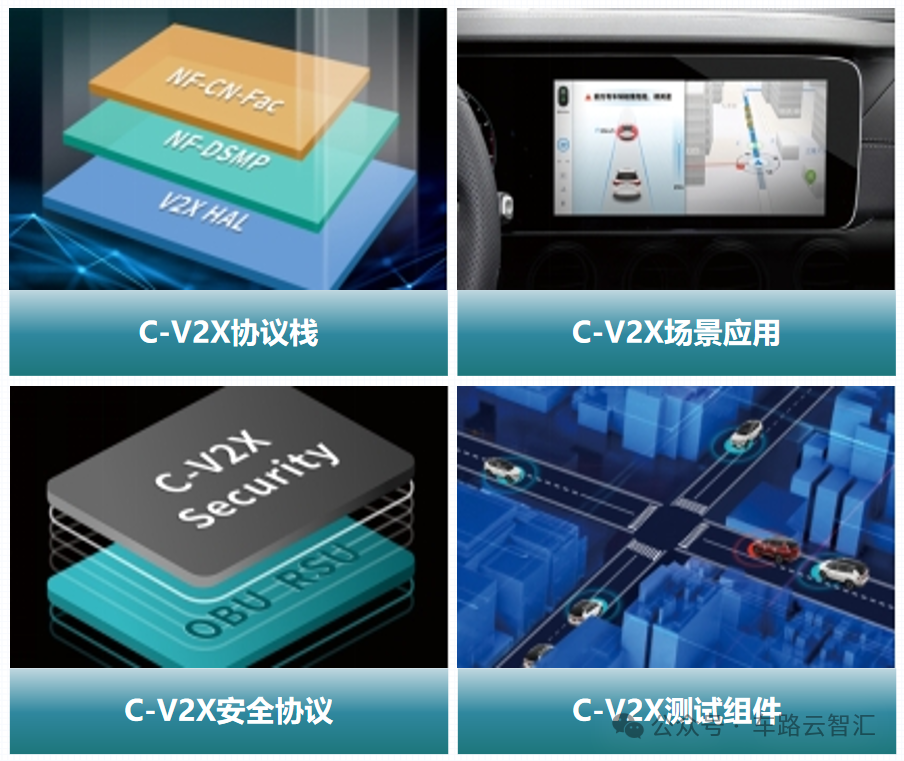
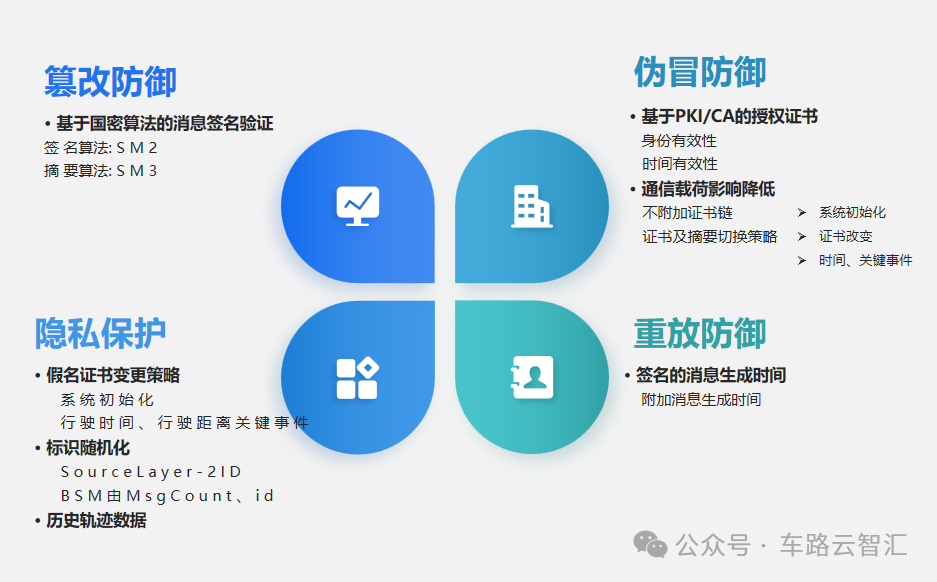
Safety and Reliability Assurance: Built-in national secret security chip, tested against the “C-V2X Communication Security Technical Requirements” industry standard. Operational data from a demonstration area shows that the incidence of safety events decreased by 95%.

4. Application Effectiveness
Quantified Value Demonstrates Commercial Potential
Improved Operational Efficiency: In a certain supermarket autonomous delivery project, after applying C-V2X, the average daily delivery volume per vehicle increased by 35%, and the on-time fulfillment rate improved to 99.5%.
Reduced Safety Incidents: In fresh produce and pharmaceutical delivery scenarios, the accident rate decreased by 90%, and the cargo loss rate reduced by 70%.
Significant Cost Optimization: Reduced the demand for sensor configurations by 20%, lowering the hardware cost per vehicle by 150,000 yuan.
Expanded Operational Range: With vehicle-road collaboration, the operational range of autonomous vehicles expanded from closed parks to open roads, tripling commercial value.

5. Vision Outlook
The Future Landscape of C-V2X Empowering Autonomous Vehicles
When C-V2X is deeply integrated with autonomous vehicles, we will usher in a new era of intelligent logistics:
Fully Collaborative Intelligent Logistics Network: Autonomous vehicles will no longer be isolated entities but organic components of an intelligent logistics network. Through real-time collaboration with roadside devices, traffic lights, and other vehicles, global optimal logistics delivery will be achieved.
Reliable 24/7 Operations: Even under extreme conditions such as heavy rain, dense fog, and nighttime, autonomous vehicles can still operate safely and reliably, truly achieving “unhindered by wind and rain” through the beyond-visual-range perception capabilities of vehicle-road collaboration.
Zero-Accident Logistics Delivery System: Through vehicle-to-vehicle and vehicle-to-road collaboration, blind spot accident risks will be completely eliminated, achieving the “zero-accident” goal for logistics delivery, providing absolute safety assurance for high-value goods.
Extremely Efficient Urban Delivery: Autonomous vehicle fleets can achieve collaborative formation and green wave passage, improving delivery efficiency by over 50%, facilitating “minute-level” delivery services.
Cost-Optimal Scalable Operations: By reducing the sensor configurations per vehicle, hardware costs are lowered; through collaborative optimization, operational costs are reduced, ultimately achieving comprehensive optimization of autonomous delivery costs.

6. Win-Win Cooperation
Join Hands to Open a New Chapter in Smart Autonomous Vehicles
Wangfuda is committed to building a new ecosystem of intelligent connected vehicles with autonomous vehicle companies:
Joint Testing and Verification: Providing a complete testing toolchain and site support to jointly verify the empowering effects of C-V2X in various scenarios.
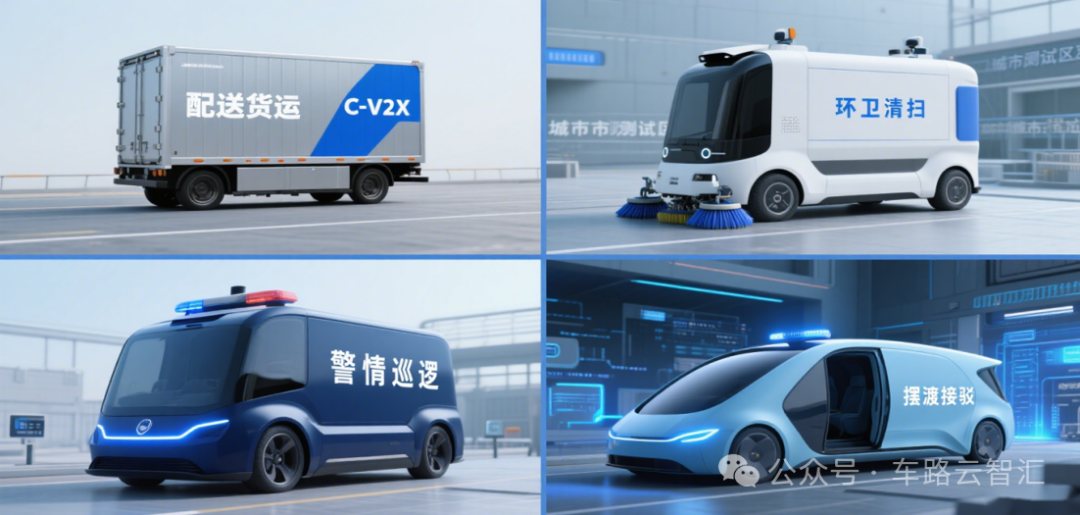
Customized Solutions: Providing customized C-V2X integration solutions for different application scenarios (delivery, sanitation, patrol, shuttle services, etc.).
Policy Pilot Application: Assisting companies in applying for various demonstration projects and policy support, jointly promoting the formulation of industry standards.
Innovative Business Models: Exploring innovative business models such as data services and road rights trading, jointly developing new profit growth points.
We believe that through the deep integration of vehicle, road, and cloud, autonomous vehicles will soon achieve large-scale commercial use, bringing revolutionary changes to the modern logistics system. Wangfuda looks forward to collaborating with various autonomous vehicle companies to jointly create a bright future for intelligent logistics.
For more technical details, to apply for samples, or to obtain development documents, please contact:
Website:https://www.brimband.info
Email:[email protected]
Phone: Manager Xie:15112345681
“Full-Stack Solutions”
From hardware to software, from tools to scenarios
It can help your vehicle-road-cloud collaborative development avoid detours and achieve faster transitions from prototype to product!