
Vehicle networking technology is a hot research topic both domestically and internationally. The deep integration of vehicle networking technology with the traditional automotive industry has promoted the deployment and application of autonomous driving technology in various intelligent scenarios. However, the intelligent, shared, and connected development of vehicle networking technology has also brought inevitable security issues, such as hardware security, data security, communication security, and cloud platform security. Starting from the three-layer architecture of the vehicle networking ecosystem, this article discusses the typical security issues from the vehicle side, road side, and cloud side, and specifically studies different security protection solutions to enhance the security assurance capabilities of vehicle networking.
In recent years, the vehicle networking industry has become a research hotspot in China, considered one of the most promising fields. The “National Comprehensive Three-Dimensional Transportation Network Planning Outline” explicitly states that it is necessary to promote the construction of important integrated infrastructure for vehicle networking and improve security assurance capabilities. At the same time, the application of vehicle networking technology in various scenarios should not be underestimated. Vehicle networking connects the intelligent internet with vehicles, enabling information exchange and sharing between vehicles, people, and the road environment, thereby replacing human driving actions and enhancing driving comfort and safety.
With the advancement of intelligent and shared vehicle networking technology, the convenience of the automotive industry has improved, and the number of vehicles has surged. According to statistics from the Ministry of Public Security, by the end of March 2022, the total number of motor vehicles in the country reached 402 million, with 79 cities having more than one million vehicles. The rapid increase in the number of vehicles has brought tremendous pressure to society, such as road congestion during peak hours, frequent traffic accidents, and excessive carbon emissions, significantly impacting travel efficiency and social economic development. Therefore, the widespread application of vehicle networking technology in the traditional automotive industry has driven the development of key technologies such as autonomous driving, sensor perception technology, and positioning technology, thereby meeting people’s daily travel needs.
In recent years, security risks and threats such as intrusion attacks, data theft, and information tampering in network terminals have gradually penetrated into the vehicle networking field, while unique security issues in vehicle networking are also emerging. The information security issues of vehicle networking technology mainly focus on the vehicle platform itself, transmission communication, and data privacy security. Unauthorized users can exploit vulnerabilities in vehicle networking platforms to remotely connect and control vehicle systems, thereby affecting driving safety and creating numerous security vulnerabilities and attack surfaces in the entire vehicle networking ecosystem. Large-scale hacker intrusions and data breaches pose significant threats to the automotive industry, impacting users’ safety and sensitive data privacy. Furthermore, the introduction of cloud platforms in the vehicle networking ecosystem has increased the intelligence and openness of the platform, leading to a rise in data security threats and communication path security threats. For intelligent vehicle networking platforms, security issues cannot be ignored, and new laws and regulations and security protection methods must be proposed to provide security support for the vehicle networking ecosystem.
1
Current Development Status of Vehicle Networking
1.1 Current Development Status at Home and Abroad
Currently, the development of vehicle networking technology in developed countries such as the United States and Europe is relatively mature. In 1996, General Motors installed the OnStar vehicle networking terminal in Cadillac cars, becoming the first to launch vehicle networking services, ensuring the safe driving performance of vehicles. To date, vehicle networking technology has experienced nearly 20 years of rapid development, closely integrating with cutting-edge technologies in the information field such as artificial intelligence, big data, and blockchain. In March 2020, the U.S. Department of Transportation released the “Intelligent Transportation System (ITS) Strategic Plan 2020-2025,” outlining key tasks and measures for intelligent transportation development, emphasizing the promotion of interconnectivity between new technologies and intelligent transportation. Against the backdrop of global vehicle networking transformation, the United States has successively launched pilot projects for Vehicle to Everything (V2X) wireless communication technology in 26 states to fully promote the development of vehicle networking technology.
China’s Ministry of Science and Technology officially launched the “China Intelligent Transportation System Framework” (1st edition) in 2001, marking the first time intelligent transportation was included in the government’s development plan in China. However, compared to developed countries such as Europe and the United States, research on vehicle networking technology in China is still in its infancy. In December 2018, the Ministry of Industry and Information Technology released the “Vehicle Networking (Intelligent Connected Vehicles) Industry Development Action Plan,” aiming to break through key technologies of vehicle networking and form a new ecosystem of vehicle networking industry that is deeply integrated, secure, trustworthy, and competitive. Furthermore, in July 2021, the “China Internet Development Report” released at the 20th China Internet Conference pointed out that the standard system construction for vehicle networking in China is basically complete, and vehicle networking has become an innovative driving force for the upgrading of the automotive industry. In January 2022, the State Council mentioned in the “14th Five-Year Plan for Digital Economy Development” to increase support for 6G technology research and development and actively participate in promoting 6G international standardization. Compared to the application and deployment of 5G technology, the research and exploration of 6G technology further enhances transmission speed and bandwidth. Relevant national departments have issued a series of guiding documents in areas such as strategic goals, industry guidance, and standard system construction, indicating the direction and related measures for vehicle networking technology in China.
1.2 Industry Development Status
The rapid development of the vehicle networking industry in recent years has attracted many corporate giants, and the registration of vehicle networking-related enterprises has also increased accordingly.
Internationally, developed countries and regions such as Europe and the United States place great emphasis on the integrated development of intelligence, connectivity, and openness during the advancement of related industries. Tesla, the American electric vehicle giant, was the first automaker to achieve online upgrades for the entire vehicle, enabling remote upgrades of onboard systems and applications, enhancing user experience. Honda Motor Co., Ltd. in Japan released the third-generation HondaCONNECT system, which enables remote control, online upgrades, and precise navigation functions. International technology companies such as Apple and Google have also collaborated with traditional automakers to develop onboard systems using their internet technology advantages, thereby working with traditional automakers to develop smart vehicles.
In recent years, many major issues in China’s vehicle networking industry have made breakthroughs, forming a favorable industrial development ecosystem. Since 2015, the Ministry of Industry and Information Technology has successively supported the construction of nearly 50 intelligent connected demonstration zones, covering all first-tier cities and some second-tier cities in the country. For local automakers, NIO launched the world’s first onboard artificial intelligence system NOMI, creating a new way of interaction between humans and vehicles, combining natural semantic analysis and human-like behavior simulation to control onboard devices. XPeng Motors has also independently developed the onboard system Xmart OS, achieving further improvements in high-precision navigation, intelligent assistance, remote upgrades, and driver assistance. In addition to automakers, the three major telecom operators in China—China Telecom, China Mobile, and China Unicom—have all opened new markets for vehicle networking. China Telecom established Tianyi Internet of Things, integrating the businesses of two major vehicle networking bases; China Unicom signed an agreement with BMW for vehicle networking services, which will last until 2025, and its subsidiary, Unicom Smart Network Technology Co., Ltd., has also collaborated with nine local automakers such as FAW and GAC; China Mobile secured China’s first commercial business for 4G vehicle networking and signed agreements with several major automakers.
Additionally, international technology giants such as Alibaba, Huawei, Google, and Apple have developed next-generation onboard operating systems, addressing driving safety and user experience issues while emphasizing service diversity to meet users’ personalized needs. With the joint efforts of automakers, technology companies, and operators, the development environment for China’s vehicle networking industry is gradually improving. Next, as key technologies in vehicle networking are tackled, the development of the vehicle networking industry will enter the fast lane.
2
Vehicle Networking Ecosystem
2.1 Overview of Vehicle Networking Definition
Vehicle networking constructs a communication network that connects vehicles to vehicles, vehicles to people, and vehicles to road environments. Researchers have equipped vehicles with fixed sensors, control components, and decision-making components while integrating network communication technology to build information exchange channels, ultimately achieving intelligent vehicles that simulate driver behavior. Each component of intelligent vehicles assumes an indispensable task, where sensors receive information about the road environment, decision-making components judge vehicle behavior based on received information and issue commands, and control components operate the vehicle based on received commands, while the information exchange channel completes information sharing. Vehicle networking connects countless intelligent vehicles through a new generation of wireless network communication technology, enabling information sharing and utilization among vehicles, thereby constructing a system network that provides diversified functional services. This communication network connecting intelligent vehicles is referred to as “vehicle networking.”
2.2 Composition of Vehicle Networking Ecosystem
The vehicle networking ecosystem consists of three layers as shown in Figure 1, which can be divided into the vehicle side, road side, and cloud side. Each layer is interconnected. Through information communication and interaction between the layers, an intelligent, shared, and highly interconnected intelligent vehicle networking platform has been constructed, promoting the rapid development of the vehicle networking industry.
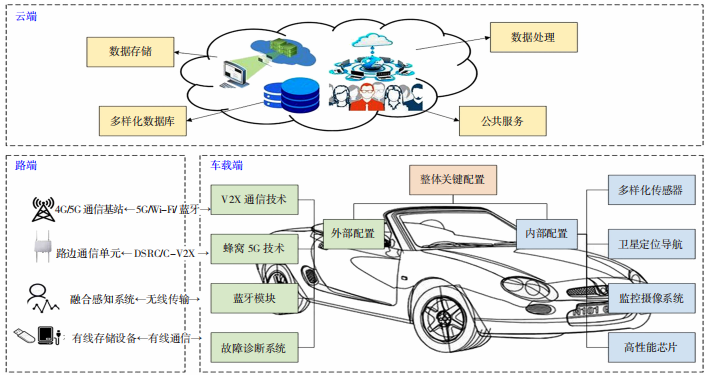
Figure 1 Three-layer Architecture of Vehicle Networking Ecosystem
The vehicle side is the foundation of vehicle networking and is of utmost importance. The vehicle side includes information receiving devices such as cameras, radars, and various sensors equipped on vehicles, and covers data transmission communication technologies between vehicle devices, such as V2X, cellular 4G/5G communication technologies, and Bluetooth technology. Additionally, to ensure the safe and efficient operation of vehicles, a fault diagnosis system needs to be constructed on the vehicle side. The fault diagnosis system analyzes the vehicle’s operating status by acquiring data generated during vehicle operation and locates fault positions, providing effective recovery measures. The vehicle side can be viewed as an intelligent terminal with data collection capabilities and secure communication capabilities through the above configurations.
The road side is a key focus of vehicle networking. The road side has established 4G/5G communication base stations, and the powerful next-generation communication base stations ensure interconnectivity within the vehicle networking ecosystem. Additionally, many roadside communication units are deployed at critical locations to collect information and complete communications, assisting in constructing a vehicle-road cooperative framework. Furthermore, to enhance the timeliness and usability of information, a fusion perception system has been introduced on the road side to process effective information collected. The road side mainly addresses interconnectivity in the vehicle networking ecosystem, achieving communication between various heterogeneous communication networks.
The cloud side is the core of vehicle networking. The cloud side mainly involves data storage, data processing, and various public service functions for vehicles, migrating the data processing process to the cloud to ensure the flexibility of the vehicle side. Additionally, various public service functions on the cloud side include the most basic vehicle control functions. The cloud side is deployed around vehicle computing and monitoring management, effectively enhancing the openness and sharing of the vehicle networking ecosystem.
3
Focus on Typical Vehicle Networking Security Events
With the rapid development of the intelligence and connectivity of vehicle networking, the application of digital technologies such as artificial intelligence, new generation communication technologies, and digital twin systems has brought more complex automotive safety risks and accidents. In recent years, intelligent vehicle networking security events have concentrated and exploded. Based on the architecture of the vehicle networking ecosystem, we summarize typical security events from the vehicle side, road side, and cloud side.
Currently, various sensors and related apps deployed on the vehicle side may be attacked without the user’s knowledge, leading to user information leakage and theft, thereby affecting vehicle driving safety and user personal safety. For example, in 2015, security researcher Samy Kamkar discovered vulnerabilities in the General Motors OnStar system that allowed remote control of vehicles and interception of data communications; in 2016, the Mitsubishi Outlander plug-in hybrid electric vehicle could directly locate the Outlander vehicle after brute-forcing the key through the Wi-Fi control module; in 2018, researchers found vulnerabilities in the onboard systems of Volkswagen and Audi vehicles, which could be exploited to gain root control of the system and control the vehicle’s braking system; in 2020, vulnerabilities were found in the wireless function module and Bluetooth key of Tesla Model S; in 2022, the U.S. Cybersecurity and Infrastructure Security Agency warned of multiple security vulnerabilities in the MiCODUS MV720 Global Positioning System (GPS) tracker, affecting over 1.5 million vehicles worldwide.
The various communication units and intelligent systems deployed on the road side face various system defects and network congestion issues during data transmission. If exploited by attackers, it threatens the entire vehicle networking ecosystem. For example, in 2016, the C4MAXTGU manufactured by NewEagle, if improperly configured, could be accessed directly through the public IP and port 23 Telnet, exposing the channel to the public; in the same year, a professor from New York University discovered a buffer overflow vulnerability in the commonly used vehicle networking specification connection standard—MirrorLink, which is easy to enable, allowing hackers to control various critical safety components; in 2019, several Ford vehicles’ wireless keys were vulnerable to replay attacks, allowing attackers to control vehicles by replaying signals sent from previous key phases; in 2020, vulnerabilities were found in the wireless protocol communication module of Tesla Model S, allowing attackers to exploit the vulnerability to access the system and execute arbitrary commands in the Linux system of the Parrot module; in 2022, vulnerabilities in the vehicle networking service provider SIRIUS XM API could be exploited to remotely control vehicles via HTTP2.
For various service systems and databases deployed on the cloud side, there are more potential attack interfaces, making them more susceptible to various malicious attacks. For example, in 2015, an anonymous hacker publicly sold personal information of car owners, including names, phone numbers, and intended vehicle purchase models, leading to the leakage of information from 100,000 Citroën car owners; in 2017, a hacker infiltrated the network system of Dongfeng Nissan, stealing personal information such as customer names, vehicle identification numbers, and home addresses; in 2021, over 1,000 pieces of sensitive customer information from Mercedes-Benz USA were leaked on a cloud storage platform; in 2022, a supplier server for Toyota was hacked and implanted with threats, causing Toyota to halt production for a day.
From the aforementioned vehicle networking security events over the years, it can be summarized that the security issues of vehicle networking mainly encompass data security, communication security, and network attack security. Against the backdrop of the rapid development of intelligent and connected vehicle networking, security issues in vehicle networking have received unprecedented attention. National governments, automakers, software suppliers, and cybersecurity giants are all strategizing to address the security transformations of new intelligent terminal devices—automobiles.
4
Analysis of Information Security Risks in Intelligent Vehicle Networking
With the high intelligence and sharing of the vehicle networking industry, security threats and vulnerabilities are increasing, posing significant challenges to intelligent vehicle networking security. The corresponding “Vehicle Networking Cybersecurity White Paper (2020)” summarizes existing security threats in the vehicle networking industry, which cannot be ignored. The entire vehicle networking ecosystem can be seen as a complex system, with various device security issues, communication security issues, and data privacy security issues present. To more clearly exhibit the security risks of intelligent vehicle networking, this article analyzes and studies typical security issues in each layer starting from the three-layer architecture of the vehicle networking ecosystem.
4.1 Security of Intelligent Vehicle Networking Vehicle Side
The vehicle side refers to the vehicle terminals in the vehicle networking communication network and is an important part of the entire vehicle networking ecosystem. If the vehicle side suffers attacks from malicious hackers or curious users, it will lead to significant security risks, directly threatening the personal safety of drivers and the privacy of user data. Therefore, this article focuses on the security issues of the vehicle side, studying various devices, systems, and communication networks deployed around the vehicle terminal.
The sensors deployed on the vehicle side can be divided into traditional sensors and intelligent sensors. Traditional sensors refer to pressure sensors, acceleration sensors, and speed sensors related to vehicle dynamics. Intelligent sensors refer to intelligent connected sensors such as infrared radar sensors, biometric sensors, and cameras. For traditional sensors, they mainly collect vehicle configuration information and driving data, which is vast and unstable. Therefore, we need to consider data security issues. If an attacker breaches the sensors, they can easily access vehicle data and modify legitimate data, leading to incorrect estimates of vehicle status, resulting in erroneous judgments that ultimately affect subsequent behavioral predictions. For intelligent sensors, they primarily perceive the road environment surrounding the vehicle. Intelligent sensors emit signals to measure the relative distance to target vehicles, calculating distances based on the time difference between emitted signals and received feedback signals, and through the fusion of multiple sensor information, they can achieve comprehensive perception of the road environment surrounding the vehicle. In this process, it is crucial to ensure the security of the communication network. If attackers intercept or listen to the communication network, it will cause delays and loss of information, thereby affecting the overall perception of the road environment. Additionally, attackers can gain sensor-related permissions through attacks on the communication network, further launching attacks on the vehicle.
To further enhance vehicle operation efficiency and safety, a fault diagnosis system has been introduced on the vehicle side. The fault diagnosis system can quickly locate faults, improving vehicle maintenance efficiency. However, the fault diagnosis system has also become the most vulnerable target in the vehicle networking ecosystem. If attackers implant backdoors in the system, it poses security threats to the entire vehicle side. Moreover, due to the vast amount of code, there are many exploitable vulnerabilities, leading to software security issues.
The vehicle side has introduced V2X communication technology to improve communication efficiency between various sensors and systems. V2X communication technology helps vehicles communicate with other devices, including sensors, cameras, and radars. Therefore, ensuring the security and latency of V2X communication is the core objective. If V2X communication is simply applied to the vehicle side without ensuring the low latency required for secure communication, safety issues may arise in emergency communications, leading to catastrophic consequences. Furthermore, as the number of intelligent vehicles accessing the network increases with the introduction of V2X communication technology in the vehicle networking ecosystem, security issues will become increasingly severe. The number of vulnerabilities that attackers can exploit will increase, and the attacks designed against V2X communication technology will become more complex, leading to vehicle control security issues.
4.2 Security of Intelligent Vehicle Networking Road Side
The road side refers to the roadside deployed devices and communication modules in the vehicle networking communication network, and is an indispensable part of the vehicle networking ecosystem. If the road side suffers malicious intrusion and data tampering from attackers, it will result in incorrect simulations of the road environment for vehicle networking. This will directly lead to misjudgments of vehicles regarding the surrounding road environment, causing errors in vehicle-human interaction behaviors. Therefore, the security issues of the road side also need to be studied in depth.
The roadside hardware devices deployed include basic roadside devices and digital vehicle networking roadside devices. Basic roadside devices generally refer to the organic combination of ordinary sensors and communication modules. For basic roadside devices, they mainly facilitate information exchange between the roadside and vehicle side, and cloud side, completing interconnectivity within the vehicle networking ecosystem, while capturing basic condition information of the road. Due to the complexity of the functions of basic roadside devices, they face security issues such as unauthorized access, remote control, and data tampering. Digital vehicle networking roadside devices refer to intelligent devices such as smart traffic signal lights. Digital vehicle networking roadside devices are primarily responsible for dynamically perceiving environmental information and traffic signage while transmitting it in real-time to the vehicle side and cloud side. Due to the need for intelligent collaboration and real-time transmission, these devices have multiple physical interfaces and network open ports. If attackers exploit open ports to illegally access devices, it can lead to the leakage of sensitive user data and illegal tampering of information, resulting in inaccurate modeling of road information, ultimately causing vehicle safety issues.
To further provide high-performance, low-latency communication services, new generation communication base stations have been introduced. Communication base stations help the system locate vehicles and key points by providing wireless signal coverage, while also completing relevant data uploads and downloads. Therefore, the security of communication base stations is crucial. If attackers target communication base stations, listening to or tampering with signals to disrupt the communication network, it could result in the theft of important user information and unclear traffic analysis. Additionally, communication base stations are often deployed in remote locations, leading to challenges in subsequent firmware upgrade maintenance.
4.3 Security of Intelligent Vehicle Networking Cloud Side
The cloud side refers to the cloud service platform in the vehicle networking communication network, serving as the core of user services in the entire vehicle networking ecosystem. The cloud side is a cloud service platform based on cloud computing technology, primarily responsible for data access and processing, providing services such as vehicle control, vehicle monitoring, and data aggregation. The cloud side must ensure timely responses when vehicles request related services and must also have the ability to exchange and interface data with various service providers. Therefore, for the vehicle networking ecosystem, intelligence and openness are essential elements. The cloud side connects a vast number of intelligent vehicles and service providers, ensuring the characteristics of the vehicle networking ecosystem.
However, the cloud side also faces numerous security threats. If attackers access the cloud service platform by forging identities, they can illegally access the platform’s control instruction set, enabling remote control of vehicles. This could lead to user information leakage and vehicle safety issues. Additionally, the cloud platform framework itself has some security issues, such as system vulnerabilities, resource control allocation issues, and external interface calling issues. Moreover, the massive amount of user data uploaded to the cloud poses data security issues. Attackers can launch SQL injection attacks against databases, leading to severe consequences such as data leakage or permanent deletion of data.
5
Intelligent Vehicle Networking Information Security Solutions
The rapid development of the vehicle networking industry has brought about numerous security issues, which could lead to severe consequences, including loss of life and property, and even threaten national public safety. Existing security solutions are insufficient to meet the security protection requirements of the vehicle networking ecosystem. Due to the lack of security standards in the vehicle networking industry, the absence of practical testing, and the untimely updates of security technologies, the security threats faced by the vehicle networking ecosystem have not been resolved. Therefore, researchers have conducted numerous studies on security protection solutions related to intelligent vehicle networking security issues.
The security protection architecture of the intelligent vehicle networking ecosystem needs to ensure the stable operation and interconnectivity of the vehicle side, road side, and cloud side, guaranteeing data privacy security and efficient service response capabilities. As shown in Figure 2, the security protection architecture of the intelligent vehicle networking ecosystem mainly considers vehicle terminal security, road communication security, application service security, and data security, while also ensuring vehicle safety issues in complex application scenarios. Therefore, this article considers different security protection solutions for the vehicle side, road side, and cloud side. The security issues that need to be addressed on the vehicle side mainly include hardware device security, data communication security, and software system security. Hardware device security refers to the safety of the sensors installed, which can be enhanced by integrating encryption algorithm modules into the sensor chips, thus resisting attacks on the sensors. Data communication security refers to the safety of communication data and channels, which can be enhanced by authenticating the identities of both communication parties and issuing security certificates, thereby increasing the difficulty for attackers to steal data. Software system security refers to the security of the relevant software systems deployed on the vehicle side, which can be ensured by introducing security protection modules throughout the software development process, and firewalls and encryption locks can be established around the system to create a combined hardware and software security protection system to defend against various attack methods.
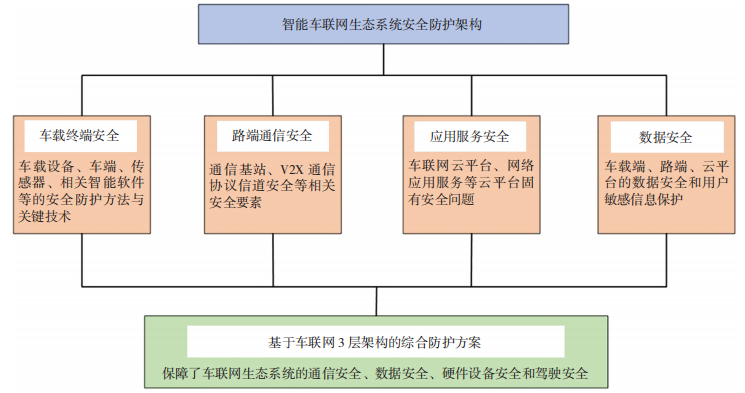
Figure 2 Security Protection Architecture of Intelligent Vehicle Networking Ecosystem
The road side faces risks of data tampering, malicious intrusion by attackers, and damage to communication base stations. To defend against attackers illegally tampering with data stored in hardware devices, data encryption can be utilized to ensure data authenticity. Considering both performance and overhead, a multi-modal lightweight encryption protocol should be applied to data transmission to ensure data security in different application environments. If attackers maliciously invade nodes or devices on the communication link, there is a risk of illegal control of vehicles, which could affect the decision-making of intelligent vehicles and lead to loss of life and property. To prevent attackers from illegally controlling vehicles, abnormal traffic monitoring and network area isolation can be implemented to enhance network control management. Damage to communication base stations can lead to the leakage of sensitive user data, which can be mitigated by deploying data security transmission systems and physical protection measures to ensure data and base station security.
The cloud side mainly focuses on the security of the cloud computing framework itself and data security. The cloud computing framework has vulnerabilities and resource control issues, which can be addressed through framework version updates, mobile defense tools, and resource control strategies to ensure the stability and security of interconnectivity on the cloud platform. Additionally, granting different operational permissions to cloud platform administrators can enhance platform security. As intelligent vehicles and service providers connect to the cloud platform, and a large amount of sensitive data is uploaded to the cloud, the risk of data leakage arises. Cloud platforms generally employ data physical isolation control measures and encryption authentication algorithms to ensure the privacy and security of user data.
Data is the most critical production factor in the interconnectivity of vehicle networking, including personal information of vehicle owners, vehicle trajectory information, road information, traffic signal linkage information, and remote control data. If this data is exploited by malicious attackers, it could lead to the leakage of owners’ privacy, threatening personal and societal security. Therefore, researchers have comprehensively and deeply studied a series of data privacy protection technologies to address data security issues. Typically, cryptographic-based privacy protection is employed to encrypt data related to users, intelligent systems, and vehicle networking cloud platforms, thereby mitigating the risks of data leakage. A data security protection scheme based on the full lifecycle of data collection, transmission, storage, usage, migration, and destruction is proposed to achieve graded security protection for data.
Moreover, with the research and application of new generation communication technologies, the robust bandwidth and low-latency communication indicators of 6G technology will further cover various intelligent vehicle application scenarios, enhancing the efficiency of traffic driving and vehicle-road collaborative interaction. Therefore, it is crucial to focus on communication security within the vehicle networking ecosystem. To ensure communication security and data exchange security, bidirectional authentication and physical isolation of buses can be implemented, using secure encryption authentication mechanisms. In summary, a comprehensive protection scheme based on the three-layer architecture of vehicle networking will enhance the communication security, data security, hardware device security, and driving safety of the entire ecosystem.
6
Future Research Directions
Due to the development of intelligence, connectivity, and sharing in vehicle networking, information security issues in multi-scenario vehicle networking need to be addressed. Currently, research on security solutions for vehicle networking information security is ongoing. However, the implementation of these security methods needs to consider real application scenarios to ensure the efficient performance of vehicle networking. Based on the current level of relevant security solutions, future research directions are as follows:
(1) Construct a vertically layered defense system with clear levels across the entire ecosystem. Develop a multi-domain protection system covering the vehicle side, road side, cloud service platform, and multi-modal network communication protocols, creating lightweight algorithms to improve performance and reduce computational demands under real conditions while establishing a database of vehicle onboard systems under real conditions to face a broader range of network attacks.
(2) Research high-security vehicle networking cloud security platforms. Investigate security protection strategies corresponding to databases and network services in the vehicle networking cloud platform, while also studying related core technologies to build a more secure and universal vehicle networking system.
(3) Research new hybrid cryptographic schemes. Leverage cryptographic technology, blockchain, and trusted computing systems to enhance the authentication process at low costs, gradually improving the trusted environment of vehicle networking, fundamentally enhancing security levels and improving defense capabilities and efficiency against unknown threats.
7
Conclusion
The rapid development of the vehicle networking industry has led to frequent security issues in the intelligent vehicle networking ecosystem, making research and analysis of vehicle networking information security a current hot topic. This article analyzes and summarizes the existing security issues and corresponding security protection solutions from the perspectives of the vehicle side, road side, and cloud side. There is an urgent need to propose more comprehensive legal and regulatory frameworks and integrated security protection schemes, vigorously developing technologies related to vehicle networking information security, thus ensuring the efficient and sustainable development of the vehicle networking industry.
Disclaimer:This article is reproduced from the Journal of Information Security and Communication Confidentiality, originally authored by Bao Shuang, Li Lixiang, and Peng Haipeng. The content of the article reflects the personal views of the original authors, and this public account’s translation/reproduction is solely for sharing and conveying different viewpoints. If there are any objections, please feel free to contact us!
Recommended Reading
Technical Economic Observation丨The Potential of Military Applications in Commercial Space Has Begun to Emerge
Technical Economic Observation丨Looking at Recent Emergencies, the Mechanism and Effect of U.S. Defense Systems in Responding to Domestic Emergencies
Technical Economic Observation丨The Profound Impact of Additive Manufacturing Technology
Technical Economic Observation丨Cyber Biological Security Risks—Potential Threats to National Security and the Bioeconomy
Technical Economic Observation丨Addressing AI Energy Resource Dilemmas from the Perspective of Cutting-edge Technologies
Reproduced from丨Journal of Information Security and Communication Confidentiality
Authors丨Bao Shuang, Li Lixiang, Peng Haipeng

About the Research Institute
The International Institute of Technology and Economics (IITE) was established in November 1985 and is a non-profit research institution under the State Council Development Research Center. Its main functions are to study major policy, strategic, and forward-looking issues in China’s economic and technological social development, track and analyze global technological and economic development trends, and provide decision-making consulting services for the central government and relevant ministries. The “Global Technology Map” is the official WeChat account of the International Institute of Technology and Economics, dedicated to conveying cutting-edge technology information and insights into technological innovation to the public.
Address: Building A, No. 20, Xiaonan Zhuang, Haidian District, Beijing
Phone: 010-82635522
WeChat: iite_er