|
Striving to Improve the Quality of Automotive Research and Development |
Automotive diagnostic tools are widely used for troubleshooting in after-sales service and are very useful.100% of all 4S stores are equipped with diagnostic tools.
Basic Applications of Diagnostic Tools
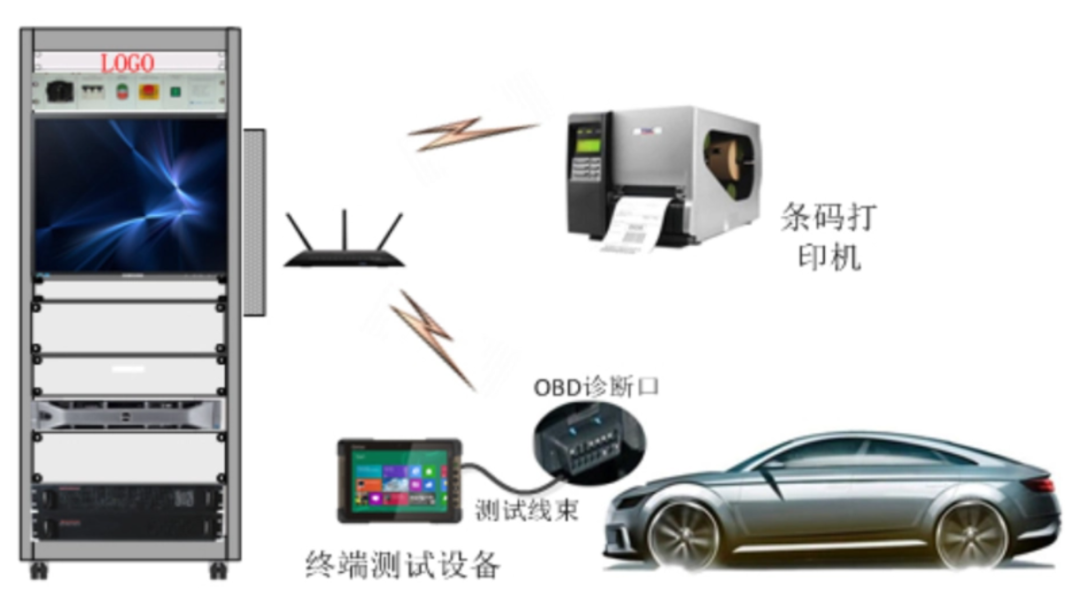
 By plugging into the OBD port and using diagnostic equipment, one can read and write a lot of information from the vehicle.For example, reading fault codes, reading VIN, software version, and other built-in information.It is also possible to write data to the vehicle, typically for software updates or configuration changes.In extreme cases, if the OTA fails and the vehicle becomes inoperable, the diagnostic rewrite is almost the only option.Diagnostic tools are generally developed based on UDS, utilizing several services from UDS to form complex functions. The core content is the “diagnostic request – diagnostic response” session, where the diagnostic request can be either single-frame or multi-frame, and the diagnostic response can also be either single-frame or multi-frame.
Mainstream Brands
Currently, well-known diagnostic tool brands in the industry include Bosch and Yuan Zheng, whose profit model generally consists of development fees plus equipment fees, with equipment fees further divided into main unit fees and Bluetooth head fees.Yuan Zheng Diagnostic Tool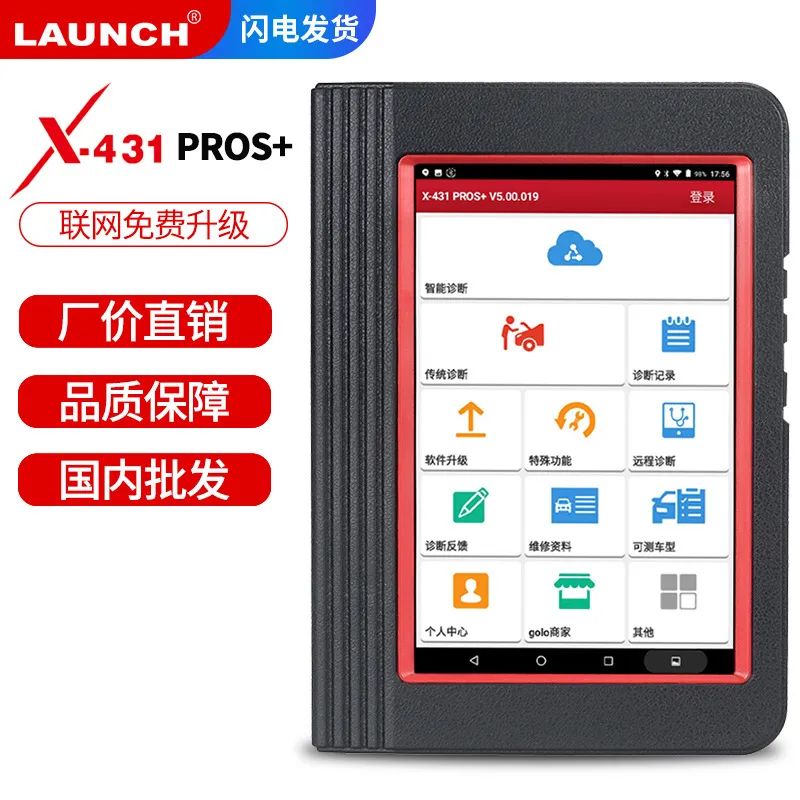 Bosch Diagnostic Tool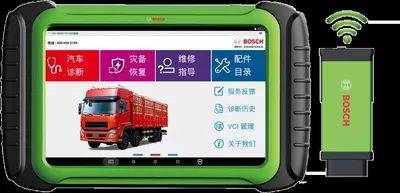
Taking a Different Approach
Recently, while accompanying a friend to a Geely 4S store for maintenance, I found that Geely was not using the industrial tablet-like diagnostic tool, but a regular computer.The diagnostic tool was made into a virtual instrument, with the software installed on the computer and hardware using a standard CAN card.
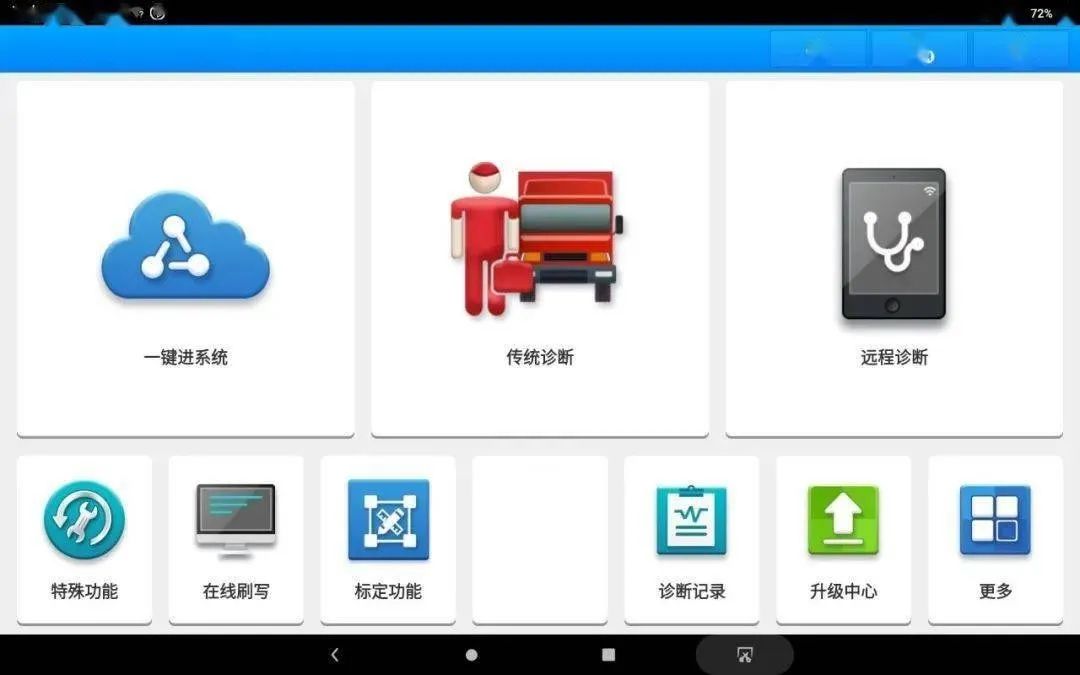
Moreover, I noticed that the software interface was quite unattractive, but according to the feedback from the 4S store staff, it was really effective.Geely is impressive!
Reflecting on How They Did It
After returning home, I pondered over it and consulted friends related to diagnostics and relevant suppliers, discovering that this was not particularly difficult.One only needs to understand some diagnostic commands to achieve it.Luxury VersionFor those with ample resources, CANoe can be utilized. After purchasing the diagnostic license, ready-made modules are available for use, allowing one to quickly create diagnostic software.However, the cost is quite high, with a “diagnostic tool” costing hundreds of thousands, which seems a bit unwise…Middle-Class VersionAdditionally, some cheaper domestic software can be used, such as TSMaster, which significantly lowers costs and allows for drag-and-drop controls to create diagnostic interfaces.Lower-Middle Class VersionSome CAN card suppliers have released diagnostic DLL libraries specifically for their CAN cards.By directly calling these libraries, one can easily create a diagnostic upper computer.For example, a CAN card supplier located in Guangzhou, which I mentioned in a previous article, you can check historical articles to find it.Basic Living VersionOf course, the lowest cost method is to encapsulate such a “diagnostic request – diagnostic response” function by oneself. Just using this one function, one can achieve a variety of complex diagnostic functions, such as reading fault codes, reading and writing parameters, learning keys, offline configuration, and flashing programs, everything is possible!!
Technical Core
The core function just mentioned is illustrated in the following block diagram:
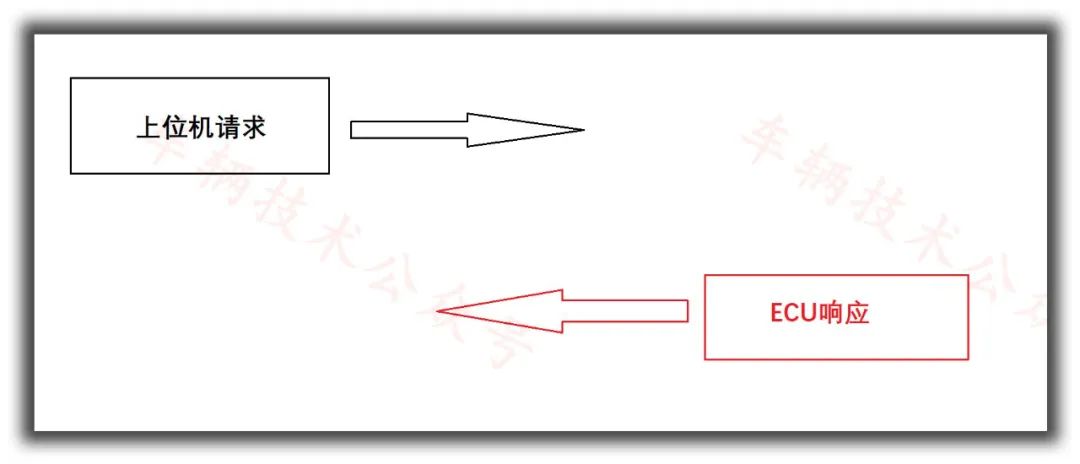
Here, the request can be single-frame or multi-frame, and the response can also be single-frame or multi-frame, leading to the following combinations:
- Request is single-frame, response is multi-frame, such as reading fault codes, reading versions, etc.In this case, the host computer sends one frame of command and that’s it, but when the ECU responds, the host computer needs to send a flow control frame to help the ECU complete the response successfully.
- Request is single-frame, response is also single-frame, such as switching session modes, ECU rebooting, etc.This situation is the simplest; you send one frame, I return one frame, and it’s done.
- Request is multi-frame, response is single-frame, such as block data transmission.In this case, the ECU needs to respond with a flow control frame to assist the host computer in achieving multi-frame transmission.
- Request is multi-frame, response is also multi-frame, such as reading data of specific address and length.This situation is not too complicated; mutual assistance is all that’s needed. When the host computer sends multiple frames, the ECU sends a flow control frame to help; when the ECU replies with multiple frames, the host computer sends a flow control frame to assist.
So, you see, UDS diagnostics are actually very simple, with the core being just one function.Essentially, its requests and responses can be divided into two phases, which are almost unrelated, with the only caution being that if it’s multi-frame, the other party needs to send a flow control frame to help.
Calculating the Economic and Political Accounts
Self-developed diagnostic tools hold significant strategic importance, as they are not cheap to purchase, with development fees plus equipment fees, and each vehicle model requires re-adaptation and development, representing a market worth several hundred million.Moreover, the development of self-developed diagnostic tools fully responds to General Secretary Xi’s call to “ensure that core technologies are firmly in our own hands.”

Learning from Role Models
Now that Geely has the capability for self-developed diagnostic tools, their diagnostic tools can be available at the ET0 stage, with the first batch of engineering prototypes being able to utilize the diagnostic tools.From the very beginning,they have eliminated all sorts of messy flashing tools and diagnostic tools..
As soon as a car is born, the diagnostic tool accompanies it, never leaving its side, persistently and consistently. There is no greater care in the world than this, especially since the inherent responsibility of the diagnostic tool is to help cars perform better and healthier.

Furthermore, diagnostic technology has powerful applications in offline testing, production line configuration, and other areas, each of which has a considerable price.
Intercommunication
Friends who are interested can discuss together~【Recommendation】
Bus 10 Talks, the best Excel to DBC tool in the Eastern Hemisphere, always free to give away.