Abstract:
Brain metastases (BMs) from lung cancer are one of the major factors contributing to poor prognosis in patients with non-small cell lung cancer (NSCLC). In recent years, antibody-drug conjugates (ADCs) have emerged as a new hope for treating HER2-mutant NSCLC due to their precise targeting and potent anti-tumor activity. This article focuses on the clinical value of DS-8201 (Trastuzumab Deruxtecan) and SHR-A1811 (Trastuzumab Rezetecan) in patients with HER2-mutant NSCLC brain metastases, based on the DESTINY-Lung series studies (DL-01, DL-02, DL-05) and the HORIZON-Lung study.
Research Background:
Lung cancer is the most common cancer that metastasizes to the brain, with approximately 20% of patients presenting with intracranial involvement at diagnosis. Lung cancer brain metastases account for about half of all brain metastases. Patients with brain metastases from lung cancer have a very poor prognosis, with a median survival of only 1 to 2 months without treatment.
Current clinical strategies for treating lung cancer brain metastases include a combination of systemic anti-cancer therapy and local radiotherapy or surgical intervention. The efficacy of systemic treatment is often limited by the blood-brain barrier and the poor inhibitory effects of the drugs themselves. Even after systemic treatment, the median survival for these patients generally does not exceed two years, highlighting the urgent need for new effective treatment options.
Antibody-drug conjugates (ADCs) are a new class of targeted agents composed of monoclonal antibodies, highly potent cytotoxic drugs, and cleavable linkers. Recently developed ADCs have shown good anti-tumor activity in patients with brain metastases from non-small cell lung cancer (NSCLC) and may provide a new systemic treatment option for this subgroup of patients. More research is needed to explore the efficacy, safety, and mechanisms of action of ADCs in brain metastases. Additionally, exploring the combination of ADCs with existing methods such as radiotherapy and immunotherapy will be a new direction for future treatment of brain metastases.
1. DESTINY-Lung01 Study
The DL-01 study first confirmed the efficacy of DS-8201 (6.4 mg/kg) in HER2-mutant NSCLC. This study evaluated the survival of patients with HER2-mutant non-small cell lung cancer with concomitant brain metastases. The results showed that the objective response rate (ORR) in 33 asymptomatic brain metastasis patients was 54.5%, comparable to the 55.2% ORR in patients without brain metastases. The median progression-free survival (mPFS) for brain metastasis patients was 7.1 months, while the group without brain metastases had an mPFS of 8.2 months; the overall survival (OS) for the two groups was 13.8 months and 17.8 months, respectively. These data provide effective evidence for T-DXd treatment of HER2-mutant NSCLC patients with intracranial tumors.
2. DESTINY-Lung02 Study
The DESTINY Lung02 study indicated that T-DXd at doses of 5.4 and 6.4 mg/kg every three weeks showed clinically meaningful responses, consistent across various factors, including HER2 mutation type and amplification status, baseline central nervous system metastases, and prior treatment history. The safety of both doses was acceptable and overall manageable. Compared to the 6.4 mg/kg dose, the 5.4 mg/kg dose exhibited better safety and a lower incidence of drug-related interstitial lung disease.
A comprehensive analysis presented at the ESMO 2023 conference aggregated data from the DESTINY Lung01 and DESTINY Lung02 studies, systematically assessing the efficacy of T-DXd at 5.4 and 6.4 mg/kg in HER2-mutant NSCLC patients. A total of 86 patients were included, with 32 receiving the 5.4 mg/kg dose and 54 receiving the 6.4 mg/kg dose. The results showed that both doses exhibited good systemic treatment effects, regardless of whether patients had brain metastases.
In the 5.4 mg/kg group, the confirmed objective response rates (cORR) for patients with and without brain metastases were 46.9% and 50.0%, respectively, with disease control rates of 90.6% and 94.3%. The mPFS for brain metastasis patients in both dose groups was the same at 7.1 months, while the mPFS for patients without baseline brain metastases was 18.0 months (5.4 mg/kg group) and 11.9 months (6.4 mg/kg group). In the 5.4 mg/kg group, 14 patients and in the 6.4 mg/kg group, 30 patients had measurable brain metastases at baseline. The intracranial cORR for the 5.4 mg/kg group was 50%, while for the 6.4 mg/kg group it was 30.0% (95% CI: 14.7-49.4%). In the 5.4 mg/kg group, 3 patients (21.4%) achieved complete response (CR), while 4 patients (28.6%) in the 5.4 mg/kg group and 9 patients (30.0%) in the 6.4 mg/kg group achieved partial response (PR). The intracranial response rates were consistent among patients, regardless of their baseline BM treatment status. Based on the positive results from the DESTINY-Lung01 and DESTINY-Lung02 studies, the FDA approved T-DXd as a second-line treatment for HER2-mutant NSCLC.
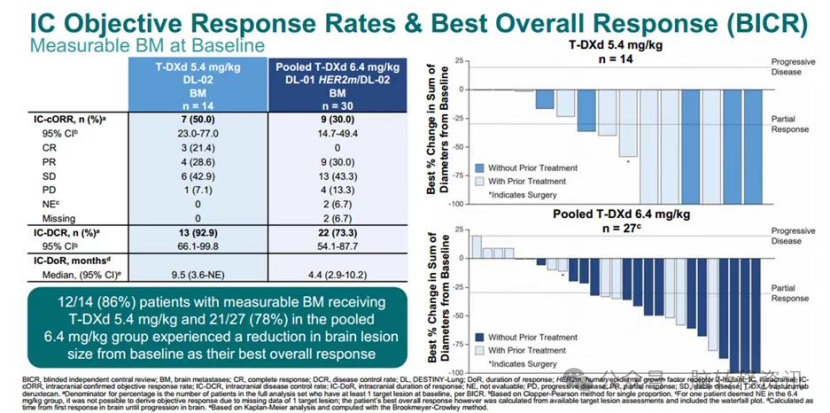
Figure 1: Summary Analysis of DESTINY Lung01/02: Intracranial Efficacy
3. DESTINY-Lung05 Study
In the final analysis of the DL05 study, 30 and 42 patients with and without central nervous system (CNS) metastases were included at baseline, respectively. The median central nervous system progression-free survival (CNS-PFS) assessed by independent central review (ICR) was 15.5 months, confirming the efficacy of T-DXd in patients with brain metastases.
4. HORIZON-Lung Study
The latest data from the HORIZON-Lung phase II study, presented at the 2025 American Association for Cancer Research (AACR) annual meeting, included 94 patients, all of whom were Chinese, with 25.5% of patients having baseline brain metastases. As of the data cutoff, the median follow-up time was 14.2 months.
Anti-tumor efficacy results showed: the ORR assessed by IRC reached 74.5%; the median time to response (TTR) was only 1.4 months, and the median sum of diameters of target lesions (SoD) shrinkage rate reached 54%; the median PFS assessed by IRC was as long as 11.5 months, with a 12-month PFS rate of 48.6%; the median OS was not yet mature, with a 12-month OS rate of 88.2%.
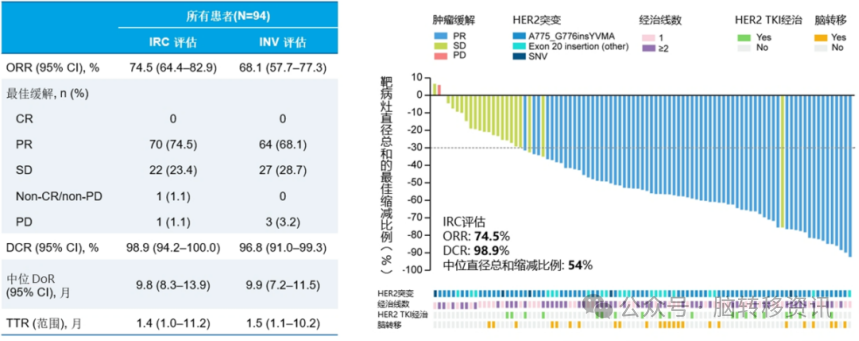
Figure 2: Tumor Response Status
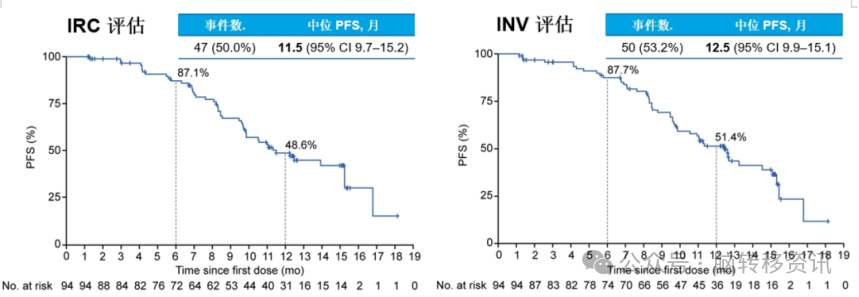
Figure 3: PFS Evaluated by IRC and INV
Subgroup analysis results further showed: for patients with baseline brain metastases, the ORR reached 87.5%, and the median PFS was 11.3 months; for patients who had previously received anti-HER2 tyrosine kinase inhibitor (TKI) treatment, the ORR after using SHR-A1811 still reached 81.8%, with a median PFS of 9.7 months.
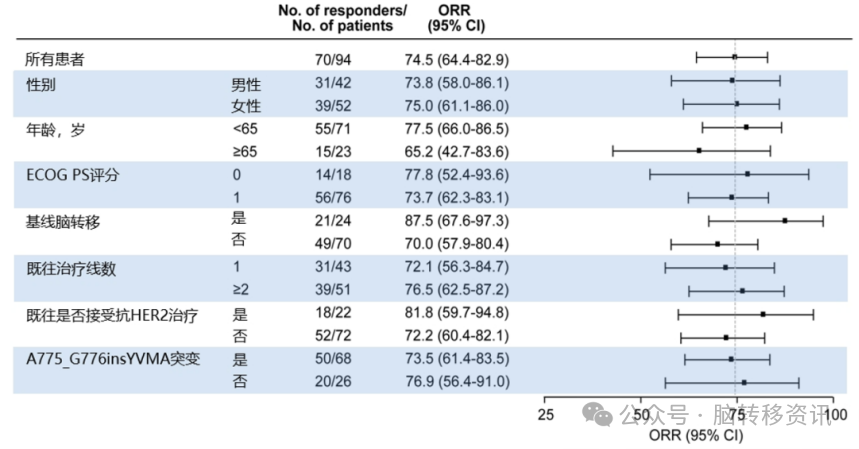
Figure 4: ORR in Different Subgroup Patients
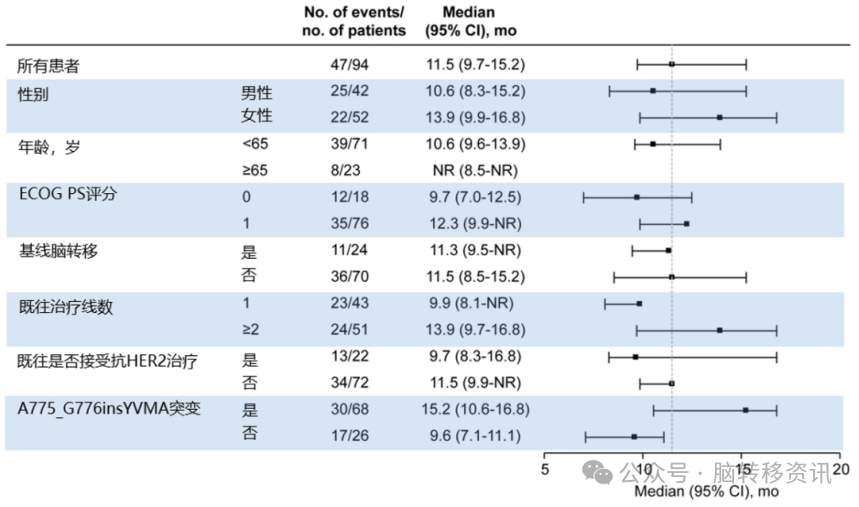
Figure 5: PFS in Different Subgroups
Conclusion and Outlook
Patients with HER2-mutant non-small cell lung cancer (NSCLC) and brain metastases generally have a poor clinical prognosis and limited treatment options. Existing clinical evidence indicates that HER2-targeted ADC drugs, represented by DS-8201, have shown encouraging systemic and intracranial efficacy in multiple clinical studies for patients with HER2-mutant NSCLC brain metastases. The HORIZON-Lung study further validated the efficacy of SHR-A1811 in the Chinese population, particularly observing high ORR and durable PFS in patients with baseline brain metastases and those who had previously received TKI treatment, suggesting its therapeutic potential in refractory subgroups. In the future, with the accumulation of more prospective studies and real-world data, HER2-targeted ADCs are expected to become an important treatment option for patients with lung cancer brain metastases.


Address: Nanjing Chest Hospital (Brain Metastasis Treatment Center)
Postal Code: 210029
Accessible Metro/Bus Routes:
Metro Line 5, get off at Wutai Mountain Station and walk 1 kilometer
Routes 6, 91, 160, 532, Y6, get off at Guangzhou Road Station and walk about 400 meters Routes 3, 60, 43, 302, get off at Lhasa Road Station and walk about 300 meters
Routes 302, 318, get off at Hujiguan South Station and walk about 500 meters