Source/Original Article Repost/ WeChat:egainnews035
Business Cooperation/WeChat:egainnews1
Author: Blue Ocean Yi Guan
3D printing is considered a relatively niche field; however, Shenzhen-based ELEGOO has achieved an impressive revenue of 1.6 billion yuan in just one year through channels such as Amazon and independent websites.
“If we solve the issues of ‘ease of use, functionality, and versatility’,3D printers will become as common in people’s lives as electric fans and televisions,” said Chen Bo, co-founder of ELEGOO.
ELEGOO’s 3D printers currently have numerous application scenarios: children can use them to print forks, toys, and school teachers can print geometric models.
More imaginatively, the commercial applications of 3D printing include users in small studios, dental clinics, and jewelry workshops who can print customized high-precision props, dental molds, jewelry, or small batches of headphone shells, etc.
ELEGOO initially entered the market through Amazon and gradually expanded to independent sites, eBay, TikTok, and other channels, relying on “hardware + consumables” to build an overseas brand with annual revenue exceeding 1 billion yuan. Among these, North America and Europe contribute 70%-80% of the revenue.
The independent site serves as the window for ELEGOO’s overseas brand. In the context of increasing logistics risks such as package loss and damage in the United States, ELEGOO chose to collaborate with the American AI technology company Seel. Seel provides trust assurance for timely cross-border logistics through its independent site service plugin, Worry-Free Delivery. “On the first day of cooperation, we completed compensation for two lost orders, with rapid reimbursement. After using Seel, our negative review rate in the U.S. market decreased by 35%, and customer repurchase significantly increased. This is not only after-sales support but also the cornerstone of brand trust,” said Kevin Wang, Vice President of ELEGOO.
By 2024, ELEGOO’s sales volume has exceeded 55,000 units. What has ELEGOO experienced along the way? (The following will analyze ELEGOO’s entrepreneurial story and its performance in sales channels such as Amazon, TikTok, and independent sites.)
01. Breaking Free from OEM Model, Cumulative Shipments Exceeding One Million
Chen Bo and Hong Yingsheng are classmates.
After graduating from university in 2013, the two entered China Post Group together and participated in innovative projects in the e-commerce bureau, where they were exposed to cross-border e-commerce. Later, their department transformed and no longer regarded cross-border e-commerce as a primary business. Chen Bo and Hong Yingsheng left together to start their own businesses.
In 2015, Hong Yingsheng approached Chen Bo to establish Shenzhen Intelligent Distribution Company and launched the overseas brand ELEGOO.
At the beginning of the brand’s establishment, ELEGOO did not immediately enter the 3D printer market but instead started with educational programming electronic hardware products, including circuit boards, sensors, and sound-controlled lights.
These products belong to STEM kits, which are teaching tools or toys based on the educational concepts of Science, Technology, Engineering, and Mathematics. Their users include high school and college students from foreign educational institutions, and even laboratories from prestigious schools like Yale regularly purchase these kits, sometimes buying dozens or hundreds at a time.
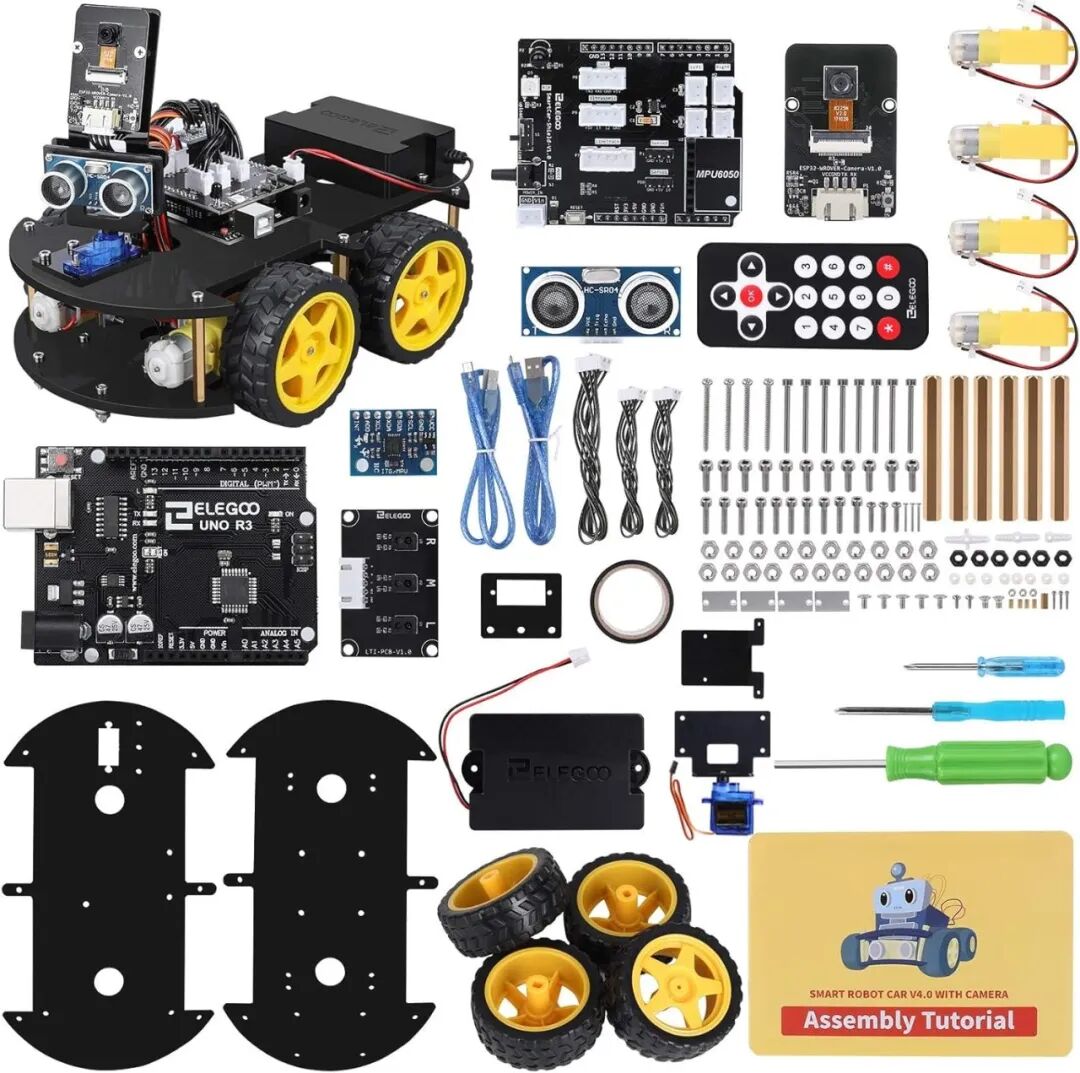
Within just one year of launching on Amazon, ELEGOO topped the programming electronic hardware category as the number one seller.
By the end of 2017, ELEGOO’s STEM series products generated revenue of 300-400 million yuan, with 98% of sales coming from Amazon.
2018 was a year of both “glory” and “anxiety” for ELEGOO.
ELEGOO made its first pot of gold by selling STEM educational kits. However, the ceiling for this category is relatively low.
No matter how well STEM educational kits sell, they are still a niche market. The market is small, and user stickiness is low, and once educational institutions change their teaching materials or enthusiasts change their methods, the product lifecycle becomes very short.
As a result, ELEGOO’s business growth became difficult to sustain, and as a “secondary developer” in the open-source ecosystem, it lacked a competitive moat. In this context, ELEGOO had to seek new growth opportunities.
ELEGOO discovered that many scenarios involving its STEM component users were related to 3D printers.
“After consumers buy programming electronic hardware, they end up with a pile of parts, and they need to use production equipment to print a shell, forming a product demo, so they also need to use 3D printers,” said Chen Bo.
At the same time, Hong Yingsheng also found that there were very few sellers who could do both “programming electronic hardware” and “3D printers”, and the combination of programming and 3D printing could make programming more tangible and realistic, turning many “ideas” into “reality”, greatly increasing user stickiness.
Ultimately, based on the demand point of “many ‘scattered electronic hardware’ needing to print a shell”, ELEGOO decided to enter the 3D printing field.
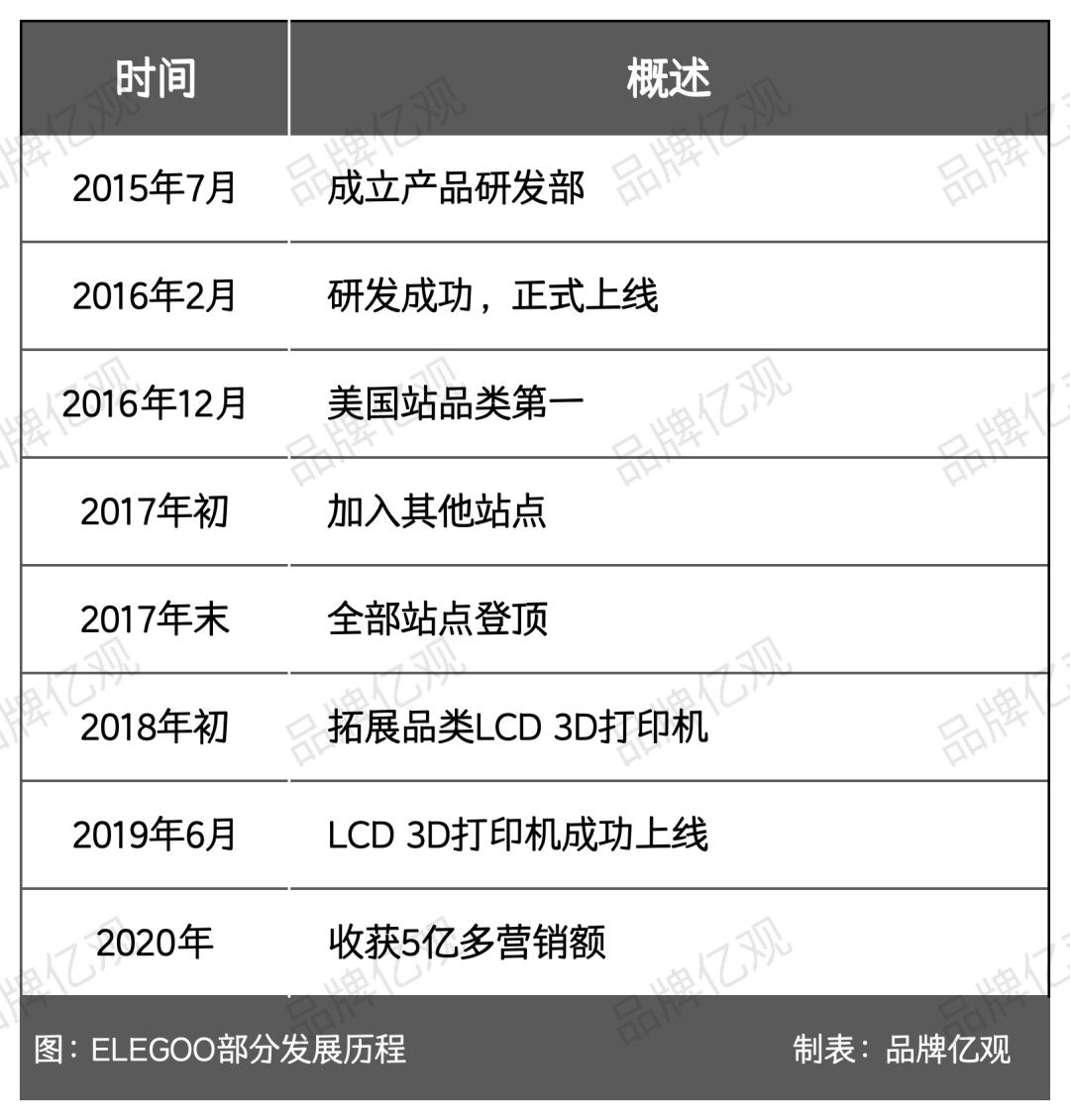
In 2018, ELEGOO officially shifted its focus from Arduino electronic programming hardware to 3D printing and laser engraving.
Initially, ELEGOO did not immediately develop its own 3D printers, but instead operated as an agent, selling 3D printing equipment produced by other manufacturers.
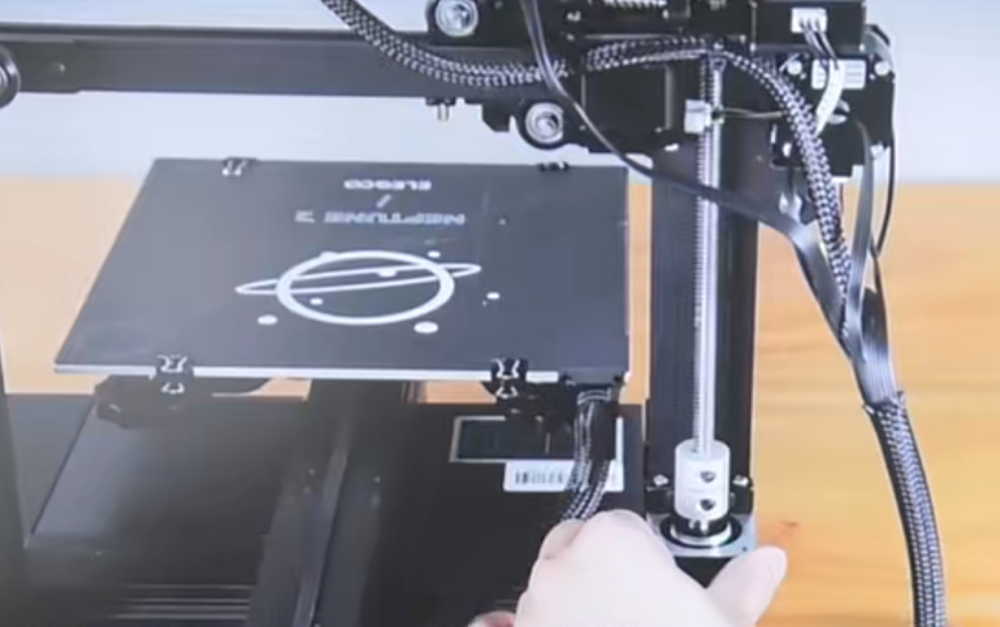
Image/ELEGOO’s 3D printer
This approach is actually similar to ELEGOO’s “assembly + packaging” strategy for programming electronic hardware, with low barriers to entry and limited profits.
However, this model revealed increasing issues in the more complex 3D printing machine field, as the capabilities of existing suppliers could no longer meet ELEGOO’s expectations for delivery quality and speed. For example, if a supplier’s module is delayed by two days, it can lead to delays in the entire machine’s delivery, and the compatibility of parts from different suppliers can affect product stability and quality, etc.
ELEGOO decided to procure core modules externally and then have its own team conduct research and development and manufacturing, achieving independent research and production of key modules.
This approach has yielded significant results, not only improving quality but also reducing costs to a lower level.
It is important to note that in terms of product selection, ELEGOO initially did not choose the more market-share-dominant FDM printers like other peers, but instead went against the trend by selecting LCD photopolymerization printers, which have higher prices and printing precision, as the breakthrough for its first-generation products.
Although FDM printers dominate the mainstream market and have faster printing speeds, their precision is limited, making it difficult to meet the applications of high-precision dental and craft models, while LCD models have advantages in these niche scenarios, forming a stable user base.
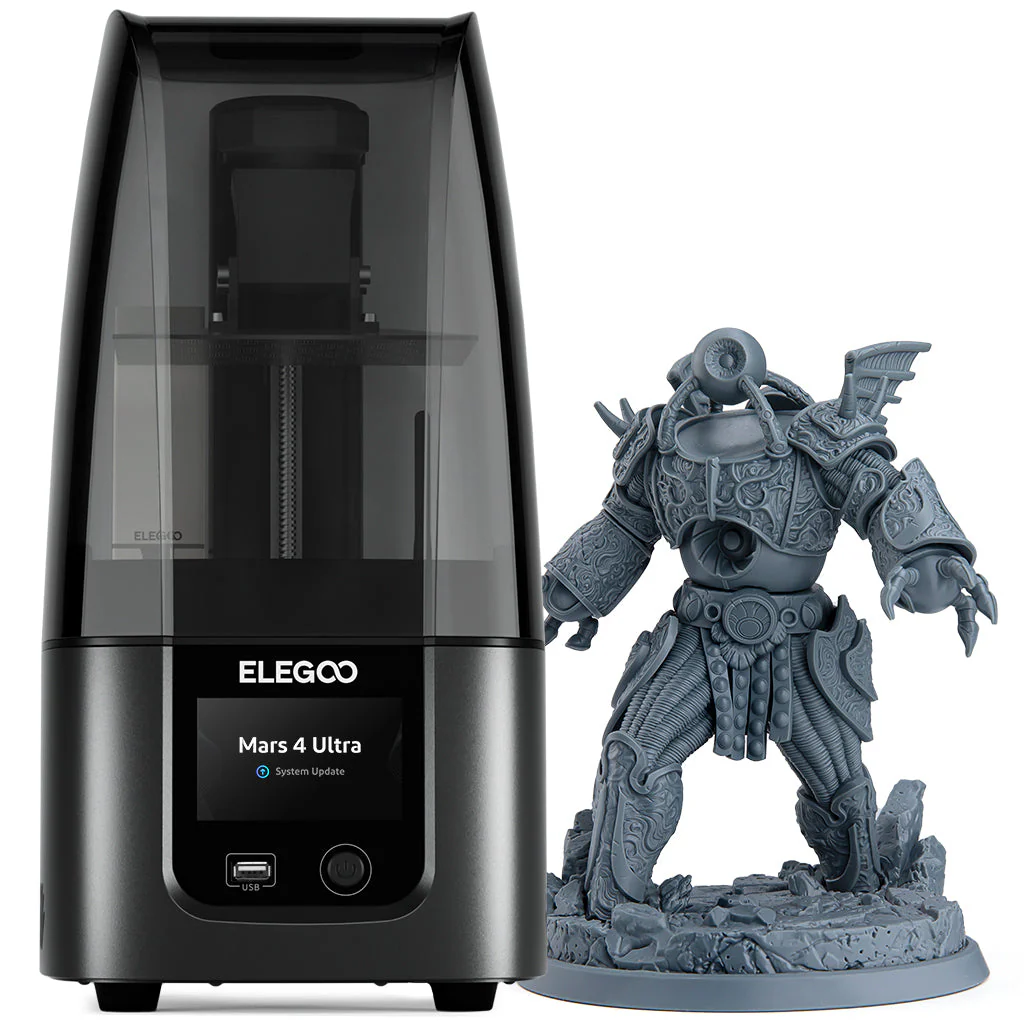
Image/ELEGOO’s LCD printer
Based on the precision advantages of LCD models, ELEGOO gradually “dug into” the large FDM user pool and converted them.
In the second half of 2019, ELEGOO developed an LCD photopolymerization 3D printer, priced at nearly half that of foreign brands, which was well-received by early seed users.
However, the rapid growth in orders exposed production issues.
With a surge in orders, the production capacity demand expanded from thousands to tens of thousands of units, and ELEGOO began to shift from “light asset operation” to “heavy asset manufacturing”, significantly increasing production management difficulty.
To address this, ELEGOO spent three years (2017-2019) optimizing its factory production systems and efficiency (including recruiting engineers, standardizing production lines, testing complete machine assembly processes, etc.). By 2019, its product quality and production capacity gradually stabilized.
Leveraging advancements in the industrial chain, ELEGOO continuously launched higher resolution printers, from 4K, 6K, 8K, to the 12K products launched in 2023.
Continuous high-frequency iterations have supported ELEGOO in creating popular products and increasing sales.
In June 2020, ELEGOO launched the Saturn series, a 4K resolution 3D printer priced at $500, only half that of competing products (ranging from $800 to $1000). As soon as the product was launched, it achieved sales of 3,000 units within three minutes.
In the same year, ELEGOO’s printer shipments reached 80,000 units, and annual revenue exceeded 500 million yuan.
ELEGOO was once referred to by consumers as “the price killer of 3D printers”, with its cheapest 3D printer abroad priced below $200, and the domestic price including tax around 1,000 yuan.
The fundamental reason is that ELEGOO benefits from integrating excellent integrators in the supply chain, collaborating deeply with them to develop and customize key components.
While many players follow a similar model, the level of supply chain optimization varies significantly among them. ELEGOO has focused on supply chain optimization, achieving a balance of cost, efficiency, and quality.
In terms of sales channels, ELEGOO primarily relies on Amazon and independent sites, with eBay and AliExpress as secondary channels. All B2C platforms are officially self-operated, allowing consumers to purchase products directly on these platforms as soon as they are launched, and the speed of product releases is faster than that of overseas brands.
02. Amazon: 3D Printing Consumables as the “Cash Cow”
On Amazon’s U.S. site, 3D printers are merely the “face” of ELEGOO, while 3D printing consumables are the “main support” for this steady business.
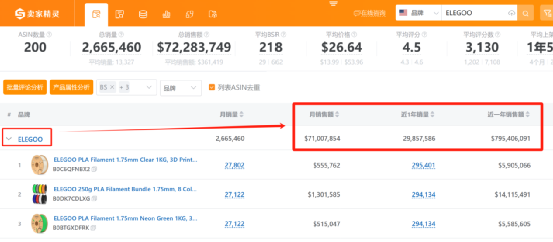
According to data from SellerSprite (www.sellersprite.com), in the last 30 days, the total sales of the top 200 ASINs under the ELEGOO brand reached 2.665 million units, with an estimated total sales of $71.08 million (possibly including some resales and brand authorizations).
Data Source/www.sellersprite.com
One of ELEGOO’s flagship products is the Neptune 3 Pro, which consistently ranks fourth on Amazon’s “3D Printing Equipment” Best Seller list. However, a closer look at the sales data reveals that its true “cash cow” is 3D printing consumables.
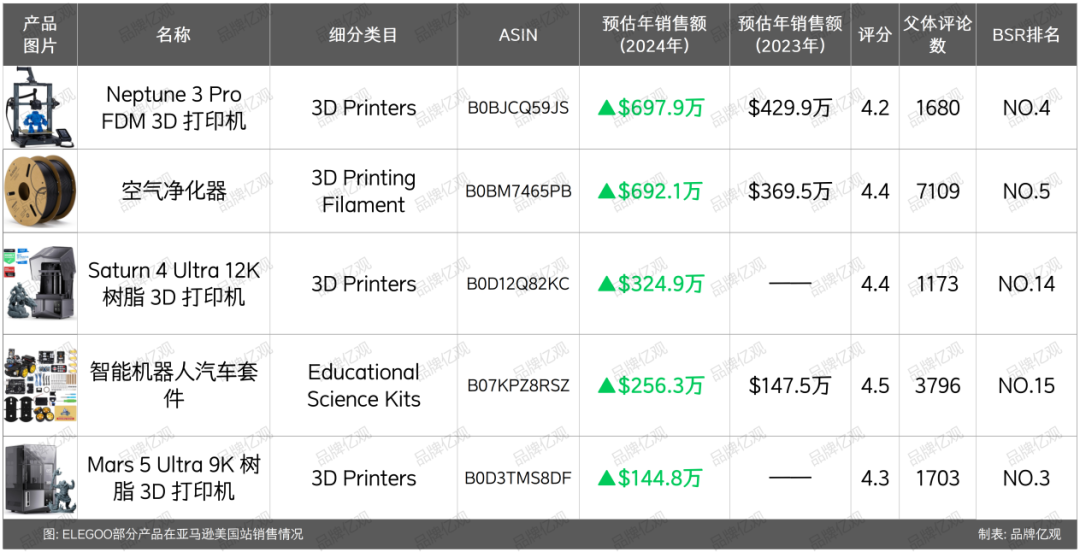
Brand Yi Guan observed that nearly all of its top 200 ASINs are 3D printing consumables.
With a range of 3D printing consumables priced between $10 and $30, ELEGOO has generated nearly $800 million in annual sales (estimated).
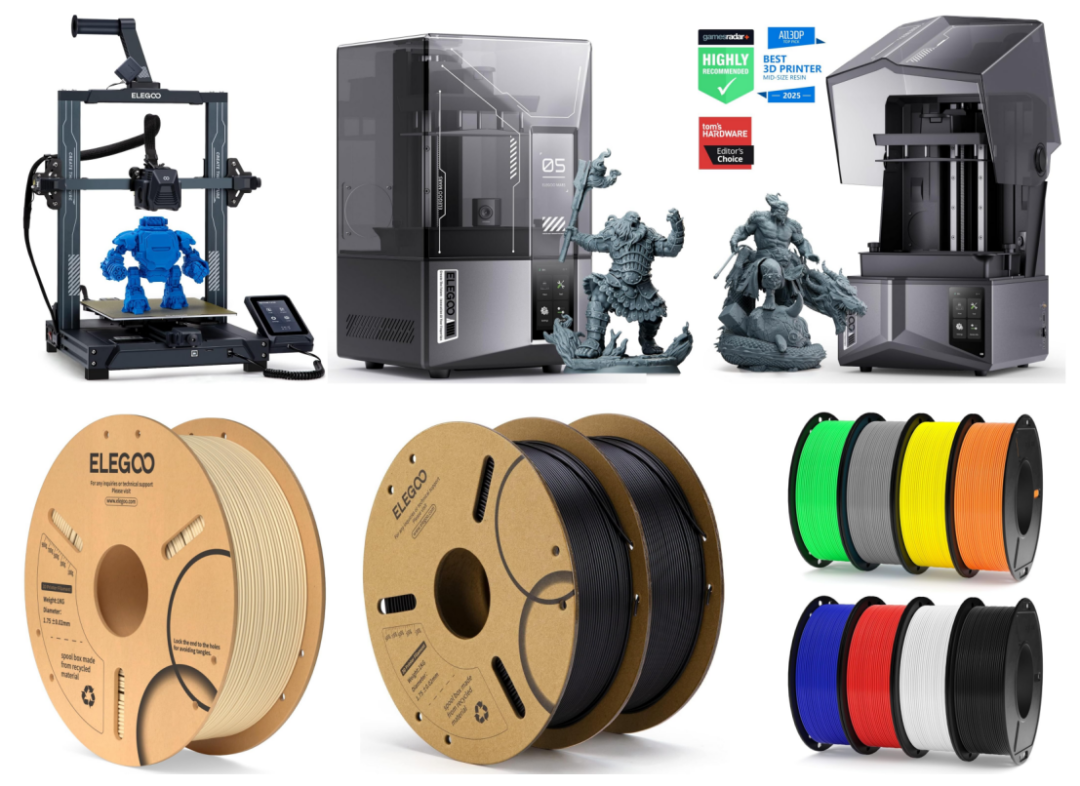
Users who purchase ELEGOO printers tend to prefer buying its original consumables. The consumable products are meticulously arranged into SKUs based on color, weight, and combinations.
Image/Various consumables for ELEGOO printers
such as 250g multi-color printing consumables, single-color dual-roll PLA, and high-repurchase single-color options suitable for most FDM printers, all have average ratings above 4.4, with cumulative reviews reaching tens of thousands.
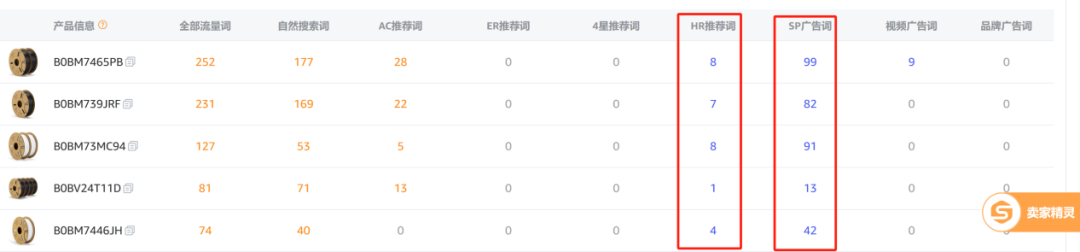
Of course, ELEGOO’s consumable products still rely on advertising support. For one of its best-selling consumables, 110 out of 252 traffic keywords are advertising keywords (including some organic traffic keywords).
 Data Source/www.sellersprite.com
A user who purchases a printer may use it for two to three years, but once they become “addicted”, such as printing figurines, architectural models, or engaging in some batch production projects, the consumption of consumables becomes as essential as “eating and drinking”.
ELEGOO’s Vice President Wang Bingbing stated that C-end users may print with consumables weighing 10 to 20 kilograms per month, while B-end users may purchase 100 to 200 kilograms.
03. Independent Site: Thriving Without Heavy Spending
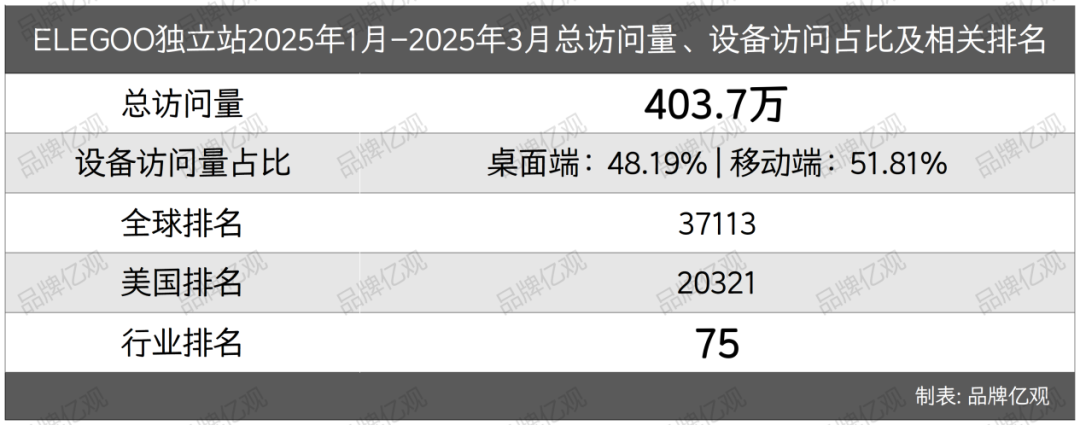
In the past three months, ELEGOO’s independent site has reached a total of 4.037 million visits. Among these, the desktop device visit share is 48.19%, and the mobile device share is 51.81%, ranking 75th in the industry.
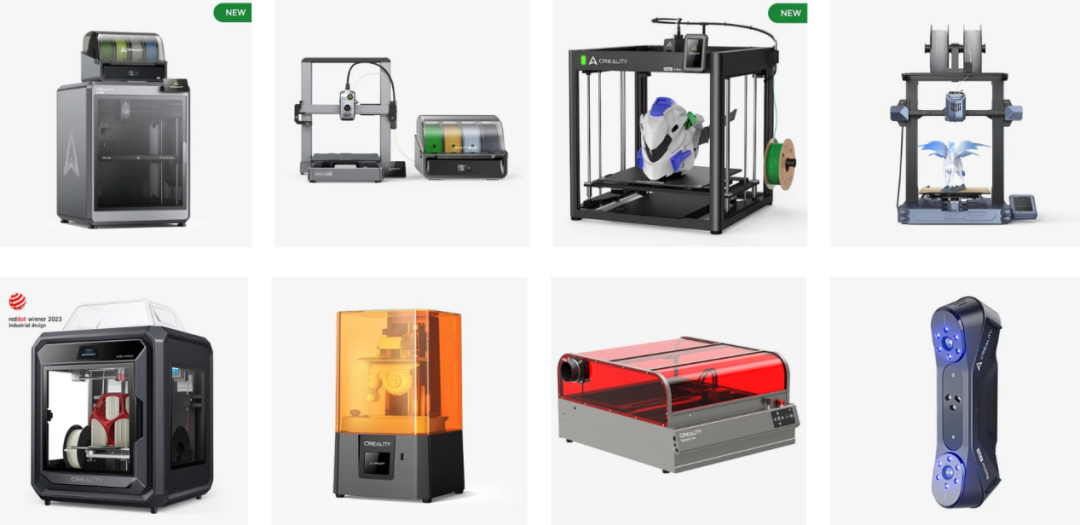
Brand Yi Guan learned that ELEGOO has some competitors in the international market, such as Creality, which covers consumer to industrial user needs, known for its high cost-performance ratio, Anycubic, and Bambu Lab, which focuses on serving the high-end market.
Among many competing brands, Creality and ELEGOO are closely competing in overseas markets.
Creality is somewhat like the “Xiaomi” of the 3D printing circle, with a rich product line covering entry-level Ender series, mid-to-high-end K series, and even laser engraving machines. Although it has a wide range of products, it is relatively weak in the photopolymerization segment, while ELEGOO is more focused in this area, with a relatively stable reputation.
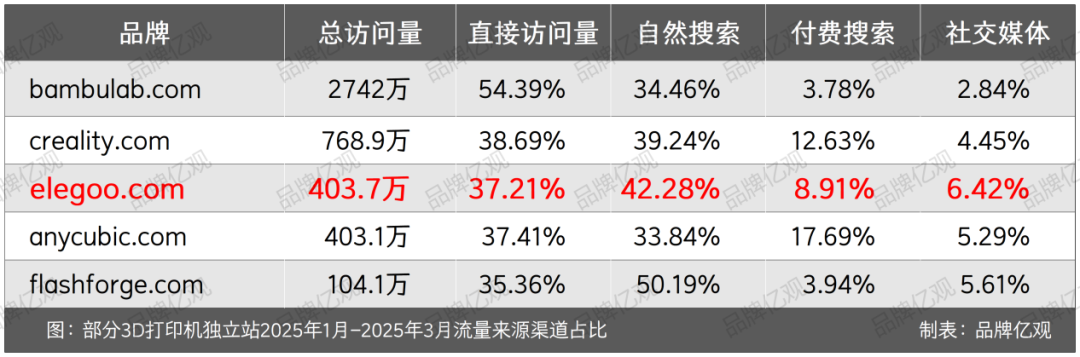
Among these competitors, although ELEGOO’s visit volume does not rank first, it maintains a high organic search share (42.28%).
Meanwhile, among the organic search share, 76% of users enter ELEGOO’s independent site through brand-related keywords, indicating that ELEGOO has a relatively high brand stickiness among users.
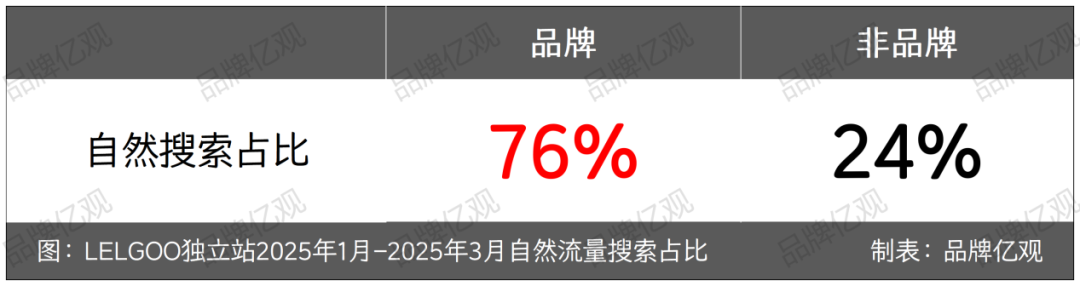
Overall, ELEGOO does not heavily rely on advertising for traffic, but rather on genuine user-initiated searches.
From the user profile perspective, ELEGOO is a typical enthusiast brand, with a very “hardcore” gender structure. Its male user ratio is 74.8%, while female users account for 25.2%.
This means that one must have some enthusiasm for technology and a penchant for hands-on activities to enter the world of ELEGOO. Just like LEGO has an “adult section”, ELEGOO attracts a group of adults with basic hands-on skills.
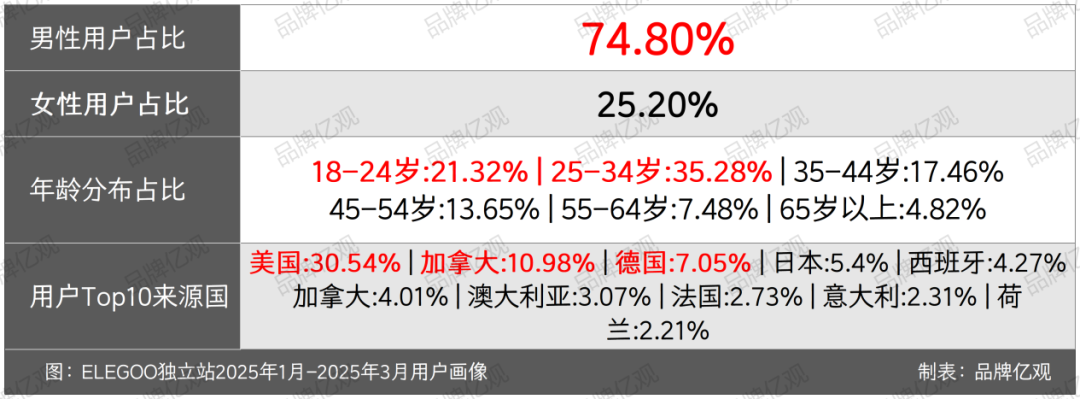
In terms of age distribution, the main consumer group of ELEGOO is concentrated in the 25-34 age range (35.28%) and 18-24 age range (21.32%). This group may not all be industrial engineers, but could also include animation modelers, cosplay prop makers, or beginners in the 3D printing business.
In terms of country distribution, over 30% of users come from the United States, followed by Canada (10.98%) and Germany (7.05%). These countries have mature DIY communities and hardcore player cultures, and ELEGOO has gradually brought users from social platforms to its independent site through YouTube tutorials, Reddit word-of-mouth, and the open-source ecosystem.
In terms of after-sales service, ELEGOO has partnered with the well-known American AI technology service company Seel, embedding transaction page plugins on its independent site to provide consumers with assurance options during the shopping process, alleviating many after-sales concerns for consumers, effectively reducing complaint rates and increasing repurchase rates.
According to comprehensive data from Statista, Shopify, Narvar, etc., the average return rate for independent sites in the North American market is as high as 20-30% (with footwear and apparel reaching 40%), while in the European market, it reaches 15-25%.
Among these, the return rate due to logistics issues (delayed delivery or lost packages, etc.) reaches 25% in North America and 20% in Europe.
To address this issue, ELEGOO has partnered with Seel to provide Worry-Free Delivery services.
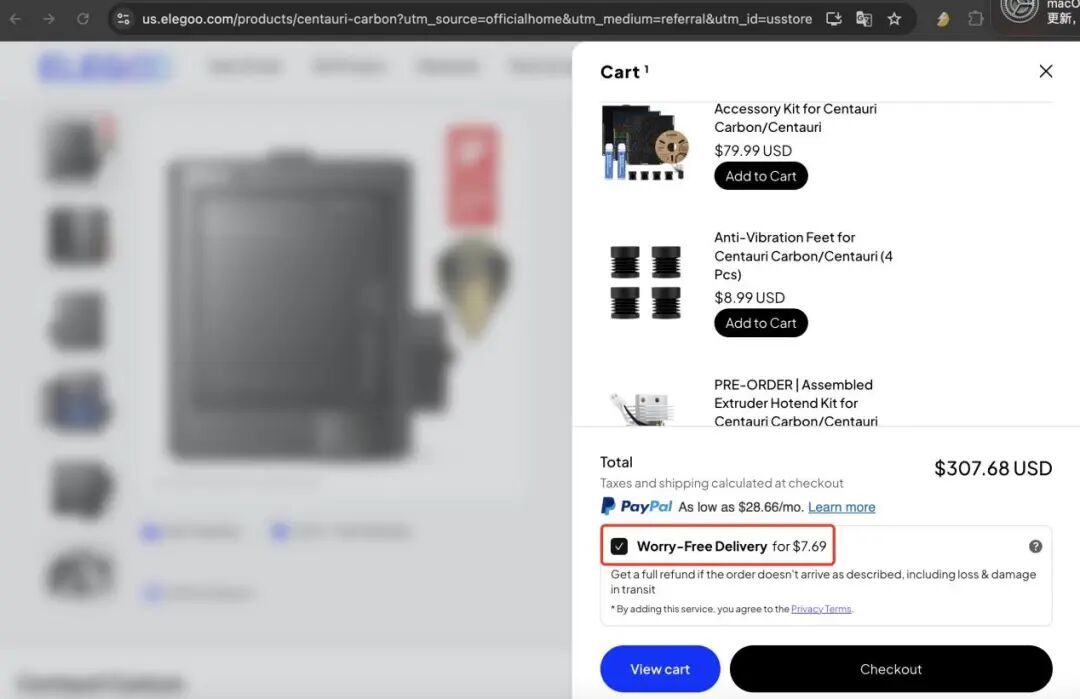
Image/The Worry-Free Delivery service displayed on ELEGOO’s independent site
During the payment process, customers will see the “Worry-Free Delivery” option on the ELEGOO page, allowing them to select it for a very low fee to receive compensation or even full reimbursement in cases of package delays, damage, or loss.
It is worth noting that the cost of the Worry-Free Delivery assurance service is not borne by ELEGOO, but by the consumers.
At the same time, to address customer concerns about “worrying about buying the wrong item and needing to return it” and “the product warranty period being too short”, ELEGOO has chosen Seel’s Free Return, Guaranteed Buyback, and Extended Warranty services to resolve a series of after-sales issues, resulting in a 35% decrease in negative reviews in the U.S. market and a significant increase in customer repurchases.
04. Social Media: 566,400 Followers Driving Brand Traffic
Social media contributes 6.42% of traffic to ELEGOO’s independent site.
Brand Yi Guan observed that ELEGOO has a solid social media following, with a total of 566,400 followers across major platforms like TikTok, Facebook, and Instagram.
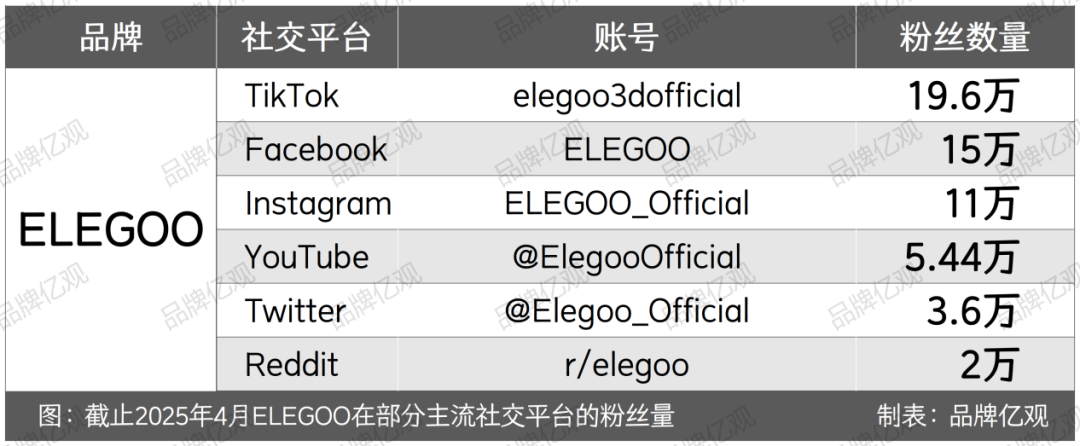
Among these, TikTok has the most followers (196,000), accounting for over 30%, followed by Facebook (150,000) and Instagram (110,000), while YouTube (54,400), Twitter (36,000), and Reddit (20,000) have fewer followers, but they play important roles in driving traffic to ELEGOO’s independent site.
From the structure of traffic driven by social media to the independent site, YouTube is the real “main battlefield”. Although it has only 54,400 followers, it accounts for nearly 70% of the traffic.
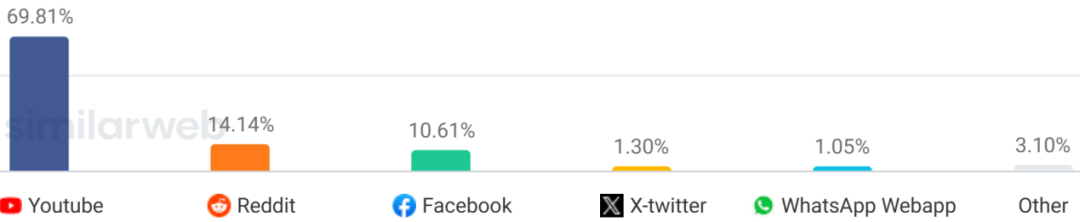
3D printing products are not easy to order impulsively; when buying a printer, users first need to “do their homework”, including watching reviews, tutorials, and case studies.
ELEGOO has created a wealth of mid-to-long video content on YouTube, covering how to level the machine, how to install the print head, how to adjust the Z-axis eccentric wheel, and other tips from entry-level to finished product printing. These reviews and practical content can meet users’ deep reading needs for ordering, and once they hit the users’ psychological expectations, they can improve conversion rates.
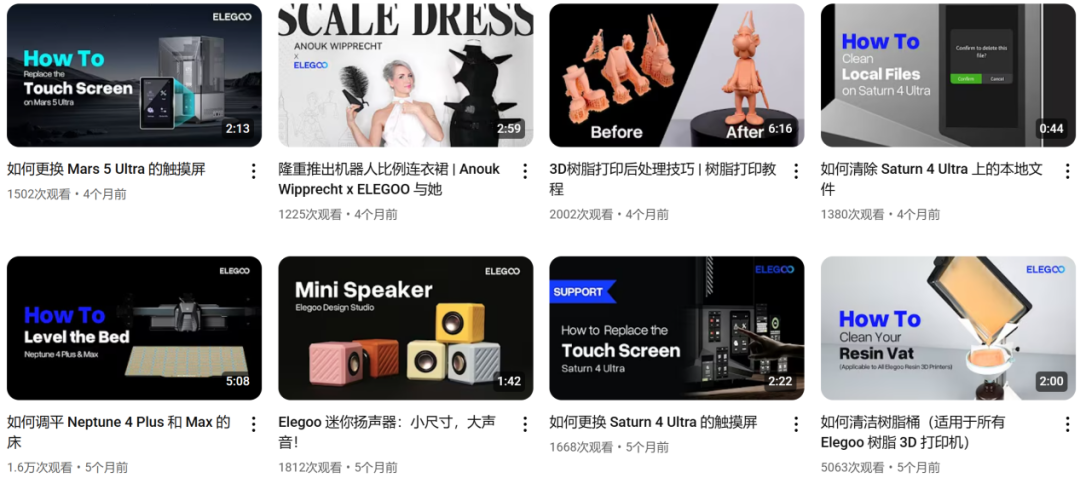
In contrast, although TikTok has the most followers, it has hardly appeared as a major traffic source for the independent site.
However, its TikTok account is not entirely ineffective. Its value in closed-loop conversion is gradually becoming apparent in the TikTok shop. Currently, ELEGOO’s TikTok shop in the U.S. has an estimated total sales of $13,300.
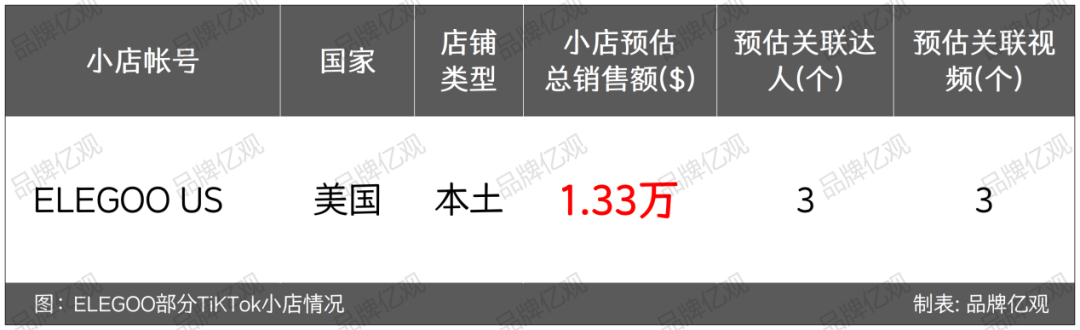
From this, it can be seen that while its TikTok followers are increasing, they are not being used to drive traffic to the independent site. Content is the key lever that can “pry users to place orders”.
TikTok is a “content consumption platform”, not a “product research platform”.
TikTok is more like an amplifier for “instant attraction”; it can quickly grab users’ attention in seconds, but it is not good at conveying complex products.
3D printing is a category with “high barriers and high learning curves”. Users care about product parameters, printing precision, compatibility of accessories, support for printing materials, whether the software is open-source, and printing speed, among a series of technical indicators.
These are the types of information that TikTok cannot convey, nor can it provide scenarios. Users who watch the videos are less likely to research the site’s manual; instead, they are more likely to casually order an entry-level model from the shop or share the video as a DIY inspiration reference.
Therefore, for ELEGOO, TikTok is more like a “shallow pool of traffic” + “brand splash”, mainly used for first-touch exposure. (Written by: Blue Ocean Yi Guan) Note: Some data and materials are sourced from third parties for industry reference only.