
On November 14, a landmark moment arrived for China’s chip industry as SiFive Technology launched the world’s first data center management chip based on the RISC-V architecture, named “Lion Mountain Chip.” Its flagship product, the JH-B100, also won the 20th “China Chip” Excellent Technology Innovation Product Award. This move not only marks the first large-scale commercial deployment of RISC-V in critical areas but also signifies a crucial breach in the server fortress long dominated by X86 and ARM.


1
Technological Innovation
RISC-V Enters Key Areas of Data Centers

The BMC chip is known as the “invisible steward” on server motherboards, serving as the “nerve center” of data center servers, responsible for hardware status monitoring, remote management, fault diagnosis, and system recovery, with high demands for reliability, real-time response, and security. This market has long been dominated by ARM architecture, while x86 occupies a core position in server CPUs.
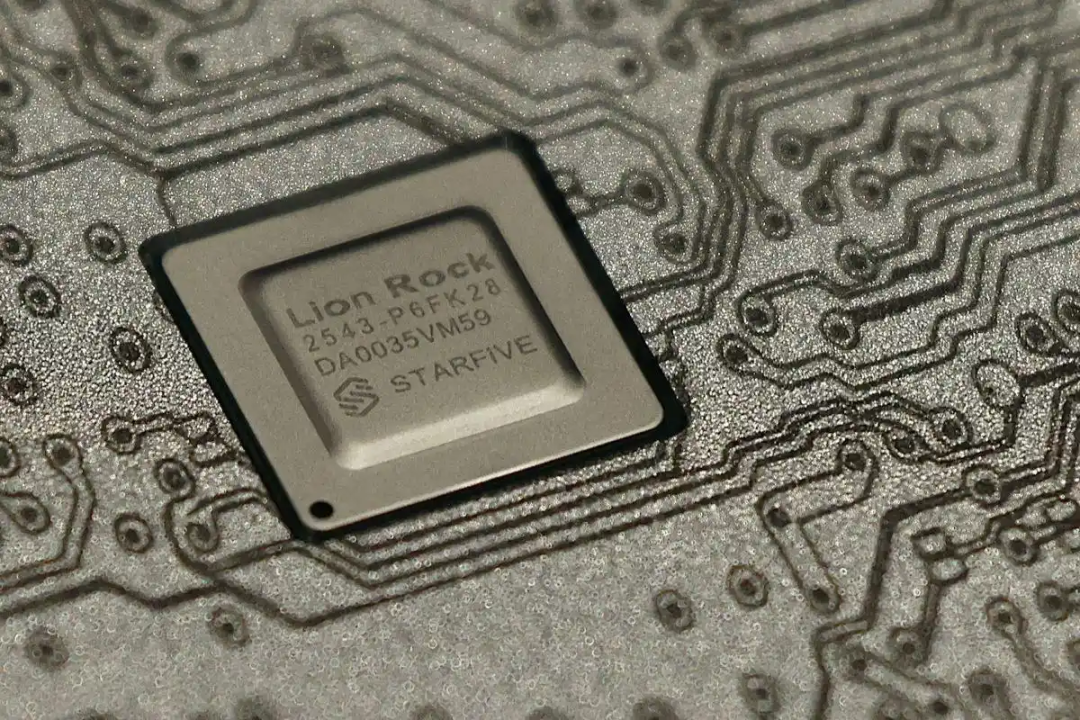
The emergence of the “Lion Mountain Chip” injects the inherent openness, customizability, and high energy efficiency of RISC-V into this core component. As the world’s first data center management chip based on RISC-V, it features SiFive Technology’s self-developed high-performance RISC-V core and a coherent on-chip network (NoC), achieving international mainstream levels in specifications, functions, performance, and power consumption. Additionally, the chip integrates a rich set of peripheral interfaces, supports diverse communication protocols, and includes security modules and dedicated AI engines, effectively defending against intrusion threats and promoting intelligent evolution in operations and maintenance management.
The launch of this product signifies that RISC-V has reached the technological maturity required to support enterprise-level critical tasks, achieving a leap from embedded and IoT scenarios to the core management field of data centers.


2
Market Restructuring
The BMC Chip Track Welcomes a “Third Pole”


Industry data shows that the annual shipment of global data center management chips is approximately 16 million units, expected to exceed 40 million units by 2030. In the face of this rapidly growing incremental market, the traditionally ARM-dominated BMC field is now encountering a strong competitor in RISC-V, an open instruction set.
The entry of RISC-V not only provides server manufacturers with a “third choice” beyond ARM and x86, enhancing their bargaining power and supply chain flexibility, but also helps reduce dependence on a single architecture, stimulates market competition, drives industry innovation, and thus enhances the resilience and diversity of global computing infrastructure. As a relatively independent yet crucial component in servers, BMC has become an ideal breakthrough point for RISC-V to penetrate the server market, laying a solid foundation for its future infiltration into core components such as CPUs, DPUs, and accelerator cards.


3
Expanding Scenarios
Taking a Key Step Towards Autonomous “Computing Power Foundation”

The launch of the “Lion Mountain Chip” not only showcases the company’s technological strength but also carries multiple strategic significances.
This is a substantial breakthrough in autonomous control. In the pursuit of core technology autonomy, the Chinese industry faces uncertainties from x86 licensing and ARM restrictions. Based on the completely open RISC-V instruction set, SiFive Technology has achieved full-stack capabilities from IP design and chip development to upper-layer software. This means that for the first time in the core management chip field of data centers, we have built a technology supply chain that is completely autonomous and free from external constraints.
This enhances China’s discourse power in the global RISC-V ecosystem. This move proves that the RISC-V architecture is fully capable of meeting the stringent requirements for reliability, performance, and stability in enterprise-level applications. As a leader, SiFive Technology’s success is not only a victory for one company but also greatly boosts the confidence of the entire RISC-V camp in advancing into high-end fields, enhancing China’s influence and discourse power in the global RISC-V ecosystem.
This injects new momentum into the “computing power foundation.” With the development of technologies like AI, computing power has become a core component of national competitiveness. Building efficient, green, and secure computing infrastructure requires innovation starting from the underlying chips. The birth of the “Lion Mountain Chip” provides new possibilities and foundational support for the differentiated development and continuous evolution of China’s computing power infrastructure.

Conclusion: The Power of Open Source Reshapes the Future of the Industry
The release of the “Lion Mountain Chip” is a successful “breaking of barriers.”
It announces to the world: RISC-V is no longer just a supporting role in IoT devices, but has grown into a mature force capable of penetrating the core of IT infrastructure and challenging the existing landscape.
The road ahead remains long, and the comprehensive construction of the ecosystem and large-scale commercial validation will still take time. But undoubtedly, the open “Lion Mountain Chip” illuminates the dawn of autonomy and diversification in computing power, opening up new imaginative spaces for the future of the global computing landscape.

*Some content generated by AI