1 Artificial Intelligence: The “Revolutionary Partner” in Programming
The relationship between artificial intelligence and programming is undergoing profound changes, evolving from a simple tool to a complex partner. This transformation is primarily reflected in two aspects: AI-assisted programming (AI for Coding) and AI autonomous programming (AI Coding).
AI-assisted programming has become the mainstream application today, significantly enhancing development efficiency through code completion tools like GitHub Copilot. These tools are trained on vast code repositories and can generate accurate code snippets based on context and comments, freeing programmers from repetitive coding tasks and allowing them to focus more on system design and architecture optimization.
In the realm of AI autonomous programming, although it is still in its early stages, progress is noteworthy. At the 2024 IDEA conference, experts pointed out that current AI has not yet reached the level of Artificial General Intelligence (AGI) and cannot fully replace human programming. Xu Shiwei, CEO of Qiniu Cloud, emphasized: “If large models could completely replace programming, it would mean they have reached the level of general artificial intelligence.” This is because programming is essentially an automated language used to accomplish complex tasks precisely and efficiently, while the inherent ambiguity of natural language makes it difficult to directly replace programming languages.
It is worth noting that AI’s impact on different types of programming tasks varies. In areas with higher fault tolerance (such as front-end development and simple script writing), AI has been able to automatically generate JavaScript and HTML code based on images; however, in system programming that requires high accuracy (such as type systems and operating system lock mechanisms), AI still struggles with deep complexity issues.
> Case Insight: The way Fields Medal winner Terence Tao uses ChatGPT provides inspiration. He utilizes AI to generate numerous random logical paths to assist in theorem proving, akin to having “thousands of brains” exploring possibilities simultaneously, but ultimately relies on human judgment to filter the correct paths. This perfectly illustrates the current positioning of AI in programming—enhancement rather than replacement of human intelligence.
2 Cryptographic Algorithms: The “Intelligent Guardian” of Data Security
The rapid development of artificial intelligence has created an urgent demand for robust cryptographic algorithms, especially in today’s context where data privacy protection is increasingly important. The intersection of AI and cryptographic algorithms mainly focuses on two areas: dynamic encryption technology and fully homomorphic encryption.
AI-based dynamic encryption represents a revolutionary advancement in cryptographic technology. Traditional encryption relies on static algorithms, while AI-driven dynamic encryption utilizes machine learning to analyze data flow characteristics and attack patterns, achieving adaptive adjustments in encryption strength. This technology can intelligently optimize encryption strategies based on context, ensuring security while enhancing computational efficiency, particularly suitable for high-concurrency, cross-network data transmission scenarios in mobile internet environments.
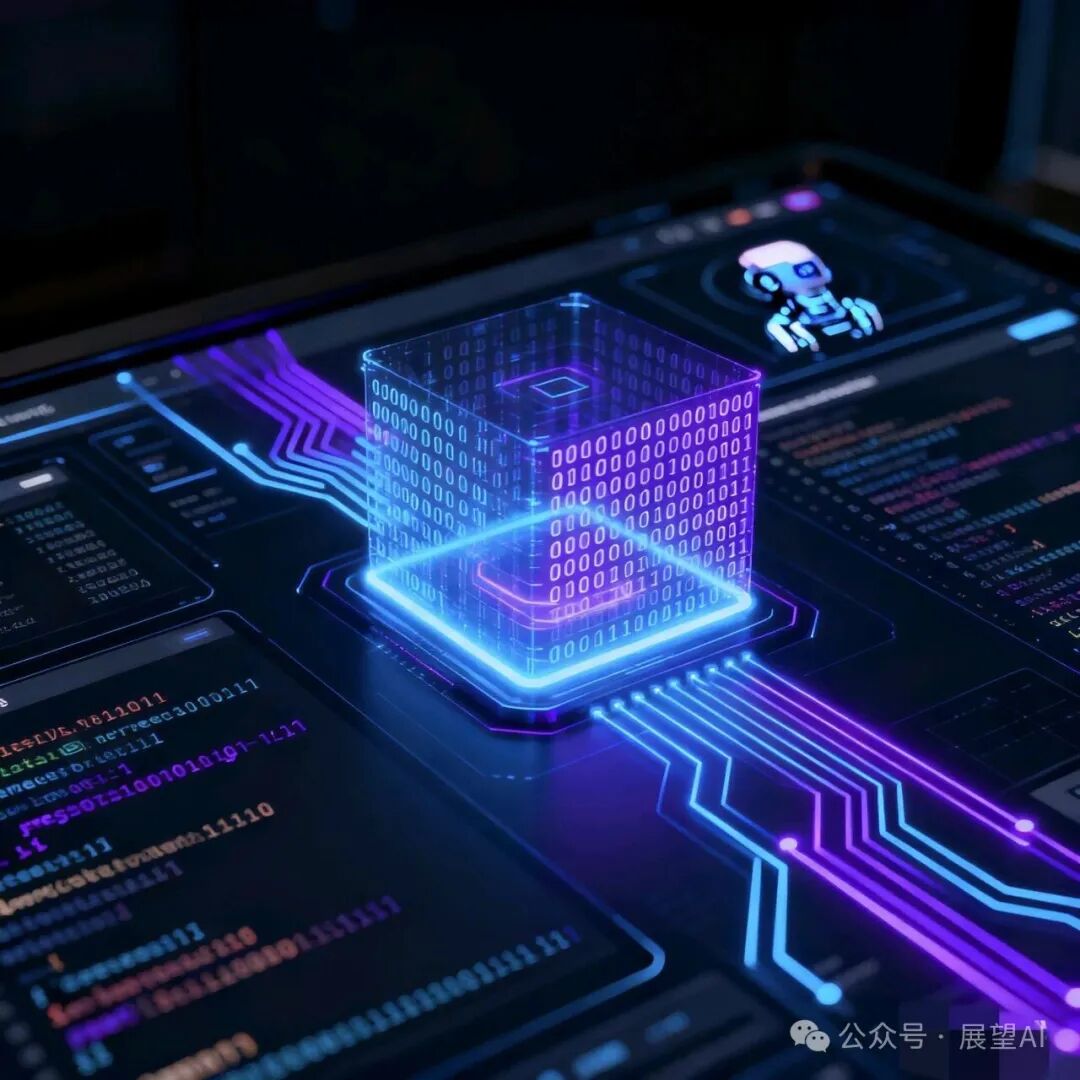
Fully homomorphic encryption is hailed as the “holy grail of cryptography.” This groundbreaking technology allows computations to be performed directly on encrypted data without decrypting the original data. This means that sensitive information remains in ciphertext form at all times, fundamentally addressing data privacy issues in cloud computing and AI services. For example, medical institutions can utilize fully homomorphic encryption technology to conduct AI analysis directly on encrypted medical record data, gaining medical insights without infringing on patient privacy.
However, fully homomorphic encryption currently faces significant challenges, primarily due to the enormous computational overhead and limited support for nonlinear operations, which restrict its widespread deployment in real-time AI applications.
The importance of cryptographic algorithms in the AI supply chain is also becoming increasingly prominent. The application of deep learning in key management, combined with federated learning and blockchain technology, is constructing a decentralized key management system, greatly enhancing key security and reliability.
3 Quantum Threats: The “Ultimate Challenge” for Cryptographic Algorithms
Today’s cryptographic systems are facing an unprecedented survival crisis, with threats arising from the emerging field of quantum computing.
3.1 How Quantum Computing Threatens Existing Encryption
Quantum computers utilize the principles of quantum superposition and quantum entanglement to solve certain mathematical problems at an exponential speed. Two key quantum algorithms pose a direct threat to existing encryption:
Shor’s Algorithm: Capable of solving large integer factorization and discrete logarithm problems in polynomial time, directly threatening asymmetric encryption algorithms like RSA and ECC. Theoretically, a sufficiently powerful quantum computer could break a 2048-bit RSA key in a few hours, while traditional supercomputers would require millions of years.
Grover’s Algorithm: Capable of searching unsorted databases with quadratic speedup, affecting symmetric encryption algorithms like AES, reducing the security strength of 128-bit AES to that equivalent to 64-bit.
3.2 “Harvest Now, Decrypt Later” Attacks
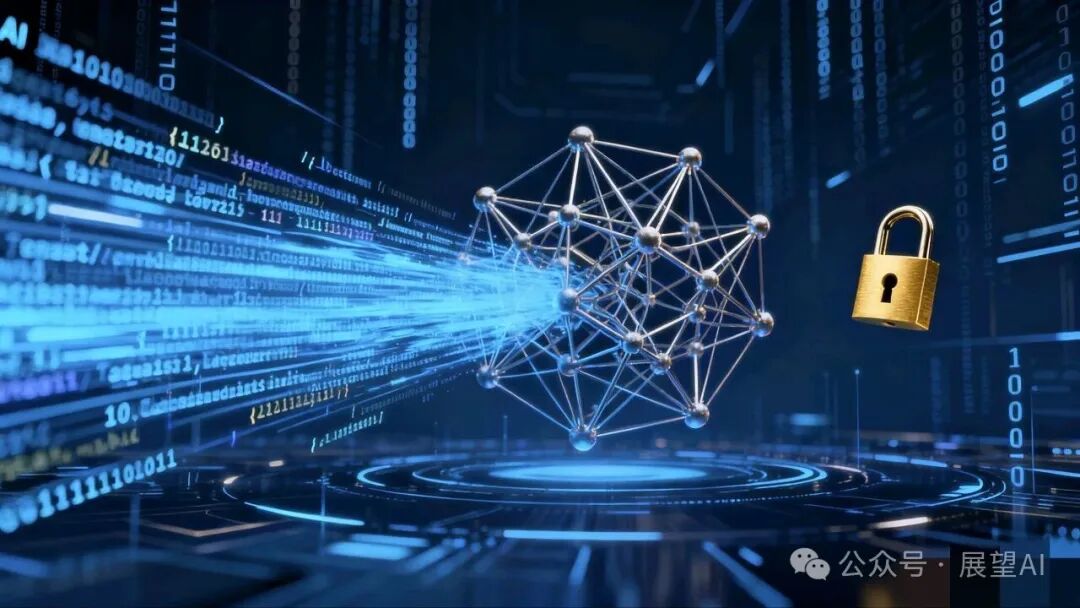
Most concerning is that quantum computers can pose a threat without needing to exist immediately. Attackers have begun adopting the “harvest now, decrypt later” strategy: collecting large amounts of currently encrypted data for storage, waiting until quantum computing matures to decrypt it. This means that sensitive communications intercepted today—whether business secrets, medical records, or government communications—may face exposure risks a decade later.
3.3 Post-Quantum Cryptography Responses
In response to this threat, post-quantum cryptography has emerged. In August 2024, the National Institute of Standards and Technology (NIST) released the first batch of post-quantum cryptographic standards, including:
– ML-KEM-1024 for encryption
– ML-DSA, SLH-DSA, FN-DSA for digital signatures
These algorithms are based on lattice-based cryptography, coding theory, and other mathematical problems, and are believed to be resistant to quantum computing attacks. The industry is generally adopting a hybrid approach, using both traditional and post-quantum algorithms to ensure backward compatibility and a smooth transition.
4 Programming Languages: The “Core Adhesive” of Tri-domain Integration
Programming languages serve as the bridge connecting human thought and machine execution, playing a critical role in the development of AI and cryptographic algorithms. The current programming language ecosystem is showing trends of diversification and specialization.
4.1 Mainstream and Emerging Programming Languages
Python, with its concise syntax and rich AI libraries, has become the preferred language for AI development. Its dominance in data science, machine learning, and web development makes it the most popular language among learners by 2025.
JavaScript continues to dominate web development, while Java remains significant in enterprise applications and Android development.
Among emerging languages, Rust is gradually replacing C++ in system programming due to its memory safety and concurrency advantages; TypeScript enhances the maintainability of large projects by adding static type checking to JavaScript.
4.2 Specialized Languages for AI and Cryptography
To meet the specific needs of AI and cryptography, specialized programming languages and frameworks are continuously emerging:
– Deep learning frameworks like TensorFlow and PyTorch provide high-level abstractions for building complex neural networks
– Programming libraries for fully homomorphic encryption enable developers to implement machine learning algorithms on encrypted data
– Solidity is rapidly growing in blockchain and smart contract development, reflecting the technical community’s adaptability to new working methods
4.3 The Rise of Low-Code/No-Code Platforms
Low-code and no-code development platforms are lowering the barriers to programming, allowing users to quickly create applications through graphical interfaces and pre-built components. This does not mean the end of traditional programming languages, but rather provides developers with a new layer of abstraction, enabling them to focus more on business logic and the implementation of innovative features.
5 Future Outlook: Three Major Trends in Integrated Development
The intersection of artificial intelligence, programming, and cryptographic algorithms will give rise to a series of transformations in the coming years, with the three fields deeply integrating and redefining technological boundaries and human-machine relationships.
5.1 The Popularization of AI and the Democratization of Programming
Programming is shifting from being “mastered by elites” to “everyone can program.” Xu Shiwei, CEO of Qiniu Cloud, predicts: “In the future, the term ‘programmer’ may resemble ‘writer’ in human society. Everyone can write something, but there will still be professional writers.”
This shift is driven by a fundamental change in human-machine interaction. As the number of robots is expected to reach 80 billion (far exceeding the human population of 8 billion), human interaction with machines will increasingly rely on simplified programming interfaces, with AI acting as an intermediary to convert natural language instructions into precise machine instructions.
5.2 Edge Computing and Endpoint AI Encryption
Endpoint devices are becoming an important battleground for AI applications. Liang Yuning, CEO of Jianshi Technology, points out: “Endpoint devices are the first to fully utilize artificial intelligence.” With the proliferation of AI notebooks (AIPC), the ability to run AI models locally has significantly increased, and the second-generation RISC-V notebooks can now run large models with 7 billion parameters.
The rise of endpoint AI presents new requirements for encryption—achieving efficient and secure computing in resource-constrained environments. The combination of lightweight encryption algorithms and edge AI models will be key to the security of future devices.
5.3 The Fusion of Quantum Security and AI-Driven Encryption
Post-quantum cryptography is expected to enter the mainstream deployment period between 2026 and 2030. However, the adoption of post-quantum cryptography is not the end, but a new starting point. Future cryptographic systems will present a three-layer architecture:
1. Traditional encryption ensures backward compatibility
2. Post-quantum cryptography resists quantum attacks
3. AI-driven dynamic encryption provides context-aware security
Yao Cheng, head of China research at JPMorgan Securities, believes that the key in the AI field in 2026 will be “the popularization and innovation at the application end,” and the success of vertical models depends on high-quality industry data and reasonable training methods. Similarly, cryptographic algorithms also need to be optimized for different application scenarios to achieve the best balance between security and efficiency.
Conclusion
The three technological fields of artificial intelligence, programming, and cryptographic algorithms are converging at an unprecedented speed, collectively shaping our digital future.
– AI is evolving from a tool to a partner, redefining how we communicate with machines
– Programming is gradually transforming from a specialized skill to a universal literacy, driving the digitalization process across society
– Cryptographic algorithms are continuously evolving under the threat of quantum computing, safeguarding the security baseline of the digital world
These three fields are jointly writing the narrative of technological development: solving old problems through innovation and embracing new challenges through breakthroughs. Their relationship is not only one of collaborative development but also mutual reshaping—AI changes the way we write code, new programming paradigms enable more powerful AI, and cryptographic technology ensures that all of this evolves within secure boundaries.
As we look towards the future at the end of 2025, it is certain that the integration of these three will continue to profoundly change technological forms, business models, and even social structures. Understanding their interactive relationships is not only a professional requirement for technical personnel but also an essential literacy for all participants in the digital age. The future winners will be those individuals and organizations that can innovate at the intersection of these three fields.