 Click the blue text | Follow us
As the focus of competition in the automotive industry shifts from horsepower to computing power, and as the wave of “software-defined” technology has not yet subsided, the call for “AI-defined” vehicles has already sounded. The global automotive industry is undergoing a profound transformation not seen in a century. In this transformation, computing power is the new engine, architecture is the new chassis, and ecological cooperation has become the passport to the future.
As a provider of the underlying computing architecture for the vast majority of automotive chips globally, how does Arm respond to this change? How will its strategic focus and product layout shape the future of intelligent vehicles? Suraj Gajendra, Vice President of Products and Solutions at Arm’s Automotive Division, and Robert Day, Marketing Director of Arm’s Automotive Division, were interviewed by the media to elaborate on Arm’s thoughts and actions in the era of “AI-defined vehicles”.
1Hardware Foundation: Pre-integrated and Scalable Computing Subsystems
In the face of the industry’s trend from distributed to centralized automotive electronic and electrical architecture, and the nearly endless demand for AI computing power, traditional chip design models face severe challenges of long cycles, high complexity, and rising costs. Suraj Gajendra clearly pointed out: “As automotive applications increase their demand for computing, chip design has also become more complex. Partners need to spend more time designing and implementing these systems. This is the key reason we launched the computing subsystem.”
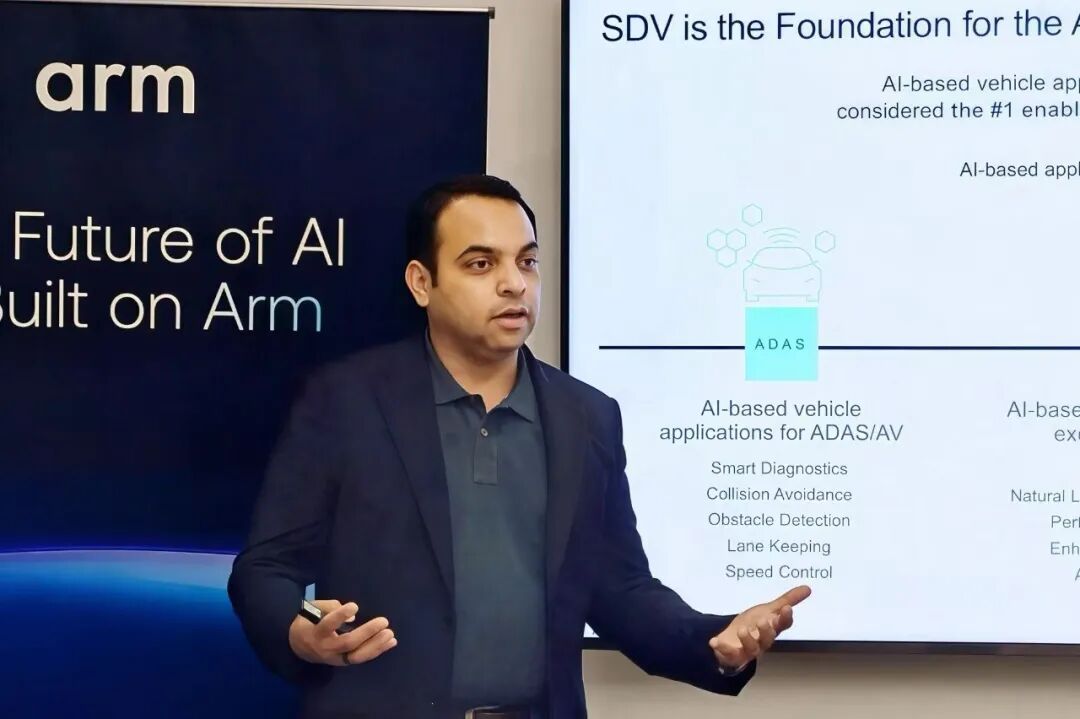
Suraj Gajendra, Vice President of Products and Solutions at Arm’s Automotive Division
The core product he mentioned is the Arm Zena computing subsystem, which was released by Arm in mid-2023. Suraj Gajendra explained that Zena CSS, as a pre-validated and pre-integrated computing platform, helps customers manage the complexity of computing, allowing them to focus resources on differentiated innovation. “Customers can reuse core computing components and iterate their products through upgrades of the AI accelerator subsystem, additions of I/O, or adjustments of other functions.” This model is believed to shorten the chip development cycle by up to 12 months and significantly reduce engineering investment.
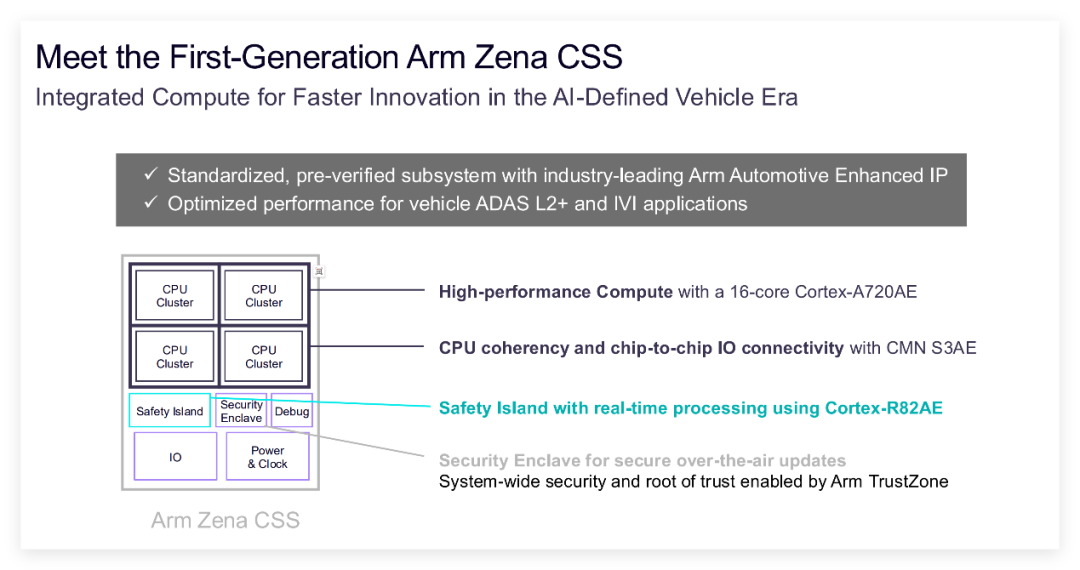
Scalability is another key design principle of Zena CSS. Suraj Gajendra emphasized that Arm is committed to building a scalable computing architecture to meet the AI computing power needs of various levels of ADAS from L2 to L4. The core computing unit of Zena CSS can empower nearly all computing scenarios in the vehicle, whether it is smart cockpit, ADAS, or higher-level driving assistance. This flexibility allows partners to program and customize the computing subsystem according to their needs, whether in terms of the number of CPU cores or other resource configurations.
2Addressing Computing Power Challenges: Chiplet Architecture and Open Standards
To meet the extreme AI workload computing power expansion needs, an important technological trend in the semiconductor industry—”chiplet” technology—is being introduced into the automotive field. Suraj Gajendra stated: “Our approach is to natively support chiplet architecture in Zena CSS. Partners can integrate multiple chiplets based on Zena CSS within a single package through the UCIe interconnect standard, thereby building more scalable solutions.”
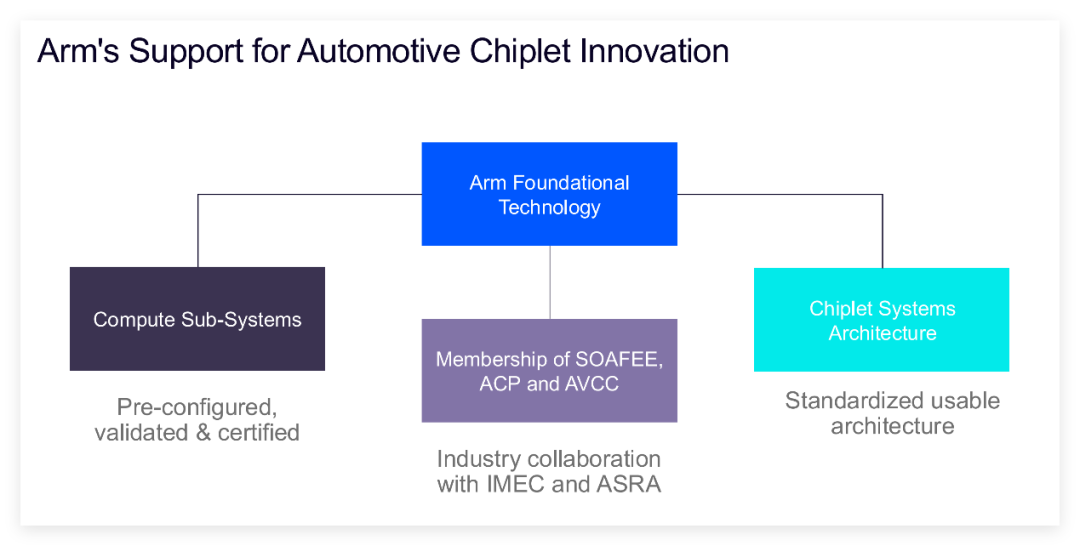
However, the potential of chiplet technology relies on openness and collaboration. “If every company adopts different chiplet standards and architectures, it will ultimately be difficult to achieve seamless collaboration,” Suraj Gajendra pointed out the common challenge in the industry. To this end, Arm is actively promoting the establishment of industry-wide standards. He specifically mentioned a key contribution: “In October of this year, we contributed a neutral architecture version of the Arm chiplet system architecture that does not depend on specific vendors or bind to CPU architectures to the Open Compute Project.” This initiative aims to bring the successful open collaboration model from the data center field into the automotive industry, laying the foundation for a strong and open chiplet market that benefits vehicle manufacturers, tier-one suppliers, and semiconductor manufacturers alike.
3Software-Defined Soul: SOAFEE Ecosystem and Cloud Development
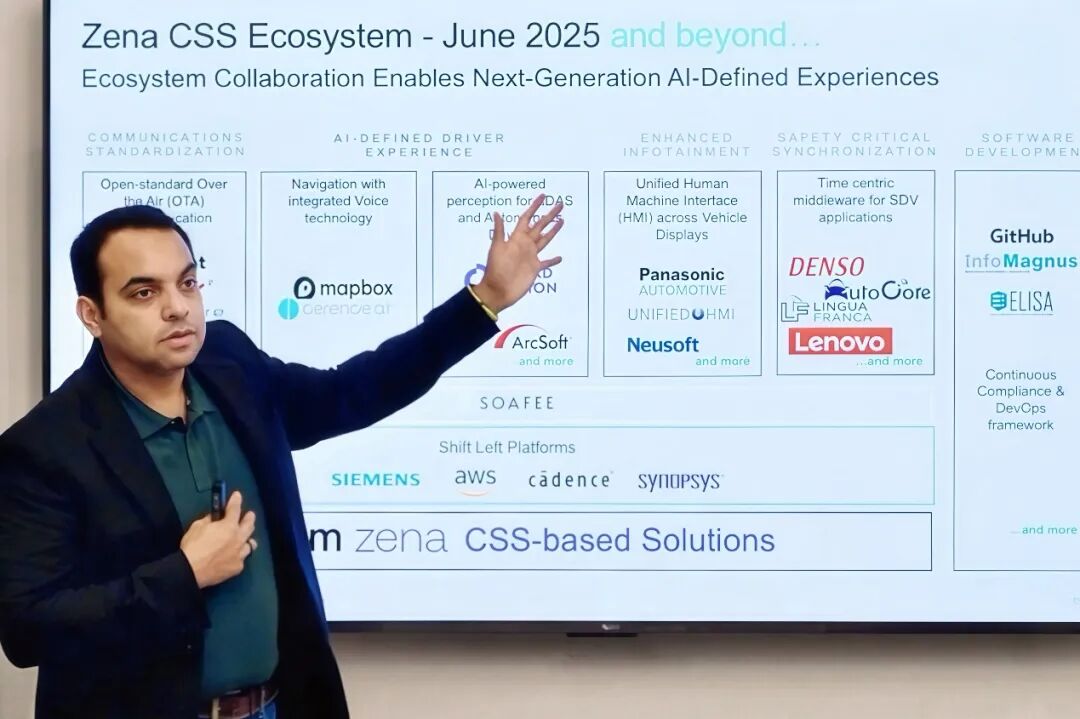
In Arm’s blueprint, the standardization of hardware must go hand in hand with the standardization of software. As early as 2021, Arm, together with ecosystem partners, initiated the establishment of SOAFEE, aimed at building an open and standardized software infrastructure for the next generation of intelligent vehicles. Now, four years later, the SOAFEE ecosystem has flourished. Robert Day introduced: “Today, SOAFEE has celebrated its fourth anniversary and achieved significant milestones: the number of global members has exceeded 150, with 38% from the Asia-Pacific region.”
The core value of SOAFEE lies in achieving hardware-software decoupling and accelerating the development process. Robert Day elaborated on its implementation progress: “SOAFEE.next has entered the implementation phase, with its core value being to create a new cloud development environment for software-defined vehicles. This allows developers to run and test software in the cloud before the actual vehicle delivery, significantly shortening the SDV development cycle.” The SOAFEE blueprint project also provides practical cases to demonstrate how various technologies and use cases operate under the SOAFEE architecture, offering valuable references and starting points for developers.
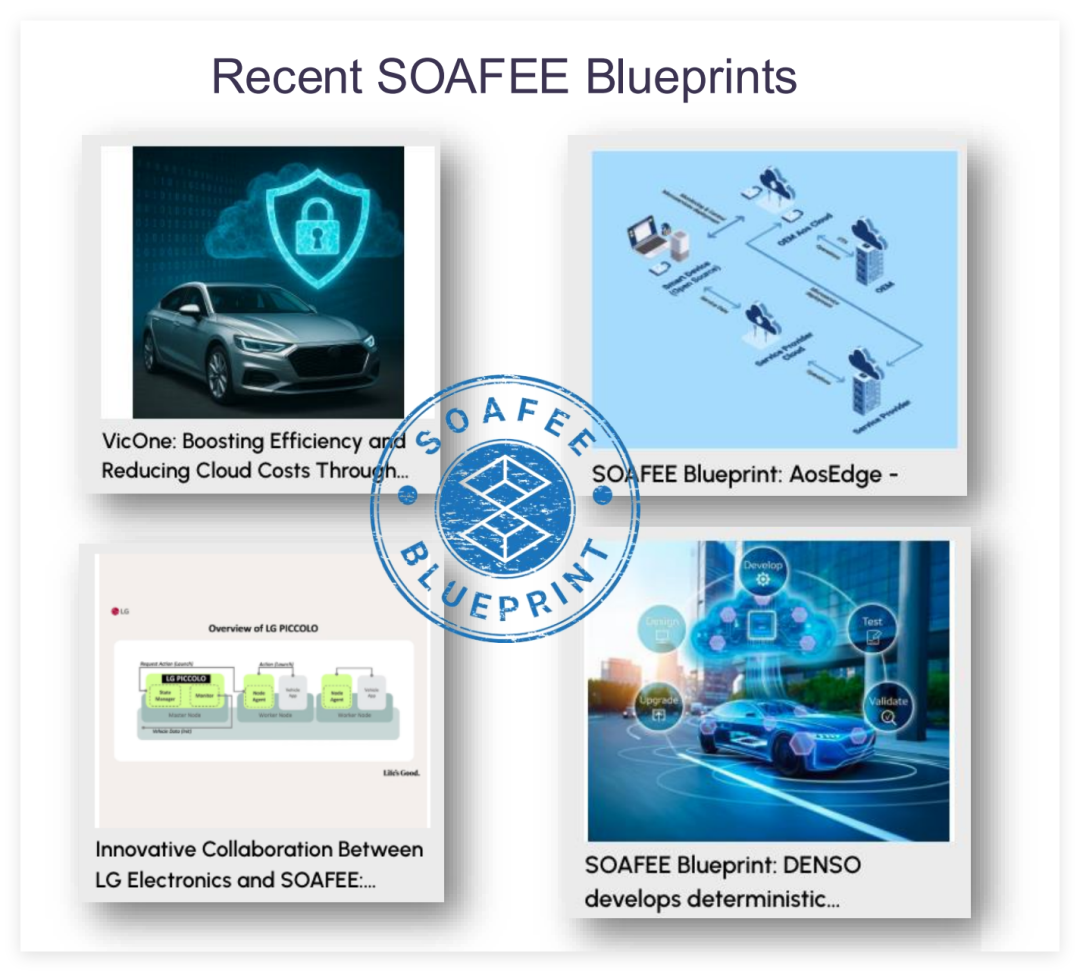
In the Chinese market, the ecosystem construction of SOAFEE is also active. Robert Day pointed out: “The Chinese automotive industry has shown strong interest in adopting SOAFEE-related technologies.” He listed several Chinese partners, including Geely, GAC Group, Zhongke Chuangda, and Lenovo. To deepen regional collaboration, SOAFEE established an Asia-Pacific regional center in 2024. Robert Day stated: “Here, SOAFEE members can discuss region-specific issues or engage in regional collaboration, and feedback the results to the SOAFEE special interest group.” Through close interaction with OEMs, SOAFEE can better understand and meet their specific demands in software infrastructure and future R&D directions.
4Focusing on China: Embracing ‘Chinese Speed’ and Deep Cooperation
The Chinese market occupies a crucial position in Arm’s automotive strategy. Suraj Gajendra emphasized in the interview: “The Chinese market is vital for Arm’s automotive business,” praising that “the Chinese market provides a vivid example: Chinese OEMs and partners are at the forefront, driving the application and implementation of these new technologies.” This “Chinese speed” is the rhythm that Arm must keep up with.
Regarding cooperation with leading domestic new energy vehicle companies, Suraj Gajendra revealed: “We maintain close and in-depth cooperation with leading Chinese automakers such as Xpeng, Li Auto, and NIO.” He further explained that this cooperation is open and two-way: “We are honored to engage in candid and open communication with them, listening to their challenges in technology R&D and specific needs in vehicle intelligence scenarios. Leveraging Arm’s rich experience and forward-looking insights in automotive computing, we optimize computing architecture and hardware-software ecosystem support solutions accordingly, with the ultimate goal of ensuring our technology can more accurately adapt to their innovation paths.”
In the cooperation model with domestic OEMs, Arm demonstrates flexibility. Suraj Gajendra introduced that Arm communicates with an “overall solution” mindset, not only introducing core technologies but also sharing reference SDKs and solutions developed in collaboration with different partners. Robert Day added that from the perspective of SOAFEE, OEMs are the end users and beneficiaries: “We invite OEMs to share their needs and requirements with us so that we can help build the functionalities and capabilities they truly need within the SOAFEE framework, whether at the interface, blueprint project, or other levels.”
5Future Outlook: AI-Defined Vehicles and Ecological Win-Win
As vehicles transition from mere transportation tools to intelligent terminals, the definition of user experience is undergoing fundamental changes. Suraj Gajendra depicted a seamlessly integrated future scenario: “Users will enjoy a seamless experience across different scenarios. For example, when preparing for work, you can check traffic conditions at home through smart devices, and when you sit in the car, the conversation with the device can continue seamlessly without needing to repeat questions.” This personalized AI experience requires seamless collaboration between devices, supported by a powerful computing platform and a consistent software architecture.
However, Arm understands that the road to AI-defined vehicles cannot be traveled alone. Suraj Gajendra firmly stated: “The most critical point is that no single company can achieve the mission of ‘AI-defined vehicles’ alone. We must collaborate closely with the entire ecosystem. Therefore, promoting open standards is crucial—whether it is the software architecture we advocate in SOAFEE or the chiplet interconnect standards promoted through FCSA.” This commitment to open standards and ecological cooperation may be the core foundation for Arm’s continuous leadership in the grand evolution of intelligent vehicles.
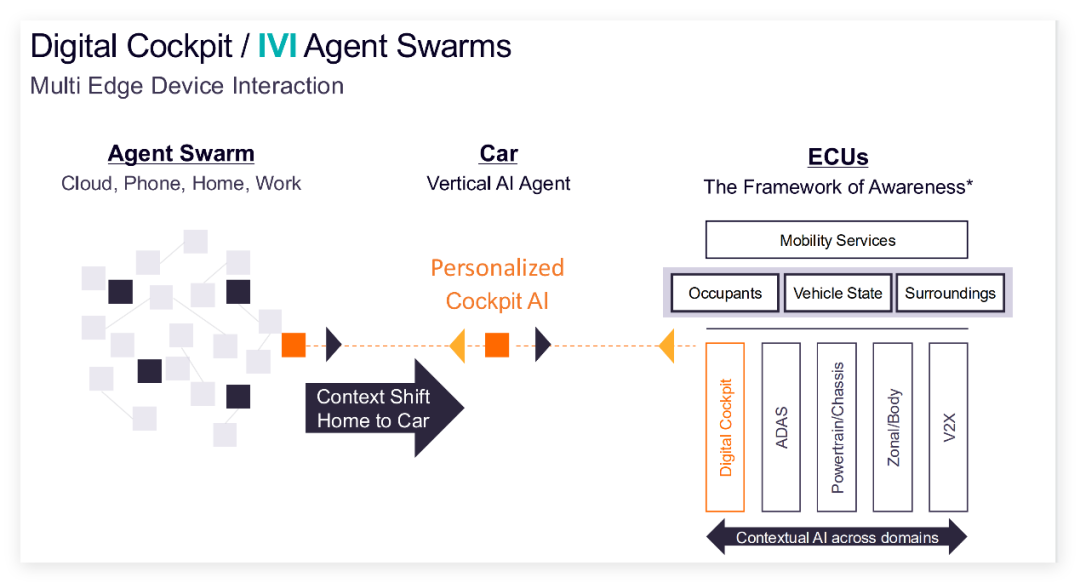
In the arena of intelligent vehicles, the technological routes are complex and the market landscape is ever-changing, but the foundational role of underlying computing architecture is becoming increasingly prominent. Arm is leveraging its deep accumulation in computing to build a hardware foundation through Zena CSS, shaping the software soul through SOAFEE, and vigorously promoting the standardization and ecologicalization of cutting-edge technologies such as chiplets.
Its strategic core is clear and resolute: to respond to complexity with openness, to drive innovation through collaboration, and to work hand in hand with partners globally, especially in the Chinese market, to jointly pursue a future of vehicles defined by AI, characterized by greater individuality and intelligence. This profound industrial transformation is not only a challenge to technological limits but also a test of ecological wisdom, and Arm has already provided its answer.
 Share
Share Collect
 View
View Like
Like