 Produced by Zhineng Zhixin
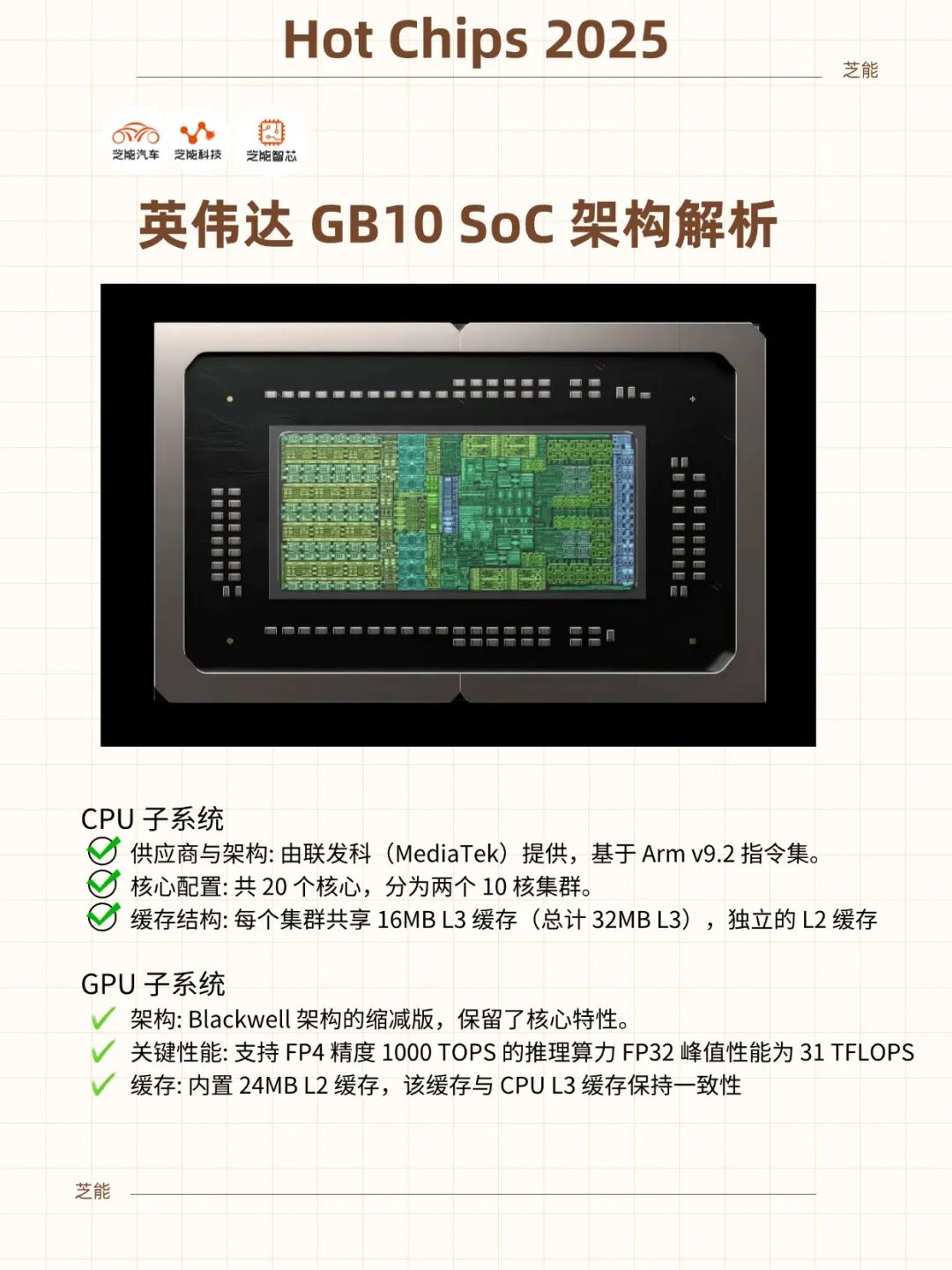
At the 2025 Hot Chips conference, NVIDIA officially detailed its latest GB10 SoC architecture, which is a “miniaturized” application of the Blackwell architecture GPU. Through collaboration with MediaTek, it integrates 20 Arm v9.2 CPU cores with a high-performance GPU in a single 2.5D package, forming a compact version of Grace Blackwell.
The launch of GB10 is not merely about performance stacking; it is an overall solution aimed at high-performance workstations, desktop-level AI development, and lightweight data centers.
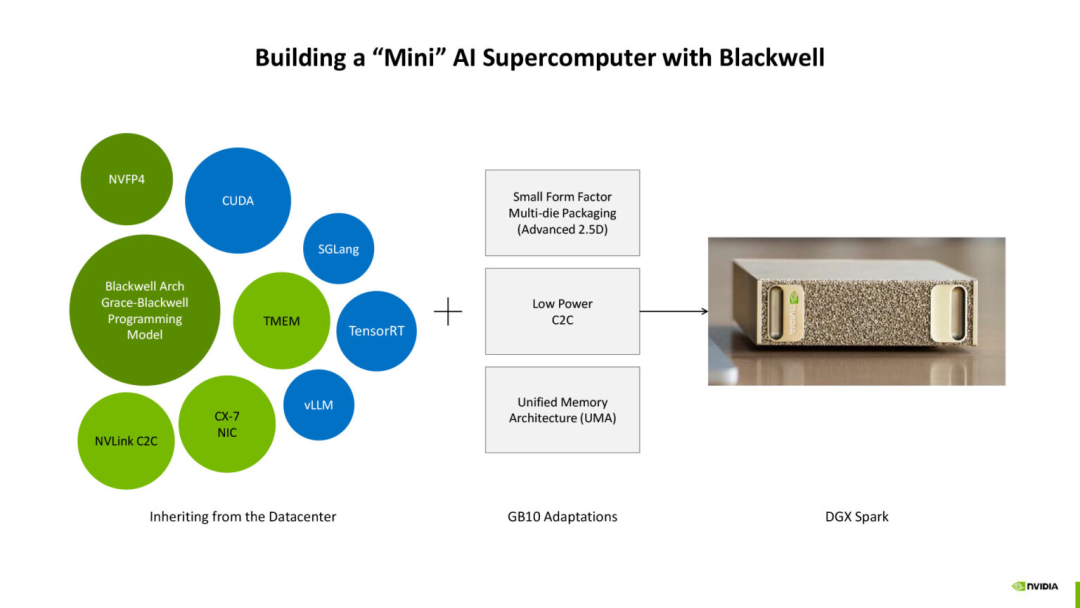
Significant optimizations have been made in areas such as unified memory architecture, CPU/GPU cache coherence, C2C links, low power design, and ease of use, enabling the DGX Spark compact workstation to undertake tasks that previously required large data center systems, all while maintaining limited power consumption and size.
The significance of GB10 lies in providing a “gateway” level product for the AI development ecosystem, facilitating smooth transitions between local development and cloud deployment.
 Part 1
GB10 SoC
Architecture Features and Design Logic
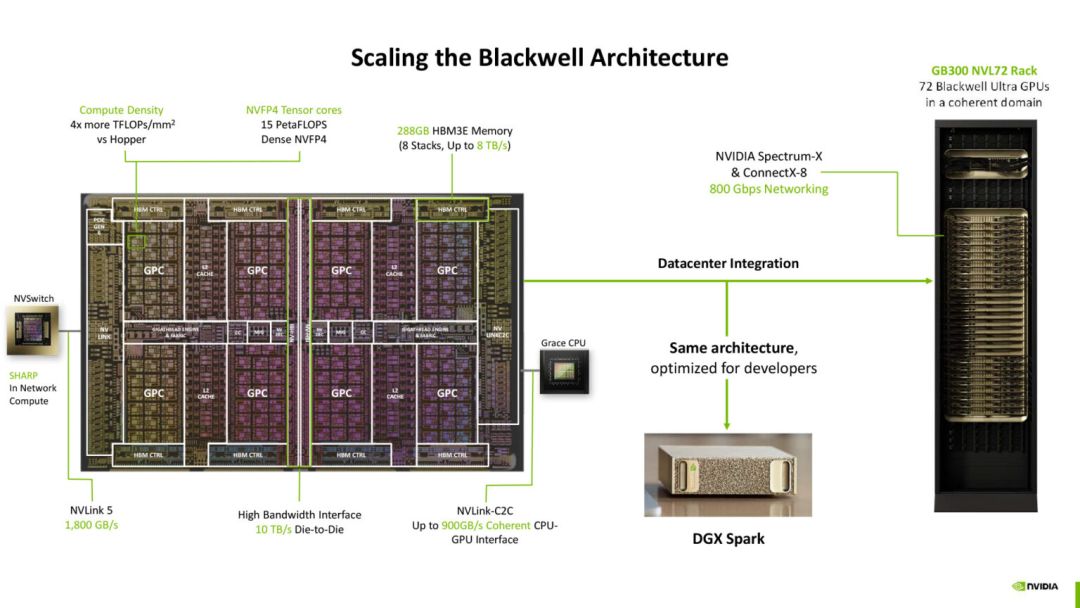
In this Hot Chips presentation, NVIDIA emphasized that the positioning of GB10 is not a traditional data center chip, but rather an SoC solution designed for the lightweight DGX Spark workstation.
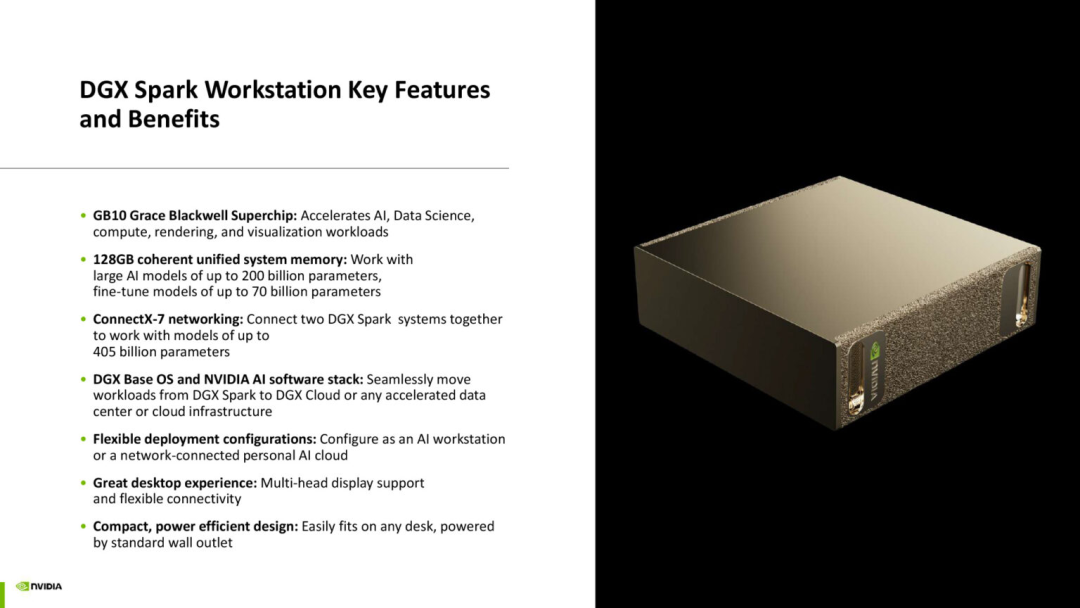
It integrates both CPU and GPU core computing units, manufactured using TSMC’s 3nm process, and is packaged through a 2.5D interposer.
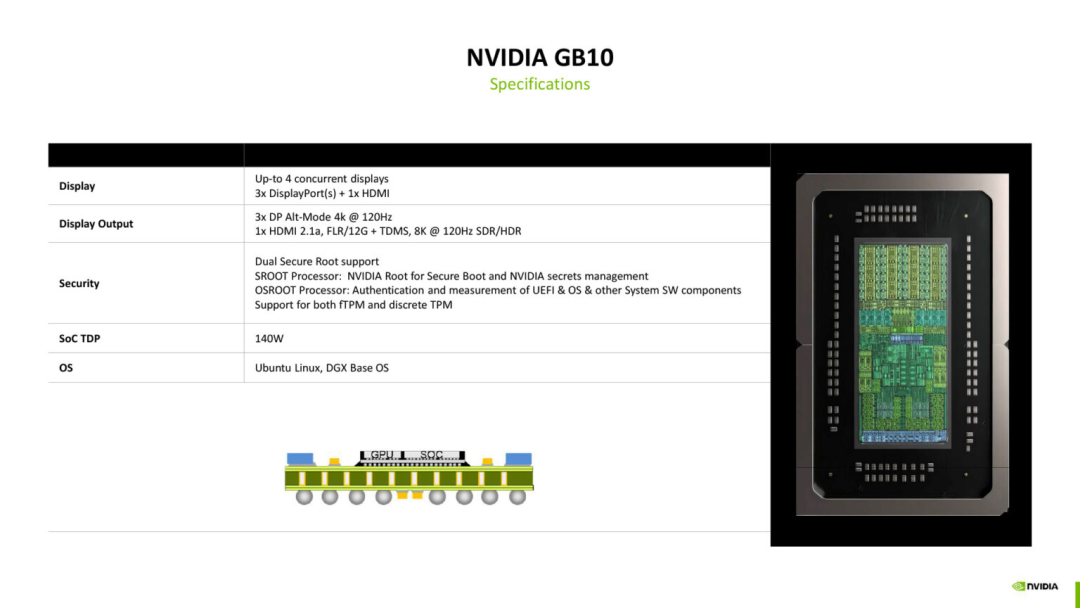
This design ensures that the overall power consumption remains within a controllable range of 140 watts, allowing the product to be powered by a standard wall outlet without the need for the complex power distribution environment of server cabinets, which is practically significant for small to medium research teams, developers, and laboratory scenarios.
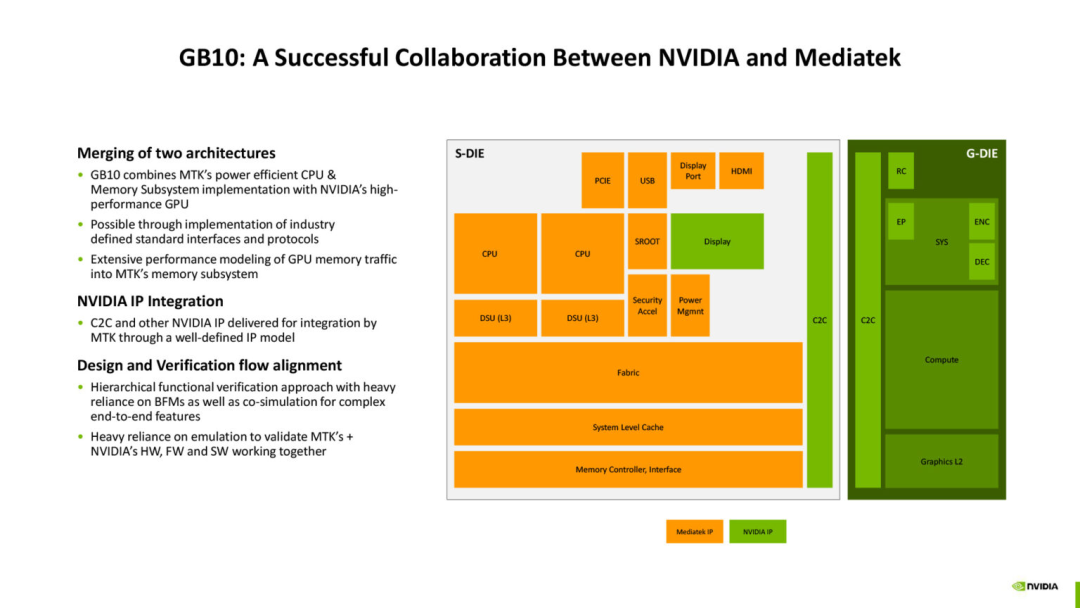
The CPU part is provided by MediaTek, based on the Arm v9.2 architecture, with a total of 20 cores divided into two clusters, each containing 10 cores, and equipped with a shared 16MB L3 cache, totaling 32MB, while each core retains its own independent L2 cache.
This allows the CPU to flexibly switch between handling large-scale parallel tasks and medium to small-scale serial tasks, ensuring both latency control and improved multi-threaded throughput.
More critically, the memory subsystem adopts a unified LPDDR5X-9400 architecture with a bus width of 256 bits, providing approximately 301GB/s bandwidth and supporting a maximum capacity of 128GB.
The CPU and GPU share data within this unified memory system, avoiding the overhead of frequent memory copying and synchronization, which is crucial for scenarios involving frequent parameter calls during AI model training and inference.
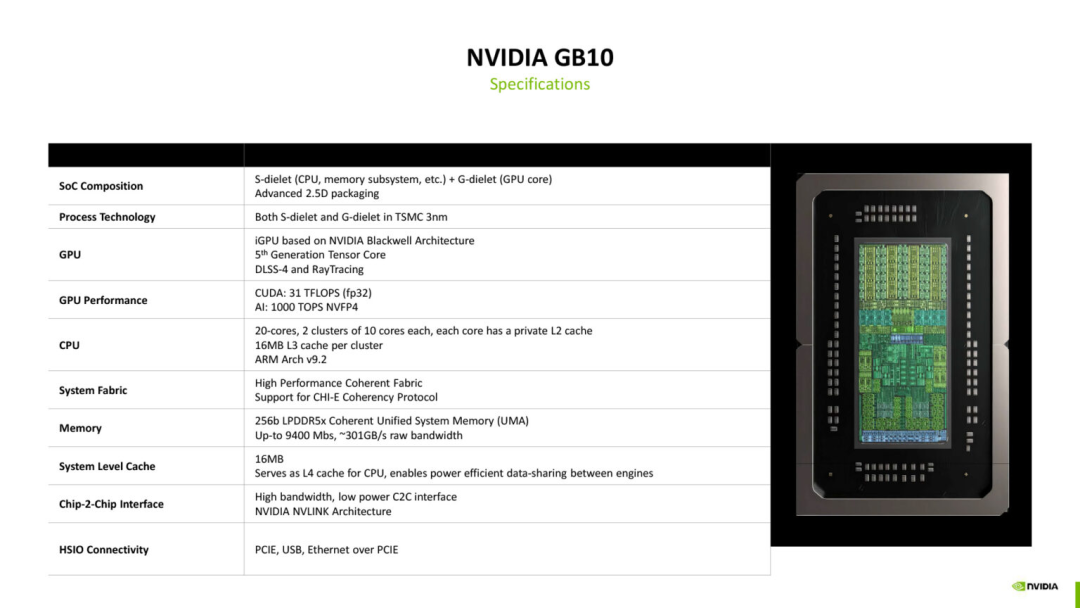
The GPU part is a miniaturized version of the Blackwell architecture. Although scaled down, its core features are fully retained, especially the support for FP4 operations, enabling up to 1000 TOPS of computational performance in ultra-low precision inference scenarios, while the FP32 peak performance is 31 TFLOPS.
At the hardware level, the GPU has a 24MB L2 cache that maintains coherence with the CPU, achieved through address translation services (ATS) and hardware management, significantly reducing the latency of inter-chip communication.
This CPU/GPU cache coherence is one of the highlights of the GB10 architecture, allowing developers to avoid managing complex synchronization logic at the software level, further simplifying programming and workflows.
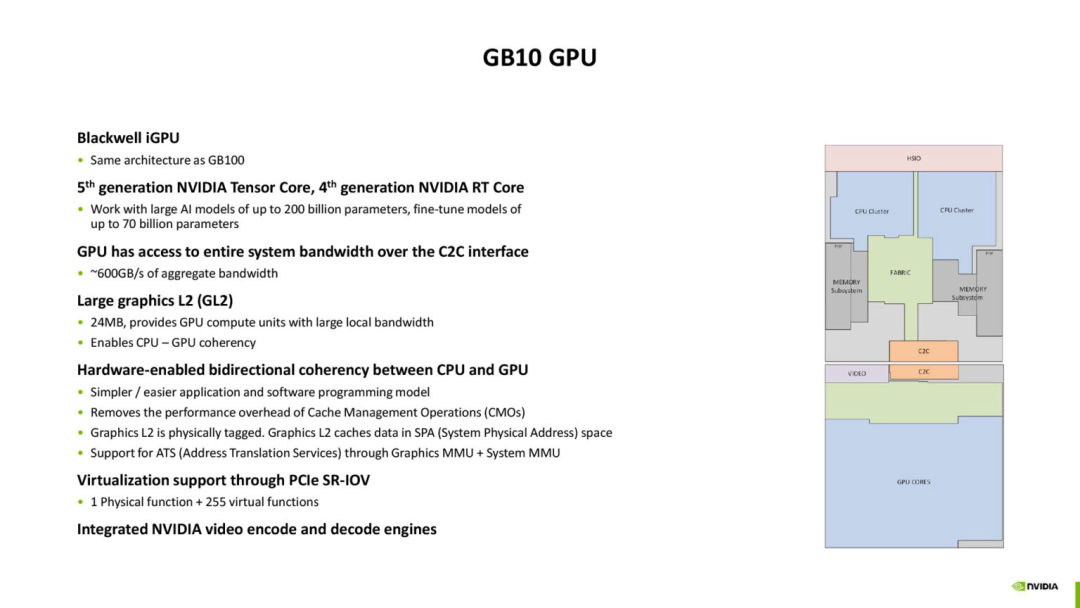
C2C (Chip-to-Chip) links also play a key role in GB10, providing approximately 600GB/s bandwidth for low-latency sharing. Compared to traditional PCIe communication methods, this dedicated link better supports data exchange between the CPU and GPU.
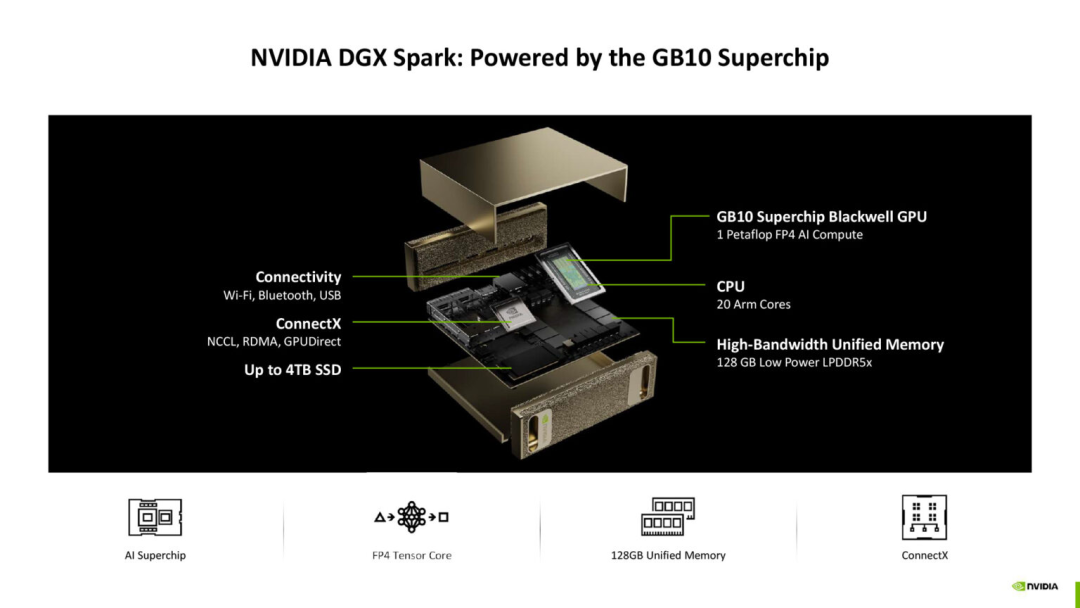
Additionally, with the integration of the ConnectX-7 network card, DGX Spark can pair with another Spark via PCIe 5.0 x8 channels, forming a dual-machine interconnection to jointly handle larger-scale models.
Although limited by bandwidth, the two 200Gbps interfaces of the network card cannot run at full speed simultaneously, but they are already practically valuable for distributed small-scale tasks.
The design logic of the GB10 SoC is to balance size, power consumption, and performance. It does not pursue peak performance identical to a complete DGX system but aims to run the most commonly used tasks smoothly on a desktop-level device through a reasonable CPU/GPU combination, unified memory architecture, and cache coherence, providing a preliminary experimental environment for large-scale training.
Part 2
Application Value and Industry Significance of DGX Spark
The launch of DGX Spark is not just an innovation at the hardware level but also an extension of NVIDIA’s ecosystem strategy.
In practical applications, the Spark workstation is equipped with up to 128GB of unified system memory and up to 4TB of SSD storage, capable of supporting model fine-tuning with up to 70 billion parameters.
This capability directly covers the experimental needs of mainstream large models, allowing developers to complete the entire process from data processing, model training to validation locally, without initially relying on expensive data center resources.
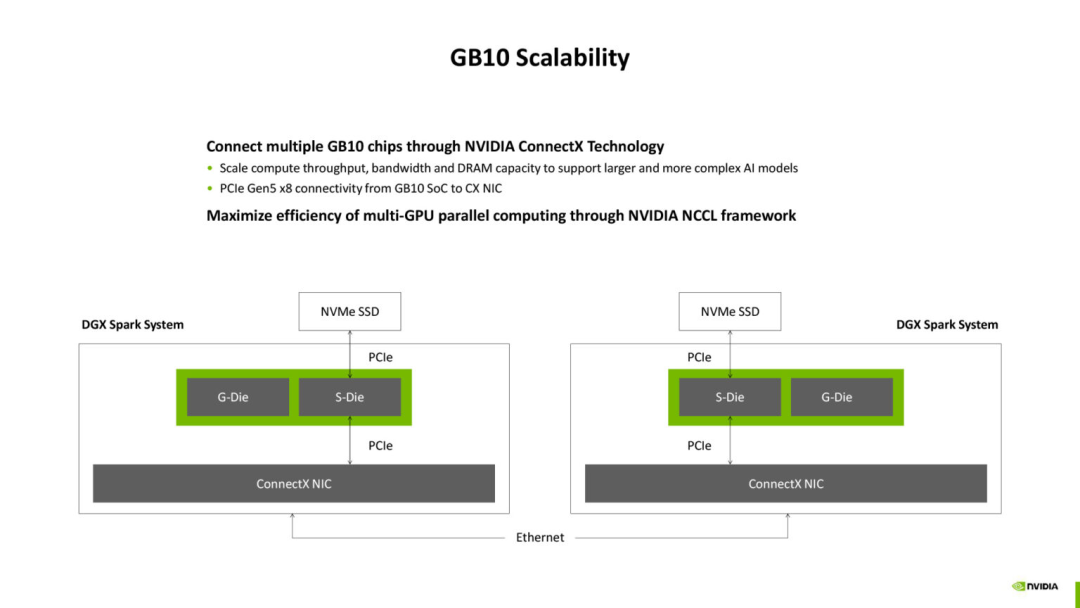
In terms of connectivity, the Spark system comes with a ConnectX-7 network card, allowing for dual-machine interconnection.
Although its performance is not on par with high-end clusters like DGX SuperPOD, the dual-machine Spark combination is already capable of handling many research and commercial development tasks for small to medium teams. This model lowers the entry barrier for AI development, enabling more users to enter the experimental phase of large model applications at a lower cost.
NVIDIA does not hide the “gateway” positioning of Spark. Its original design intention is to allow users to develop and validate locally, then migrate mature models to DGX Cloud or larger DGX systems for deployment. This migration path from desktop to cloud reflects NVIDIA’s deep integration of its ecosystem.
Spark serves as a connection point, enabling individual developers and enterprise users to smoothly transition under the same CUDA software stack without changing their development logic due to hardware environment differences.
The emergence of the GB10 SoC also indicates NVIDIA’s further openness in CPU/GPU collaboration.
The collaboration with MediaTek marks NVIDIA’s shift from insisting on self-research in the CPU field to quickly filling gaps through ecosystem cooperation. This deep binding across companies may influence more areas in high-performance computing and consumer products in the future.
For example, the rumored N1/N1x SoC could potentially be based on the GB10 design philosophy and be integrated into consumer-grade laptops, thereby promoting the GPU technology in a broader market.
The launch of GB10 and Spark also responds to the rapid diversification pressure in the AI chip market. As AMD, Intel, and startups introduce AI-oriented SoC solutions, NVIDIA needs to find new market breakthroughs beyond high-end data centers.
The “lightweight AI supercomputing” experience provided by Spark and GB10 is a reflection of this market strategy. It not only solidifies NVIDIA’s position in the AI developer community but also further expands the momentum of the CUDA ecosystem.
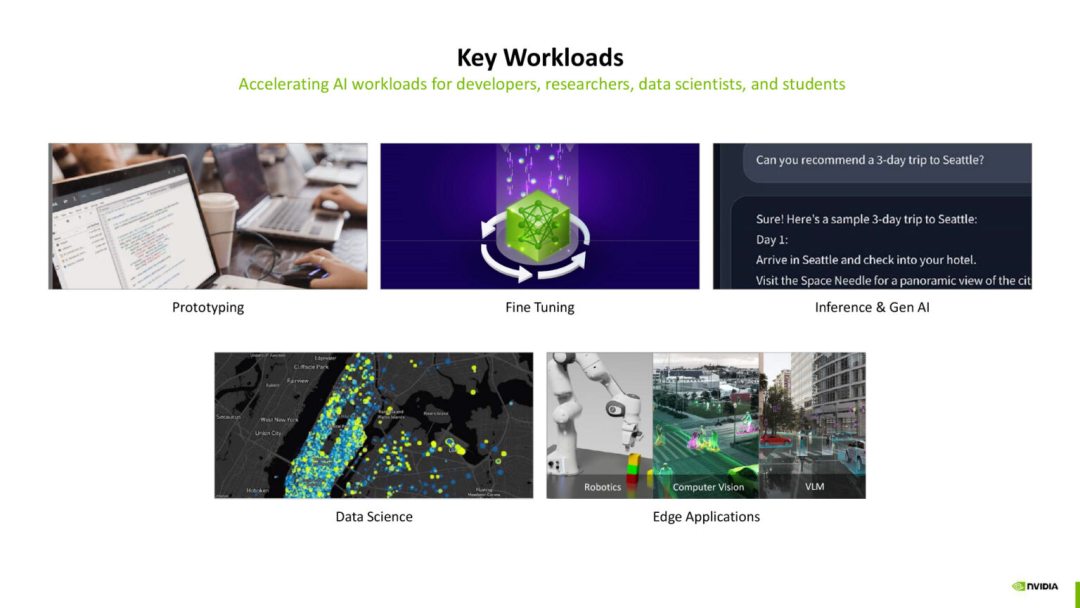
The application value of DGX Spark is reflected in three aspects:
◎ First, it provides developers with a low-barrier, high-performance local development environment;
◎ Second, it builds an ecological closed loop from desktop to cloud;
◎ Third, through cross-industry cooperation and technology downscaling, it expands NVIDIA’s market landscape, making the GB10 SoC not just a hardware innovation but also a form of industrial layout.
Conclusion
At Hot Chips 2025, NVIDIA showcased its new ideas in CPU/GPU collaboration, unified memory architecture, and low-power high-performance design with the GB10 SoC. DGX Spark, as its implementation vehicle, is both a presentation of technological achievements and a practice of ecosystem strategy.
By combining a “miniature Blackwell + Arm CPU,” it provides an accessible AI development platform for small to medium teams while seamlessly connecting with cloud DGX systems, forming a complete development and deployment pathway.
The GB10 SoC sets a new performance benchmark for desktop-level AI development and may become a blueprint for future consumer-grade SoCs. The promotion of Spark workstations is expected to further popularize the AI development ecosystem, allowing more user groups to directly participate in the experimentation and application of large models.