As is well known, the development of Samsung’s self-developed Exynos chips has been fraught with challenges. Clearly, at this critical technological node of 2nm, Samsung is fully betting on the flagship SoC, Exynos 2600.
This is not just a new generation mobile chip; it represents a comprehensive upgrade in Samsung’s 2nm GAA process, packaging technology, GPU architecture, and edge AI capabilities. For the Exynos series, which has faced criticism in the past for yield and heating issues, the Exynos 2600 is a hard battle that Samsung must win.
From the leaked benchmark scores and industry information, the Exynos 2600 will be Samsung’s first flagship chip using the 2nm GAA process. Leaked information indicates that the Exynos 2600 features a 1+3+6 ten-core design with a maximum frequency of 3.55GHz, where the mid-high performance cores and efficiency cores focus more on balancing multi-threaded performance and energy efficiency.
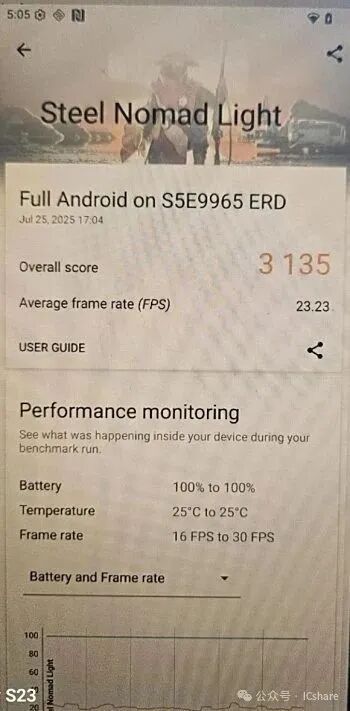
The GPU of the Exynos 2600 has also undergone a significant upgrade. Multiple leaked benchmark scores indicate that the Xclipse 960 it is equipped with outperformed the Adreno 830 of the current Snapdragon 8 Gen 2 in early 3DMark (Steel/Nomad Light) tests.
However, it is important to note that these benchmark scores belong to the development stage testing, where the testing platform had excellent cooling conditions, which may be difficult to achieve in the thin and light production models, depending on the phone’s thermal design. Even with these scores, the Exynos 2600’s GPU is competing against last year’s flagship (with the second-generation Snapdragon 8 Gen 2 set to be released soon), creating an awkward situation of being outdated upon release.
To optimize the overheating and battery life issues that have been widely criticized by consumers, reports indicate that Samsung has introduced numerous improvements in the packaging and thermal management of the Exynos 2600, including the so-called Heat Pass Block (HPB) and fan-out wafer-level packaging (FOWLP) technologies, aiming to more effectively convert the chip’s instantaneous peak performance into sustained performance over longer periods.
If these packaging and thermal measures are successfully implemented in mass production, they will significantly enhance the stability of the chip’s performance in real mobile devices.
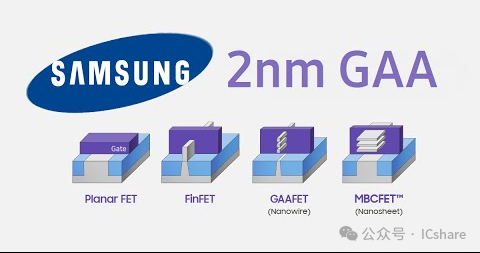
Currently, as Samsung’s first flagship chip using the 2nm process, the biggest variable facing the Exynos 2600 is whether it can be mass-produced as planned. The 2nm process is currently the most advanced in the industry, and wafer yield, packaging yield, and tuning rhythm will all affect the shipment pace and costs.
Industry expectations suggest that Samsung will continue to maintain a mixed supply strategy in the short term, using Exynos in some markets like Europe, while adopting Snapdragon flagship chips in markets like China and the United States to avoid impacting its reputation.
The biggest selling point of the Samsung Exynos 2600 is its self-developed 2nm GAA process, which, at least on paper, shows a process advantage over competitors using TSMC’s 3nm (N3P/N3B, etc.) manufacturing nodes, typically indicating advantages in energy efficiency and transistor density.
Leaked information about the second-generation Snapdragon 8 Elite indicates that Qualcomm is likely to continue using TSMC’s 3nm N3P process while enhancing peak performance through higher single-core frequencies (potentially up to 4.8GHz) and larger cache (16MB).
Meanwhile, MediaTek’s Dimensity 9500 will also be based on a 3nm process, aiming for rapid expansion in the mid-to-high-end market with more competitive GPU and AI capabilities, seeking more growth points in the flagship market.

For the three manufacturers, their competition is not merely a “cyber battle of wits.” Qualcomm’s strengths lie in its mature software-hardware synergy and global supply chain advantages, maintaining a long-standing lead in the high-end market. MediaTek has been encroaching on the market with more competitive costs and rapid product rollout, recently challenging Qualcomm’s flagship.
If Samsung wants to regain its flagship voice through the Exynos 2600, it must convincingly address the issues of 2nm yield, packaging yield, scheduling, and long-term stability. Technical specifications are merely a ticket to entry, but what truly determines market position is the comprehensive optimization from “chip to phone to user experience.”
Can Samsung leverage the Exynos 2600 to revitalize its chip business? Currently, it seems difficult.
If the Exynos 2600 can indeed deliver the generational improvements promised by the 2nm process, it could become a significant boost for Samsung in achieving flagship chip prominence, bringing different advantages in gaming, image processing, and local AI scenarios.
However, in terms of long-term scheduling optimization and market acceptance, Qualcomm and MediaTek remain formidable competitors. Looking ahead, if Samsung can truly translate the lab benchmark results into mass production and control risks in yield and packaging, the Exynos 2600 may have a real chance to return and threaten competitors’ market shares.
Conversely, it may simply repeat past mistakes, becoming a regional alternative rather than a mainstream flagship. However, it should be noted that the Exynos series has not met expectations on several occasions, so perhaps a cautious outlook is more appropriate.