
Click the blue text above to follow us
On August 27, the State Council issued the “Opinions on Deepening the Implementation of the ‘Artificial Intelligence +’ Action”, requiring that by 2027, the penetration rate of the new generation of smart terminals exceeds 70%, clearly listing edge AI chips as a key technology focus, with a strong emphasis on supporting the research and development of chips for AR/VR devices.
On August 25, it was announced that the 2nm wafer factory would completely eliminate equipment from mainland China, with operations in Hsinchu, Kaohsiung, and Arizona, USA, being executed simultaneously. The US factory is expected to contribute 30% of TSMC’s advanced capacity by 2026. This news has forced domestic manufacturers to accelerate localization efforts.
This article will provide an overview of the SoC chip industry, including an analysis of the industrial chain and competitive landscape:


1. Overview of SoC Chips

SoC (System on Chip) refers to a hardware device that integrates the functions of multiple electronic systems into a single chip.
Thus, SoC is a hardware concept that mainly includes processors (such as MCU or CPU), memory (RAM, ROM, etc.), peripheral devices (such as ADC, GPIO, I/O controllers), and other subsystems (such as graphics processing units, wireless modules, etc.), all integrated on a single silicon chip.
The core of the SoC is the microchip, which contains all the electronic circuits required for a complete functional system on a single integrated circuit (IC).
In other words, the CPU, internal memory, I/O ports, analog inputs and outputs, and additional application-specific circuit blocks are all designed to be integrated on the same chip. SoCs differ from traditional devices and PC architectures, which use separate chips to handle CPU, GPU, RAM, and other basic functional components.
One of the main advantages of SoCs is their compact size and efficiency. By integrating multiple components into a single chip, the resulting devices can be smaller and consume less power than traditional circuit boards with separate components.
In contrast, traditional circuit boards often require multiple components, such as separate processors, memory chips, and input/output interfaces, which must be physically connected through wiring or other means, potentially making the final device larger, less efficient, and more prone to errors or failures.
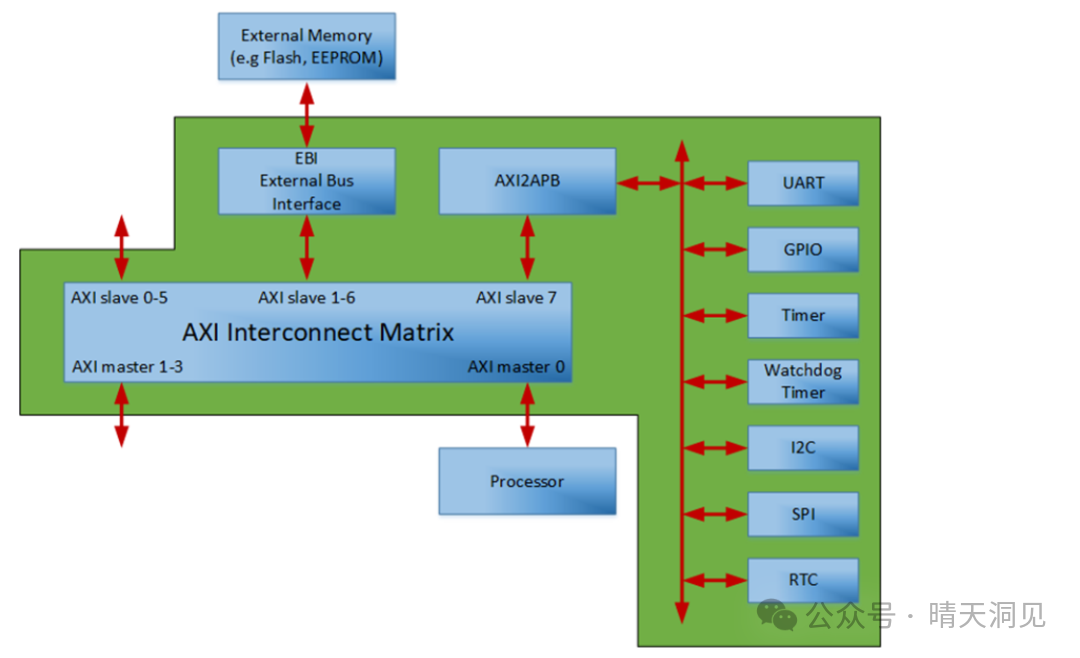
Overall, SoC is a powerful and versatile technology that is changing the way electronic devices are designed and manufactured.
By integrating multiple components into a single chip, they are helping to drive innovation and push the boundaries of the electronic world.
2. Analysis of the SoC Chip Industrial Chain
1Upstream Industrial Chain
Overview of the upstream industrial chain: oligopoly competition in design tools. Strong bargaining power in the upstream.
The upstream of the SoC industrial chain can be divided into intellectual property cores (IP cores) and related EDA tools:
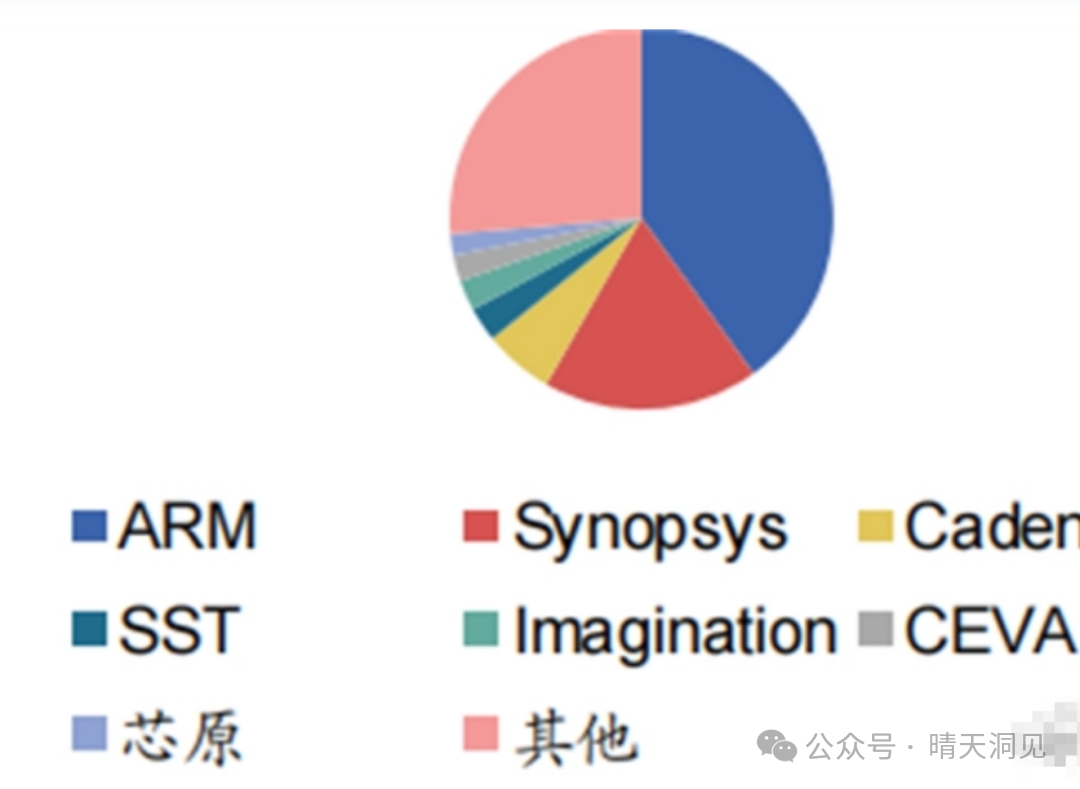
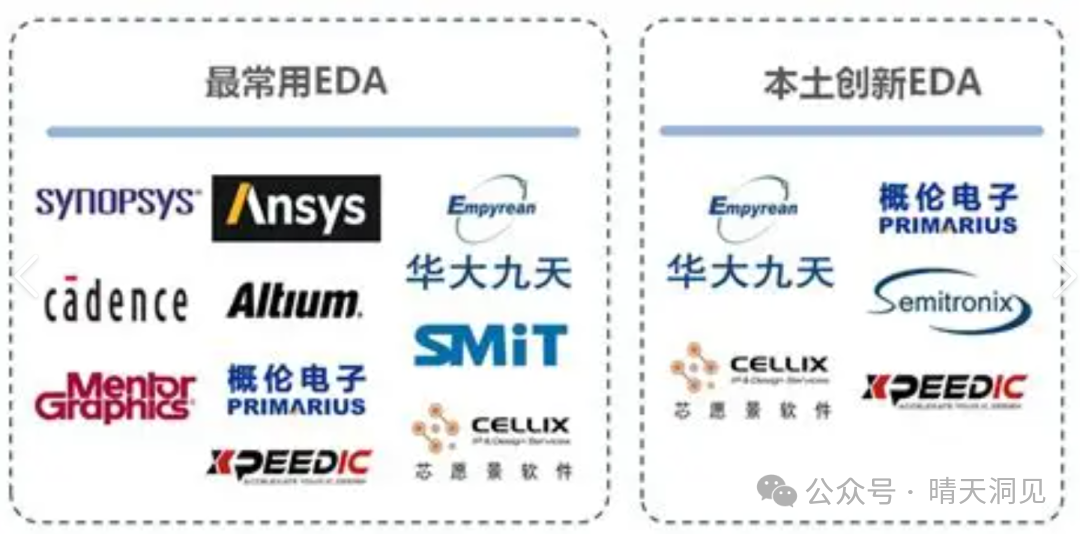
Major companies in the IP core space include ARM, Synopsys, and Cadence, while core companies in EDA tools include Cadence, Synopsys, and Mentor Graphics.
The upstream design tool industry is highly concentrated, with the global core IP mainly provided by ARM, Synopsys, and Cadence, accounting for nearly 65%. The global EDA industry is mainly monopolized by Cadence, Synopsys, and Siemens’ Mentor Graphics, with the three major EDA companies holding over 60% of the global market share, giving upstream manufacturers strong bargaining power.
Competitive Landscape of IP Cores
The industry is highly concentrated, with domestic manufacturers having a low market share.
Global IP core suppliers are mainly foreign companies, and the industry concentration is relatively high: most of the IP cores required by domestic integrated circuit design companies come from overseas suppliers, with annual imports exceeding $1 billion, accounting for about one-third of the global market.
There are about 50 IP core suppliers in mainland China, most of which are relatively weak. There are also larger companies, such as Verisilicon, headquartered in Shanghai, which has entered the global top ten in market share, but there is still a significant gap compared to the “three giants” in Europe and the United States.
IP cores themselves are products of continuous specialization in the industrial chain, representing important intellectual property in chip design and a key direction for the next upgrade of the semiconductor industrial chain. Each round of specialization upgrade in the industry has its inherent supply and demand reasons and is often the result of pursuing economies of scale.
EDA companies generally provide a full set of tools to IC companies, so companies with high EDA integration have more advantageous products. The three EDA giants can basically provide a complete set of chip design EDA solutions.
Synopsys’ industry-leading IC Compiler II layout and routing solution provides the most comprehensive design platform available from a single supplier, accelerating the implementation of large-scale AI processors.
Cadence excels in customized circuit and layout design for analog or mixed-signal applications.
The digital backend tool Innovus can achieve optimal performance while meeting power/area budget requirements, or ensure minimal power/area while meeting frequency specifications.
Mentor Graphics is also strong in backend layout and routing, and has advantages in PCB, with strengths in Calibresignoff and DFT. It was acquired by Siemens in 2016.
2Midstream Industrial Chain
Midstream situation: characteristics of high-end, mid-range, and specialized SoCs.
High-end SoC chips are mainly concentrated in the smartphone, tablet, and server markets, while mid-range SoC chips are widely used in security, smart audio, and IoT fields, and specialized SoC chips are mainly used in TWS headphones and smartwatches.
The iteration of process technology leads to differentiation in the performance and price of SoC chips. The increase in the number of transistors leads to upgrades in CPU, GPU, NPU, and other IP cores.
The latest high-end SoC chip process is 5nm, while specialized SoC chips, such as smart audio chips, generally have processes ranging from 16nm to 55nm.
The process affects the chip area and thus directly impacts the chip price. By increasing the chip area, more transistors can be accommodated within a chip. Theoretically, the smaller the area of the SoC chip, the lower the cost, and the size of transistors/chip area is directly related to performance output under the same technology level and process.
Currently, high-end SoC chips are often designed with one super core and multiple mid and small core architectures, which have significantly improved in process technology, clock frequency, and performance over years of iteration.
At the same time, high-end SoC chips, especially mobile chips, generally add integrated or external basebands to achieve mobile access, telephony, and other traditional mobile terminal functions.
3. Downstream Industrial Chain
Downstream of the industrial chain: significant head effect in chip manufacturing.
The wafer manufacturing process is a crucial step in the semiconductor industrial chain, and the level of manufacturing technology directly affects the advancement of the semiconductor industry.
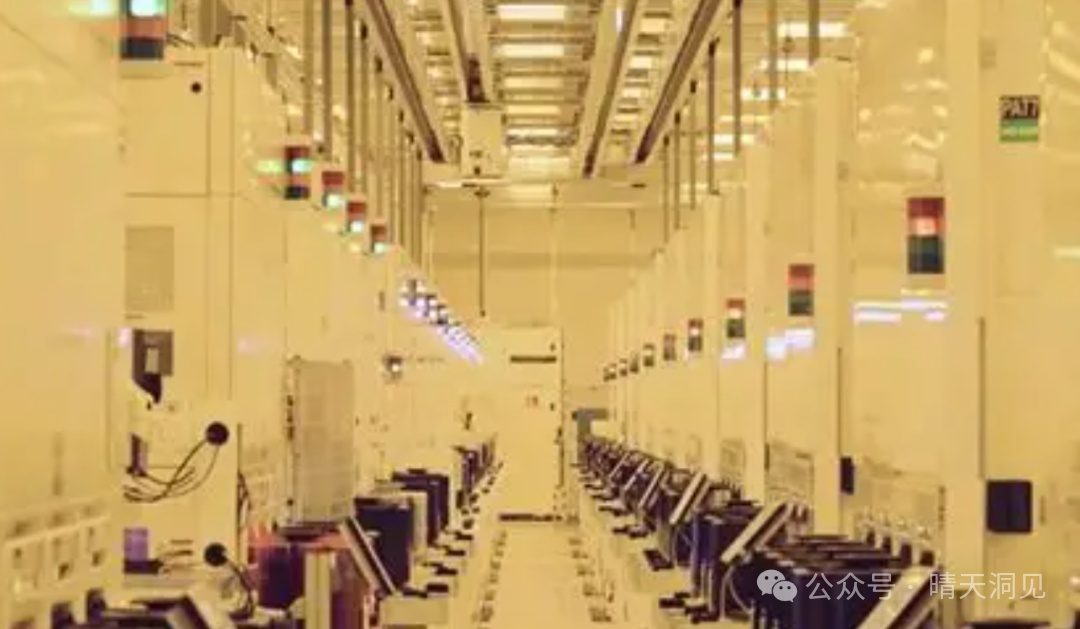
The Fabless + Foundry + OSAT model has become a trend, and the importance of Foundry in the entire industrial chain is gradually increasing.
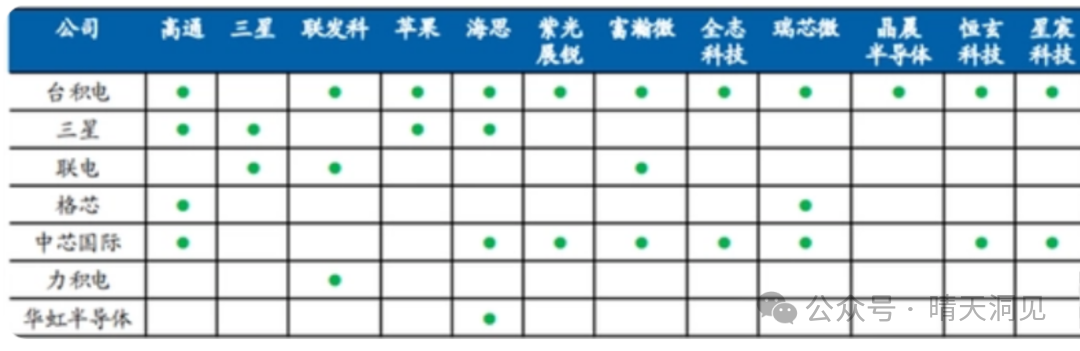
At the same time, the semiconductor manufacturing industry shows a very obvious head effect. According to data from IC Insights,among the top ten global foundry manufacturers, TSMC alone occupies more than half of the market share, with the top eight accounting for nearly 90%.
3. Competitive Landscape of SoC Chips: Multidimensional Game Between International Giants and Local Enterprises
By 2025, the competitive landscape of the SoC chip industry will present a “pyramid” structure.
In the high-end market, Qualcomm, Apple, and Samsung occupy about 60% of the share due to their technological first-mover advantage and ecological barriers, especially holding an almost monopolistic position in the smartphone and XR device chip sectors.
These international giants invest over $10 billion annually in R&D, maintaining competitiveness through a “dual-wheel drive strategy of architectural innovation + advanced processes”, such as Qualcomm’s latest Snapdragon chip using 4nm process and self-developed Oryon CPU architecture, achieving AI computing power of 80 TOPS.
1. The Path of Chinese Enterprises to Breakthrough Shows Differentiated Characteristics
Huawei HiSilicon has achieved breakthroughs in the 5G base station and automotive chip fields through a vertically integrated model of “fundamental research + scenario implementation”, with its Ascend series AI chips surpassing NVIDIA’s products of the same level in computing density.
Unisoc adopts a “rural encirclement of cities” strategy, occupying 25% of the global share in niche markets such as IoT and feature phone chips, gradually extending into emerging fields like smart cockpits.
MediaTek, with its Dimensity series, is expected to increase its global market share to 35% by 2025 in the mid-to-high-end smartphone market.
The regional competitive landscape has also undergone profound changes.
The integrated circuit industry clusters centered around Shanghai, Beijing, and Shenzhen have formed a complete industrial chain, contributing over 70% of the national SoC chip production capacity.
Among them, the Yangtze River Delta focuses on high-end design and advanced manufacturing, with companies like SMIC and Hua Hong Semiconductor gradually launching 7nm production lines;
the Pearl River Delta, leveraging its advantages in consumer electronics terminals, leads the industry in application innovation and scenario implementation. This regional synergy significantly enhances the delivery capability and cost advantage of domestic SoC chips.
2. Supply Chain Security Becomes a New Dimension of Competition
By 2025, the global chip industry will face a structural contradiction of excess capacity in mature processes and insufficient supply in advanced processes, prompting Chinese enterprises to accelerate the construction of localized supply chains.
The National Integrated Circuit Industry Investment Fund (Big Fund) has invested 50 billion yuan in its third phase, focusing on supporting the construction of 12-inch wafer fabs and specialty process lines.
At the same time, system manufacturers like Huawei and BYD are increasingly developing their own SoC chips, promoting the shift of the industrial chain from “global division of labor” to “regional integration”, a trend that will further reshape industry competition rules.
4. Investment Targets Related to SoC Chips
1. Espressif Technology
In the SoC field, Espressif Technology has performed excellently, holding the number one market share in the IoT Wi-Fi SoC communication chip market.
With product differentiation and deep involvement in the downstream module field, it occupies about 30% of the global market, maintaining a leading position in the competitive Wi-Fi chip industry.
Espressif Technology has strong technical research and development capabilities, achieving fruitful results in SoC chip design. In wireless communication technology, the company’s self-developed Wi-Fi 4 and Wi-Fi 6 protocol stack technologies effectively ensure the stability and efficiency of product operation, making device network connections smoother and more reliable.
Moreover, its technical scope has successfully expanded from Wi-Fi technology to various wireless protocol technologies such as Bluetooth, Thread, and Zigbee,greatly enriching the applicable scenarios of SoC chips, whether in industrial control fields with high requirements for connection stability or in smart home scenarios requiring low power consumption and multi-device networking, Espressif’s SoC chips can adapt.
In the smart home field, many smart appliances and security devices use Espressif’s SoC chips to achieve stable interconnection and intelligent control between devices;
in the consumer electronics field, they empower smart speakers and wearable devices with strong connectivity and computing capabilities.
The company primarily adopts a direct sales model, supplemented by distribution, with direct sales accounting for over 70%. It has established partnerships with many well-known companies such as Xiaomi, Tuya Smart, and Ecovacs, and has reached strategic cooperation with cloud IoT platforms like Google, AWS, and Azure, with about 70% of its revenue coming from Chinese customers, half of whom are involved in overseas business, thus pushing its products into the global market.
2. Rockchip
Rockchip is a leader in the smart application processing SoC chip field, achieving remarkable results in the consumer electronics market.
Its products are widely used in common consumer electronics such as tablets, smart boxes, and smartphones, and it has successfully entered the supply chains of mainstream brands like ByteDance, Huawei, and Xiaomi.
The company has strong technical capabilities, accurately grasping market trends for high-performance, low-power chips.
For example, its flagship product, the 8nm RK3588 chip, has a computing power of up to 6T, supporting 8K video encoding and decoding, and meeting edge AI computing needs.
In the smart application processor market, Rockchip has established a high brand awareness and market competitiveness with its solid product quality and technical advantages, continuously leading industry development trends.
3. Allwinner Technology
Allwinner Technology is undoubtedly the leader in the domestic audio and video SoC main control chip field, with SoC business accounting for nearly 80% of total revenue.
The company’s products are widely applied in smart home devices, such as smart speakers and robotic vacuum cleaners, giving home devices an intelligent “brain” for efficient voice interaction and intelligent control;
in the automotive intelligence field, its chips also play an important role, assisting vehicles in achieving smart cockpits and automatic driving assistance functions.
Allwinner Technology has outstanding technical research and development and market expansion capabilities, providing chip solutions that are precisely adapted to the unique needs of different application scenarios.
Whether for smart speakers with high audio processing requirements or for automotive intelligent driving with strict visual processing and computing power requirements, Allwinner Technology’s chips can perform excellently.
4. Hengxuan Technology
Hengxuan Technology is driven by innovation and is the only global company using RISC-V architecture for Bluetooth audio SoC chips.
Riding the wave of the rise of the smart wearable market, especially the explosion of the TWS headphone market, the company quickly captured market share, with shipments exceeding 40 million units in 2024, achieving a global market share of 30%.
The BES2700 series chips it launched use advanced 12nm technology, successfully entering the supply chains of leading customers like Huawei, Xiaomi, and Samsung.
Facing opportunities in emerging markets, Hengxuan Technology is actively increasing its investment in the automotive internet and edge computing fields, continuously expanding its business boundaries, and is expected to replicate its success in the Bluetooth audio chip market in new application areas, achieving sustained high growth.
5. Amlogic
Amlogic is a globally renowned multimedia SoC chip design company, especially dominating the smart set-top box chip market with a market share exceeding 60%.
Its new generation T series high-end chips have excellent performance, supporting 8K decoding, widely used in smart TVs, OTT terminals, etc., providing users with an ultimate high-definition audio-visual experience, with clients including globally renowned companies like Xiaomi and Amazon.
Moreover, Amlogic is actively exploring new fields and has successfully entered the automotive electronics sector, with models from BMW and Lincoln adopting its related chips, providing strong multimedia processing capabilities for automotive smart cockpits.
In the multimedia SoC chip design field, Amlogic maintains its industry-leading position with its technical advantages and rich product line.
Conclusion
1. Edge SoC chips are the “core engine” of edge intelligent devices—they solve the pain points of “small size, low power consumption” through high integration, supporting local AI and real-time tasks, ultimately enabling smartphones, smart hardware, and IoT devices to achieve a “smarter, more portable, and safer” experience.
2. The SoC chip industry has formed a relatively complete industrial ecosystem, covering chip design, manufacturing, packaging, and testing.
In the chip design phase, companies like Huawei HiSilicon and Unisoc have developed design capabilities for 7nm and even more advanced processes;
In the manufacturing phase, SMIC and Hua Hong Semiconductor are accelerating the research and development of advanced processes;In the packaging and testing phase, companies like JCET and Tongfu Microelectronics have entered the global first tier.
3.In terms of application fields, China’s SoC chip industry has developed from a single consumer electronics focus to a diversified direction.
While smartphones and PCs remain the largest application markets for SoC chips, their share is relatively declining; meanwhile, the share of emerging fields such as smart vehicles, industrial internet, and artificial intelligence is rapidly increasing. Especially in the automotive electronics sector, with the explosive growth of new energy vehicles, the demand for automotive SoC chips is showing exponential growth.


Note: The views expressed in this article are solely personal opinions, and the mentioned investment targets are not recommendations. Trading based on this is at your own risk.
Like, share, and seeyour best look