Imagine this: when asking an e-commerce customer service representative, “Why hasn’t my order been shipped yet?” the chatbot can generate a natural language response based on a large model, explaining the reasons for the logistics delay. However, to automatically check inventory, trigger reshipment processes, and inform the user, it must rely on the autonomous action capabilities of an AI Agent. This difference reveals the two core branches of current AI technology—large models and AI Agents: the former is a “language expert” skilled in understanding and generating text; the latter is an “action executor” capable of making decisions and executing tasks based on objectives. They are not in a substitutive relationship but are reshaping the application boundaries of AI in collaboration, becoming key tools for digital transformation in enterprises.
1. The Essential Differences Between Large Models and AI Agents
To understand their value, it is first necessary to clarify their underlying positioning and technical characteristics, which form the basis for subsequent application choices.
(1) Large Models: The “Intelligent Brain” Focused on Language Processing
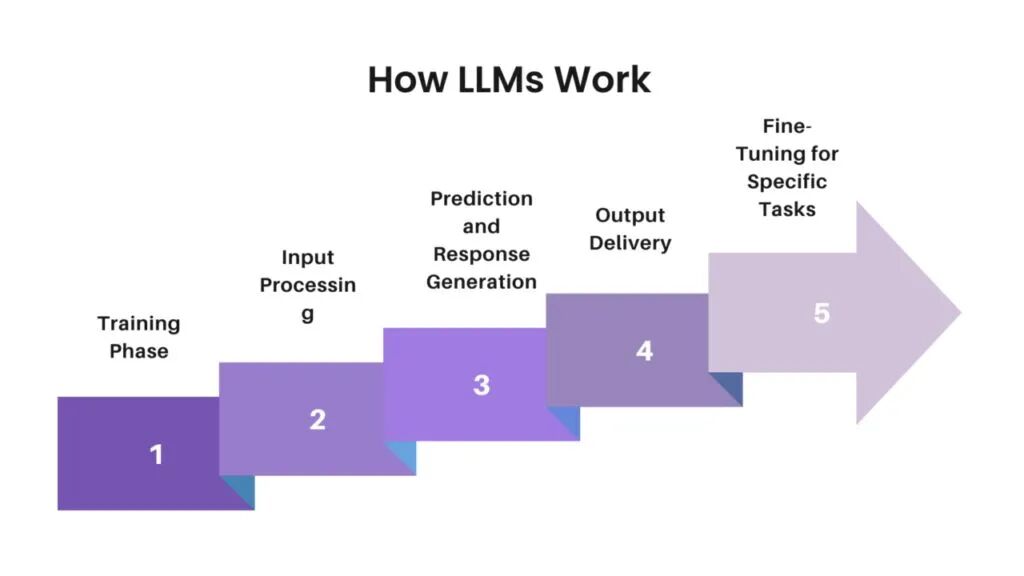
Large models are AI systems built on the Transformer architecture, with core capabilities centered around “language.” Through pre-training on massive text data, they master grammar, semantics, and contextual relationships. They predict the sequence of the next word based on the input prompt, enabling tasks such as Q&A, creation, and translation.

Large models represented by OpenAI’s GPT-4 and Google Gemini possess three key characteristics:
1. Language-Centric: All capabilities revolve around language; even some models (like GPT-4V) that support image input ultimately output text, unable to directly interact with the physical world or digital systems;
2. Static Learning Mode: Once pre-training is complete, model parameters are fixed, and improvements can only be made through fine-tuning (updating parameters based on specific domain data) or prompt engineering (optimizing input instructions), with no ability to learn new knowledge in real-time interactions;
3. Passive Response Mechanism: They must rely on explicit user prompts to generate outputs and cannot proactively identify needs or set goals, for example, they will not remind users that their membership is about to expire unless the user asks.
(2) AI Agents: Intelligent Entities with Autonomous Action Capabilities
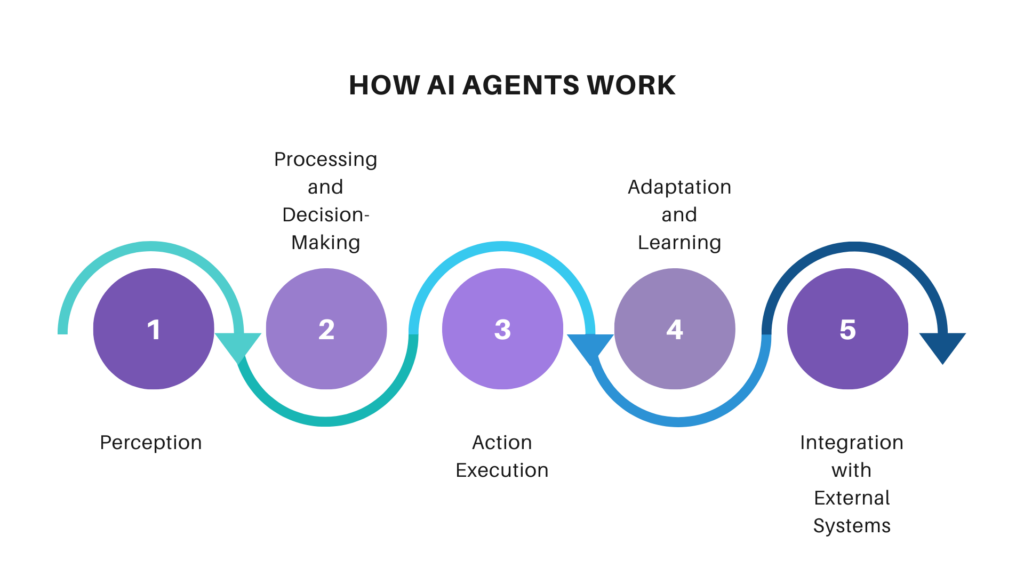
AI Agents are integrated autonomous systems that combine multiple technologies, with the core goal of completing tasks rather than being limited to language processing. They can perceive the environment, formulate plans, execute actions, and optimize based on feedback.

Agent technology has four core characteristics:
1. Multimodal Perception: It can process not only text but also obtain data from the physical environment or digital systems through sensors (such as cameras, temperature sensors) and API interfaces. For example, an AI Agent in a factory can identify mechanical arm failures through visual recognition;
2. Dynamic Adaptive Learning: Utilizing technologies such as reinforcement learning and supervised learning, it optimizes decisions in real-time interactions. For instance, a customer service Agent can analyze past cases to gradually improve the accuracy of determining whether to meet the 7-day no-reason return policy;
3. Autonomous Decision-Making Loop: It requires no continuous human intervention; simply setting a goal (such as “reduce warehouse inventory”) allows it to autonomously break down tasks (check slow-moving products, trigger promotional rules, synchronize inventory data) and execute them;
4. Cross-System Interaction Capability: It can connect with APIs, databases, IoT devices, and other external tools to realize the full process of “language understanding – decision-making – action.”
 2. In-Depth Comparison of Large Models and AI Agents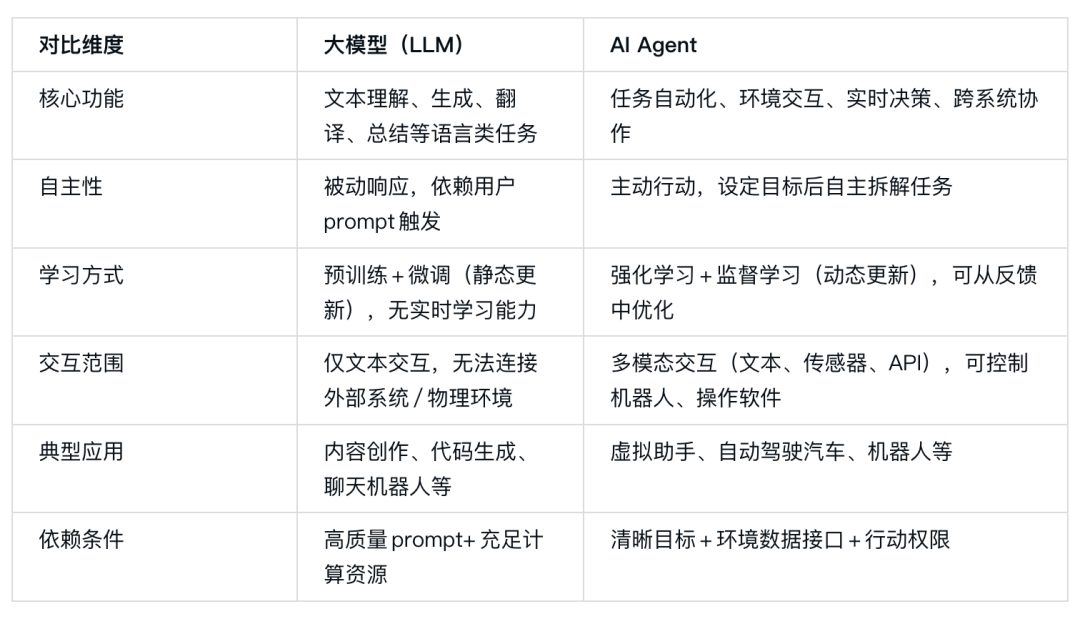
In practical business, the application of large models and AI Agents is not an either-or choice but presents two modes of independent and collaborative use based on the complexity of the requirements, covering all scenarios from simple inquiries to complex process automation.
When business needs focus on information processing rather than action execution, large models can solve problems at low cost and high efficiency. A typical feature is that they do not need to interact with external systems, solving problems solely through text output. The language understanding and generation capabilities of large models can directly create value.
When business needs involve multi-step decision-making, cross-system collaboration, or real-time responses, AI Agents become the core tool. A typical feature is action rather than explanation; the autonomous decision-making and cross-system interaction capabilities of AI Agents are key to breaking through the bottleneck of human efficiency.
Thus, the advantages of large models are concentrated in information processing efficiency, such as generating 10 product descriptions within an hour; while the advantages of AI Agents lie in task execution capabilities, such as completing 100 order anomaly checks and processing within an hour. The differences between the two are not a matter of superiority or inferiority but rather a division of capabilities, laying the foundation for subsequent collaborative applications.
Examples of Collaboration Between Large Models and Agents
A certain airline integrated a large model into an AI Agent to build an intelligent customer service system:
-
Step 1: The large model processes user inquiries: When a user says, “My flight has been canceled, I want to reschedule for tomorrow,” the large model understands the user’s intent (rescheduling need) and extracts key information (original flight number, target date);
-
Step 2: The AI Agent executes actions: Based on the large model’s intent analysis, it automatically checks the availability of flights for tomorrow, verifies the user’s eligibility for rescheduling, and updates the order status;
-
Step 3: The large model provides feedback: It converts the Agent’s action results (e.g., “You have been rescheduled to flight XX, and a confirmation message has been sent”) into natural language to inform the user.
Through collaboration, customer service response times are shortened, the rate of human intervention decreases, and user satisfaction increases.
3. The Core Role of Large Models in AI Agents
In the collaborative relationship between the two, large models are not merely auxiliary tools but are the core support for AI Agents to achieve human-like interaction and precise decision-making, primarily undertaking three major roles:
(1) Intent Parser: Transforming Ambiguous Needs into Clear Instructions
User’s natural language needs often contain ambiguity, such as “Help me with an order issue.” The large model can analyze the context to break down the specific needs—whether it is “inquire about logistics,” “request a refund,” or “change the delivery address,” and extract key information (such as order number, user contact information), converting it into structured instructions understandable by the AI Agent (e.g., “Call the logistics API to check the current status of order number 12345”). Without the parsing capability of the large model, the AI Agent would be unable to understand user intent and would have to rely on fixed “keyword matching,” leading to rigid responses.
(2) Decision Supporter: Providing Logical Support for Actions
When executing complex tasks, AI Agents need to determine “why to act” and “how to act.” The large model can provide logical basis based on massive data. For example, when a medical AI Agent formulates a treatment plan for a patient, the large model can analyze the patient’s medical history, past treatment cases, and the latest medical literature to generate a decision suggestion of “recommend adopting XX therapy,” which the Agent can then combine with real-time physiological data (such as heart rate, blood pressure) to finalize the treatment plan. This “data + logic” decision-making model can significantly reduce the error rate of AI Agents.
(3) Interaction Interface: Achieving Humanized Feedback
The action results of AI Agents need to be presented in a way that is understandable to users. The large model can convert technical action data (e.g., “Inventory API return value: Product A inventory=5, restock status=ordered”) into natural language (e.g., “The product A you are interested in currently has 5 items in stock, and we have arranged for restocking, expected to arrive in 3 days”), while also adjusting the tone based on user profiles, such as using simpler expressions for elderly users and adding emojis or internet slang for younger users to enhance the interaction experience.
Conclusion
The relationship between large models and AI Agents is essentially the evolution of AI technology from perceptual intelligence (understanding language) to cognitive intelligence (autonomous decision-making) and action intelligence (execution). The former addresses the issue of “Can AI understand human language?” while the latter breaks through the bottleneck of “Can AI do things on its own?” For enterprises, understanding the differences and collaborative logic between the two is not only a prerequisite for choosing technical solutions but also a key to seizing opportunities in the AI era.