Introduction
Using a diagram, a three-phase roadmap, and five key components, this article outlines the correct path for AI Agent development, guiding you from beginner to expert while avoiding common pitfalls.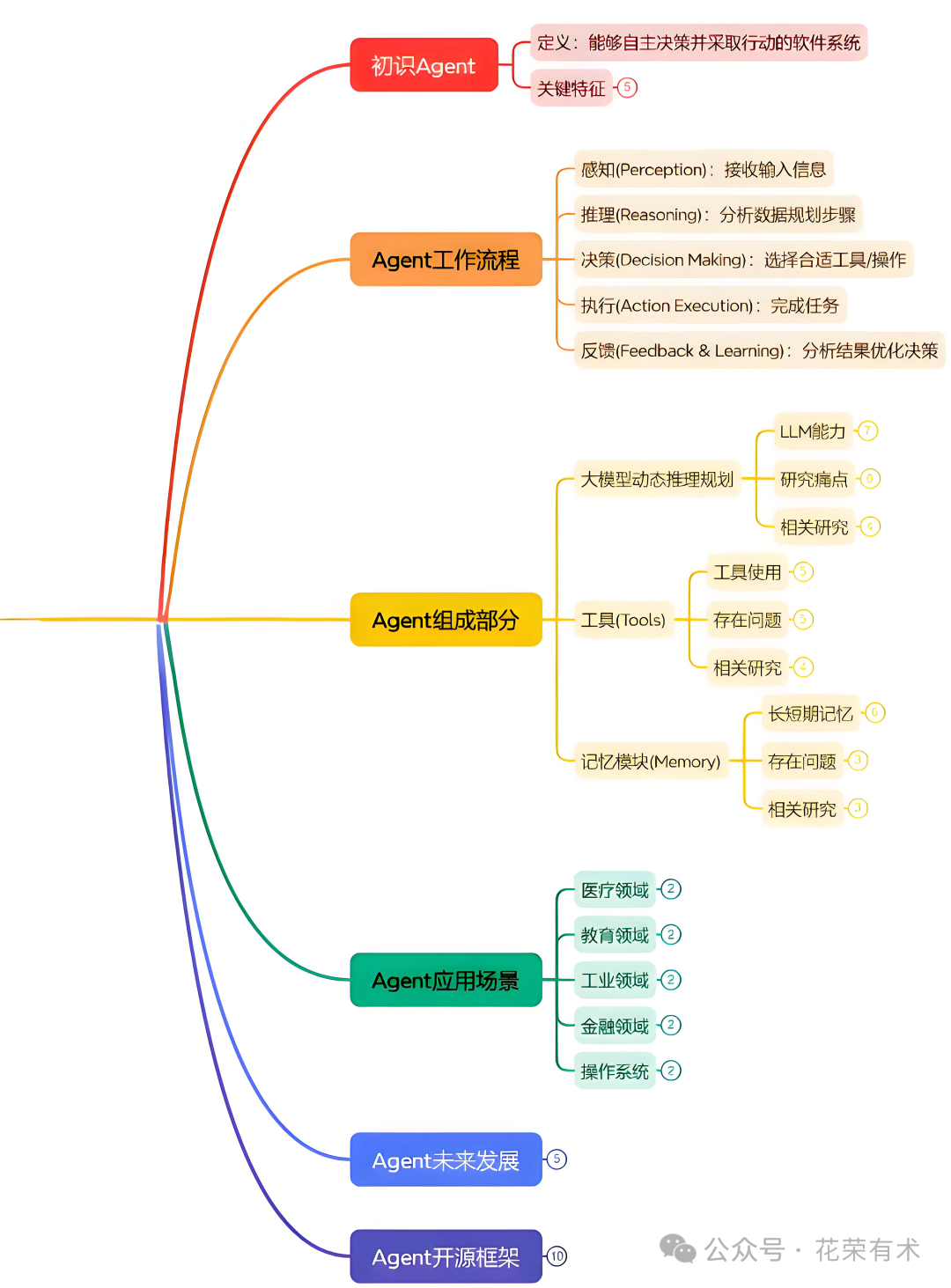 1. Why is 2025 the ‘Year of AI Agents’?1. It’s not a technical issue, but a cognitive one.
According to a recent McKinsey report: 70% of CEOs believe that AI Agents will completely change the business landscape within three years.
Gartner has listed Agentic AI as the hottest technology of 2025. What does this mean? AI is no longer a passive ‘repeater’ but a digital brain capable of active thinking and decision-making!
But why do so many companies fail? Because they treat AI Agents as ‘universal tools’ while neglecting the ‘development roadmap’.
Short-term memory: temporarily stores context during task execution (e.g., summary of search results).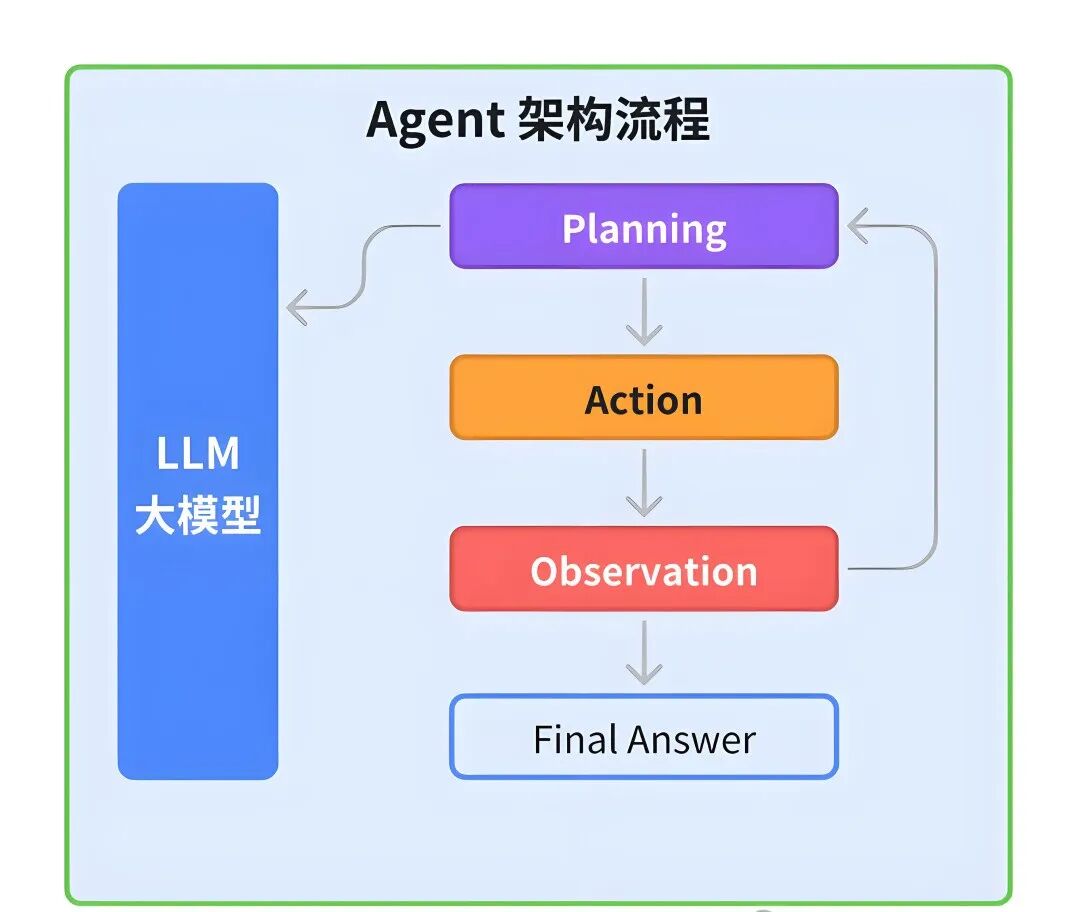 2. Three-Phase Roadmap for AI Agent Development
- Phase 1: Beginner (1-3 months) — Establishing Cognition
Goal: Understand what AI Agents are, what they can do, and what they cannot do.
Learning Content:
- Basic concepts of AI Agents (differences from traditional AI)
- Mainstream application scenarios in 2025 (business process automation, intelligent customer service, programming assistants, etc.)
- Essential toolchain: LangChain, LangGraph, CrewAI
Pitfall Guide:❌ Do not start by ‘reinventing the wheel’✅ Begin with existing frameworks like LangGraph and CrewAI
-
Phase 2: Intermediate (4-6 months) — Building Capabilities
Goal: Be able to independently develop and deploy an AI Agent to solve real business problems.
Learning Content:
- Infrastructure layers of AI Agents (platform layer, tool layer, orchestration layer, data layer, agent layer)
- Core protocol stack: RAG, multimodal, inter-agent communication
- Security and control: access permissions, performance monitoring, manual review
Pitfall Guide:❌ Do not skip the ‘data layer’ and jump directly to the agent layer✅ Ensure data quality first, then build the Agent
-
Phase 3: Mastery (7-12 months) — Business Empowerment
Goal: Be able to design and implement enterprise-level AI Agent solutions that create measurable business value.
Learning Content:
- Vertical domain AI Agents (healthcare, finance, customer service)
- Multi-Agent system design (Agent collaboration)
- Quantifying business value (ROI analysis)
Pitfall Guide:❌ Do not focus solely on ‘technical implementation’✅ Quantify business value (e.g., ‘increase sales conversion rate by 20%’)2. Five Key Components for AI Agent Development in 2025
1. Agent Framework: LangGraph, CrewAI, LlamaIndex
Why It Matters: These are the ‘LEGO blocks’ for building AI Agents, allowing you to quickly assemble complex workflows.
2025 Trends:
- LangGraph becomes the de facto standard framework
- CrewAI leads in multi-Agent collaboration
- LlamaIndex performs best in RAG scenarios
2. Security Tools: Ensuring AI Agent Safety and Control
Why It Matters: 51% of companies adopt two or more control methods.
Essential Tools:
- Access permission management
- Performance monitoring
- Manual review
3. RAG Workflow: Real-time Data Retrieval and Generation
Why It Matters: 64% of AI Agent deployments focus on business process automation.
Typical Applications:
- Customer support: real-time product information queries
- Sales operations: obtaining the latest market data
4. Multimodal Agents: Understanding Text, Images, and Sound
Why It Matters: Multimodal AI Agents are the game-changer of 2025.
Typical Applications:
- Medical diagnosis: combining image and text analysis
- Retail experience: voice + image interaction
5. GUI Agents: Directly Operating Graphical Interfaces
Why It Matters: GUI Agents enable AI to directly operate applications, increasing efficiency by 100%.
Typical Applications:
- Automated report generation
- System operation automation
The conclusion is that AI Agents are not just ‘technology’ but ‘business capabilities’. The ultimate answer to AI Agent development is not how advanced the technology is, but how high the business value is. Without business value, even the most impressive technology is useless; without a clear roadmap, no amount of investment will pay off.Scan the QR code belowClick on the AI+Finance menu for intelligent assistantsExperience the integrated intelligent agents

—END—