
Introduction: Have you ever faced communication barriers due to terminology differences between brands on an automation project site? Have you ever applied the concept of “soft components” from Mitsubishi to a Siemens project, resulting in programming errors? The terminology differences among various PLC brands represent a significant gap that engineers must bridge to progress from novice to expert!
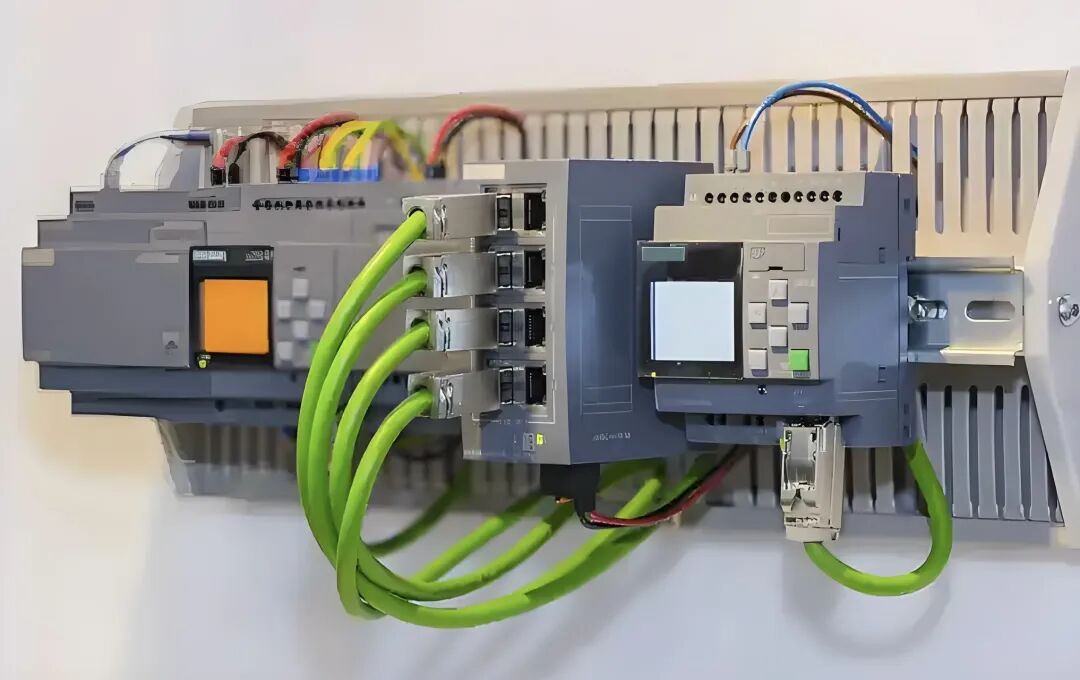
In previous issues, PHM published two articles: “Basic PLC Terminology | A Guide to Common PLC Terms to Help You Overcome Communication Barriers!” and “Advanced PLC Terminology Guide | From Novice to Expert”. Continuing from the previous articles, today PHM has compiled relevant information and edited it into this issue, revealing the core terminology differences among the three major factions: Siemens (German), Rockwell (American), and Mitsubishi (Japanese), helping you become a true cross-brand solution expert! Let’s take a look!
👉 PHM Tip:
→ Click the following text links to view previous articles:
“Basic PLC Terminology | A Guide to Common PLC Terms to Help You Overcome Communication Barriers!”
“Advanced PLC Terminology Guide | From Novice to Expert”
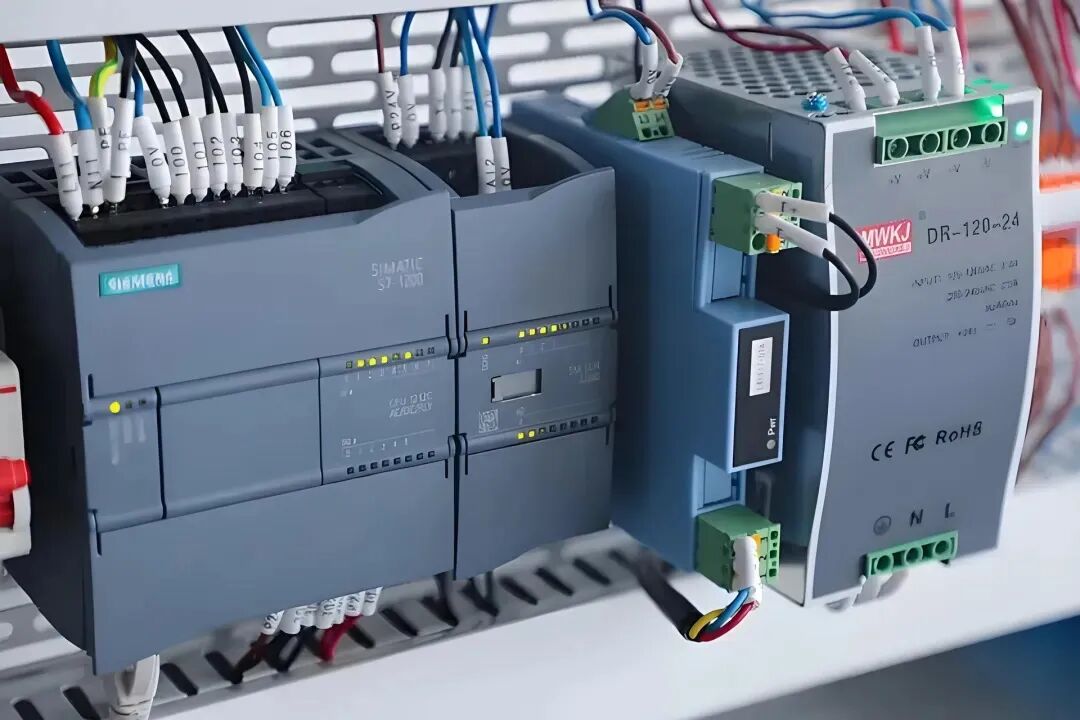
1. Programming Software and Ecosystem: Which IDE is More User-Friendly?
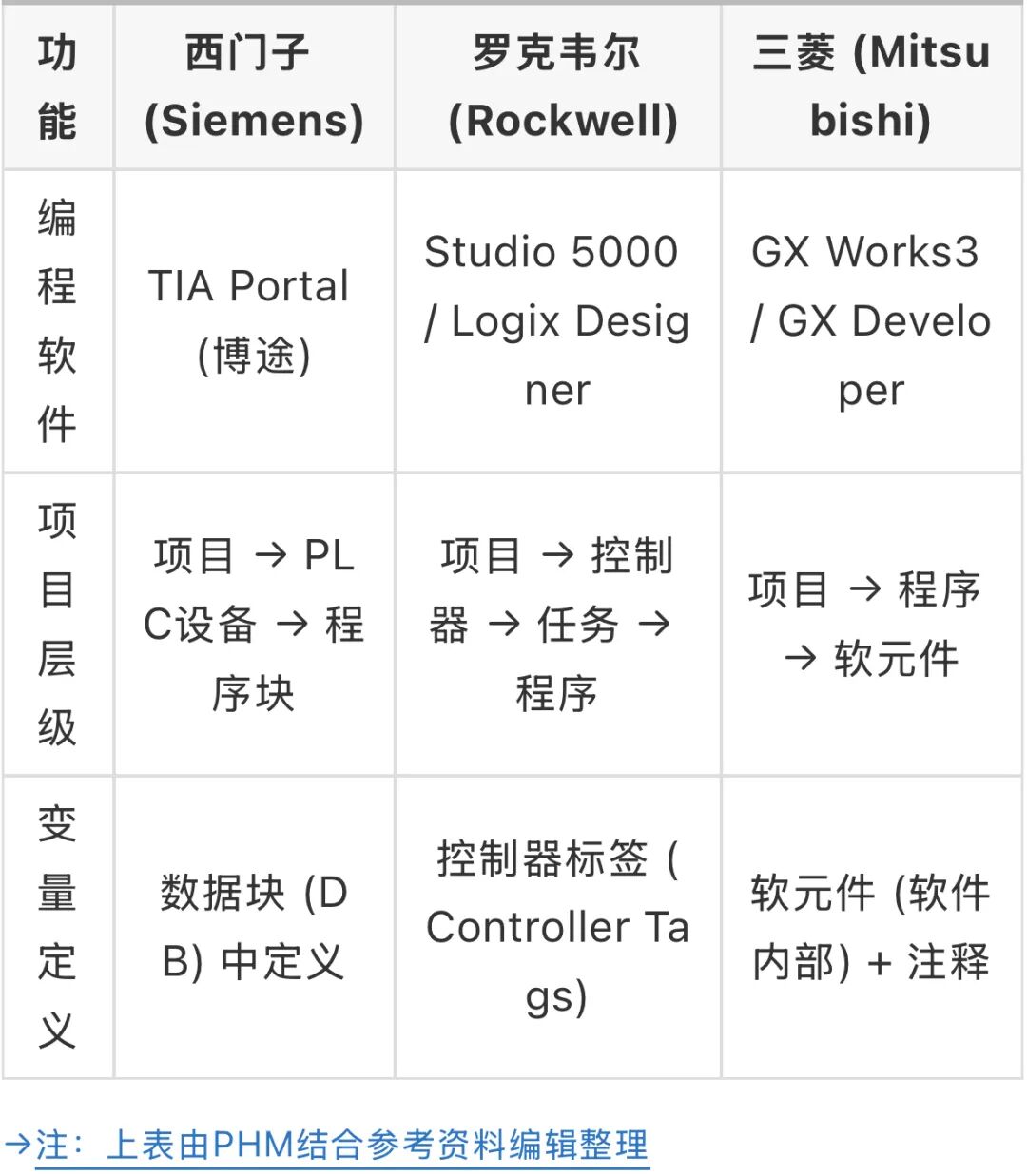
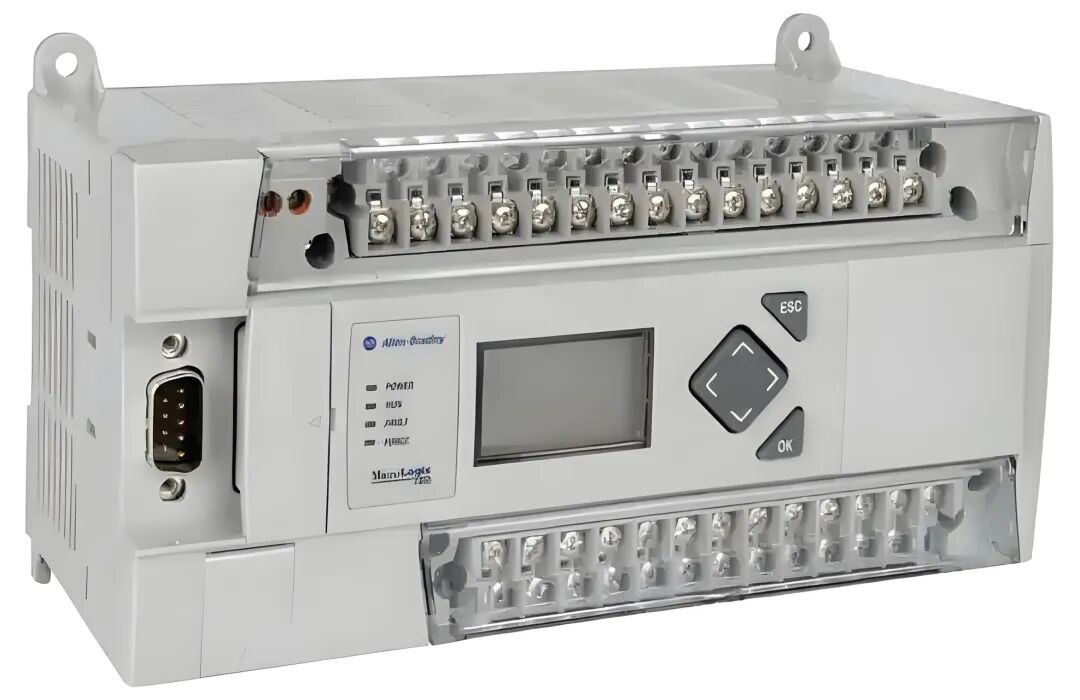
👉 Key Differences:
·S Siemens: Data Block (DB) is core, highly structured, and data types are strictly defined (must be defined before use).
·R Rockwell: Tag is core, highly global, supports alias tags (Alias Tag) mapping to physical points.
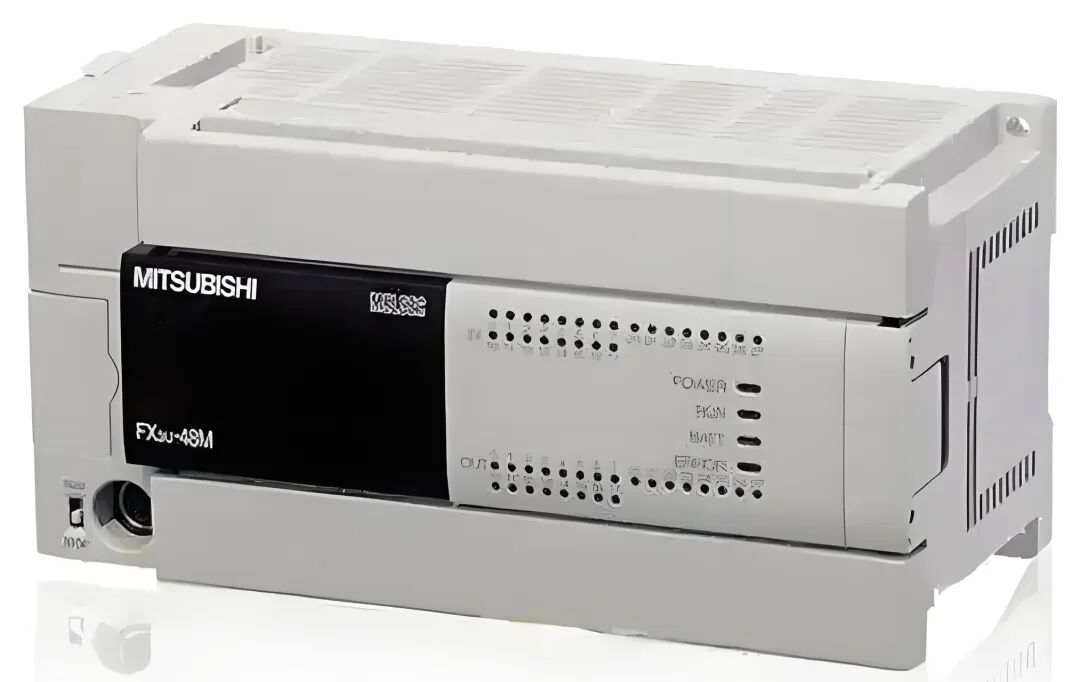
·M Mitsubishi: Soft components (e.g., X, Y, M, D) have fixed addresses and require comments to enhance readability.
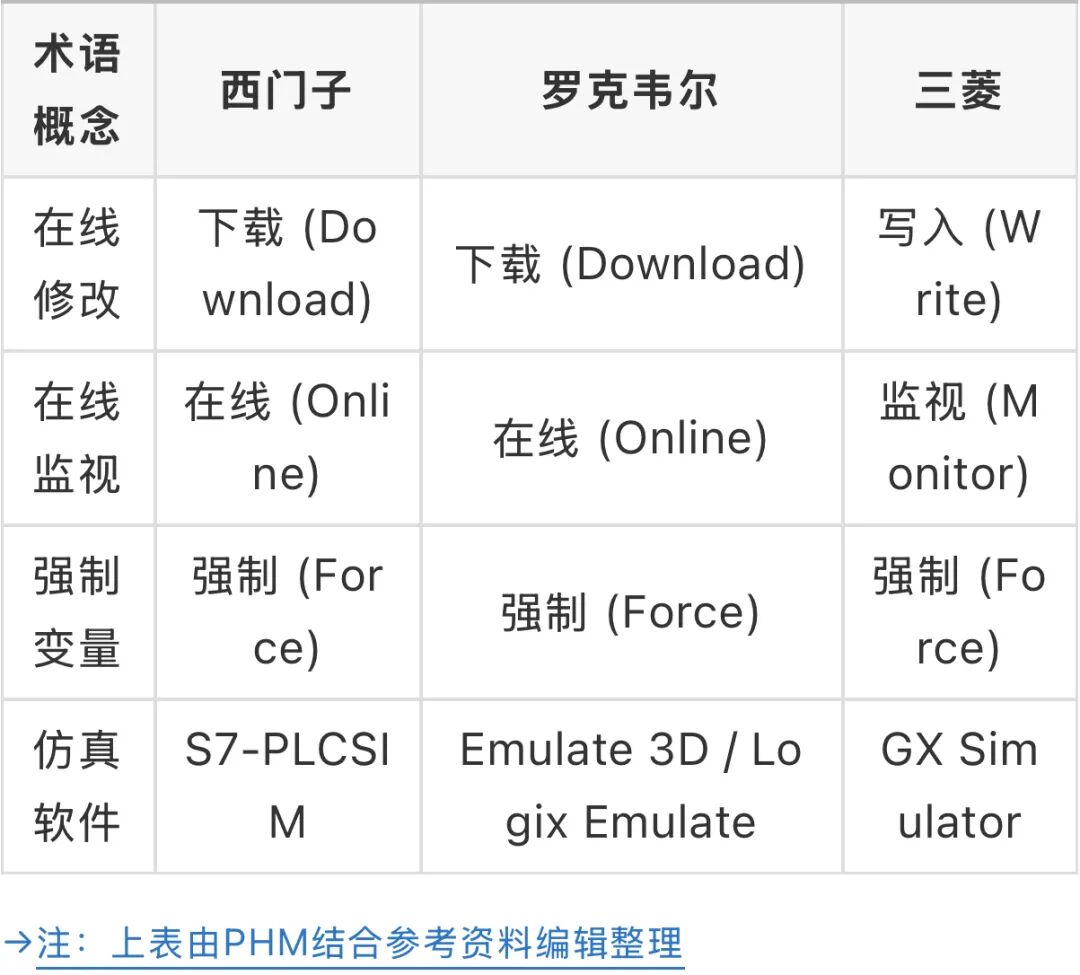
💡 PHM Practical Tip: Siemens’ DB blocks must be downloaded to take effect; Rockwell’s tags can be modified online more conveniently; Mitsubishi’s soft component addresses are fixed, and poor planning can easily lead to conflicts.
2. Program Organization Units: What They Are Called is Not Important, What They Can Do is!
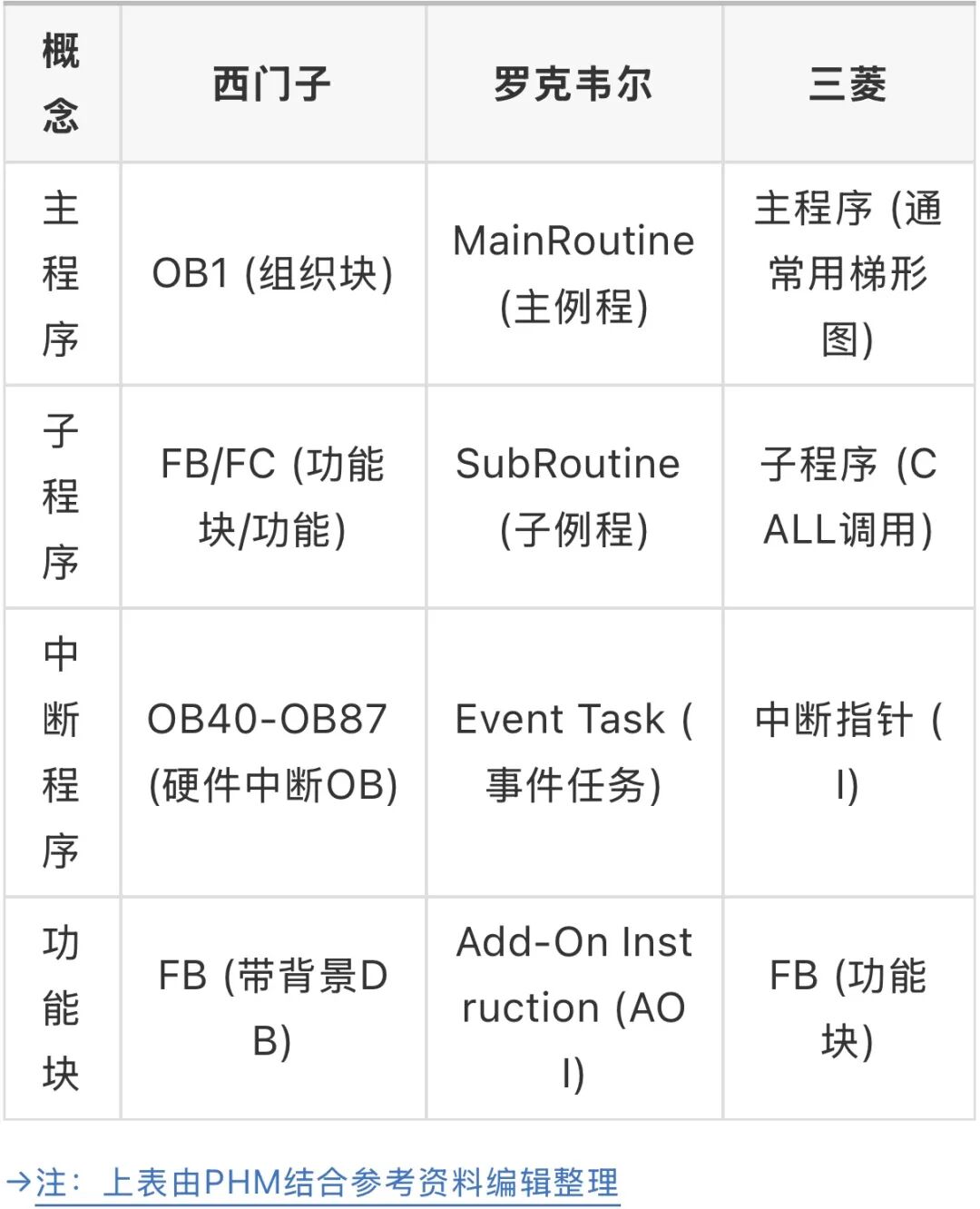
👉 Core Difference Analysis:
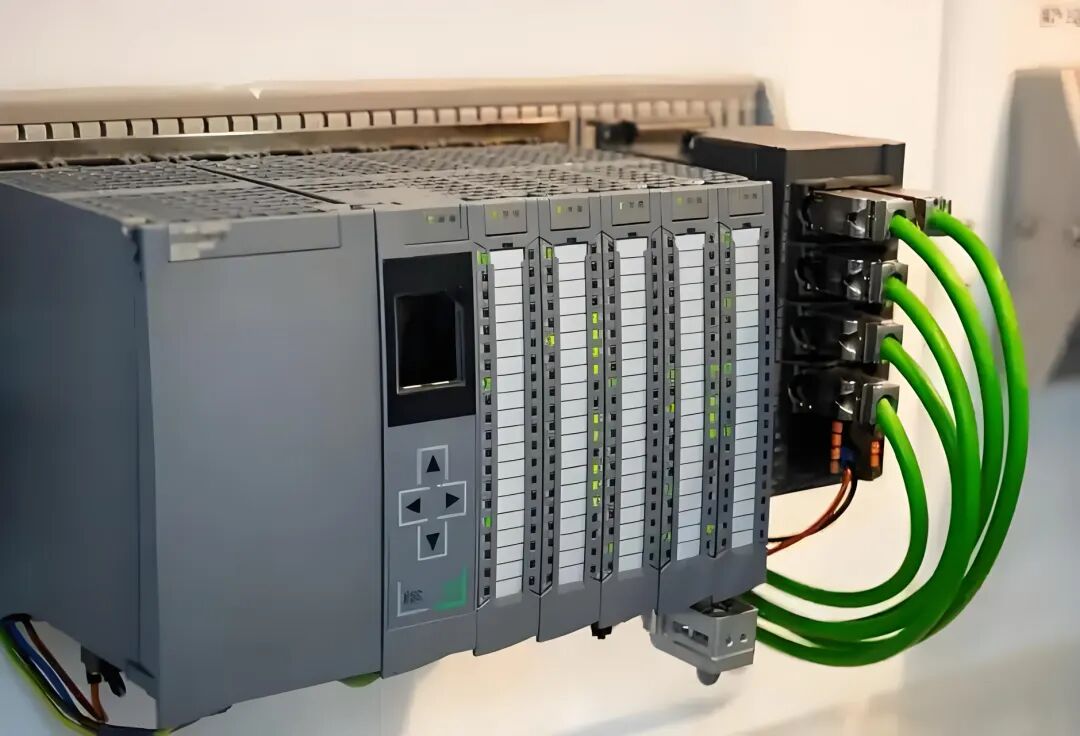
➡️ S Siemens’ FB/FC
FB: Must be paired with background DB (Instance DB), equivalent to a dedicated data storage area.
FC: No storage function, pure function logic.
Advantages: Extremely modular, suitable for complex repetitive devices (e.g., valves, motor control).
 ➡️ R Rockwell’s AOI
Add-On Instruction: User-defined instructions that encapsulate logic and parameters into a single instruction.
Advantages: Extremely reusable, can be dragged and used like native instructions, with a custom interface.
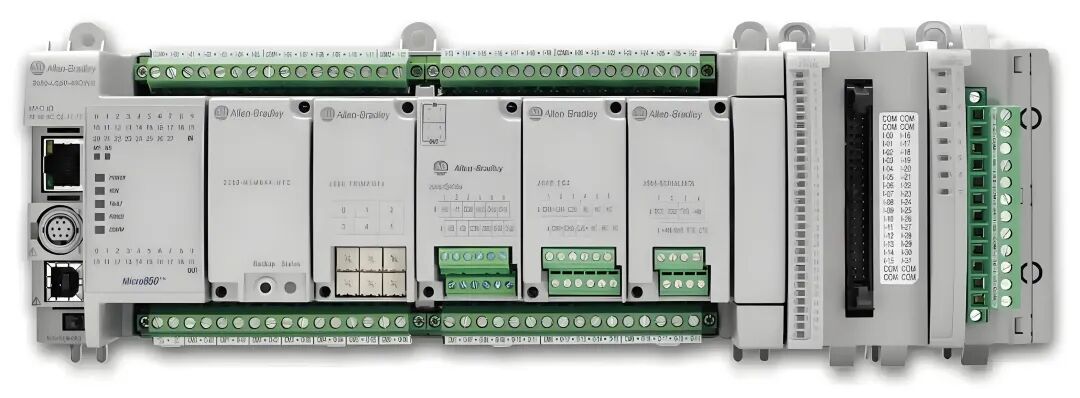 ➡️ M Mitsubishi’s FB
Similar concept to Siemens, but background data is stored directly within the FB, no additional DB required.
Advantages: Simple concept, quick to learn.
⚠️ Warning: Siemens FB’s multiple background calls vs. single background calls can easily confuse beginners! Rockwell’s AOI needs to be downloaded separately, or it will throw an error!
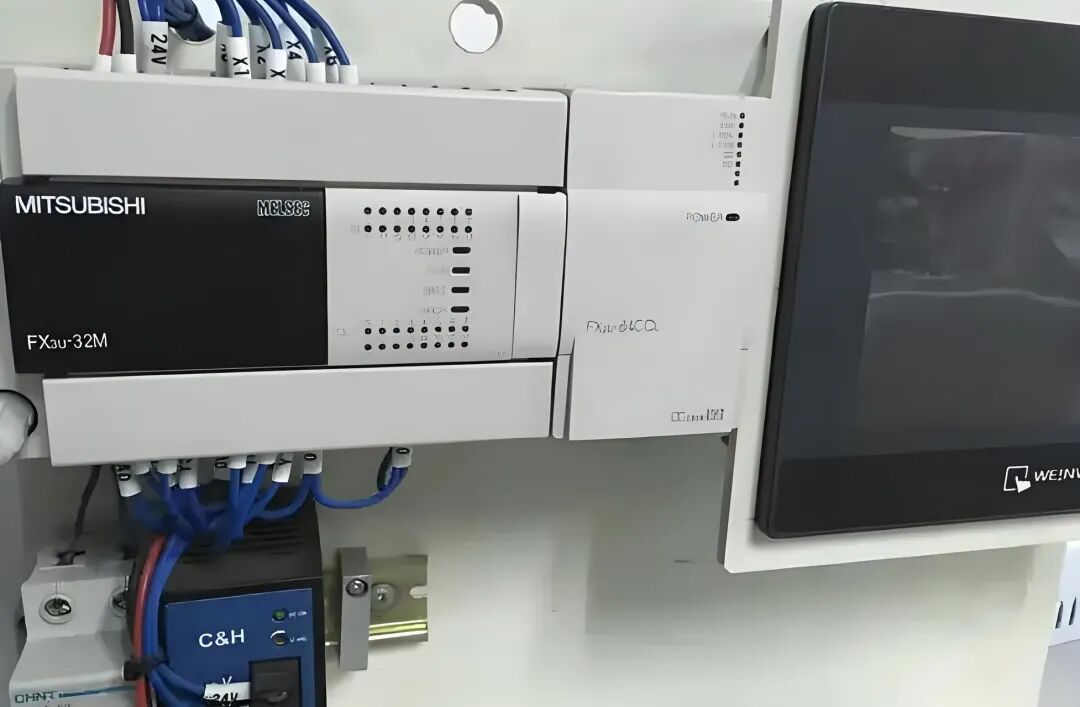
3. Addressing Methods: Address Formats Differ Greatly
👉 PHM Tip:
This is the area with the greatest differences and the most prone to errors!
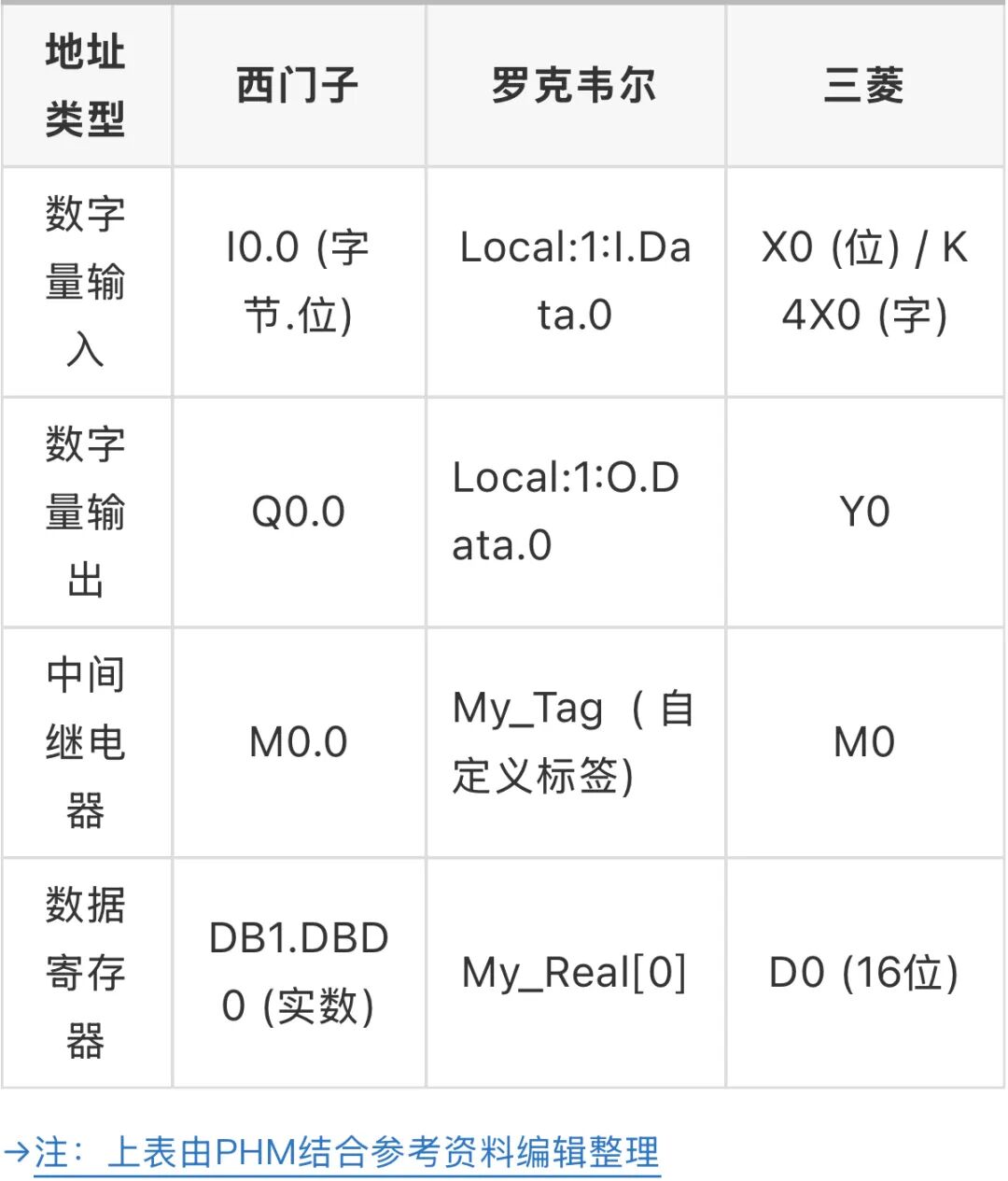
➡️ Essential Addressing Differences:
S Siemens: Combination of absolute addressing + symbolic addressing. I0.0 is an absolute address, which can be assigned the symbolic name “Start Button”.
R Rockwell: Primarily tag-based addressing. Almost all data is accessed via tag names, and physical points are also mapped to tags.
M Mitsubishi: Soft component addresses are core. X0, Y0, M0, D0 are fixed addresses, with poor readability, heavily relying on comments to compensate.
🎯 Memory Mnemonic: Siemens “point”, Rockwell “name”, Mitsubishi “letter + number”.
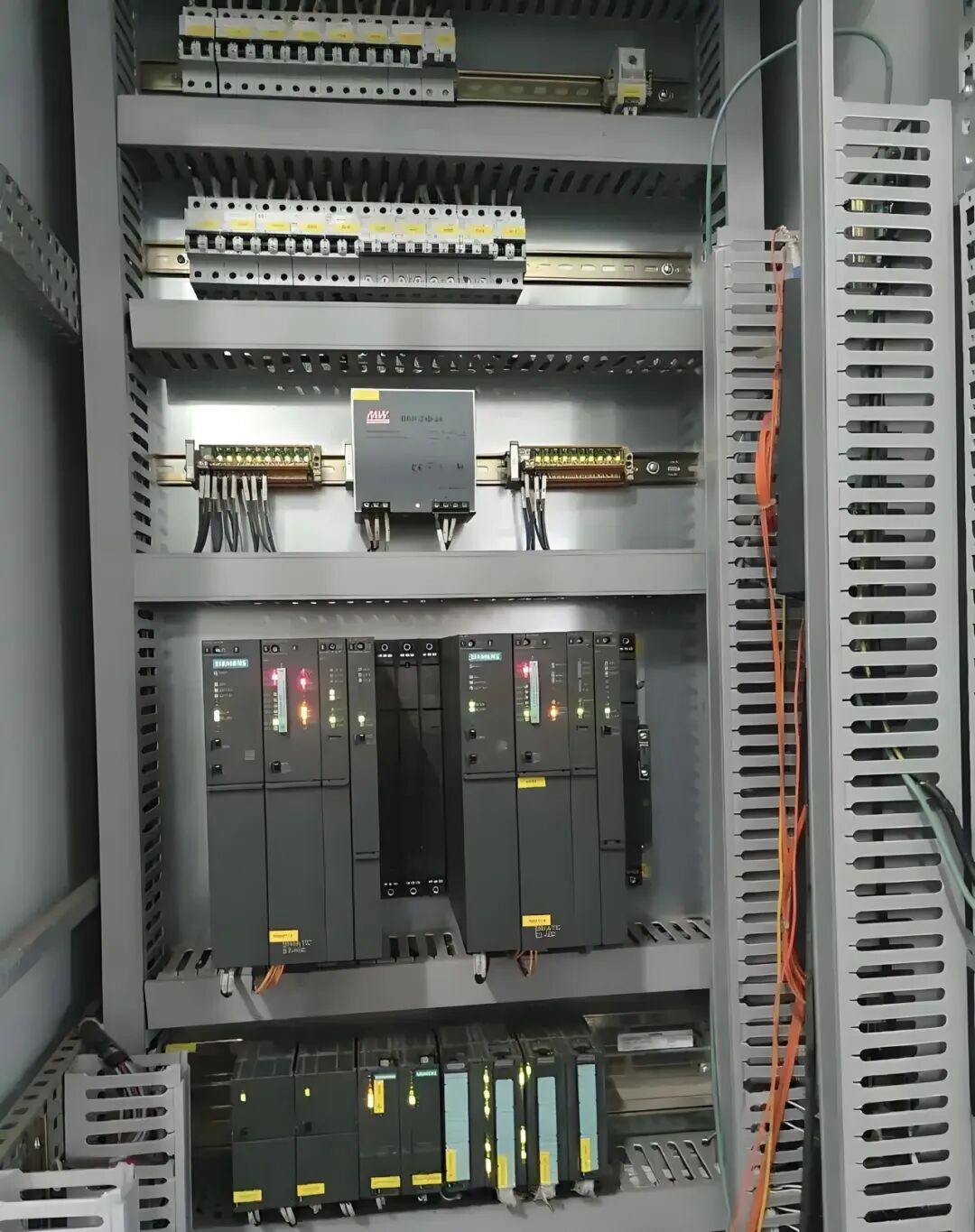
4. Communication Terminology: Different Names Behind Protocols
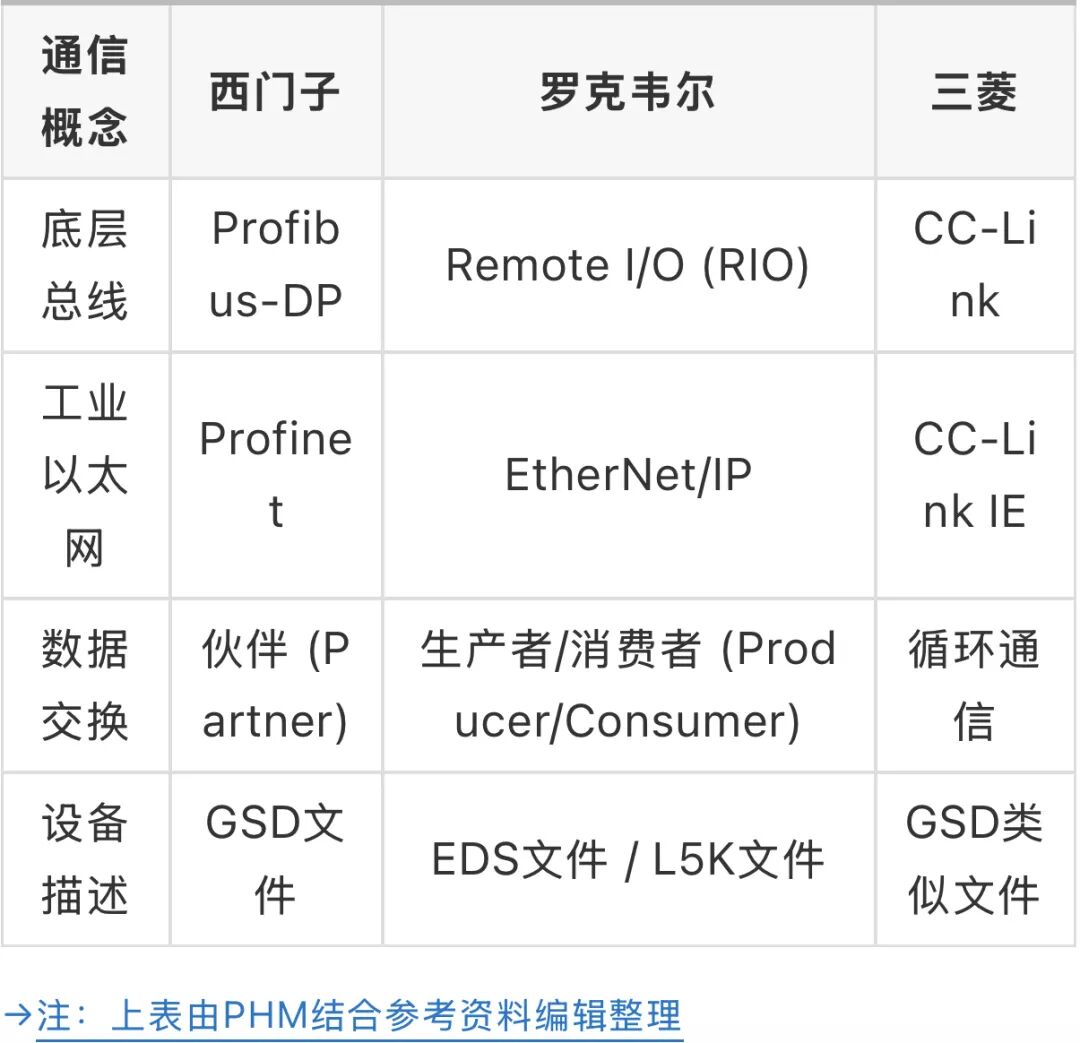
👉 Key Understanding:
Profinet (Siemens) and EtherNet/IP (Rockwell) are two competing Ethernet standards, both using Ethernet at the physical layer, but the protocol stacks are completely different and incompatible.
“Producer/Consumer” is the core model of the Rockwell system, where a tag’s data is “produced” and can be used by multiple “consumers”, enhancing efficiency. Siemens Profinet’s publisher/subscriber mechanism is similar.
5. Other Key Terminology Differences Comparison Table
✅ Ultimate Principles for Cross-Brand Learning
1. Understand Philosophical Differences
·German (Siemens): Rigorous, structured, top-down design.
·American (Rockwell): Flexible, tag-based, configuration-driven.
·Japanese (Mitsubishi): Intuitive, address-based, compact and lightweight.
2. Master Core Mapping
Remember the core concepts of each brand: Siemens’ DB blocks, Rockwell’s tags, Mitsubishi’s soft components. Most other concepts revolve around them.
3. Make Good Use of Official Documentation
When encountering uncertain terminology, consult the official manuals or help documents of the brand first; do not assume cross-brand applicability.
💎 Conclusion:
Terminology differences are superficial; they reflect the different design philosophies and concepts of various brands. True experts can not only clearly distinguish these differences but also draw on the strengths of each to integrate them into their own system design capabilities.
→ 📚 PHM’s article writing references for this issue:
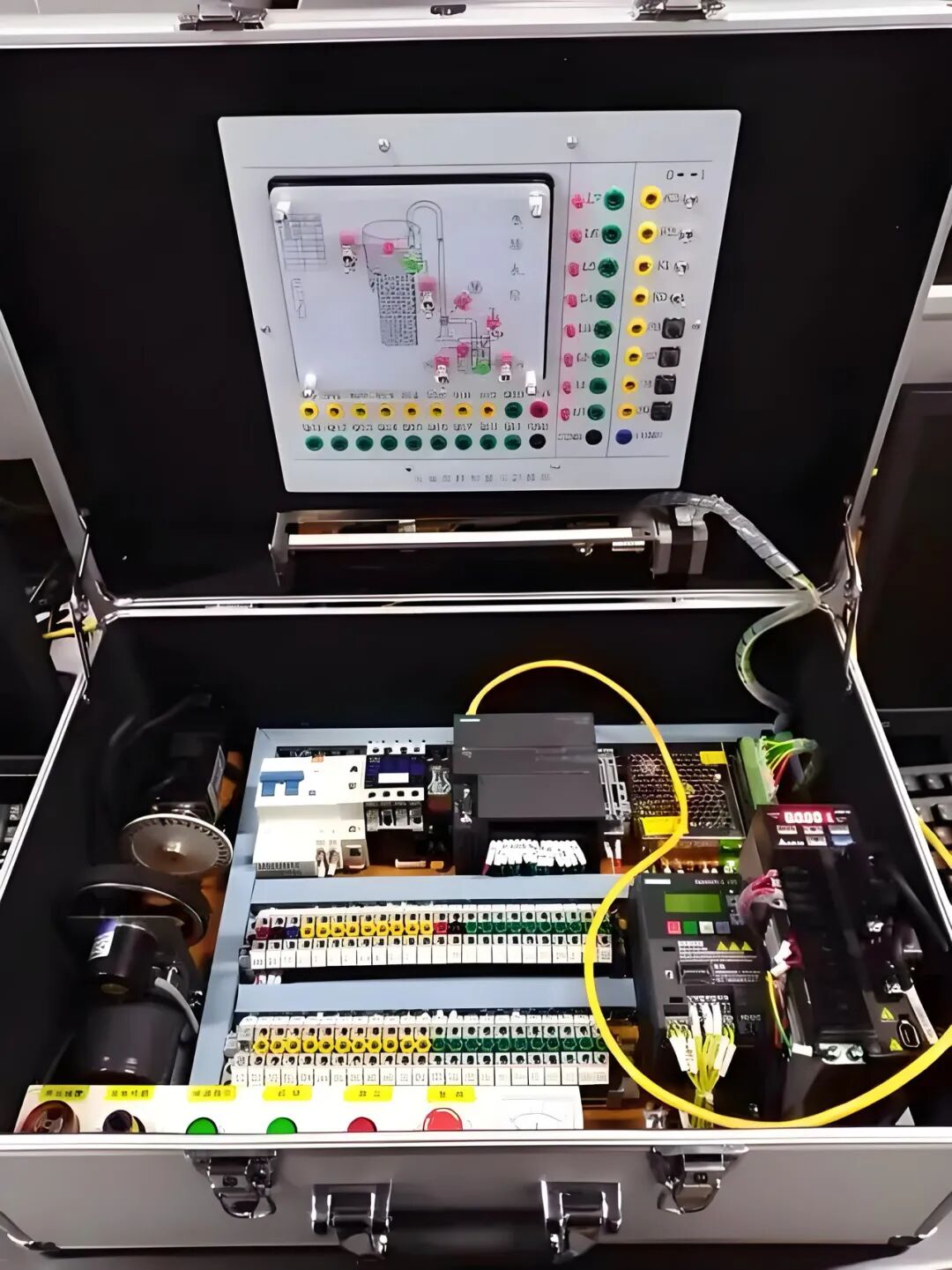
·“Electrical Control and S7-1200 PLC Application Tutorial”
(Published in March 2025)
-Authors: Fang Guisheng, Wang Hongmei
-Publisher: Machinery Industry Press
-Features: Modular structure with “basic-application-practice” three-part modules, accompanied by micro-course videos and program source code, transitioning naturally from relay control to PLC programming.
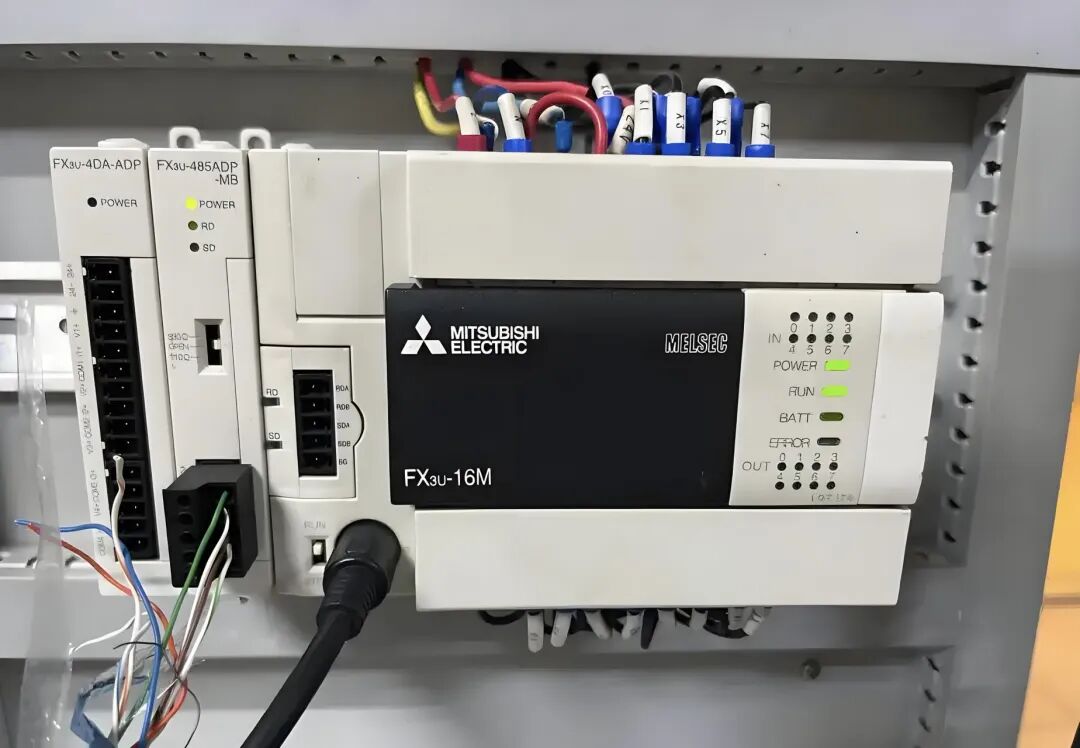
·”PLC Technology Project Tutorial (Mitsubishi FX3U Series)” (Published in February 2025)
-Authors: Wang Baolin, Xie Feixian
-Publisher: Machinery Industry Press
-Features: Project-led, task-driven, accompanied by high-quality online courses and a fully virtual simulation system from Guangdong Province.
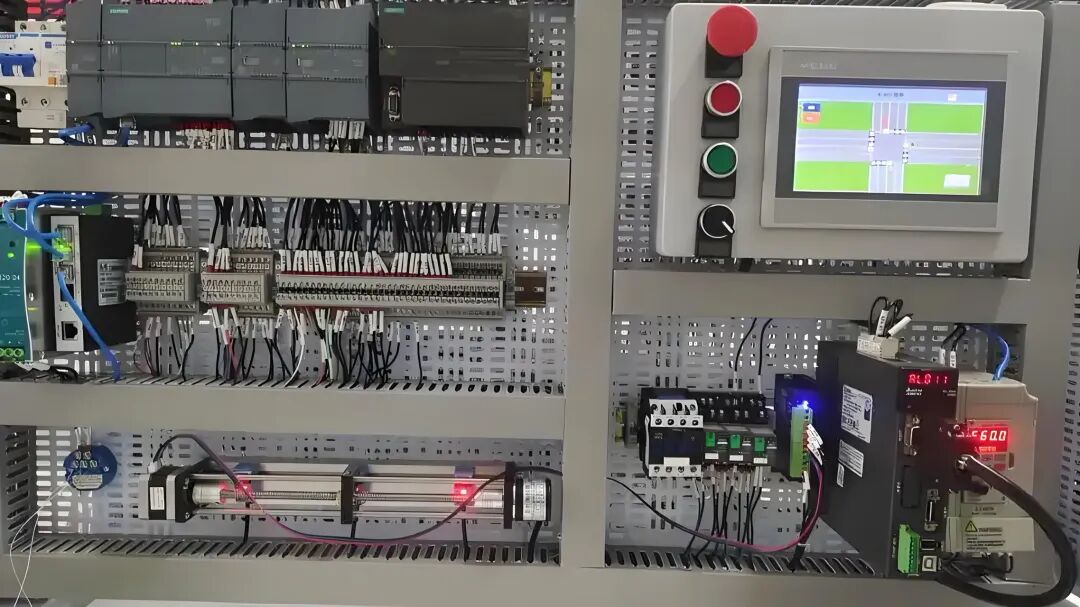
·“PLC Application Technology (S7-200 SMART)” (Published in March 2025)
-Authors: Chen Li, Cheng Defang
-Publisher: Machinery Industry Press
-Features: Includes 20 project tasks ranging from easy to difficult, covering advanced applications such as communication networks, with strong practicality.
· Siemens Industrial Support Center
· Mitsubishi Electric Automation Official Website
 💡【Interactive Topic】
→ PHM’s article writing review series: ·Basic Edition: Common PLC Terminology Demystified ·Advanced Edition: High-End Applications and Communication Terminology Analysis ·Brand Edition: This Article (Revealing Terminology Differences Among Three Major Brands) – – Follow us for more automation content!
Which brand of PLC do you primarily use? What interesting stories or pitfalls have you encountered in cross-brand learning? Feel free to share your stories in the comments!
 【Original Statement: This article is originally written by PHM. PHM is committed to sharing technology related to equipment, quality management methods, and cutting-edge industry information, focusing on improving manufacturing efficiency. Feel free to share and learn, and contact us for authorization if used elsewhere】
Unit Address: Shenzhen Hongguan Technology Park A6/3F Equipment Health Management Center Office
Contact Number: 568-83954