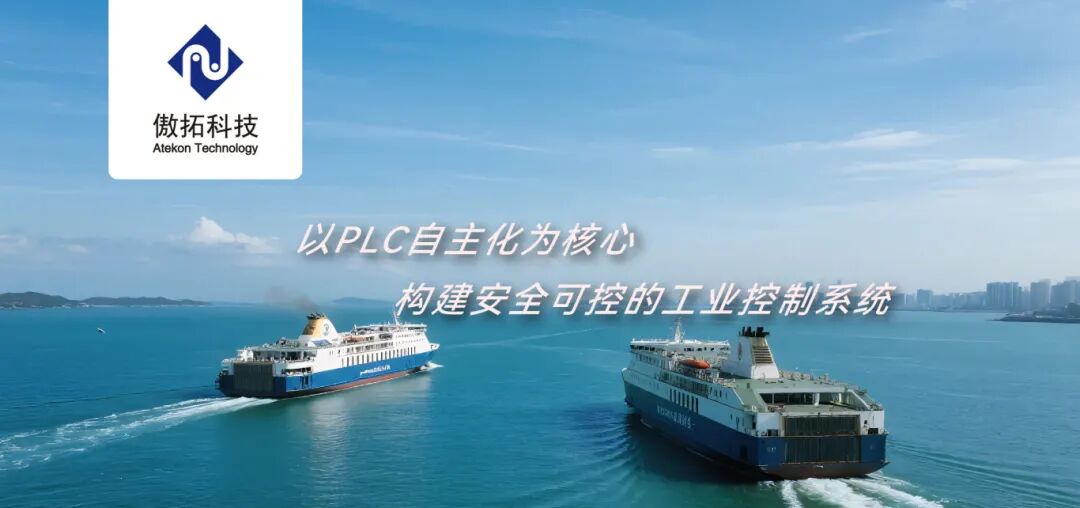
During navigation, ships experience rolling and pitching due to external forces such as wind and waves, which jeopardizes stability and comfort. The anti-roll fins, as a common device, actively control the fins to generate counter-torques to suppress rolling.
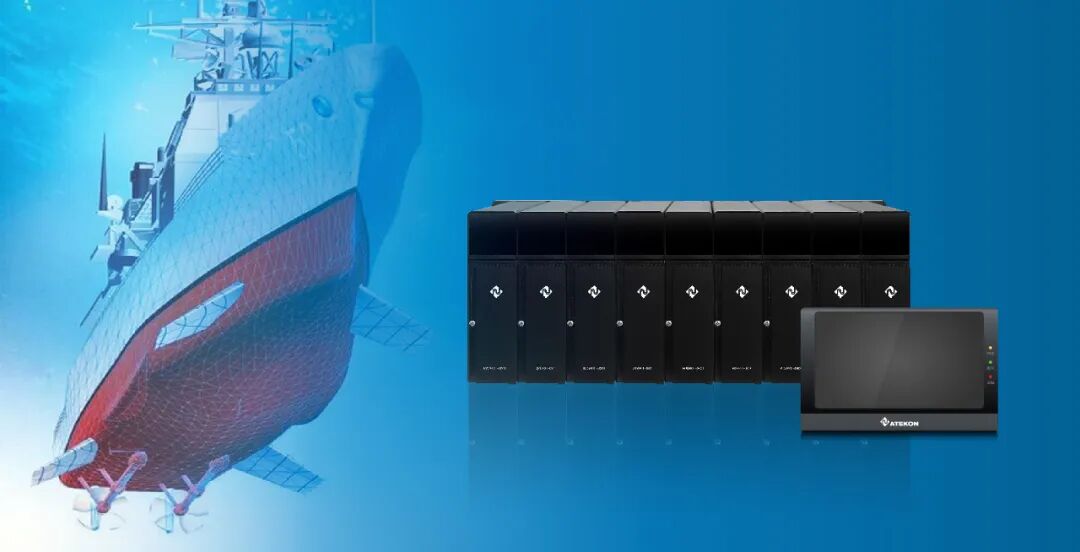
Traditional anti-roll fin control systems rely on analog circuits or dedicated controllers, which have inherent drawbacks such as system complexity, maintenance difficulties, and poor scalability. With technological advancements, Programmable Logic Controllers (PLCs) have emerged as a widely used new solution in this field due to their high reliability, programming flexibility, and ease of expansion.
01Components of the PLC-based Anti-Roll Fin Control SystemSensor
Used to collect signals such as the ship’s roll angle, roll angular velocity, and speed, including gyroscopes, accelerometers, and speed sensors.
PLC Controller
The core control unit of the system, responsible for receiving sensor signals and calculating the action commands for the anti-roll fins based on preset control algorithms.
Actuator
Drives the movement of the anti-roll fins based on the control signals output by the PLC, including hydraulic systems and motors.
Human-Machine Interface (HMI)
Used to display system status, set parameters, and perform fault diagnosis.
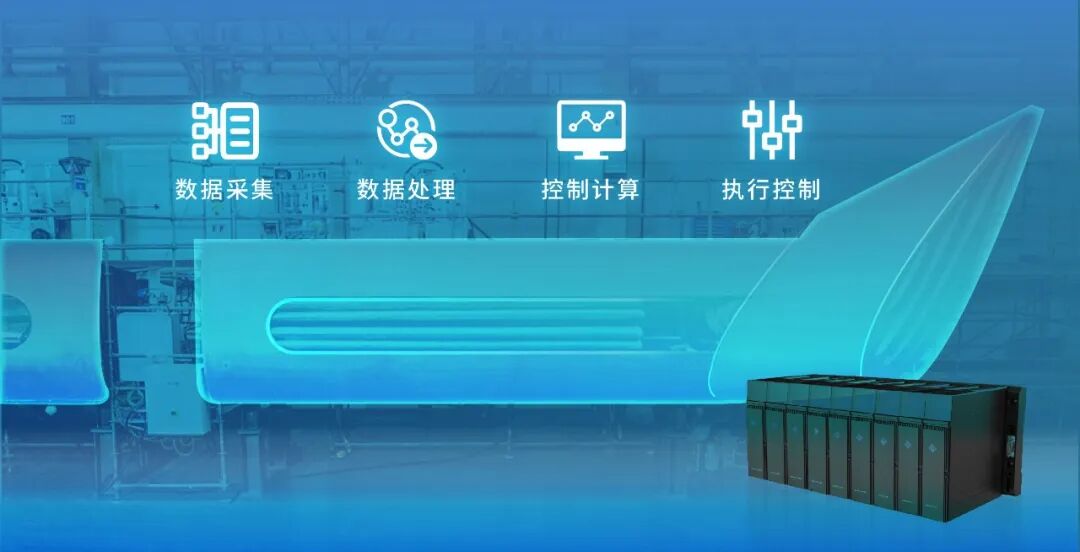
 02Workflow of the PLC-based Anti-Roll Fin Control SystemData Acquisition
Sensors collect the ship’s roll angle, roll angular velocity, and other motion parameters in real-time and transmit them to the PLC controller.
Data Processing
The PLC processes the sensor data, calculates the current roll state, compares it with the set target, and generates an error signal.
Control Calculation
The PLC calculates the required action commands for the anti-roll fins (such as deflection angle and speed) based on preset control algorithms (e.g., PID).
Execution Control
The actuator receives the PLC commands, drives the anti-roll fins to deflect accordingly, and generates a counteracting stabilizing torque to offset the roll.
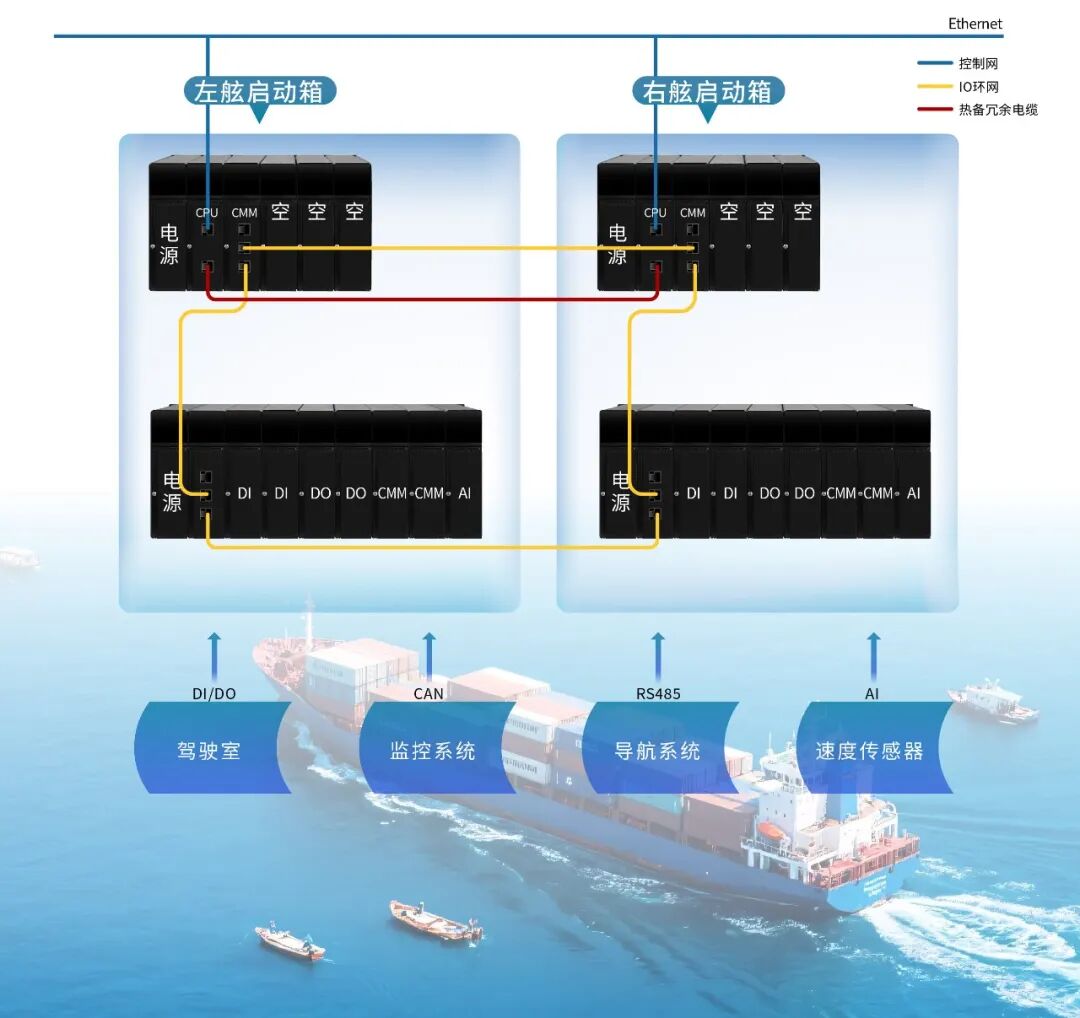
 Control System Solution Introduction (A Ship from China Shipbuilding)ACore Configuration
This system uses the AOTEK NJ400 series PLC.
BSystem Architecture
It adopts a dual-machine rack redundancy architecture, with the main and backup PLC racks placed in two control cabinets.
Two Ethernet remote I/O racks control the left and right anti-roll fins, forming an Ethernet ring network with the main and backup CPU racks.
CBasic Working Principle
The system collects signals from the roll angle sensors (gyroscopes/inclinometers) through the analog input module (roll angle, angular velocity), processes them using the PLC’s internal control algorithms, and outputs commands to drive the hydraulic cylinders, moving the anti-roll fins to generate stabilizing torque, while reporting all status information to the central monitoring system.
DMain Features of the Solution
CPU Performance:
The CPU401-0511 uses a domestically produced processor.
CPU Redundancy:
Dual-machine rack redundancy.
Network Redundancy:
Integrated dual Ethernet ports, 10/100M adaptive.
Bus Redundancy:
Ethernet master and slave form a ring network; supports By-pass functionality.
The successful application of this system significantly enhances the stability and comfort of ships in harsh sea conditions, achieving leading levels of roll reduction performance. As artificial intelligence and adaptive algorithms continue to integrate deeply, AOTEK PLC will keep evolving—smarter predictive control, lower energy consumption, and broader ship adaptability, providing a solid technical foundation for intelligent ships and marine equipment control systems!
ATEKONPrevious Recommendations
New Breakthrough in Supply Chain Security: Leading State-Owned Enterprises Join Hands with AOTEK Technology to Achieve Domestic Replacement of Navigation Control Systems
Learn More
Follow AOTEK Technology Nanjing Headquarters
Address:8th Floor, Building D, Yunmi City, No. 19 Ning Shuang Road, Yuhua District, Nanjing, Jiangsu Province
Phone:025-68530188 (Switchboard)
Fax:025-68530178
Service Hotline:400-025-0155
Technical Support:025-68530179
Email: [email protected]
Website: www.atekon.com
Beijing Branch
Address: Room 828, Building B, Jinxin Mansion, No. 16 Lianhuachi West Road, Haidian District, Beijing
Phone: 18905184188
Qingdao OfficeAddress: 5th Floor, North Skirt Building, Fucai Mansion, No. 135 Yan’an Third Road, Qingdao, Shandong ProvincePhone: 13853282618
Xi’an OfficeAddress: Room 704, Building B, Jingfa Mansion, No. 9 Fengcheng Second Road, Weiyang District, Xi’an, Shaanxi ProvincePhone: 17396800573
Dongying Office
Address: Room 201, Unit 2, Building 3, Jintai Garden, No. 9 Zibo Road, Dongying District, Dongying, Shandong Province
Phone: 18905187373
Wuhan Office
Address: Room 3002, T2 Office Building, Vanke Future Center, No. 408 Hanyang Avenue, Hanyang District, Wuhan, Hubei Province
Phone: 18168073077
Chengdu Office
Address: Room 1519, Building A, Walz Plaza, No. 7 Aviation Road, Wuhou District, Chengdu, Sichuan Province
Phone: 18905184088
Guangzhou Office
Address: Room 603, Building 2, No. 6 Jiapin Second Street, Shatou Street, Panyu District, Guangzhou, Guangdong Province
Phone: 17396800575
Fuzhou Office
Address: Room 306, Building S12, Phase III, China Resources Land Center, Hongshan Garden Road, Gulou District, Fuzhou, Fujian Province
Phone: 18914712985
Shenyang Liaison Office
Address: Building 4, No. 9 Qizhong Road, Beita Street, Huanggu District, Shenyang, Liaoning Province
Phone: 18120175097
Daqing Liaison Office
Address: Room 2803, Unit 1, Building 4, Kunlun Tangren Center, No. 25 Juxian Street, Ranghu Road, Daqing, Heilongjiang Province
Phone: 18905184188
Chongqing Liaison Office
Address: 8-1#, Building 1, Times Tianjie, Yuzhong District, Chongqing
Phone: 13668018588
Kunming Liaison Office
Address: Room 2113, Building A, Yuntong Times Plaza, No. 363 Jinbi Road, Xishan District, Kunming, Yunnan Province
Phone: 13619673625