1 Profinet Communication Standard
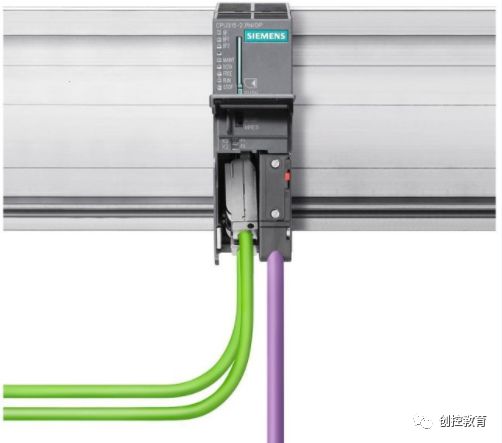
PROFInet provides open and consistent connections in office and automation fields. The PROFInet solution covers all operational phases of decentralized automation systems, mainly including the following aspects:
⑴ An open object model (structural model) for highly decentralized automation systems;
⑵ An open, object-oriented runtime communication scheme based on Ethernet (communication relationships between functional units);
⑶ Manufacturer-independent engineering design solutions (application development).
The PROFInet solution can be simply described by one equation: PROFInet = Profibus + open and consistent communication with PROFIBUS and IT standard Ethernet.
1.1 Software Structure of PROFInet Devices
The software of PROFInet devices covers the entire runtime communication of field devices. The modular design software includes several communication layers, each consistent with the system environment. The PROFInet software mainly includes an RPC (Remote Procedure Call) layer, a DCOM (Distributed Component Object Model) layer, and a layer specifically defined for PROFInet objects. PROFInet objects can be ACCO (Active Connection Control Object) devices, RT auto (Runtime Automation) devices, physical devices, or logical devices. The real-time data channel defined in the software provides real-time communication services between PROFInet objects and Ethernet. PROFInet connects to the operating system (such as WinCE) through a system interface and to controllers (such as PLC) through an application interface. The runtime software of PROFInet is located in a fixed directory structure, which can be divided into a core directory and a system application directory. If communication starts and the files in the core directory have not changed, some files in the system application directory must be rebuilt. All system applications point to the system interface and application interface, implementing various functions of the PROFInet device.
The software structure of PROFInet devices determines that they can be accessed directly and transparently from the enterprise management layer to the field layer, providing absolute support for the TCP/IP protocol. PROFInet technology enables enterprise users to easily extend and integrate existing systems, making it an optimized industrial Ethernet communication standard.
1.2 Porting PROFInet to Field Devices
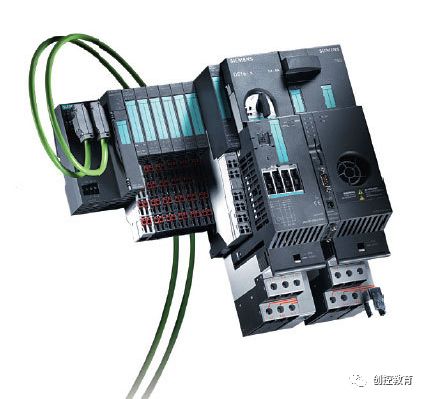
As an open resource, PROFInet software is implemented quickly and easily in products from other manufacturers by porting it to the TCP/IP protocol stack on devices. The specific process is: first, connect the open resource RPC interface to the TCP/IP protocol stack and the system integration in the device operating system; then integrate the DCOM (Discrete Component Object Module) mechanism of the PROFInet protocol stack into the device’s operating system; finally, implement device-specific DCOM applications for physical device and logical device objects, runtime objects, and active control connection objects. When assembling PROFInet devices from individual components, an XML file must also be created with the corresponding description.
An XML file for a PROFInet device should include the following data:
⑴ The name and ID number of the PROFInet device;
⑵ The IP address of the PROFInet device, the access method for diagnostic data, and the device connection method;
⑶ The hardware allocation of the PROFInet device, device interfaces, and the variables, data types, and formats defined for each interface;
⑷ The storage address of the PROFInet device in the entire project. The PROFInet device encapsulates all its functions in its software and provides variable interfaces to connect with other PROFInet devices. Each variable in the variable interface represents a specific sub-function, including operation, input/output enable, reset, end, stop, start, and error. A PROFInet device can encapsulate a controller, an actuator, or even a control network. As shown in Figure 2, a PROFInet device encapsulates a Profibus-DP control network.
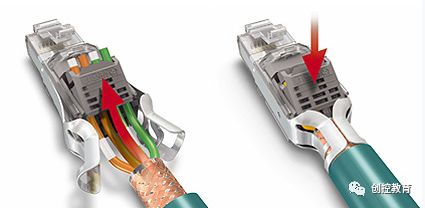
Communication between PROFInet devices is carried out through the DCOM module. In the graphical interface of the PROFInet device connection editor, connections between various PROFInet devices can be easily realized. A beverage manufacturer’s production process with four stages: rinsing, filling, sealing, and packaging can be implemented by connecting four PROFInet devices in series.
All device interfaces are consistently defined in PROFInet, allowing for flexible combinations and reuse, without the user needing to consider the internal operational mechanisms of each device. In addition, PROFInet integrates the fault-tolerant communication standard PROFIsafe, meeting comprehensive safety requirements for personnel, equipment, and the environment, making it suitable for fail-safe applications.
2 Implementation of PROFInet Communication Functions
The implementation of communication functions for PROFInet devices is based on traditional Ethernet communication mechanisms (such as TCP or UDP), while also enhancing it using RPC and DCOM mechanisms. DCOM can be seen as an extension of COM technology for distributed applications based on RPC, optimized for real-time communication mechanisms in applications with strict real-time requirements. During operation, PROFInet devices are represented as DCOM objects, ensuring communication through the object protocol mechanism. COM objects appear on the communication bus in the form defined by the DCOM protocol as PDU. The DCOM wiring protocol defines the identification of objects and methods with relevant interfaces and parameters, allowing for standardized DCOM information packet transmission on the communication bus. For higher-level communication, PROFInet can adopt integrated OPC (OLE for Process Control) interface technology.
2.1 Basic Communication Methods of PROFInet
PROFInet defines three different communication methods based on different application scenarios: standard communication using TCP/IP; real-time RT (Real-time) communication; and synchronized real-time IRT communication. PROFInet devices can select the appropriate communication method based on communication requirements.
PROFInet uses Ethernet and TCP/IP protocols as the communication foundation, providing absolute support for TCP/IP communication in any scenario. Since most factory automation applications have high requirements for real-time response times, PROFInet specifies an optimized real-time communication channel based on Ethernet layer 2 to meet the real-time requirements in automation, significantly reducing the time occupied on the communication stack and improving performance in automation data refresh. PROFInet not only minimizes the communication stack in programmable controllers but also optimizes the data transmission in the network. By adopting the PROFInet communication standard, the system’s response time for real-time applications can be reduced to 5-10ms. PROFInet also supports high-performance synchronized motion control applications, where it provides synchronized real-time (IRT) communication with response times of less than 1ms for 100 nodes, a function provided by the embedded synchronous real-time switching chip ERTEC on layer 2. The communication cycle of PROFInet is shown in Figure 4. Within a communication cycle of a PROFInet device, both IRT real-time communication and TCP/IP standard communication are included. PROFInet communication technology demonstrates its significant advantages in many application scenarios. Engineering practice shows that using IRT communication provided by PROFInet in synchronized motion control scenarios can improve system performance by nearly 100 times compared to fieldbus solutions.
2.2 Integration of PROFInet and OPC
Since both PROFInet and OPC use DCOM communication mechanisms, the PROFInet communication technology can be easily integrated with OPC interface technology to achieve data exchange at higher communication levels. OPC interface devices are widely used in the industrial control field, and OPC interface technology defines two communication standards, OPC DA (Data Access) and OPC DX (Data Exchange), which are used for transmitting real-time data and exchanging data between heterogeneous control networks, respectively. Integrating the OPC DX interface in PROFInet allows for an open connection to other systems, with the integration mechanism as follows:
⑴ Based on the real-time communication mechanism of PROFInet, each PROFInet node can be addressed as an OPC server;
⑵ Each OPC server can be operated as a PROFInet node through a standard interface. The functionality of PROFInet far exceeds that of OPC, and the integration of PROFInet technology with OPC interface technology can not only meet the real-time communication requirements in the automation field but also enable interaction between systems at a higher level.
3 Applications of PROFInet in Automation
PROFInet is an excellent communication technology and has been successfully applied in distributed intelligent control. PROFInet opens up new prospects for the implementation of distributed automation system structures, allowing for complete modularization of the entire plant engineering, including mechanical components, electrical/electronic components, and application software. PROFInet supports various forms of network structures, minimizing wiring costs while ensuring high availability. Additionally, specially designed industrial cables and durable connectors meet EMC and temperature requirements, forming standards that ensure compatibility between different manufacturing equipment.
PROFInet can not only be applied to distributed intelligent control but is also gradually entering the field of process automation. In the field of process automation, standards or solutions are being formed for issues related to power supply for industrial Ethernet buses and the application of Ethernet in safety fields. The PROFInet-integrated Profibus fieldbus can provide superior solutions for the process automation industry (as shown in the figure below):
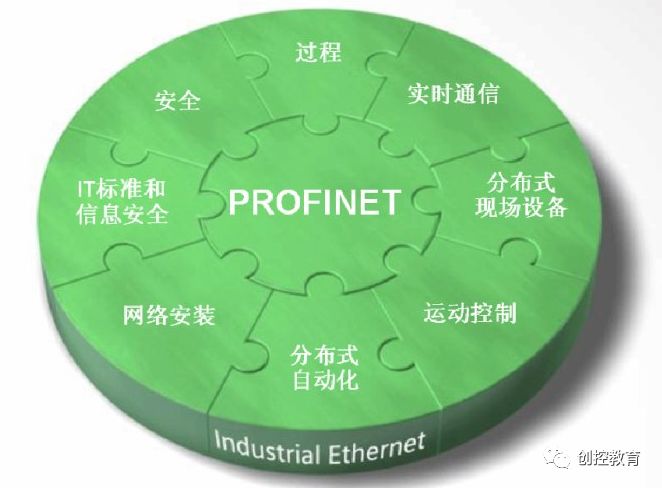
By adopting PROFInet communication technology, not only can Profibus field devices be integrated, but other types of fieldbus networks can also be integrated through proxy servers. By adopting this unified forward-looking design concept, components within the factory can be pre-assembled and tested as independent modules, then easily assembled within the entire system or reused in other projects. For example, for an automotive manufacturing enterprise, the real-time solutions supported by PROFInet can fully meet the response time requirements in body workshops, painting workshops, and assembly departments, while the synchronous real-time function of PROFInet can be used in aspects such as lathe synchronization in mechanical engineering and engine and transmission production.
(Content source from the internet, copyright belongs to the original author)
Disclaimer: If there are copyright issues, please contact for removal! No individual or organization bears related legal responsibility.
Recommended Reading:
Last week’s open class video replay [Siemens G120C Inverter PROFInet Communication (PKW Message Explanation)]
Why is it difficult for engineers to find girlfriends? See if you are one of them.
Junior industrial control personnel vs Senior industrial control personnel
What is it like to date an electrical engineer?
Open class video on Siemens S7-300/400 STL language indirect addressing (16-bit pointers, 32-bit pointers)
How is it to work in industrial control? Is it easy? Is it profitable? Unified answers!