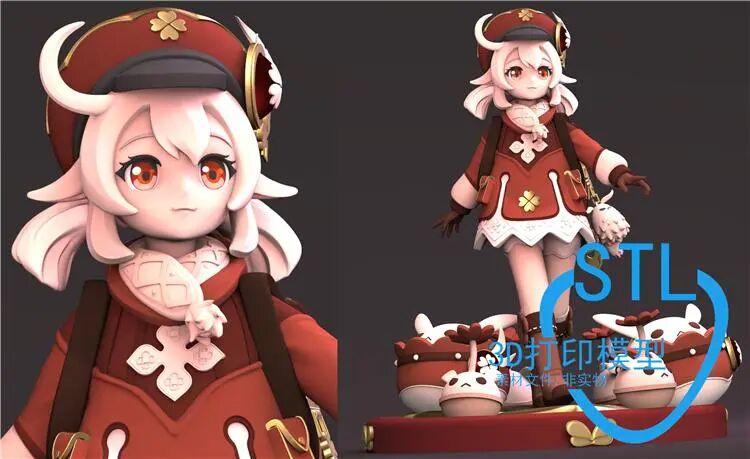
As we immerse ourselves in the passionate adventures of “One Piece,” the ninja world of “Naruto,” or the fantastical battles of “Demon Slayer,” those vibrant anime characters seem to become a part of our lives. We cheer for their growth, are moved by their bonds, and often wish to bring these heroes from the virtual world into reality. Now, 3D printing technology acts like a magical spell, helping us realize this wish and breaking the barrier between the second and third dimensions.
Have you ever been captivated by exquisite figurines at an anime convention? Luffy’s iconic straw hat and radiant smile, Naruto’s passionate orange outfit and confident stance, Nezuko’s cute and gentle appearance—these figurines made through 3D printing capture every detail so vividly, as if the characters have crossed time and space to stand before us. They are no longer mere images on a flat screen but tangible entities we can hold in our hands and admire closely, allowing us a more intimate connection with the anime world we love.
In addition to classic character figurines, 3D printing has also spawned countless creative anime works. Some anime enthusiasts utilize 3D printing technology to create unique anime scene models, presenting iconic locations from anime, such as the mysterious bathhouse in “Spirited Away” and the fantastical castle in “Howl’s Moving Castle,” in three-dimensional form. Every texture of the building and every arrangement of the scene is filled with the creator’s ingenuity and passion, bringing us a new visual shock.
Challenges of Traditional Anime Model Making
Before the popularization of 3D printing technology, creating anime models was indeed a daunting project. From the initial design and drawing, designers had to sketch the lively anime images in their minds onto paper, with every line and detail carrying their understanding and imagination of the characters. This not only requires solid drawing skills but also a deep understanding of the anime characters to accurately capture their essence.
When it comes to the manual shaping stage, the difficulty increases exponentially. Makers must use various materials, such as clay and resin, to transform flat designs into three-dimensional models. This is not simply about molding clay; it is a battle of materials and patience. Every press and carve must be done carefully, striving to perfectly replicate the character’s form. For instance, creating a model of Luffy from “One Piece” requires precise representation of his iconic straw hat, exaggerated smile, and unique body proportions; any slight error could strip Luffy of his original charm.
After shaping, sanding and painting present two major challenges. During sanding, the model’s surface must be smoothed and leveled without any blemishes, as even the slightest flaw can affect the final quality. Painting tests technical skills, as the mixing of colors and the evenness of application directly relate to whether the model can perfectly replicate the character’s image from the anime. Moreover, different materials have varying absorption and performance with pigments, requiring makers to continuously adjust and experiment based on actual conditions.
Traditional anime model making is not only labor-intensive and time-consuming, but a beautifully crafted figurine often takes weeks or even months to complete. The costs are also quite high, with significant investments in labor and materials. Additionally, due to the limitations of manual production, some complex details and shapes are difficult to achieve perfectly. For example, characters with elaborate costumes and intricate accessories are challenging to represent accurately with traditional techniques, which is undoubtedly a major regret for anime enthusiasts and creators.
3D Printing Emerges, Revolutionizing Anime Model Making
(1) The Working Principle of 3D Printing
3D printing sounds cool, but how does it turn virtual anime characters into tangible figurines? In fact, the principle of 3D printing is somewhat akin to playing with building blocks as a child. However, here the “blocks” are layers of very thin material, and the 3D printer acts like a super-skilled architect, stacking these materials layer by layer according to the design blueprint on the computer, ultimately constructing a complete three-dimensional object.
Specifically, when making anime figurines, the first step is to create a three-dimensional digital model of the anime character using computer-aided design (CAD) software or 3D scanning technology. This model serves as the “soul” of the figurine, containing all the detailed information about the character. Then, this digital model is imported into the 3D printer, which will layer and solidify the material according to the model’s data, with each layer being extremely thin, usually only a few microns or even thinner. As the layers accumulate, a lifelike anime figurine gradually takes shape, as if the character is slowly being dressed in layers of “skin,” bringing them from the virtual world into reality.
(2) Advantages of 3D Printing in Anime Model Making
- High Precision in Detail Restoration: 3D printing technology is a “detail fanatic” when it comes to restoring anime character details. Subtle expressions that traditional techniques struggled to present are no problem for 3D printing. For example, in the figurine of Nezuko from “Demon Slayer,” her slightly flushed cheeks, gentle gaze, and the exquisite patterns on her pink kimono are all precisely replicated by 3D printing. Even when viewed under a magnifying glass, it is hard to find flaws, as if Nezuko has truly stepped out of the anime to smile at you. This high precision allows figurine enthusiasts to feel the charm of anime characters more vividly, as if the distance between them has been shortened.
- Efficient and Rapid Production: Compared to traditional manual production, 3D printing is as fast as a rocket. Creating a figurine traditionally, from design to completion, may take several weeks or even months, leaving fans waiting impatiently. However, with 3D printing, once the digital model is designed, the prototype can be printed in a short time. Industry pioneers like Elite Anime have significantly improved the iteration efficiency of figurine designs by adopting 3D printing technology. Designers can quickly modify and adjust the model and immediately print it to see the results, greatly shortening the product development cycle. This not only allows fans to receive their desired figurines faster but also injects more vitality into the anime merchandise market.
- High Degree of Design Freedom: In the world of 3D printing, creators wield a “magic wand” to unleash their creativity. In traditional model-making processes, many complex shapes and structures are simply impossible to achieve, akin to placing a “tightening spell” on creators, limiting their expression. But 3D printing is different; it is not bound by these limitations. Creators can freely modify and adjust digital models, whether it be fantastical shapes or intricate structures that dazzle the eye, 3D printing can easily handle them. For instance, if you want to design an anime character with super cool gear and a unique pose, you just need to move your mouse on the computer, and 3D printing can help you turn that unique idea into reality, allowing your imagination to soar.
Amazing 3D Printed Anime Works
(1) 3D Printing Applications in Well-Known Anime IPs
In the world of anime merchandise, the application of 3D printing technology has become increasingly common, with many well-known anime IPs shining brightly thanks to this technology. Take “One Piece” as an example; its official 3D printed figurines not only perfectly restore the iconic actions and expressions of characters like Luffy, Zoro, and Nami, but also clearly depict the textures of their clothing and the details of their accessories. Once these figurines were released, they were met with frenzied demand from fans, significantly enhancing the commercial value and market influence of the “One Piece” IP.
The domestic anime “Spirit Dream Yeluo Li” has also created a series of exquisite figurines with the help of 3D printing technology. Elite Anime uses 3D printing to produce Yeluo Li figurines, which not only improves production efficiency but also better restores the characters’ delicate features and gorgeous costumes. These figurines, with their exceptional quality, have attracted a large fan base, becoming popular products in the anime merchandise market.
(2) Fan-Made Creative 3D Printed Works
3D printing technology not only enables official high-quality anime merchandise production but also provides a vast space for fans’ creative expression. In Japan, a Pokémon fan named “kagerou_honey” used 3D printing technology to create a 60 cm tall Charizard. This Charizard’s actions, expressions, and design are identical to those in the game, and the tail’s tip even features an LED light design, making it look as if flames are truly burning when turned on, which is incredibly cool. “kagerou_honey” even took this Charizard camping, engaging in cosplay, and his work garnered significant attention and likes online, showcasing fans’ creativity and love for anime.
Additionally, some fans of “Elden Ring” have created a “small pot” figurine from the game using 3D printing. A Reddit user named finch_worm accidentally forgot to create the pot lid while 3D printing but cleverly turned it into a flower pot. The small pots, now with green plants, look like they have hair, adding a unique charm. This creative idea went viral online, with netizens praising it and even suggesting it could be a new business opportunity, with many expressing interest in purchasing it if sold. These fan-made 3D printed works are filled with imaginative ideas, showcasing fans’ unique understanding of anime and the infinite possibilities that 3D printing technology brings to anime enthusiasts.
3D Printing Promotes the Development of the Anime Industry
(1) Impact on the Anime Figurine Market
3D printing technology is like a timely rain, bringing tremendous changes to the anime figurine market. In the past, producing a high-quality figurine came with a jaw-dropping cost. Not only did it require significant upfront investment for mold development, but the production process also demanded high material and labor requirements, leading to high prices for figurines that deterred many anime enthusiasts. For instance, a typical licensed Japanese anime figurine might cost several hundred or even thousands of yuan, not to mention limited edition or special edition figurines, which are even more unaffordable.
However, with the emergence of 3D printing technology, this situation has been broken. It eliminates the need for mold creation, significantly reducing upfront investment costs. With just a digital model, figurines can be easily printed. Moreover, 3D printing allows for small batch production, even one-off orders. This is a boon for niche anime IPs or independent designers, as they can flexibly produce figurines based on fan demand without worrying about inventory issues.
The production cycle has also been greatly shortened due to 3D printing. Previously, it could take months from design to finished product; now, it can be completed in just days or even shorter. As a result, figurines can be brought to market faster, satisfying fans’ eager anticipation. Consequently, a wider variety of figurines have emerged in the market, whether they are popular anime characters or supporting characters from niche anime, corresponding figurines can be found. This not only enriches fans’ choices but also further expands the scale of the figurine market. More and more people are willing to purchase figurines, making them no longer a luxury for a few but a type of anime merchandise that the general public can afford.
(2) Applications in Other Aspects of Anime Creation
In animation production, 3D printing also plays a crucial role. During the character design phase, designers can quickly create prototypes of characters using 3D printing technology. This allows them to see the three-dimensional form of the character more intuitively, examine the design’s rationality from different angles, and promptly identify and modify issues. For instance, when designing a new anime character, a prototype printed with 3D printing can help observe whether the character’s body proportions are harmonious, whether the folds and textures of the clothing appear natural, and whether the expressions are lively. This intuitive experience is something that two-dimensional design drawings cannot provide, helping designers better refine character designs.
In the production of scene props, 3D printing also excels. The scenes and props in animations often require unique styles and details that traditional methods struggle to achieve quickly. 3D printing technology can easily print various exquisite scene prop prototypes based on the designer’s creativity. For example, the stunning ice castle in “Frozen” can be accurately presented through 3D printing, capturing every spire and ice brick, providing realistic references for animation production and making the scenes in animations more vivid and lifelike.
In the development of anime merchandise, the application of 3D printing is even more widespread. In addition to figurines, various small and exquisite merchandise products, such as keychains, ornaments, and badges, can be easily produced through 3D printing. These merchandise not only feature unique designs but also can highly restore elements from the anime, making them beloved by fans. For instance, a 3D printed keychain themed around “Naruto” might vividly depict Naruto performing the Rasengan, allowing fans to showcase their love for anime in their daily lives. 3D printing can also cater to fans’ personalized needs, creating exclusive anime merchandise. You can combine your own likeness with your favorite anime character to create a unique ornament or print your favorite anime quote on a keychain, making it a distinctive piece just for you. This personalized customization service further meets fans’ special demands for anime merchandise and injects new vitality into the anime merchandise market.
The Future Blueprint of 3D Printing in the Anime Field
(1) Possibilities Brought by Technological Breakthroughs
With the rapid development of technology, 3D printing technology will continue to break through and innovate in the future, bringing more exciting possibilities to the anime field. In terms of printing precision, future 3D printers may achieve nanometer-level precision, meaning that every tiny detail on anime models, such as a strand of hair or a button on clothing, can be perfectly presented. Imagine creating a figurine of Killua from “Hunter x Hunter,” where his delicate silver hair is distinctly visible, and the highlights in his eyes shine as bright as real ones; this extreme detail restoration will make the figurine even more lifelike, as if Killua is truly standing before us.
Printing speed will also see significant improvements. Currently, printing a slightly larger anime model may take several hours or even longer, but in the future, it may only take a few minutes to complete a high-precision model print. This will not only greatly enhance production efficiency but also allow creators to see their ideas come to life more quickly, enabling timely modifications and refinements. For instance, during the anime character design phase, designers can quickly print multiple versions of character models in a short time, allowing for rapid comparison of effects and selection of the most satisfying design, significantly shortening the design cycle.
Diversity in materials is also an important direction for the future development of 3D printing technology. In addition to existing materials like plastics and resins, more special performance printing materials may emerge in the future. For example, materials with self-luminous properties could allow anime models to emit unique light in the dark, adding a mysterious atmosphere to models from sci-fi and fantasy anime works. Alternatively, flexible and elastic materials could create anime figurines with movable joints, allowing for more diverse poses, enabling players to freely manipulate the figurines’ actions and create their own exciting scenes. The emergence of these new materials will provide more creative space for anime model making, allowing creators to realize designs that were previously unimaginable.
(2) Imaginings of Integration with Other Technologies
What sparks will fly when 3D printing meets AI? The powerful algorithms and data analysis capabilities of AI can provide comprehensive support for 3D printing in anime creation. In character design, AI can analyze a vast amount of anime character data to identify different character traits and popular elements, providing creative inspiration for designers. Designers only need to input some keywords, such as “brave boy” or “mysterious witch,” and AI can quickly generate multiple character design sketches, including the character’s appearance, clothing, and expressions, which designers can then modify and refine, greatly improving design efficiency.
In model optimization, AI can automatically detect defects and unreasonable aspects in 3D printing models and provide optimization suggestions. For instance, when a model has structural instability or unreasonable support designs, AI can quickly identify these issues and offer improvement plans, ensuring that the printed models are of higher quality. Moreover, AI can automatically adjust the model’s design based on different printing materials and printer parameters to achieve the best printing results.
The combination of 3D printing and VR will also provide anime enthusiasts with an unprecedented immersive experience. In anime exhibitions, viewers will no longer just watch anime models from a distance; they can wear VR devices and enter a virtual anime world. In this world, viewers can interact with 3D printed anime character models, as if they have become part of the anime story. For example, in an exhibition themed around “Attack on Titan,” viewers wearing VR devices can experience the tense atmosphere of giants attacking and observe the details of the giants from various angles while fighting alongside the Survey Corps characters. This immersive experience will allow viewers to gain a deeper understanding of anime works and feel the charm of anime.
For anime creators, the integration of 3D printing and VR also brings new ideas for creation. Creators can build anime scenes and design characters in a VR environment, using 3D printing to turn these virtual ideas into physical models. This combination of virtual and physical creation allows creators to intuitively experience their works, promptly identify issues, and make modifications, resulting in even more exciting anime works.
Join the Trend of Anime Creation with 3D Printing
Having read this, are you eager to try using 3D printing to create your own anime works? Don’t rush; let me share some beginner tips and practical resources for 3D printing.
For complete beginners, learning 3D modeling is the first step towards 3D printing anime creation. I recommend a few easy-to-use modeling software, such as Tinkercad, which has a very user-friendly interface, making it as simple as building blocks. By dragging and dropping various basic shapes, you can combine them into the model you want. Another option is Blender, which, while more powerful and complex, has abundant tutorial resources online, allowing you to learn the basics step by step.
If you find modeling challenging, you can also obtain ready-made models from some 3D model libraries. Platforms like Thingiverse and MyMiniFactory offer a wealth of free or paid anime-related models that you can download and personalize according to your preferences.
For 3D printing service platforms, Magic Monkey Network is a good choice. It offers various materials and printing processes at reasonable prices, and the operation process is simple; you just need to upload your model file, select the materials and parameters, and you can easily place an order for printing. If you want to buy a 3D printer to print at home, Creality’s Ender-3 V3 is a popular choice for entry-level users, as it is affordable, produces good results, and is easy to use.
Of course, during the process of learning 3D printing for anime creation, you will encounter various issues. Joining some communities or forums for 3D printing enthusiasts is very helpful. In these communities, you can exchange experiences, share works, and seek advice from others when facing problems, allowing for mutual progress. For example, the 3D Printing Baidu Tieba has many enthusiastic members who share their creative insights and problem-solving methods.
Now, pick up your “magic wand”—3D printing technology—and embark on your anime creation journey! I look forward to seeing more exciting 3D printed anime works in the future, as we use creativity and technology to make the anime world richer and more colorful!