
3D printing technology is a new rapid prototyping technology that has emerged in recent years. It first utilizes a computer to create a three-dimensional model of the printed component, and then a 3D printer manufactures it layer by layer through points, lines, and surfaces, ultimately obtaining the desired component.
As a relatively advanced forming process, 3D printing technology has many unique advantages, such as moldless forming and high product precision. It has been widely applied in the forming process of advanced ceramics such as alumina ceramics.
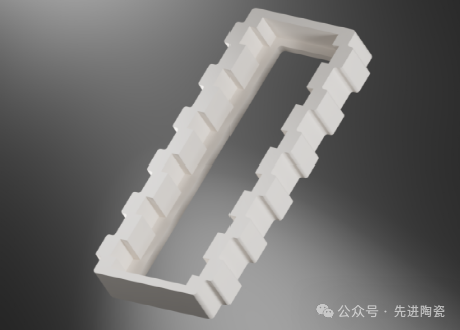
Image source: Beijing Shiwai Technology
In the 3D printing of alumina ceramics, the quality of the slurry is key to the 3D printing process. How to obtain a slurry with high solid content and low viscosity has become a research hotspot in 3D printing of alumina ceramics. To effectively control the alumina slurry, several aspects need to be considered.
Alumina Powder
To ensure that the formed alumina ceramic body has outstanding mechanical properties and excellent chemical stability, it is essential to select high-performance alumina ceramic slurries. This means that the alumina raw material powder we use must meet the technical requirements of high purity, good dispersion, narrow particle size distribution, and that the ceramic particle powder has a small size, high activity, and is easy to sinter upon heating.

For oxide ceramics such as alumina, it is challenging to obtain a light-curable ceramic slurry with high solid content and low viscosity, mainly because the particle surfaces have many hydroxyl groups, which are polar and exhibit hydrophilicity. However, commonly used photosensitive resins often exhibit hydrophobic and non-polar characteristics, leading to poor wettability between the two, making it difficult for ceramic particles to disperse uniformly in the photosensitive resin. As the solid content increases, the distance between ceramic particles decreases, leading to severe particle agglomeration and a sharp increase in slurry viscosity.
Currently, we generally address this issue by controlling the particle shape, size, and distribution of the ceramic particles, modifying the surface of the ceramic particles, and adding dispersants.
Smaller alumina powder particles can fill the voids between larger alumina powder particles, significantly reducing the size of the voids between particle sizes; this leads to increased final forming pressure, further reducing the number of pores, thereby lowering the shrinkage rate of the ceramic body and simultaneously enhancing the bending strength and density of the sintered alumina ceramics.
Ball Milling
Ball milling is the most commonly used technique for refining the processing of various alumina powders under general conditions. However, excessive ball milling can easily cause the raw material powder to agglomerate rapidly, forming secondary grinding particles. Therefore, strict control of the ball milling process quality is an indispensable part of obtaining ideal ground alumina powder.
Solid Content
The viscosity of ceramic slurries increases with the increase in solid content because the distance between powder particles decreases, and the interaction forces between them increase. The tendency for particle aggregation also increases, causing organic substances in the system to adsorb onto the surfaces of the ceramic powder particles and overlap with each other, making it difficult for them to move between particles. This ultimately leads to an increase in the viscosity of the alumina slurry as the solid content rises, reducing the slurry’s uniform flowability.
Dispersants
The preparation of the slurry is usually the first and critical step in the ceramic 3D printing process. In this process, to achieve a high solid content, good flowability, and low viscosity of the ceramic slurry, it is essential to select appropriate dispersants to disperse the ceramic powder particles in the slurry. Dispersants are generally organic surfactants, whose non-polar groups combine with the polar groups on the surface of the ceramic powder particles, thereby eliminating agglomeration and enhancing slurry flowability. Dispersants can be directly added to the slurry system and stirred to achieve dispersion; alternatively, the powder can be pre-modified with dispersants before being added to the ceramic slurry system to achieve dispersion indirectly.
Reference source: New Ceramics