 Image source: J. Am. Chem. Soc.Introduction:
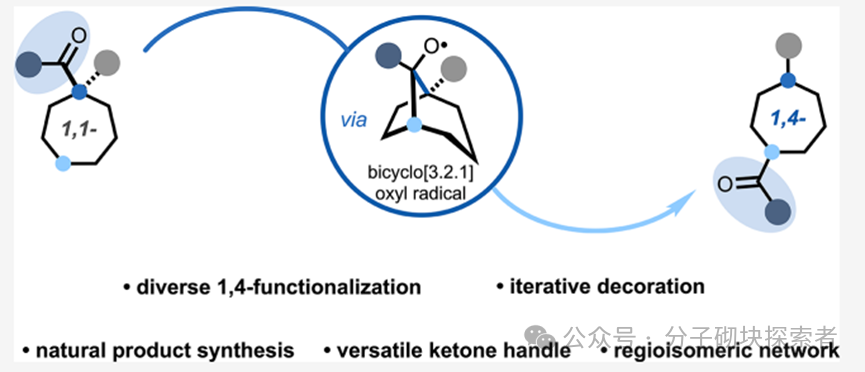
The seven-membered ring is a crucial structural unit in bioactive compounds, yet its precise synthesis remains challenging compared to smaller ring systems. Traditional methods rely on ring assembly strategies, while direct functionalization of simple cyclic precursors offers a more attractive alternative for substituent structural units. This study by Professor Alison E. Wendlandt reports a photocatalytic cross-ketone migration strategy: under mild conditions facilitated by sodium tungstate and thiol co-catalysts, 1,1-di-substituted acylcycloheptane can be converted into 1,4-di-substituted products through LED irradiation. This process achieves site-selective migration via reversible hydrogen atom abstraction and transfer at multiple sites within the ring, followed by radical addition and β-fragmentation of the exocyclic carbonyl. This dynamic kinetic approach enables site-selective C-H functionalization, providing a new pathway for the regioselective construction of highly substituted seven-membered rings, filling a long-standing gap in synthetic methodology.
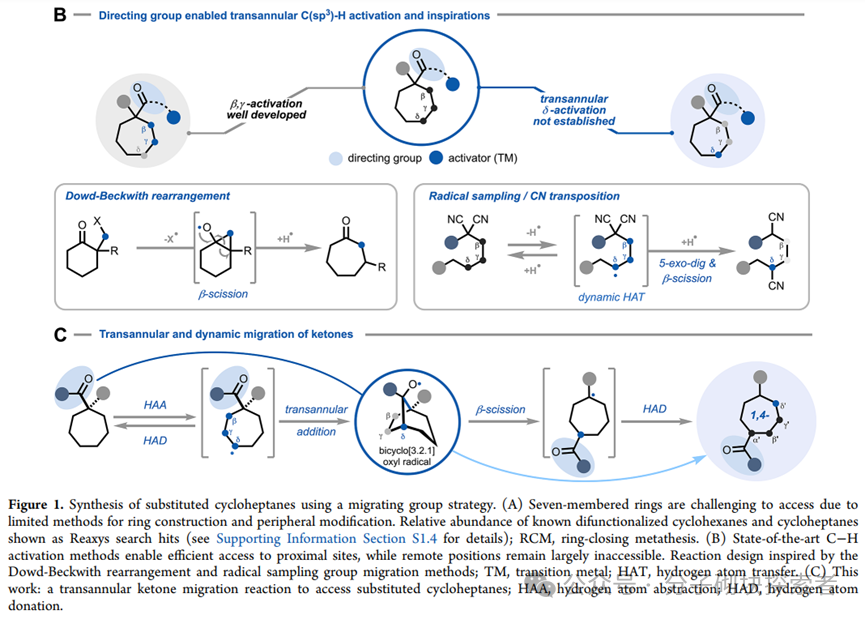 Image source: J. Am. Chem. Soc.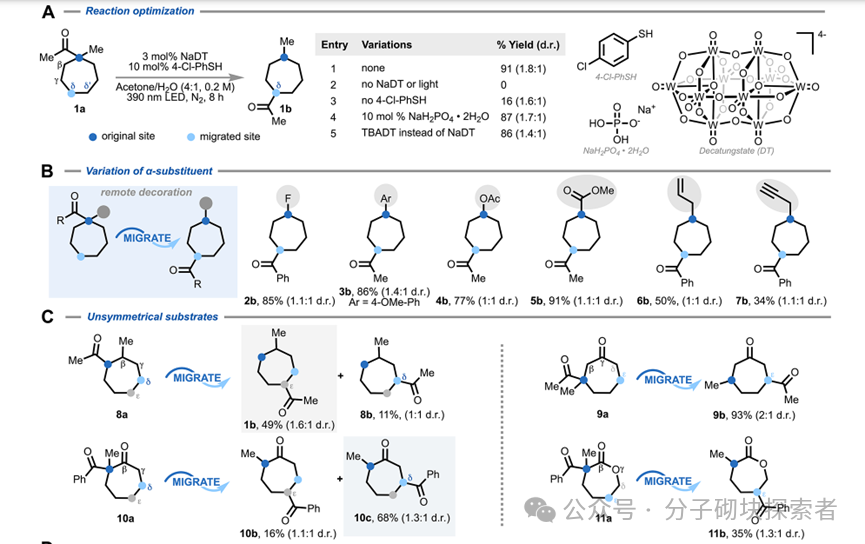
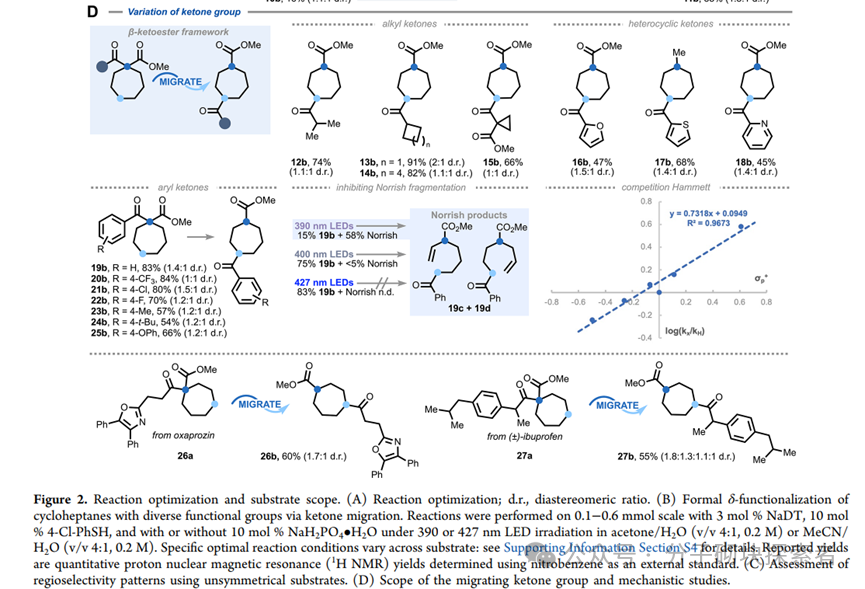 Image source: J. Am. Chem. Soc.
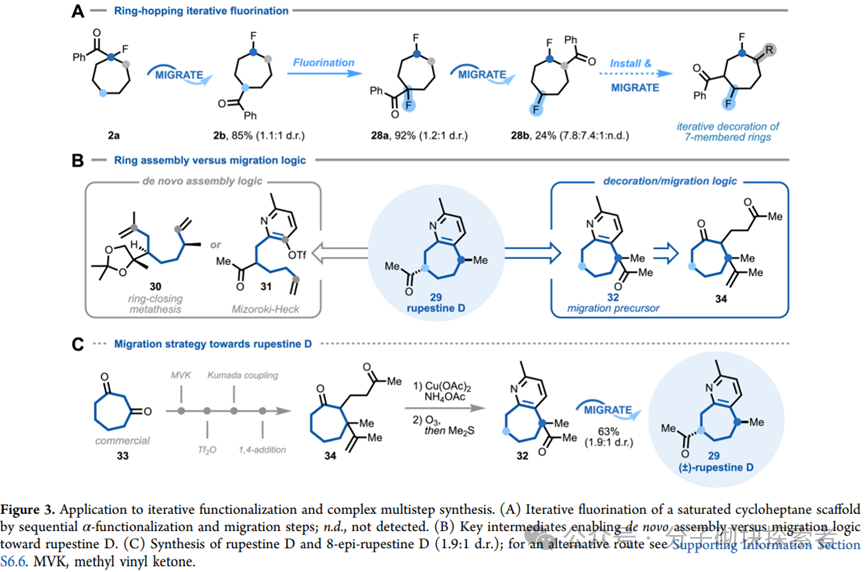 Image source: J. Am. Chem. Soc.
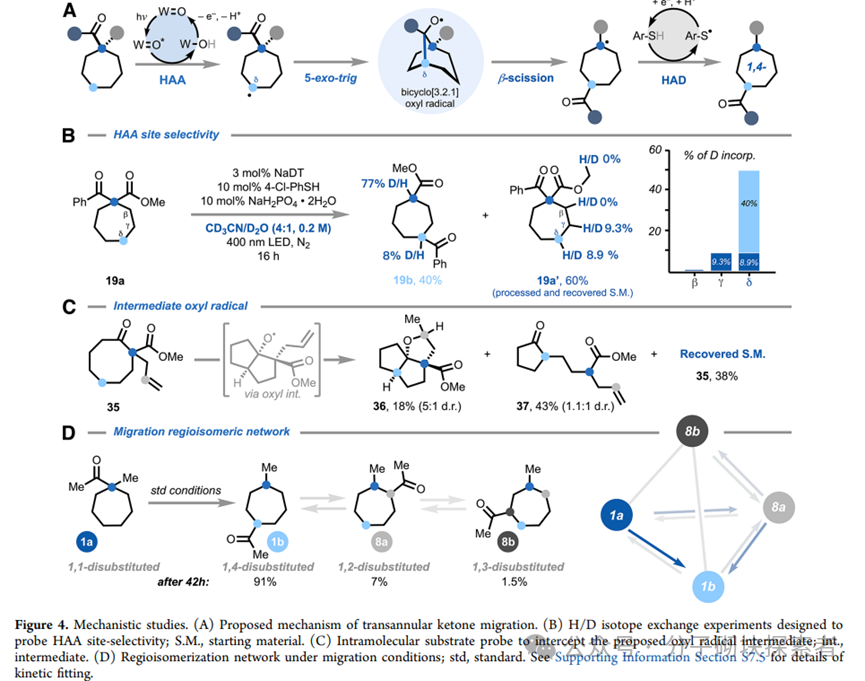 Image source: J. Am. Chem. Soc.
Conclusion:
A ketone migration strategy has been reported, enabling remote C-H functionalization of seven-membered rings from readily available 1,1-di-substituted precursors. This method combines a non-selective, reversible radical generation process with product-selective 5-exo-trig radical carbonyl addition and β-fragmentation steps, achieving site-selective C-H bond functionalization. Although dynamic kinetic resolution mechanisms are common in stereoselective catalysis, this study innovatively applies this mechanistic paradigm to achieve site-selective processes. This research adds a new dimension to the emerging concept of “network control” in non-equilibrium steady-state catalysis.
References:
Migrating Group Strategy for Remote Functionalization of Seven Membered Rings
J. Am. Chem. Soc. 2025,
https://doi.org/10.1021/jacs.5c10470