In today’s rapidly advancing scientific and technological landscape,
3D printing technology, with its unique advantages,
is becoming the “golden key” to solving medical challenges.
Recently, the Trauma Orthopedics Department of Yantai Yuhuangding Hospital took the lead in the province by applying 3D printed custom prosthetics to treat post-operative internal fixation failure of sternal tumors. Led by Chief Physician Sun Yujie, the team utilized 3D printing technology to create personalized sternum prosthetics for patients, breaking through the limitations of traditional surgery in repairing complex thoracic structures and reshaping the thorax with millimeter-level precision, thus relieving patients who have long suffered from pain.
The successful execution of this surgery not only vividly illustrates the hospital’s robust capabilities but also opens up a new path for thoracic reconstruction in patients with sternal tumors.

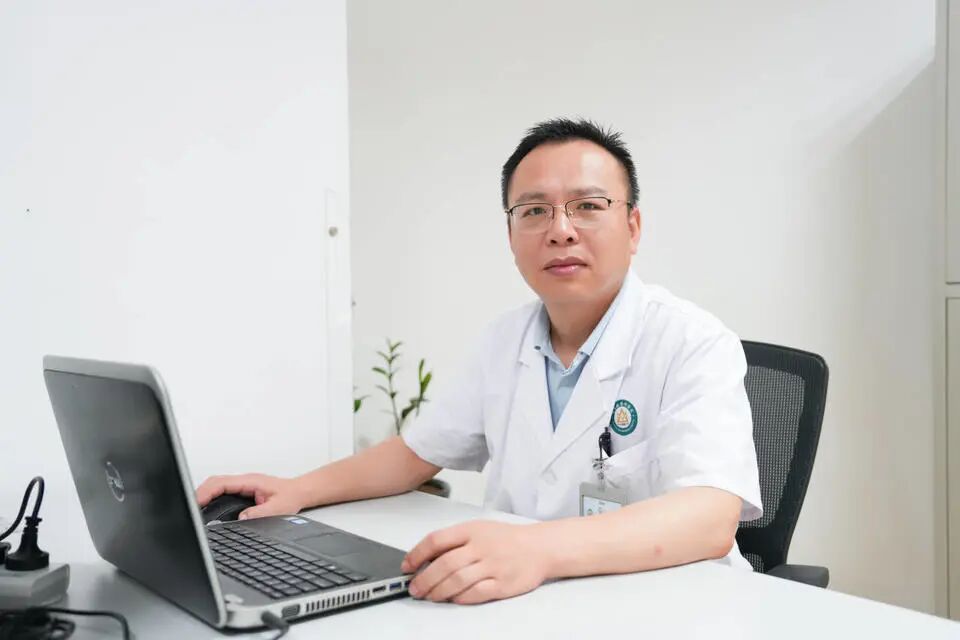
 Doctors Become ‘Designers’, Revising Five Times to Reconstruct a New Sternum for Patients
Plagued by persistent chest pain, Ms. Chen, 47, was unfortunately diagnosed with a malignant tumor of the sternal body in November last year. Because these tumors grow rapidly and can “devour” the clavicle, ribs, and even grow into the mediastinum and the body surface, surgical removal is the preferred treatment method.
After tumor removal and thoracic reconstruction, Ms. Chen’s condition was briefly alleviated. However, more than a month later, chest pain reoccurred, and with every breath and turn, it felt as if steel needles were stirring in her chest cavity, causing her to be nearly unable to lift her arms and suffering greatly.
After seeking medical advice in vain, this year, Ms. Chen and her family sought out Sun Yujie from the Trauma Orthopedics Department of Yantai Yuhuangding Hospital, hoping to relieve the “pain that breathes” as soon as possible.
After completing relevant examinations,
Sun Yujie quickly identified the “culprit,”
which turned out to be the failure of the post-operative steel plate,
which was “biting” into the surrounding muscles and nerves,
causing Ms. Chen’s pain with every breath and movement.
To completely resolve the issue,
the steel plate had to be removed for thoracic reconstruction,
but how to achieve precise repair with such a large defect in the sternum
became a new problem.
At this critical moment,
Sun Yujie turned his attention to 3D printing technology.
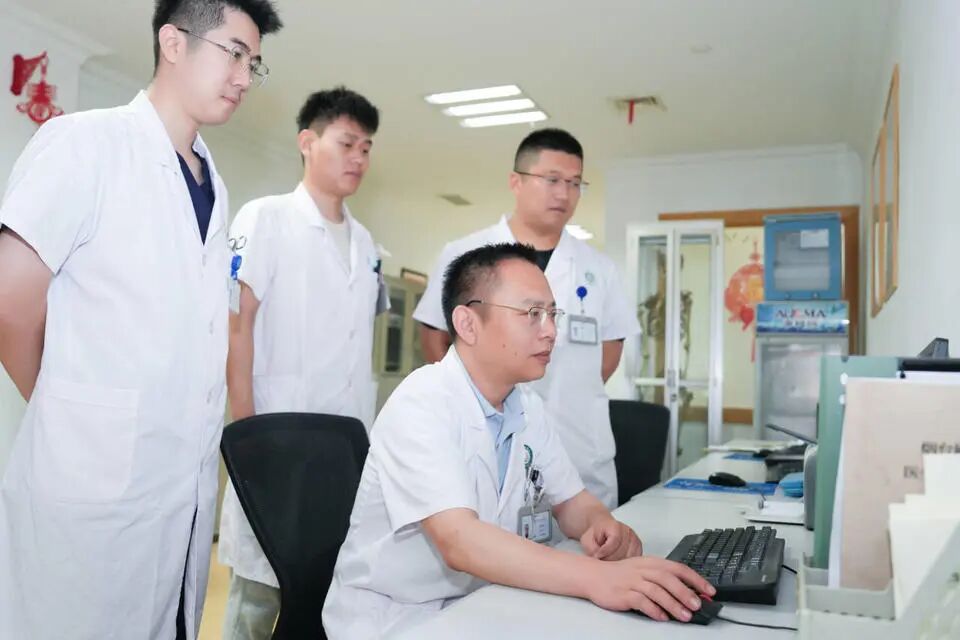
Customizing prosthetics through 3D printing technology requires meeting both physiological morphology and post-implant stability needs, while also conforming to biomechanics and considering the activity of the sternoclavicular and costovertebral joints. Taking into account Ms. Chen’s physical condition, Sun Yujie transformed into a “designer” and proposed the initial style of the prosthetic.
“Initially, we designed a pentagonal shape with a vertical handle based on the defect, and later, at the engineer’s suggestion, we added dual lateral wings to further enhance stability,” said Sun Yujie. Customizing personalized prosthetics involves many considerations; to ensure joint mobility, they “carved” honeycomb-like pores into the prosthetic, which not only served as “anchor points” for artificial ligaments but also cleverly resolved the issue of secondary bone suture fixation.
From material density to surface curvature,
every detail underwent dozens of calculations,
with Sun Yujie and the engineers communicating repeatedly,
revising five times,
before finalizing the prosthetic’s final style.
Overcoming Multiple ‘Roadblocks’ to Pioneer New Paths in Sternal Tumor Revision Surgery
Completing the prosthetic customization was just the first step,
and the key to relieving the patient’s suffering was the surgical implantation.
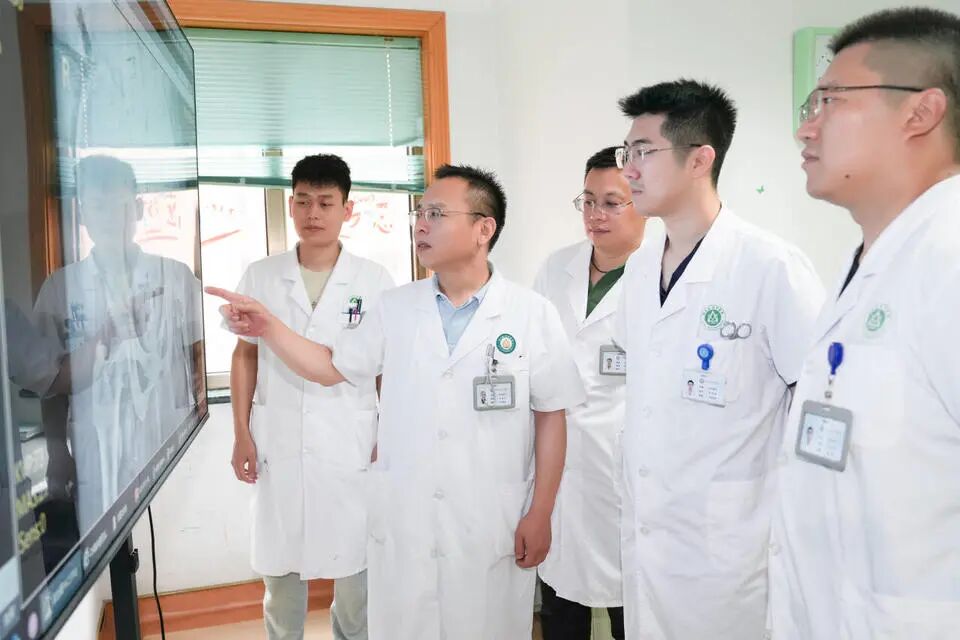
The first challenge facing Sun Yujie and the team was how to quickly and safely remove the prosthetic. “The prosthetic had been implanted for a long time and had adhered to the surrounding soft tissues and muscles, making separation difficult,” Sun Yujie explained. Due to the special location of the prosthetic, which was close to the heart and major arteries, there could be no room for error.
With organ protection in place, they carefully freed the original steel plate while minimizing blood loss, and after nearly an hour, the failed steel plate was finally removed.
At this point, the second “roadblock” followed closely. “To successfully implant the prosthetic, we must groove the sternum to insert the revision prosthetic into the medullary cavity,” Sun Yujie further explained. Since the sternum is very thin, any deviation of the steel needle could potentially damage the heart and surrounding blood vessels and nerves, making this step’s surgical safety crucial.
Drilling, polishing, and expanding the medullary cavity,
they carefully implanted the prosthetic handle into the medullary cavity,
and through the precise collaboration of the surgical team,
the 3D printed revision prosthetic
finally “stood” in place.
The effectiveness of the prosthetic depends entirely on the success of the suturing and fixation. To ensure effective connection between the prosthetic and the clavicle and ribs, Sun Yujie and the surgical team used the 12 small holes reserved in advance to cleverly “lock” the prosthetic to the second rib and clavicle with sutures and artificial ligaments, ensuring the stability, safety, and mobility of the prosthetic implantation. “Roughly estimated, we sewed at least a hundred stitches,” Sun Yujie remarked.
Meanwhile, the protection of the heart and arteries during the surgery was also proceeding at a rapid pace. After nearly five hours, the surgery was successfully completed.
The day after the surgery, Ms. Chen’s pain significantly decreased, and she was able to lift her arms and move freely.
“Traditional standardized prosthetics often cannot meet the needs of large bone defects and complex lesions. Utilizing 3D printing technology to customize prosthetics for patients allows for more minimally invasive and precise solutions,” Sun Yujie explained. 3D printed prosthetics can meet patients’ personalized needs and better achieve biomechanical matching, greatly enhancing the safety of the surgery.
Moreover, “customized” prosthetics can also minimize the loss of functional mobility, which is more beneficial for patients’ post-operative recovery.
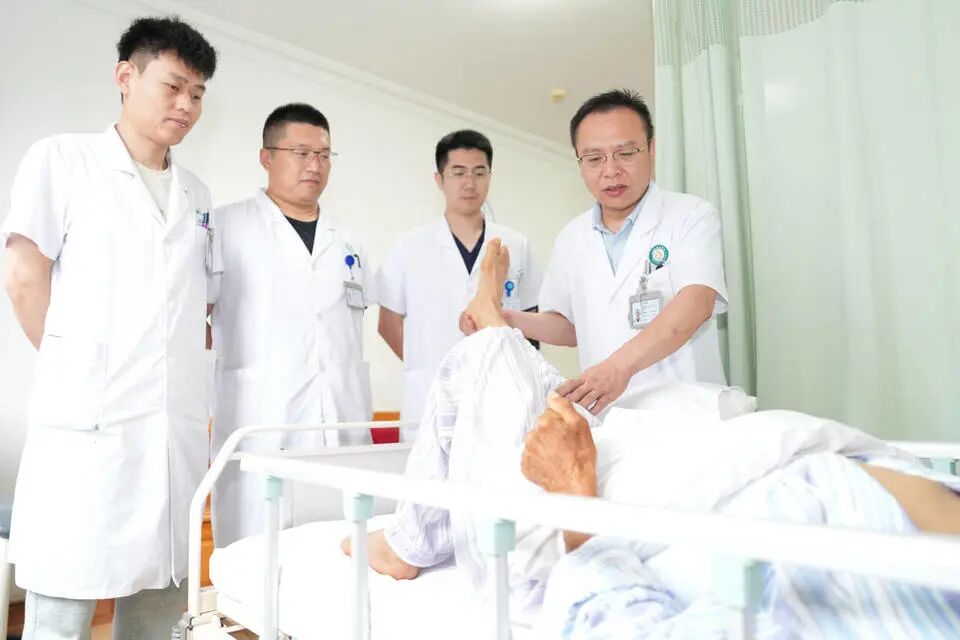
The successful execution of this surgery not only freed Ms. Chen from the persistent chest pain but also opened a new path for the repair of complex bone tumors. Taking this innovative practice as an opportunity, the Trauma Orthopedics Department of Yantai Yuhuangding Hospital has explored new avenues in the field of sternal tumor revision, bringing new hope for recovery to more patients.
(Source: Qilu Evening News · Qilu One Point, Sun Shuyu, Correspondent Li Chengxiu)