Chapter 6 of ICC: Myeloid/Lymphoid Neoplasms with Eosinophilia and Tyrosine Kinase Gene Fusions (M/LN-eo-TK)
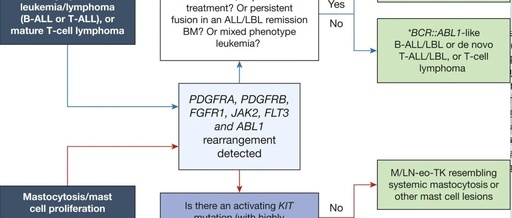
Chapter 6 of ICC: Myeloid/Lymphoid Neoplasms with Eosinophilia and Tyrosine Kinase Gene Fusions (M/LN-eo-TK)

In the 2008 (4th edition) World Health Organization (WHO) classification, this disease category was first established, originally named myeloid/lymphoid neoplasms with eosinophilia and abnormalities of PDGFRA, PDGFRB, or FGFR1 genes. In the revised 4th edition WHO classification, PCM1::JAK2 and its genetic variants were introduced as provisional entity subtypes within this category. In the current classification, … Read more
New Breakthrough in Green Catalysis! Pd/C-N@SiO₂ Achieves Efficient Conversion of Rosin with No Activity Loss After 5 Cycles

New Breakthrough in Green Catalysis! Pd/C-N@SiO₂ Achieves Efficient Conversion of Rosin with No Activity Loss After 5 Cycles

Introduction The disproportionation reaction of rosin is a key step in the preparation of high-value-added chemical products. However, traditional catalysts face bottlenecks such as high costs and significant pollution. The team from Qingdao University of Science and Technology has developed a new Pd/C-N@SiO₂ catalyst that achieves efficient and green catalysis through hollow structure design and … Read more

Understanding Targeted Therapies for HER2-Positive Advanced Breast Cancer: Focus on Five Categories

The human epidermal growth factor receptor 2 (HER2) is a known important molecular target in breast cancer. As one of the proto-oncogenes, HER2 is often associated with aggressiveness, recurrence, metastasis, and poor prognosis. The clinical application of the anti-HER2 drug trastuzumab has significantly improved the diagnosis and treatment patterns and prognosis of HER2-positive breast cancer, … Read more

Chapter 1: Chronic Myeloid Leukemia

Chapter 1: Chronic Myeloid Leukemia

Definition:Chronic Myeloid Leukemia (CML) is caused by the chromosomal translocation (9;22)(q34.1;q11.2), which leads to the formation of the Philadelphia (Ph) chromosome containing the BCR::ABL1 fusion gene. The BCR::ABL1 oncogenic protein acts as a constitutively activated tyrosine kinase, driving malignant transformation by activating multiple signaling pathways. Granulocytes are the main proliferative component, but all myeloid lineages … Read more