Design of Watchdog and Reset Circuits for Automotive MCUs

Design of Watchdog and Reset Circuits for Automotive MCUs

Click the blue text to follow us “ Imagine this: a car speeding down the highway suddenly has its ESP system malfunction due to electromagnetic interference. Without an effective protection mechanism, the braking system could completely fail, leading to catastrophic consequences. However, in reality, such situations are rare, precisely because there is a silent “guardian” … Read more
Detailed Explanation of Microcontroller Reset Circuits

Detailed Explanation of Microcontroller Reset Circuits

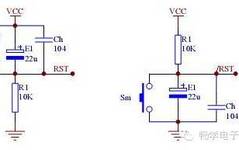
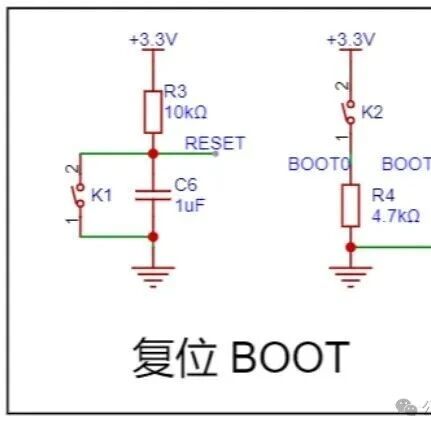
In many microcontroller circuits, we often see reset circuits, as shown below: This is the reset circuit in our STM32103C8T6 minimal system board. Let’s study the reset circuit using this example: A. First, let’s look at the reset circuit on the left: The RESET signal of the chip is connected to ground through a button … Read more

Microcontroller Reset Circuit Explained

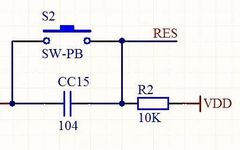
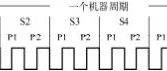
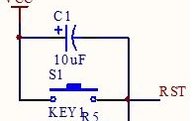
Reset Conditions The RST pin must maintain a high level for more than 2 machine cycles. Reset Circuit Figure 80C51 Reset Circuit CPU State After Reset Any microcontroller must go through a reset process before it can operate. What does reset mean? It is similar to the preparation bell we ring before class starts. Once … Read more

How to Calculate the Value of Capacitor C1 in Microcontroller Reset Circuit

How to Calculate the Value of Capacitor C1 in Microcontroller Reset Circuit

[Question] How to calculate the value of capacitor C1 in the microcontroller reset circuit? I need the specific formula and explanation! Urgently needed! [Incorrect Answer] Taking the 51 microcontroller as an example: The reliable reset time for the microcontroller must be greater than 2 machine cycles. If using a 12MHz crystal oscillator, the reset time … Read more

Detailed Design of Microcontroller Reset Circuits

Detailed Design of Microcontroller Reset Circuits

The reliability design of microcontroller reset circuits 1. Overview The factors affecting the operational stability of microcontroller systems can be roughly divided into external and internal factors: 1. External Factors Radio frequency interference, which is transmitted in the form of spatial electromagnetic fields, induces corresponding interference in the conductors (wires or component pins) inside the … Read more

The Complete Process from Powering Up to Running an MCU

The Complete Process from Powering Up to Running an MCU

For embedded developers, the MCU acts like a tireless little steward, responsible for directing electronic devices to complete various tasks. But have you ever thought about how this “little steward” is awakened from a completely “asleep” state to gradually enter a working state the moment you power on the device? The startup process behind this … Read more

Analysis of STM32 Reset Circuit Methods

Analysis of STM32 Reset Circuit Methods

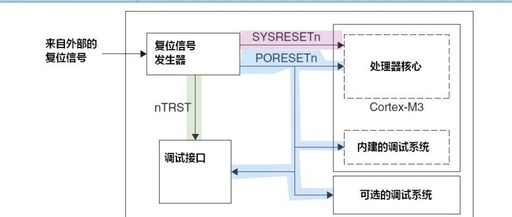
Introduction to STM32 The STM32 series is based on the ARMCortex®-M0, M0+, M3, M4, and M7 cores specifically designed for embedded applications that require high performance, low cost, and low power consumption. Prior to the STM32F105 and STM32F107 interconnected series microcontrollers, STMicroelectronics had launched the STM32 basic series, enhanced series, USB basic series, and complementary … Read more

Understanding the Minimum System Circuit of MCS-51/52 Microcontroller

Understanding the Minimum System Circuit of MCS-51/52 Microcontroller

Microcontroller The minimum system consists of the external connections of the chip, including the clock circuit, reset circuit, and power supply, forming a basic application system. It mainly includes the clock circuit and reset circuit. The microcontroller consists of a central processing unit (including some special function registers), internal RAM, program memory, various peripherals (I/O … Read more