Introduction to Basic Knowledge of Industrial Robots
Introduction to Basic Knowledge of Industrial Robots

Click on the above Structural Design – Official Account,Please Industrial robots are widely used in manufacturing industries such as automotive, electronics, and food, capable of replacing repetitive machine operations. They are machines that rely on their own power and control capabilities to perform various functions. They can be commanded by humans or operate according to … Read more
How to Accurately Choose Industrial Robots? 9 Key Parameters Explained!

How to Accurately Choose Industrial Robots? 9 Key Parameters Explained!

In the automation industry, for experienced electromechanical engineers, selecting the right “robot” may be a straightforward task. However, for designers or factories purchasing and integrating robots for the first time, it can be somewhat confusing. Here, we will discusshow to choose a suitable industrial robot. 01 Application Scenario First and foremost, the most important factor … Read more

What Replaces Manual Labor? The Internal Structure of Industrial Robots (With Video)

What Replaces Manual Labor? The Internal Structure of Industrial Robots (With Video)

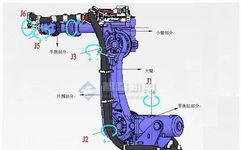
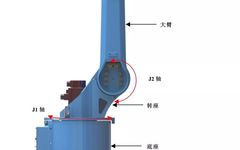
The pace of development in China’s manufacturing industry is accelerating, and the number of industrial robots used in Chinese factories is increasing. To become a technical talent in industrial robotics, one must understand the internal structure of industrial robots. Below, we will introduce the structure of general industrial robots. First, let’s take a look at … Read more

Comprehensive Knowledge of Industrial Robots

Comprehensive Knowledge of Industrial Robots

1. Main Body The main body of the robot consists of the base and execution mechanism, including the upper arm, lower arm, wrist, and hand, forming a multi-degree-of-freedom mechanical system. Some robots also have walking mechanisms. Industrial robots typically have 6 degrees of freedom or even more, with the wrist usually having 1 to 3 … Read more

Basic Composition and Classification of Industrial Robots

Basic Composition and Classification of Industrial Robots

Industrial robots are multi-joint mechanical arms or multi-degree-of-freedom robots aimed at the industrial field.Industrial robots replace humans in production and are an important development trend in the future manufacturing industry, serving as the foundation for achieving intelligent manufacturing and ensuring future industrial automation, digitization, and intelligence.The harsh production and processing environment , the aging population … Read more

Understanding Industrial Robot Control Systems and Applications

Understanding Industrial Robot Control Systems and Applications

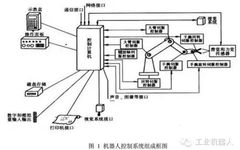
1. Functions to be Achieved by the Industrial Robot Control System The robot control system is an important component of the robot, used to control the manipulator to complete specific work tasks. Its basic functions are as follows: 1. Memory Function: Stores job sequences, motion paths, motion modes, motion speeds, and information related to production … Read more

Six Subsystems of Industrial Robot Systems

Six Subsystems of Industrial Robot Systems

Industrial robots are multi-joint mechanical arms or multi-degree-of-freedom machines widely used in the industrial field, possessing a certain degree of automation, capable of relying on their own power sources and control capabilities to achieve various industrial processing and manufacturing functions. Industrial robots consist of three main parts and six subsystems, which can be divided into … Read more

Typical Control Systems and Structures of Industrial Robots

Typical Control Systems and Structures of Industrial Robots

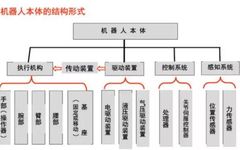
Industrial robots consist of three basic components: the main body, the drive system, and the control system. The main body includes the base and the actuators, which consist of the arm, wrist, and hand; some robots also have locomotion mechanisms. Most industrial robots have 3 to 6 degrees of freedom, with the wrist typically having … Read more

Understanding the Composition and Typical Structure of Industrial Robot Control Systems

Understanding the Composition and Typical Structure of Industrial Robot Control Systems

1. Functions of Industrial Robot Control Systems The robot control system is a crucial component of the robot, used to control the operation of the machine to complete specific tasks. Its basic functions are as follows: 1. Memory Function: Stores job sequences, motion paths, motion modes, motion speeds, and information related to production processes. 2. … Read more

Key Technologies Required for Different Robot Controls

Key Technologies Required for Different Robot Controls

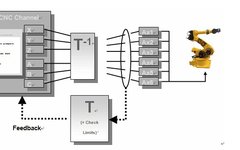
The robot control system is the brain of the robot, determining its functions and performance. The main task of industrial robot control technology is to control the motion position, posture, trajectory, operation sequence, and timing of actions of industrial robots within the workspace. It features simple programming, software menu operations, a user-friendly human-computer interaction interface, … Read more