Why Do We Need AI Chips?

Why Do We Need AI Chips?

Source: Tiger Says Chip Original Author: Tiger Says Chip This article introduces chips specifically designed for AI computation. In the context of the rapid development of artificial intelligence (AI), traditional general-purpose processors (such as CPUs) can no longer meet the growing computational demands. Therefore, AI chips have emerged as the core hardware driving the popularization … Read more
Unveiling NPU Veils: Unlocking Neural Network Processor Mysteries

Unveiling NPU Veils: Unlocking Neural Network Processor Mysteries

Click on the blue word to follow us In today’s digital age, artificial intelligence (AI) is everywhere, profoundly changing our way of life. From the intelligent voice assistant accurately identifying instructions on mobile phones, to the safe driving of self-driving cars in complex road conditions, to the keen capture of abnormal behavior by security monitoring … Read more

FPGA Empowers Upgrades in Medical Imaging Devices: The Path to Hardware Acceleration of Image Processing Algorithms

In the medical field, every technological innovation is crucial to health and hope. Today, we are witnessing a wave of upgrades in medical imaging devices led by FPGAs (Field-Programmable Gate Arrays), which act like a precise surgical knife, opening up a new path for hardware acceleration of image processing algorithms, making medical diagnosis more efficient … Read more

In-Depth Analysis of NPU (Neural Processing Unit)

1. What is NPU? NPU (Neural Processing Unit) is a dedicated hardware accelerator specifically designed for neural network computations, with the primary goal of efficiently executing inference and training tasks for deep learning models. Unlike CPUs and GPUs, NPUs optimize matrix multiply-accumulate operations (MAC), activation functions, and quantization calculations through a customized architecture, significantly enhancing … Read more

Linux Crypto Engine Overview

Linux Crypto Engine Overview

Overview The Crypto Engine in the Linux kernel is an efficient encryption queue manager specifically designed to manage and schedule the execution of hardware cryptographic accelerators. Its primary goal is to efficiently offload cryptographic operations (such as encryption, decryption, hashing, authentication, etc.) to dedicated hardware, thereby significantly improving system performance and reducing CPU load. The … Read more

Summary of Converting Acceleration Signals to Displacement Signals in Matlab

Summary of Converting Acceleration Signals to Displacement Signals in Matlab

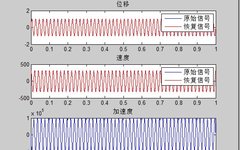
Introduction: Recently, I have been working on data processing related to acceleration, needing to integrate acceleration into displacement. I found that there isn’t much information available online, so I will summarize what I have done recently! There are mainly two methods for integration: time-domain integration and frequency-domain integration. A common issue with integration is the … Read more

Is Multi-Die System Verification Difficult?

Is Multi-Die System Verification Difficult?

In today’s era, the benefits brought by Moore’s Law are slowing down, and the Multi-Die system provides a way to integrate multiple heterogeneous die (small chips) in a single package, reducing power consumption and improving performance for compute-intensive applications. For this reason, Multi-Die systems are rapidly becoming the preferred architecture for hyperscale users, autonomous vehicle … Read more

Launch of AK1037 Series Low-Power Lock Control SoC Chip

Launch of AK1037 Series Low-Power Lock Control SoC Chip

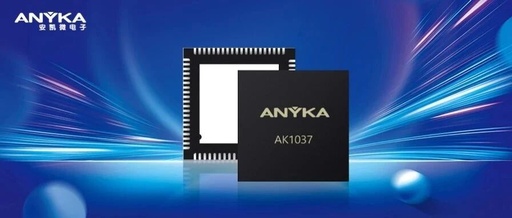
●●● On August 1, 2025, Ankai Micro officially launched the AK1037 series low-power lock control SoC chip designed specifically for smart locks. This series of chips integrates core functions such as fingerprint recognition acceleration, RFID card recognition, BLE, touch buttons, and voice broadcasting, achieving a high level of integration. A high-performance, ultra-low-power system platform and … Read more