Understanding NVIDIA DGX, EGX, IGX, HGX, MGX
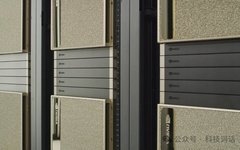
Understanding NVIDIA DGX, EGX, IGX, HGX, MGX

Recently, NVIDIA’s market value increased by 5.2%, closing at $3.019 trillion, surpassing Apple to become the second largest company by market value in the US stock market, second only to Microsoft. In today’s technology landscape, GPUs have become one of the most important infrastructures driving the development of artificial intelligence, deep learning, and high-performance computing. … Read more
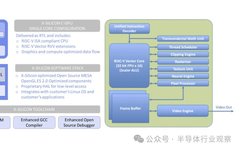
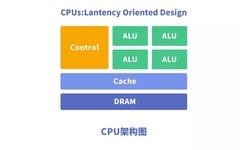
A Universal RISC-V Chip: Integrating CPU and GPU into One Core

A Universal RISC-V Chip: Integrating CPU and GPU into One Core

X-Silicon Inc. (XSi) has created a new RISC-V microprocessor architecture that combines RISC-V CPU cores with vector capabilities and GPU acceleration into a single chip. According to Jon Peddie Research, the CPU/GPU hybrid chip is open-source and is designed to handle a variety of functions typically managed by dedicated CPUs and GPUs, aiming to do … Read more

Analysis of Chip Architecture Characteristics: CPU, GPU, NPU, FPGA, and More

Analysis of Chip Architecture Characteristics: CPU, GPU, NPU, FPGA, and More

1. Overview With the surge of artificial intelligence and the widespread application of AI algorithms, deep learning has become a key focus of current AI research. In the field of autonomous driving, environmental perception, sensor fusion, and control decision-making all involve deep learning to some extent. The performance of autonomous driving is directly related to … Read more

The Future of AI Chips: Not Necessarily GPUs

The Future of AI Chips: Not Necessarily GPUs

Source: Semiconductor Industry Review Original Author: Feng Ning In the layout of artificial intelligence computing architecture, the collaborative working model of CPUs and acceleration chips has become a typical AI deployment solution. The CPU plays the role of providing basic computing power, while the acceleration chips are responsible for enhancing computing performance to assist algorithms … Read more

The Viability of FPGA Compared to CPU, GPU, and ASIC

The Viability of FPGA Compared to CPU, GPU, and ASIC

In recent years, the concept of FPGA has become increasingly prevalent. For example, in Bitcoin mining, there are miners based on FPGA. Additionally, Microsoft previously stated that it would use FPGA to “replace” CPU in data centers, among other things. In fact, for professionals, FPGA is not unfamiliar; it has been widely used. However, most … Read more

Ultra-Heterogeneous Computing: The Future of High-Performance Chips

Ultra-Heterogeneous Computing: The Future of High-Performance Chips

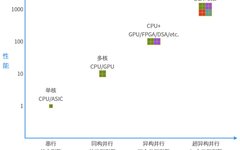
Source: Software and Hardware Integration Original Author: Chaobowx Editor’s Note Reviewing the history of computer development, from serial to parallel, from homogeneous to heterogeneous, it will continue to evolve to ultra-heterogeneous: First Stage: Serial Computing. Single-core CPUs and ASICs belong to serial computing. Second Stage: Homogeneous Parallel Computing. Multi-core CPUs and GPUs with thousands of … Read more

In-Depth Understanding of GPU, FPGA, and ASIC

In-Depth Understanding of GPU, FPGA, and ASIC

Artificial intelligence consists of three elements: algorithms, computation, and data. Algorithms are the core of AI implementation, while computation and data serve as the foundation. In terms of algorithms, they can mainly be divided into engineering methods and simulation methods. The engineering method employs traditional programming techniques to improve algorithm performance using extensive data processing … Read more

Overview of Three Mainstream Chip Architectures in Autonomous Driving

Overview of Three Mainstream Chip Architectures in Autonomous Driving

The current mainstream AI chips can be mainly divided into three categories: GPU, FPGA, and ASIC. Both GPU and FPGA are relatively mature chip architectures and belong to general-purpose chips. ASIC is a chip customized for specific AI scenarios. The industry has confirmed that CPU is not suitable for AI computing, but is still indispensable … Read more

A Brief History of the Global Chip Industry (Part 3): Computing Chips

A Brief History of the Global Chip Industry (Part 3): Computing Chips

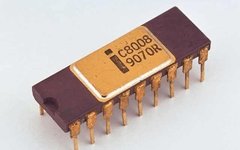
Intel: Microprocessor Chip 01 Intel 4004 Microprocessor Release Date: November 15, 1971 Features: 10-micron process, 2250 transistors, speed 108KHz, size 3mm×4mm, 4-bit processor, 45 instructions, executes 50,000 instructions/second, priced at $200 The 4004 can read and execute instructions and exchange information with other computer components. It can perform 60,000 calculations per second, with a computing … Read more

Artificial Intelligence Chips: Concepts and Importance

In the foreseeable future, artificial intelligence will play a significant role in national and international security. Therefore, the U.S. government is considering how to control the dissemination of information and technology related to artificial intelligence. Due to the difficulty in effectively managing general artificial intelligence software, datasets, and algorithms, the computer hardware required for modern … Read more