Click the “Lithium Battery Alliance President” in the upper left corner to follow!

【Research Background】
Sodium-based batteries, with their abundant sodium resources and cost advantages, have become an ideal alternative to lithium-based systems, and different sodium-based batteries exhibit various application characteristics. However, their practical applications still face challenges such as low energy density, short cycle life, and safety hazards. Currently, carbon materials, with their tunable physicochemical properties, are widely used in various sodium batteries, providing innovative solutions to enhance battery performance. Therefore, it is particularly important to fully explore the multifunctional potential of carbon materials. By leveraging this potential, the development of advanced multifunctional sodium-based batteries becomes possible.
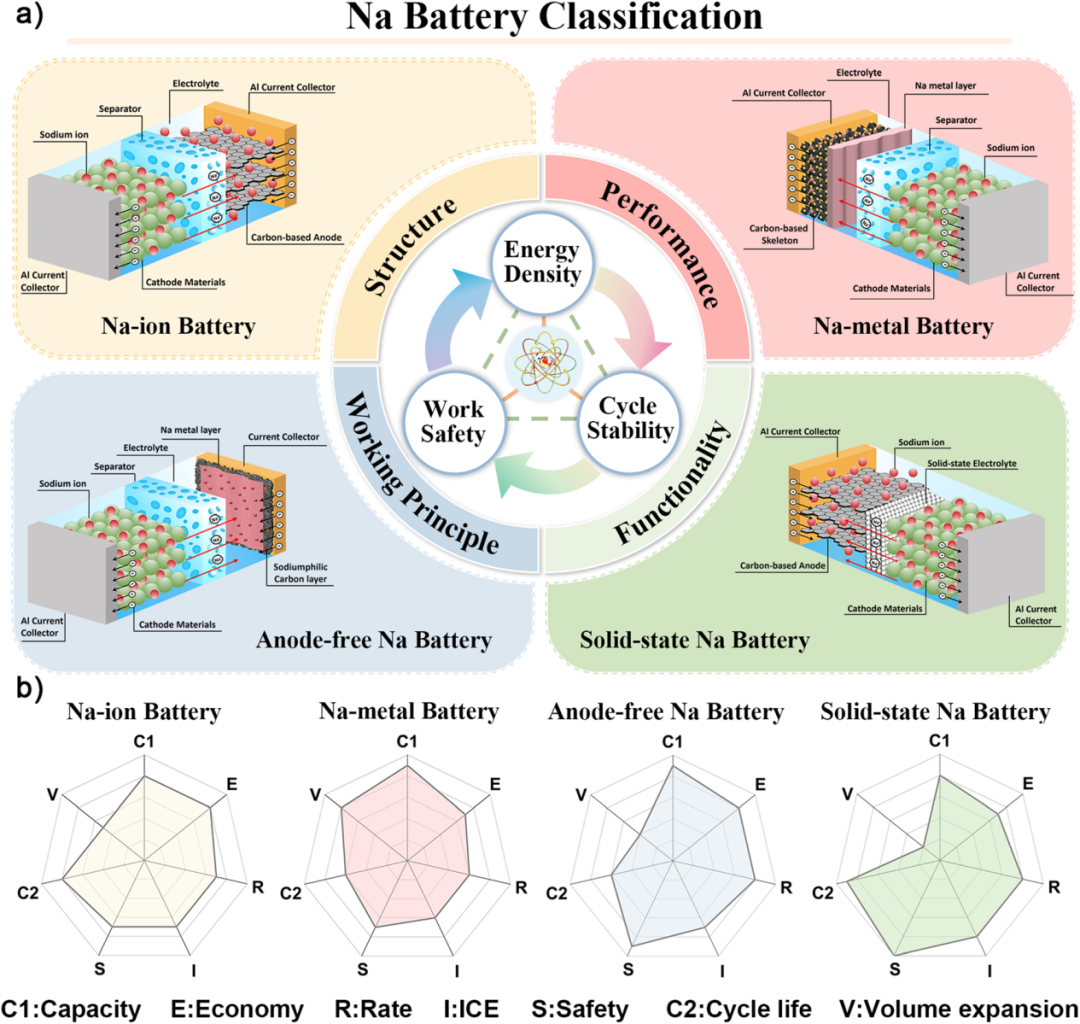
Figure 1. (a) Schematic diagrams of sodium-ion batteries, sodium metal batteries, anode-free sodium batteries, and solid-state sodium batteries, and (b) a comprehensive performance comparison chart.
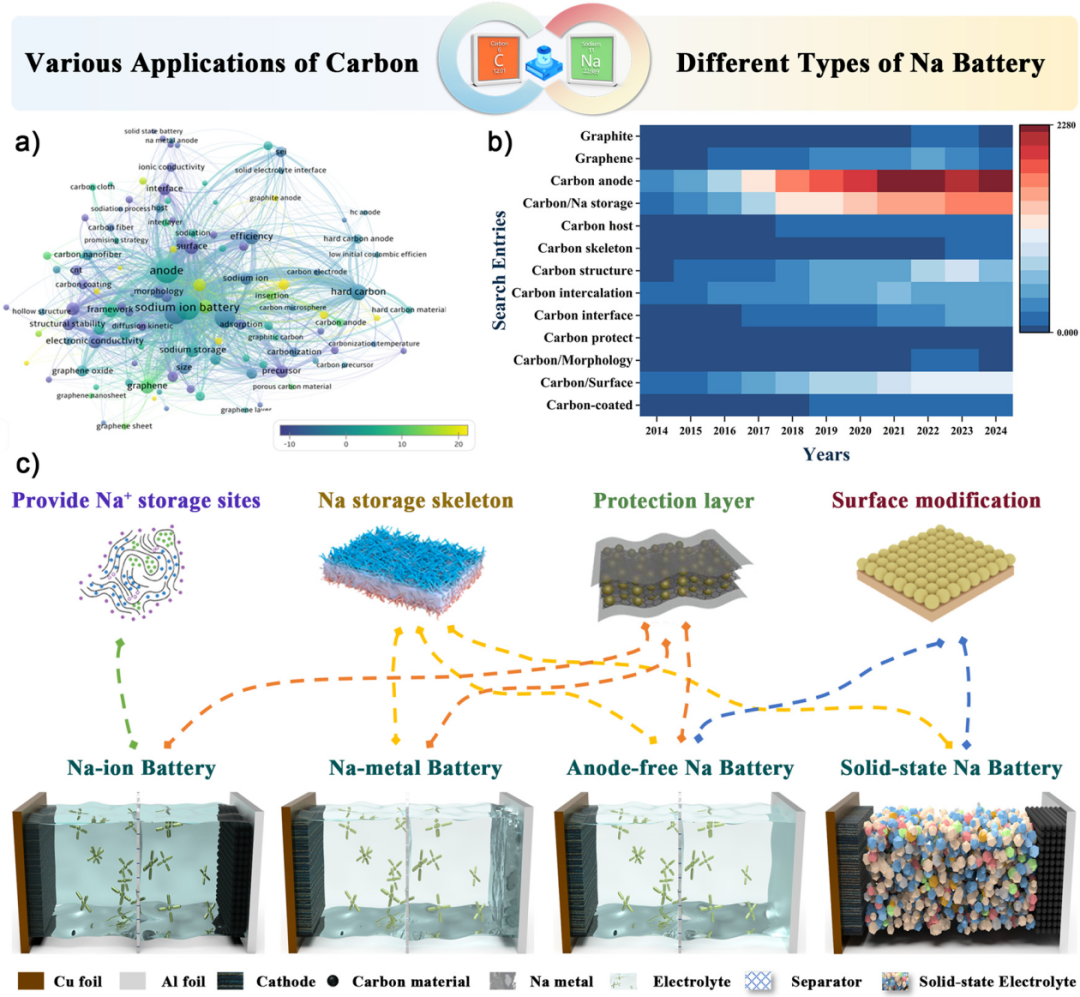
Figure 2. (a) A scientific literature network diagram based on the keywords “carbon” and “sodium battery.” (b) A heatmap of the number of papers related to sodium batteries and various carbon materials from 2014 to 2024, with color intensity representing the number of published papers. (c) The key role of carbon-based materials in various sodium-ion batteries.
【Work Overview】
Recently, the team of Wu Xingqiao and Chuangshu Lei from Wenzhou University systematically explored the roles and functional transformations of carbon-based materials in different sodium batteries. They investigated the applications, structural parameter differences, and common performance of carbon-based materials in four types of sodium batteries (sodium-ion batteries, sodium metal batteries, anode-free sodium batteries, and solid-state sodium batteries), summarizing various intrinsic and extrinsic factors affecting the performance of carbon-based materials in sodium batteries. Additionally, based on multifunctional carbon materials, they proposed a hybrid sodium battery with “intercalation-driven” and “defect-induced” dual energy storage modes, and suggested three adaptive working modes (standard, extended, survival) for different working environments. The related results were published in the top international review journal Chem. Soc. Rev. under the title “Carbon engineering for sodium batteries: multi-role architectures bridging material design and hybrid system innovation.” The first authors are doctoral student Wen Qianxiong and master’s student Li Chuangchuang from the School of Chemistry and Materials Engineering at Wenzhou University, which is the first institution. This is also the first time that graduate students from Wenzhou University have published a paper as first authors in Chem. Soc. Rev.
【Content Description】
1. The application of carbon-based materials in different sodium-ion batteries
In this section, the optimization strategies for carbon materials applied to different types of sodium batteries are explained in detail, clarifying the different optimization paths required for the role transformation of carbon materials.
1.1 The role of carbon-based materials in sodium-ion batteries
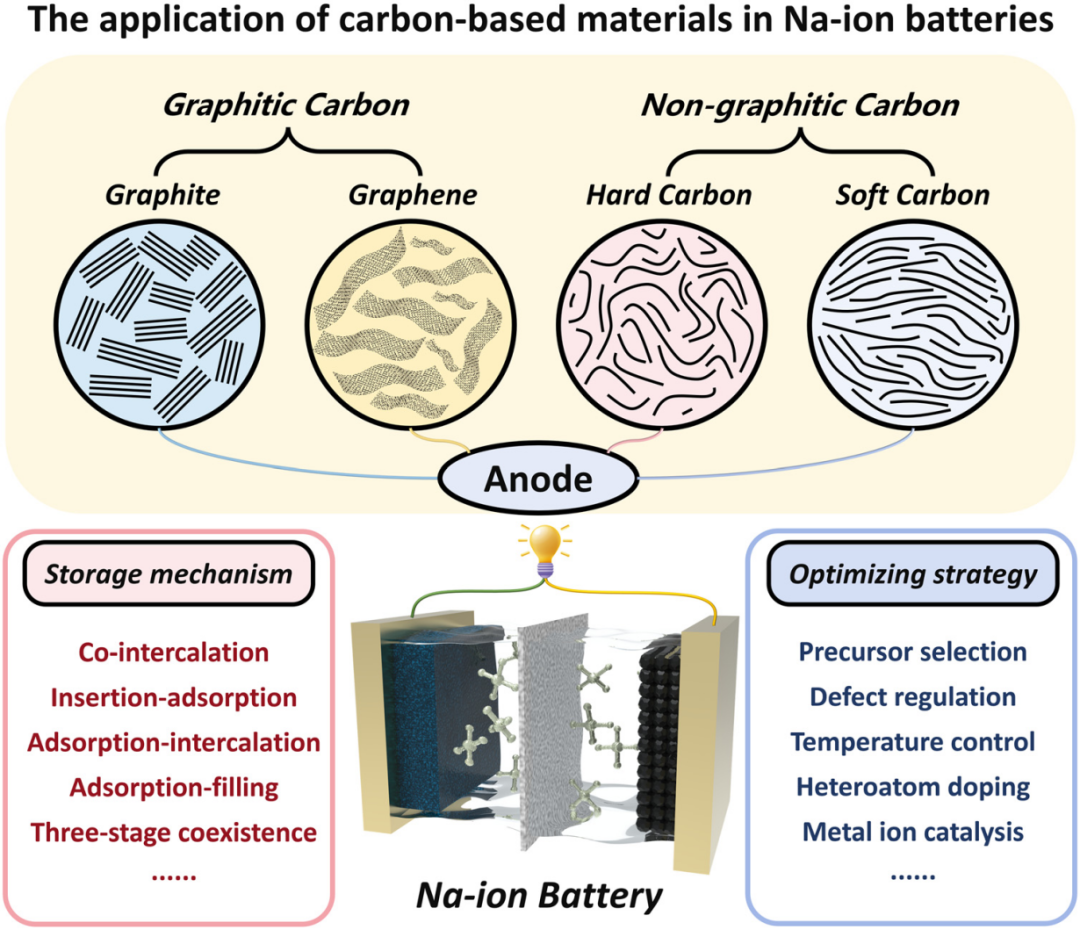
Figure 3. Schematic diagram of the main roles and classifications of carbon-based materials in sodium-ion batteries, along with corresponding sodium storage mechanisms and optimization strategies for traditional sodium-ion batteries.
1.2 The role of carbon-based materials in sodium metal batteries
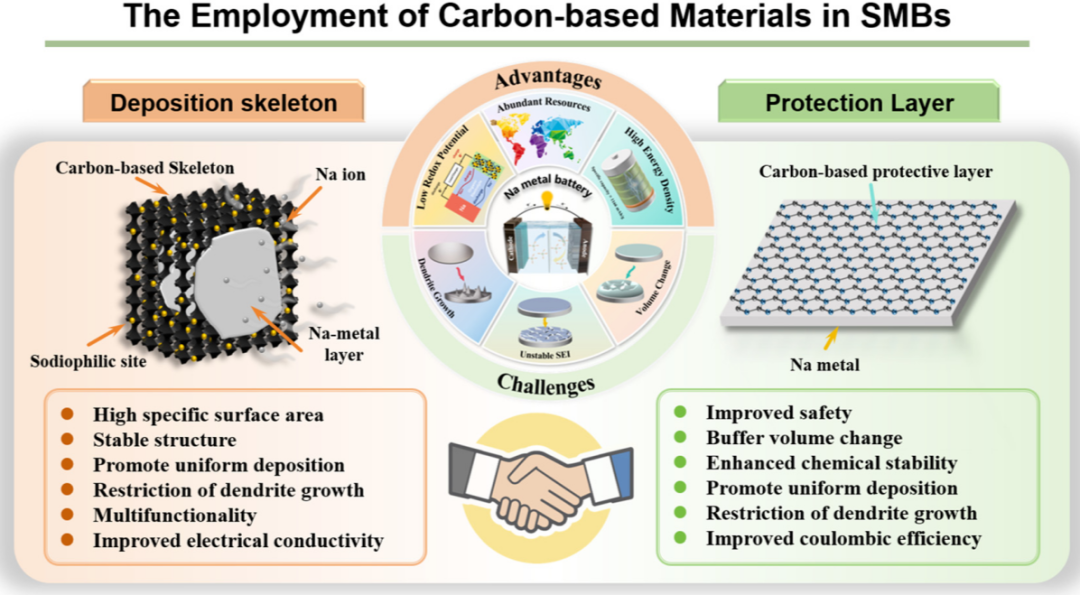
Figure 4. Schematic diagram of the application of carbon-based materials in sodium metal batteries.
1.3 The role of carbon-based materials in anode-free sodium batteries
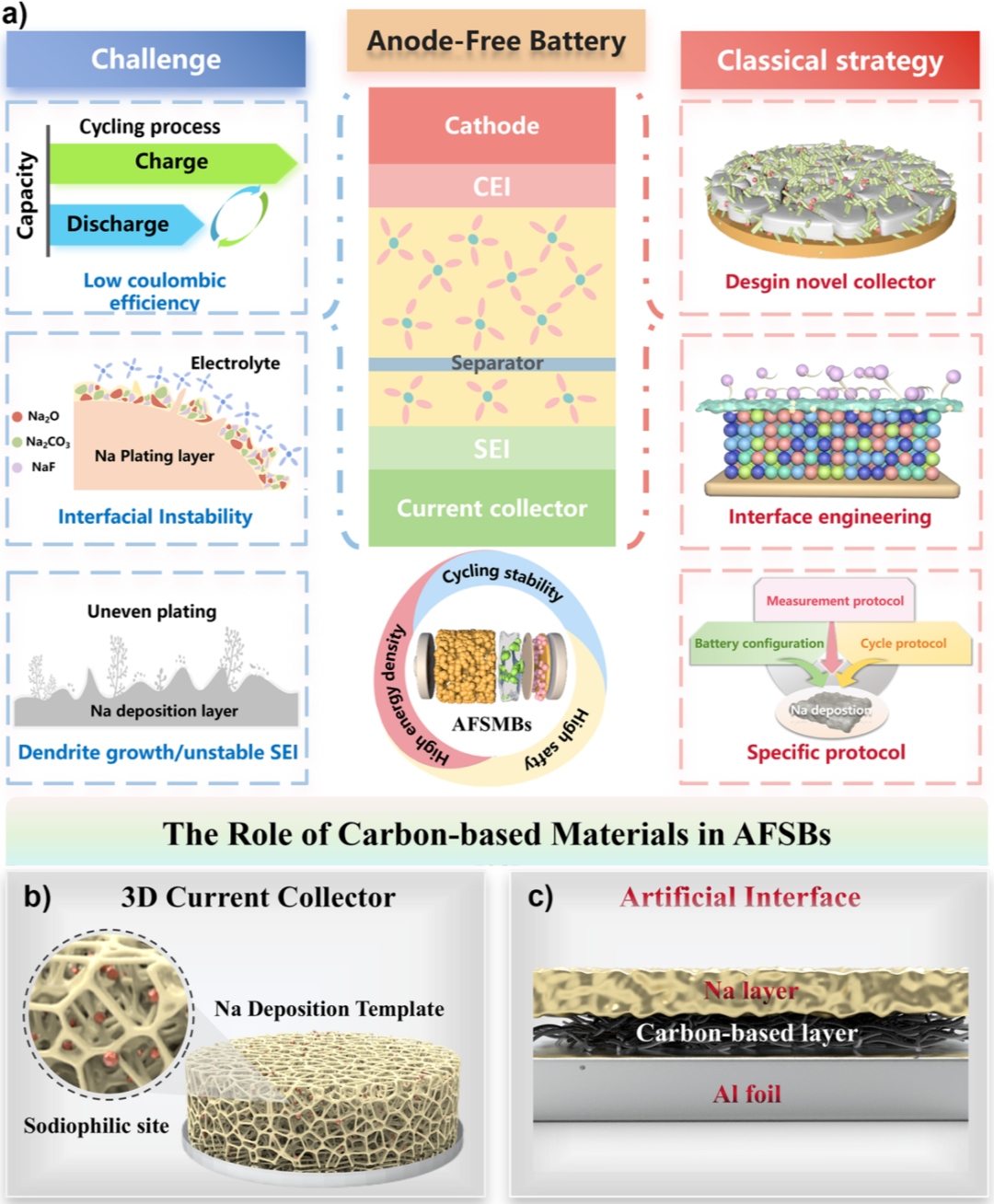
Figure 5. The upper part of this figure shows (a) a schematic diagram of the structure of anode-free sodium batteries, outlining the current challenges and classic strategies. The lower part illustrates the dual functions of carbon-based materials in anode-free sodium batteries.
1.4 The role of carbon-based materials in solid-state sodium batteries
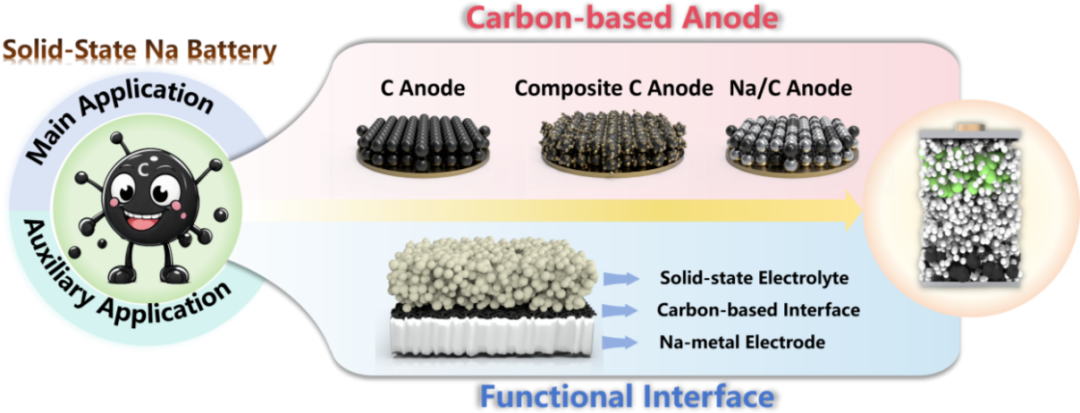
Figure 6. Schematic diagram of the main and auxiliary applications of carbon-based anodes in solid-state sodium batteries.
2. Collaborative multifunctional carbon materials: Rational design of hybrid sodium batteries
This section will delve into the key factors affecting the functional characteristics of carbon-based materials and propose rational design schemes for sodium-ion hybrid batteries based on multifunctional carbon materials.
2.1 Key factors of carbon materials in sodium-ion batteries
Carbon materials in sodium-ion batteries not only serve as sodium storage sites but also play an auxiliary role in sodium deposition. Based on the sodium storage characteristics of carbon materials, we summarize four key processes: adsorption, intercalation, filling, and deposition. Furthermore, several key factors involved in these processes collectively influence the sodium storage efficiency and reversible cycling stability of carbon-based materials, including defects, specific surface area, interlayer spacing, degree of graphitization, pore structure, sodium affinity, overpotential, ash content, conductivity, and tap density.
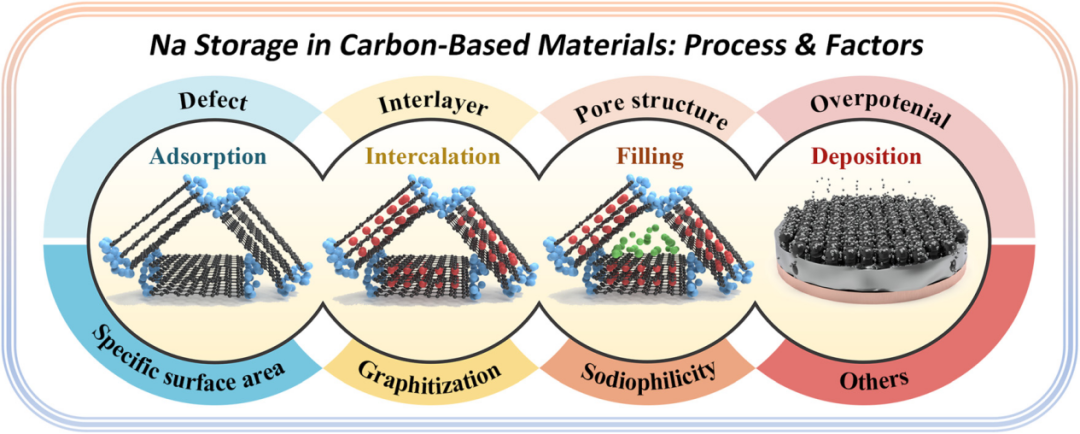
Figure 7. Schematic diagram of sodium storage behavior related to carbon-based materials and key influencing factors.
2.2 Hybrid sodium batteries: Utilizing multifunctional carbon materials
Based on the unique and interrelated structural characteristics and different functional roles of carbon-based materials in sodium-ion battery systems, it is revealed that sodium storage primarily occurs through two different mechanisms: intercalation-driven Na+ storage and defect-guided Na deposition. Therefore, the designed hybrid sodium battery achieves sodium storage mechanisms of “adsorption-intercalation-filling” above 0V and uniform sodium deposition on the surface of carbon-based materials below 0V through the multifunctional characteristics of carbon materials as anodes. The structural design of multifunctional carbon anodes not only meets the core functions of sodium-ion storage but also promotes uniform sodium deposition as a sodium-affinitive substrate, thereby enhancing energy density. This innovative approach provides new insights for expanding the application of carbon-based materials in sodium-ion batteries.
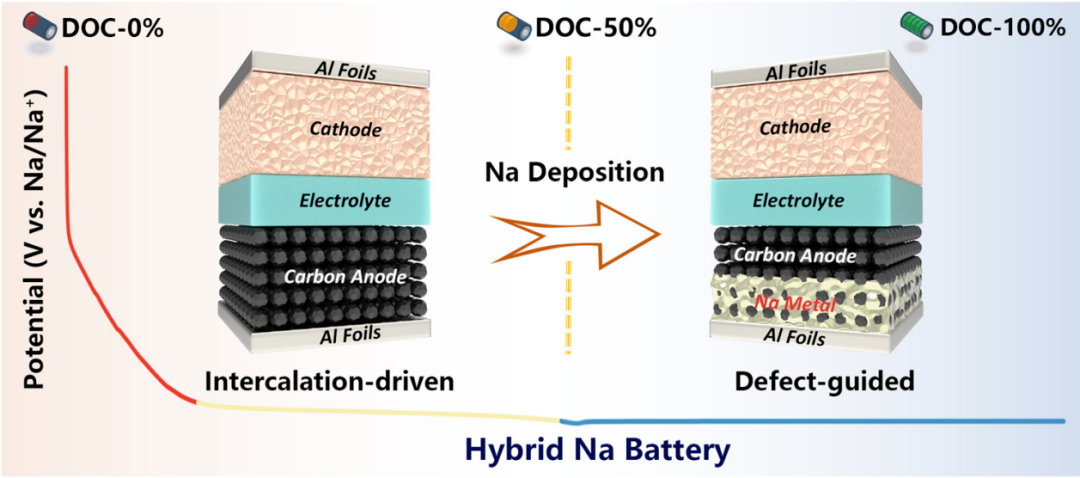
Figure 8. The discharge working model of carbon-based anodes in ideal hybrid sodium batteries.
3. Outlook and Perspectives
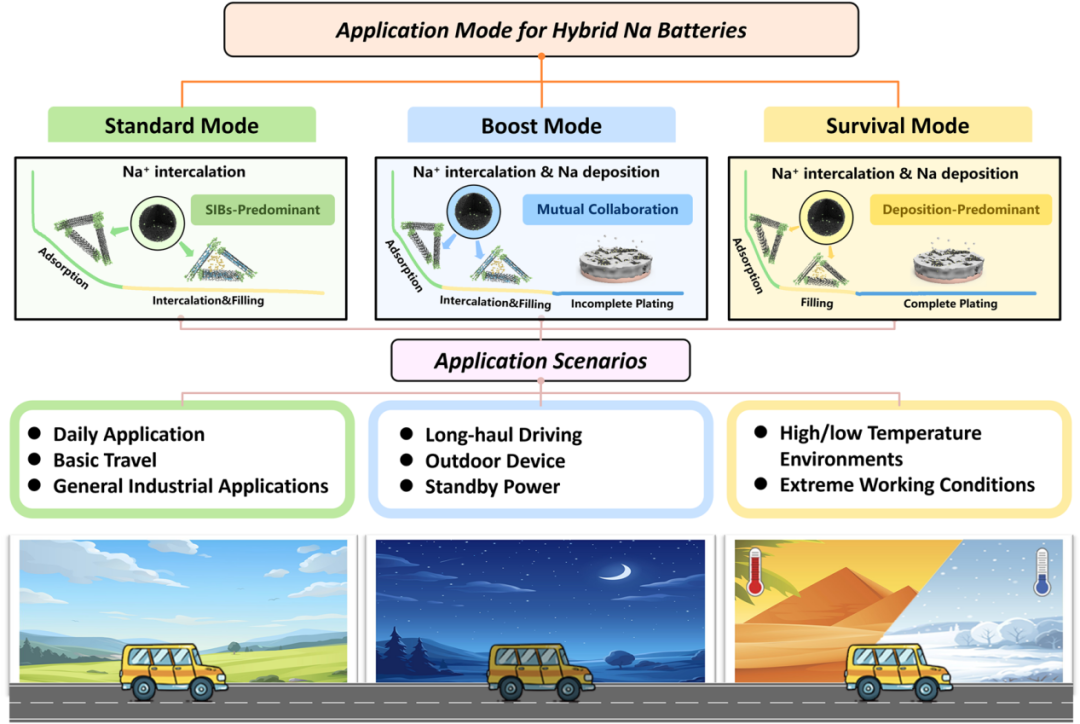
Figure 9. Adaptive working modes of hybrid sodium batteries in practical applications (standard mode, extended mode, and survival mode), illustrating their working principles and applicable working conditions.
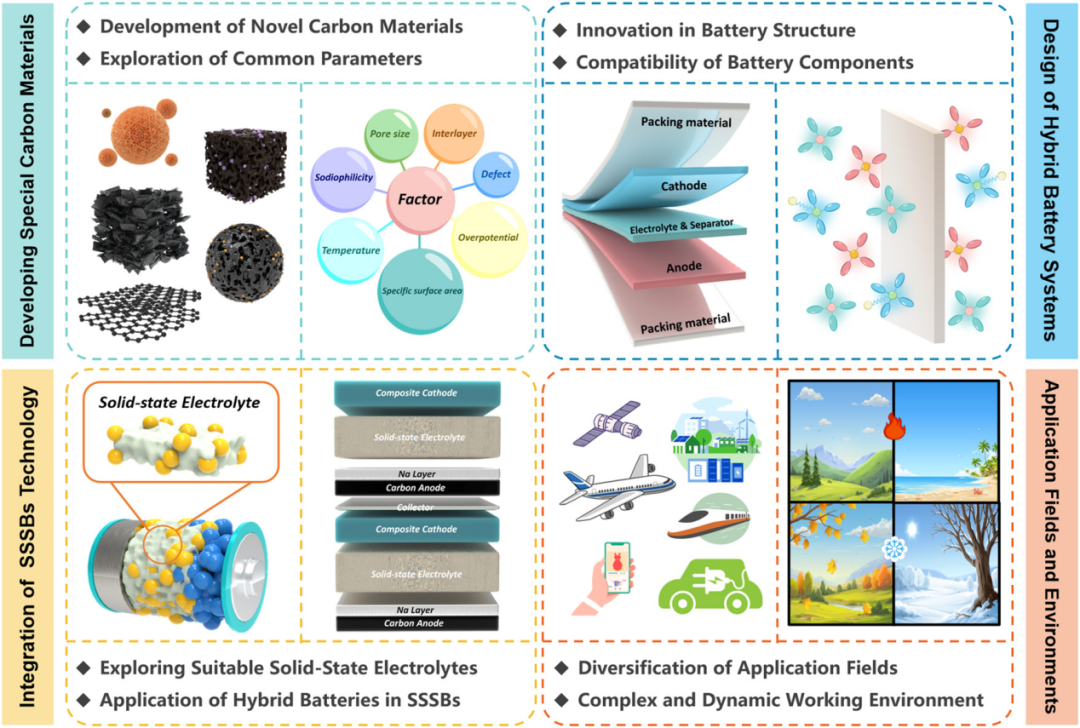
Figure 10. Overview and outlook of the development direction and future applications of hybrid sodium batteries.
【Literature Details】
Qianxiong Wen, Chuangchuang Li, Qinghang Chen, Pandeng Zhao, Chun Wu, Xingqiao Wu, Shu-Lei Chou, Carbon Engineering for Sodium Batteries: Multi-Role Architectures Bridging Material Design and Hybrid System Innovation, Chem. Soc. Rev., 2025. https://doi.org/10.1039/D5CS00515A
 Related Reading:Preparation materials for lithium-ion batteries / pressure testing! Lithium battery self-discharge measurement methods: static and dynamic measurement methods! Key process issues in soft-pack batteries! Understand the K value of lithium-ion batteries in one article! Processes, R&D, mechanisms, and patents! A comprehensive collection of materials on soft-pack battery directions! Unveiling CATL’s super factory! Understanding lithium battery impedance spectroscopy (EIS) is not easy; this review is worth a look! Compilation of various issues in lithium-ion battery production! Summary of research on the cycle life of lithium batteries (with 60 high-quality materials available for free download).