Special Topic on College Entrance Examination: Analysis of Supermolecular Exam Questions Compilation
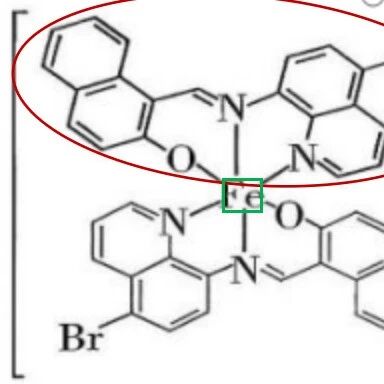
Special Topic on College Entrance Examination: Analysis of Supermolecular Exam Questions Compilation

Topic Introduction The college entrance examination combines unfamiliar information to create questions that not only test the examinee’s ability to extract key information, absorb, and integrate knowledge, but also promotes the examinee’s autonomous learning and active problem-solving skills. This is an important embodiment of the integration of “teaching, learning, and assessment,” thereby comprehensively enhancing the … Read more

Proving You’re Not an AI Robot with One Word

If I have time, I will write a standard college entrance examination essay, aiming for a score above 54 from the examiners, to avoid misleading the students. However, I have been extremely busy lately, so I will write it when I remember. Below are some analyses of the topics. Some people say love, death, but … Read more

Selected Compilation of Phenomenon Essays from the 2026 National College Entrance Examination

===PhenomenonTypeEssayCompilation=== The phenomenon-type essay in the college entrance examination relies on specific phenomena in real life as writing material, requiring candidates to perceive the essence through phenomena and express insights in conjunction with cognition. Its core connotation lies in“using phenomena as a carrier, with critical thinking as the core, and values as the guide.” This … Read more

Comprehensive Summary of High-Frequency Word Forms for College Entrance Exam

Comprehensive Summary of High-Frequency Word Forms for College Entrance Exam

Warm reminder: Reply “College Entrance Exam Vocabulary” to the public account to see the complete vocabulary table. Summary of High School English Word Form Conversions Memorize a little bit every day, and improvements in grades are visible! 1. Verb to Noun 1. Ends with v + mentachieve —— achievement (achievement)advertise —— advertisement (advertisement)agree —— agreement … Read more

Understanding Sensors in Physics: Principles and Examples

Understanding Sensors in Physics: Principles and Examples

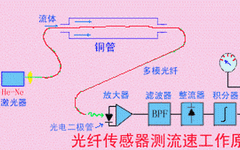
1. Working Principle of Sensors A sensor is a device that converts non-electrical quantities into electrical quantities. The non-electrical quantities sensed typically include pressure, temperature, displacement, concentration, speed, pH, etc. The output is usually an electrical quantity, such as voltage, current, or charge. These output signals are very weak and usually need to be amplified … Read more