Does Periodic Hypoxia Accelerate SOC Decomposition in Soil?

Does Periodic Hypoxia Accelerate SOC Decomposition in Soil?

Abstract: The decomposition of soil organic carbon (SOC) is fundamental to soil-atmosphere carbon exchange and is regulated by changes in soil redox conditions mediated by climate change. Periodic hypoxia typically occurs after precipitation, soil flooding, and erosion events, and it is believed to preserve SOC. However, water saturation may also increase SOC decomposition compared to … Read more

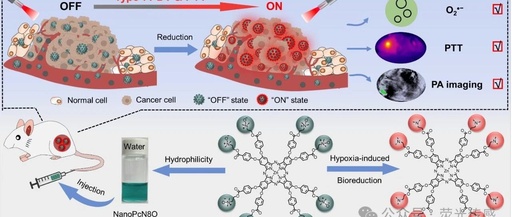
Professor Li Xingshu and Academician Juyoung Yoon in Angew: Hypoxia-triggered Bioreduction of Hydrophilic Type I Photosensitizers for Switchable In Vivo Photoacoustic Imaging and High-specificity Cancer Phototherapy

Professor Li Xingshu and Academician Juyoung Yoon in Angew: Hypoxia-triggered Bioreduction of Hydrophilic Type I Photosensitizers for Switchable In Vivo Photoacoustic Imaging and High-specificity Cancer Phototherapy

Click the blue text Follow us Background Introduction Hypoxia has been identified as a prominent feature within tumors, resulting from the rapid and aggressive growth of tumor cells and abnormal vascularization. Consequently, the low concentration of oxygen (O2) in the hypoxic tumor microenvironment significantly weakens O2-dependent physiological mechanisms and further reduces therapeutic efficacy, such as … Read more

Smooth Muscle Acid-Sensing Ion Channel 1a as a Therapeutic Target to Reverse Hypoxic Pulmonary Hypertension

Smooth Muscle Acid-Sensing Ion Channel 1a as a Therapeutic Target to Reverse Hypoxic Pulmonary Hypertension

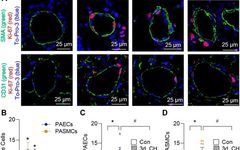
Acid-sensing ion channel 1a (ASIC1a) is a voltage-independent, non-selective cation channel that simultaneously conducts Na+ and Ca2+. The activation of ASIC1a causes depolarization of the plasma membrane, stimulating Ca2+-dependent signaling pathways in various cell types, including vascular smooth muscle (SM) and endothelial cells (ECs). Previous studies have indicated that the increase in pulmonary vascular resistance … Read more