How to Read Analog Signals with Mitsubishi PLC: A Beginner’s Guide to Sensor Signal Translation
How to Read Analog Signals with Mitsubishi PLC: A Beginner's Guide to Sensor Signal Translation

Many beginners encounter this challenge when working on projects: a temperature sensor measures 25°C, and a pressure sensor measures 3.5MPa. How do these “continuously varying numbers” get transmitted to the PLC? How does the PLC “understand” these signals? In fact, these “continuously varying quantities” are called “analog signals,” which are different from discrete signals (on/off). … Read more

How to Convert and Process Analog Signals with PLCs? Get It Done in 3 Minutes!

How to Convert and Process Analog Signals with PLCs? Get It Done in 3 Minutes!

Analog signals are the most basic process signals in automation process control systems, such as pressure, temperature, flow, etc. These signals are input forms that are transmitted through transmitters, converting the detected signals into standardized voltage and current signals, and sending these signals in real-time to the controller (PLC). PLCs convert these analog signals into … Read more

Understanding PLC Programming Algorithms in One Minute

Understanding PLC Programming Algorithms in One Minute

PLC Programming Algorithms (1)   In PLC, there are three main types of signals: digital signals, analog signals, and pulse signals. Once you understand the relationship between these three, you can master PLC programming.   1. Digital signals, also known as logical signals, refer to signals that have only two values: 0 or 1, ON or OFF. … Read more

The ‘Left Hand and Right Hand’ of PLC: Digital and Analog Signals, Don’t Get Confused

The 'Left Hand and Right Hand' of PLC: Digital and Analog Signals, Don't Get Confused

In the world of PLCs, all signals can be divided into two main categories: Digital and Analog. They are the “left hand and right hand” of PLCs in perceiving and controlling the external world, and understanding the difference between the two is crucial. 1. Digital: The Black-and-White ‘Switch’ Signal Core Characteristics: There are only two … Read more

Summary of Leakage Current Failure Analysis Cases for SOC Chips [Part A: Statement from the Analog Supervisor]

Summary of Leakage Current Failure Analysis Cases for SOC Chips [Part A: Statement from the Analog Supervisor]

Hello everyone!Recently, during the testing of standby power consumption for the XXX project chip at our company, it was found that some chips were normal while others exhibited additional leakage current. The leakage current varied significantly between chips, ranging from a few microamperes to 200 microamperes. Moreover, there were some perplexing phenomena; for instance, when … Read more

Understanding PLC Analog Signals: Detailed Applications of 0-10V and 4-20mA (Including FX3U Analog Programming)

Understanding PLC Analog Signals: Detailed Applications of 0-10V and 4-20mA (Including FX3U Analog Programming)

When designing automation equipment, we often need to monitor and control various pressure sensors, instrument signals, or temperature sensors. Many of these instruments will have analog input or output signals, and we need to use PLCs to read these analog signals and output analog signals to the instruments. What exactly is an analog signal? Some … Read more

Comprehensive PLC Programming Algorithms You Can’t Miss!

Comprehensive PLC Programming Algorithms You Can't Miss!

Over 90,000 friends have followed this industrial control WeChat platform:Technical sharing,Learning exchange,Industrial control videos PLC Programming Algorithms (1) In PLC, there are three main types: digital signals, analog signals, and pulse signals. Once you understand the relationship between the three, you can master PLC programming. 1. Digital signals, also known as logic signals, refer to … Read more

51 Microcontroller Programming 12: Analog and Digital Signals

51 Microcontroller Programming 12: Analog and Digital Signals

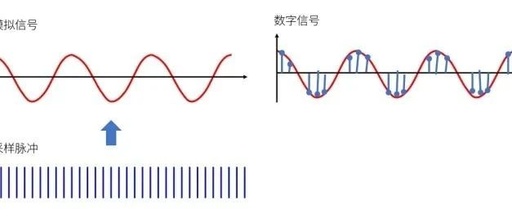
Analog and Digital Signals In the process of industrial production control, it is often required to control some physical quantities such as temperature, pressure, flow, etc. These physical quantities change continuously over time, and any value during this continuous change is a specific and meaningful physical quantity. These physical quantities that change continuously over time … Read more

Understanding How to Use Analog Signals in PLCs

Understanding How to Use Analog Signals in PLCs

First, let’s understand what digital and analog signals are?Why do PLCs need to use analog signals? Digital Signals Digital signals are a type of physical quantity. Their changes are discontinuous over time, occurring only at a series of discrete moments. This type of physical quantity is called a digital signal. It refers to quantities that … Read more