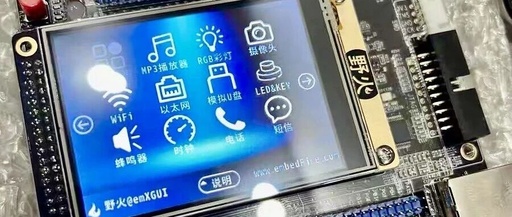
Why Use External Relays When PLCs Have Built-in Relays? Unveiling the Design Wisdom Behind Industrial Control

Why Use External Relays When PLCs Have Built-in Relays? Unveiling the Design Wisdom Behind Industrial Control

Click to follow and unlock more PLC technology knowledge! Introduction Many newcomers to the industrial control field often wonder: since PLCs come with built-in relay outputs, why do we need to add an extra row of external relays to control contactors? Doesn’t this increase costs and complicate the system? In fact, there is profound electrical … Read more

Understanding DFM in Circuit Board Design

Understanding DFM in Circuit Board Design

“A good-looking board must be functional!” This is a statement made to me by a hardware engineer. In circuit design, not only is extensive professional knowledge required, but it is also essential to consider the manufacturability of the circuit board during the design process, as the final design needs to be produced and used. I … Read more

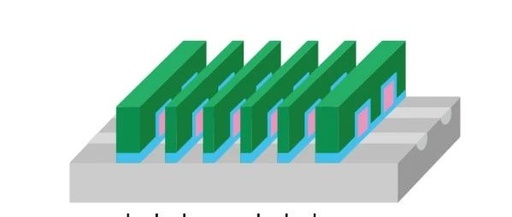
Principles, Structure, Process Challenges, Applications, and Future Development of NAND Flash

Principles, Structure, Process Challenges, Applications, and Future Development of NAND Flash

Source:Tiger Says Chip Original Author:Tiger Says Chip This article introduces the principles, structure, processes, and applications of NAND Flash. Basic Principles and Structure of NAND Flash What is NAND Flash?NAND Flash (flash memory) is a type of non-volatile memory technology primarily used for data storage. Unlike traditional DRAM or SRAM, NAND Flash retains data even … Read more

Comparison of Advantages and Disadvantages between PLC and Microcontroller

Comparison of Advantages and Disadvantages between PLC and Microcontroller

In the field of automation control, both PLC (Programmable Logic Controller) and microcontrollers are extremely important control devices, each possessing unique advantages and disadvantages suitable for different application scenarios. Advantages of PLC 1. Simple programming and easy to learn: PLC uses a ladder diagram programming method similar to relay control circuit diagrams, which is intuitive … Read more

Differences Between Industrial PCs and PLCs

Differences Between Industrial PCs and PLCs

PLCs and Industrial PCs (IPCs) are two different control devices in the field of industrial automation, both play important roles in industrial automation, but there are significant differences in functionality, application, and structure between IPCs and PLCs. Hardware and Reliability Industrial PCs adopt a rugged hardware design, featuring a complete computer architecture, including processors, memory, … Read more

What is the Typical Factory Yield Rate of the MCU You Use?

What is the Typical Factory Yield Rate of the MCU You Use?

The factory defect rate of an MCU (Microcontroller Unit), usually expressed in PPM (Parts Per Million), is a highly variable value that depends on several key factors. For mainstream, mature MCU manufacturers and product lines, the factory defect rate can typically be controlled at a very low level, generally ranging from 10 PPM to 100 … Read more

Performance, Reliability, and Efficiency: An Analysis of the Six Major Advantages of onsemi’s Hardcore Image Sensors

Performance, Reliability, and Efficiency: An Analysis of the Six Major Advantages of onsemi's Hardcore Image Sensors

This article is authored by Chris McNamara, the Market Development Manager for Automotive Sensing at onsemi. Advanced Driver Assistance Systems (ADAS) have become standard features in modern vehicles, enhancing driving safety and comfort. ADAS functionalities include classic emergency braking features enabled by windshield cameras, as well as multi-camera surround view and perception systems integrated with … Read more

Why ESD Levels Differ Among Systems with Different MCUs in the Same Environment?

Why ESD Levels Differ Among Systems with Different MCUs in the Same Environment?

A washing machine product selected two different manufacturers’ MCUs with pin compatibility. During EMC certification, it was found that MCU A failed at 5kV, while MCU B could withstand up to 8kV, with all other components and environments being identical. Why do different MCU products exhibit varying ESD levels? The reasons behind this are not … Read more

Analysis of a Single Bit Failure Issue in MCU SRAM

Analysis of a Single Bit Failure Issue in MCU SRAM

Our company received a product returned from the market for repair. Testing revealed that the product would freeze after running for a period of time (possibly a few minutes or hours, the duration is uncertain). Upon checking the hardware circuit, no anomalies were found. After replacing the MCU, it was discovered that the issue followed … Read more

Reliable Multi-Agent Architecture Design in 2025: How Anthropic Constructs Claude’s Multi-Agent System

Reliable Multi-Agent Architecture Design in 2025: How Anthropic Constructs Claude's Multi-Agent System

🌟 According to Yu Shi In this article, Anthropic reveals how the multi-agent system behind Claude has evolved from prototype to production. The article focuses on sharing their key experiences and lessons learned in system architecture, tool design, and prompt engineering. While this article may seem to conflict with the previous article on reliable multi-agent … Read more