2023 PECA Latest Testing Solutions Tour | Huawei DCS Virtualization Software

2023 PECA Latest Testing Solutions Tour | Huawei DCS Virtualization Software

The “DCS (Datacenter Virtualization Solution) V1.3” virtualization software product submitted by Huawei Technologies Co., Ltd. has successfully passed the evaluation of the “Server Application Scenario Performance Testing Method for Virtualization Software” standard, conducted by the China Electronics Standardization Institute as the national authoritative testing organization and the professional evaluation team of the Green Computing Industry … Read more
Comparison of x86 and ARM Architectures

Comparison of x86 and ARM Architectures

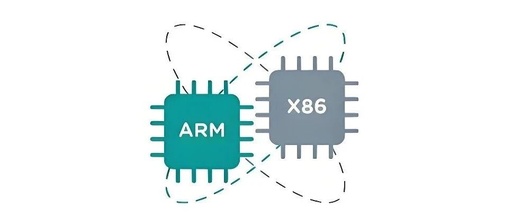
The x86 architecture and ARM architecture are the two dominant processor architectures today, each leading in high-performance computing and low-power applications, respectively. The x86 architecture employs a Complex Instruction Set Computing (CISC) model, which features powerful instruction capabilities but higher power consumption, making it suitable for high-performance scenarios such as desktop computers and servers, including … Read more

Switching to ARM in Data Centers? Avoid These 3 Major Pitfalls

Switching to ARM in Data Centers? Avoid These 3 Major Pitfalls

ARM chips run smoothly in mobile devices, but when it comes to data centers, they seem to be under a spell—despite a decade of calls to “replace x86”, very few enterprises dare to adopt them on a large scale. Let’s take a look at the hurdles ARM faces in establishing a foothold in data centers. … Read more

Arm Servers are Consuming the X86 Market

Arm Servers are Consuming the X86 Market

In the global server processor market, the X86 architecture has long dominated. However, it is now facing one of the most severe challenges in nearly two decades. With continuous technological advancements and transformations, Arm servers are emerging in the market, showcasing strong development potential and are expected to significantly shake the dominance of X86. The … Read more

A Brief Discussion on X86, ARM, RISC-V, and MIPS

A Brief Discussion on X86, ARM, RISC-V, and MIPS

X86, ARM, RISC-V, and MIPS are four mainstream processor architectures that have significant differences in terms of architecture type, instruction set design, application scenarios, and licensing models. The following is a detailed comparison and analysis of their differences from several core dimensions: 1. Architecture Type and Instruction Set Characteristics The core difference in processor architectures … Read more

Why ARM is Replacing x86 as the ‘Heart’ of Embedded Systems?

Why ARM is Replacing x86 as the 'Heart' of Embedded Systems?

In the selection of processors for industrial automation, IoT devices, and embedded systems, the choice between x86 and ARM often has far-reaching implications. This is not only a matter of technical direction but also a key factor in product competitiveness and long-term viability. We delve into the essential differences between these two architectures and their … Read more

Basics of Assembly: Hands-On with General-Purpose Registers

Basics of Assembly: Hands-On with General-Purpose Registers

In the previous article, it was mentioned that in assembly, the content of registers is modified through assembly instructions to control the CPU’s operation. Several classifications of registers were also discussed.Understanding the concepts can be a bit dry, so today we will look at several registers through debugging on a PC, and also modify the … Read more

Get Onboard with Domestic CPUs

Get Onboard with Domestic CPUs

“Come on, Pentium computers, let them think for me.” In 1999, when Pu Shu sang this lyric in “New Boy,” x86 architecture chips were undergoing a magnificent transformation, with the Wintel combination bringing personal computers into the homes of ordinary people. By 2021, when the band “Landlord’s Cat” covered this song, computers were no longer … Read more

Introduction to x86 Assembly Language and Environment Configuration

Introduction to x86 Assembly Language and Environment Configuration

1.Introduction to x86 x86 is a CISC architecture introduced by Intel in 1978, named after early processor models (such as 8086). Its core features include complex instruction set design and backward compatibility, supporting a smooth transition from 16-bit to 64-bit. Throughout its historical evolution, the 80386 marked the beginning of the 32-bit era, while AMD64 … Read more

A Comprehensive Overview of Industrial Rugged Laptops and the Rise of Domestic Chips

A Comprehensive Overview of Industrial Rugged Laptops and the Rise of Domestic Chips

Click the blue textFollow me 1. The Battle of Chip Architectures The requirements for chips in industrial scenarios are extremely stringent: they must withstand extreme environments and handle complex data. Currently, mainstream chip architectures are divided into three major camps, each with its strengths: (1) ARM Architecture 1. Advantages ARM is known for its low … Read more