Click the aboveLychee Research Societyto follow us

📋📋📋The table of contents is as follows:🎁🎁🎁
Table of Contents
💥1 Overview
📚2 Operating Results
🎉3 References
🌈4 Matlab Code and Data



1 Overview
References:


In the demand-side resources, residential users account for 36.6% of the total electricity consumption in society. The electricity consumption in this field has the following characteristics: 1) A large user base with significant demand response potential; 2) The elasticity level of individual user loads is relatively low, failing to meet the minimum level required for participation in demand response; 3) Users have low electricity efficiency, leading to significant waste. Given these characteristics, load aggregators (LA) can aggregate residential users’ flexible load resources to meet the minimum level required for participation in demand response, thus participating in grid scheduling. As an emerging independent electricity sales organization, load aggregators sell the integrated demand response resources to the scheduling departments of power companies and earn a profit from it. The emergence of load aggregators not only brings residential users’ demand response resources into market transactions, improving the efficiency of demand response, but also helps users form efficient electricity usage patterns, enhancing end-use electricity efficiency.

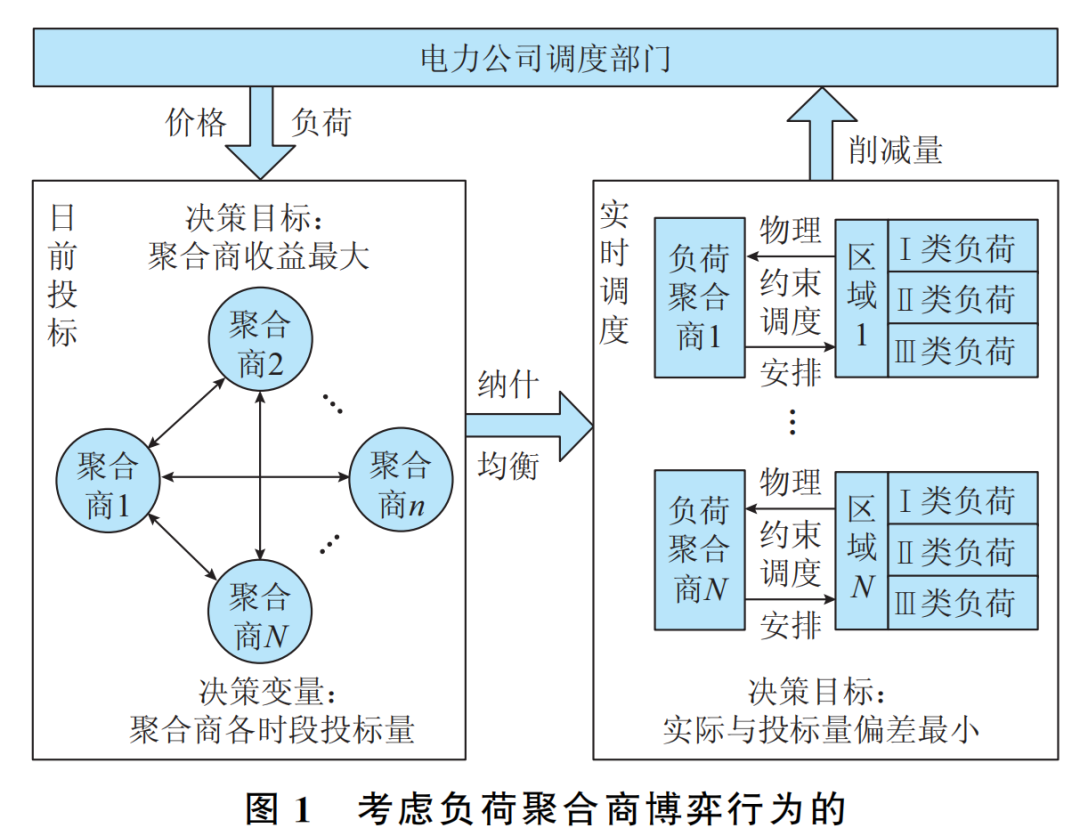
The hierarchical scheduling model of residential load based on non-cooperative game theory aims to effectively promote the participation of residential users’ flexible load resources in demand response. This model can utilize the platform of load aggregators to integrate users’ load resources, thereby better participating in grid scheduling. By classifying the flexible loads of residential users, we can establish a hierarchical scheduling model among the grid company, load aggregators, and residential users. In the day-ahead bidding phase, we constructed a day-ahead bidding game model aimed at maximizing the profits of the aggregator. Using the concept of non-cooperative game theory, we conducted an in-depth analysis of the aggregator’s behavior in the day-ahead bidding market and proved the existence of the Nash equilibrium solution of the game. The establishment of this model provides theoretical support for the behavior of aggregators in the market, helping to better understand and predict their behavior. In the real-time scheduling phase, the aggregator uses the physical characteristics of classified flexible loads as constraints, aiming to minimize the deviation between real-time scheduling and day-ahead bidding quantities as the objective function for real-time scheduling of users’ classified flexible loads. This arrangement not only increases the aggregator’s profits without affecting user comfort but also helps optimize the overall operational efficiency of the grid. To solve this model, we employed the dual-layer whale algorithm to achieve better results. This method provides us with an effective tool to optimize the solution process of the model, thereby better guiding practical operations. Overall, the establishment of this model and solution method provides strong support for promoting the participation of residential users’ flexible load resources, with the potential to achieve significant results in practical applications.



2 Operating Results
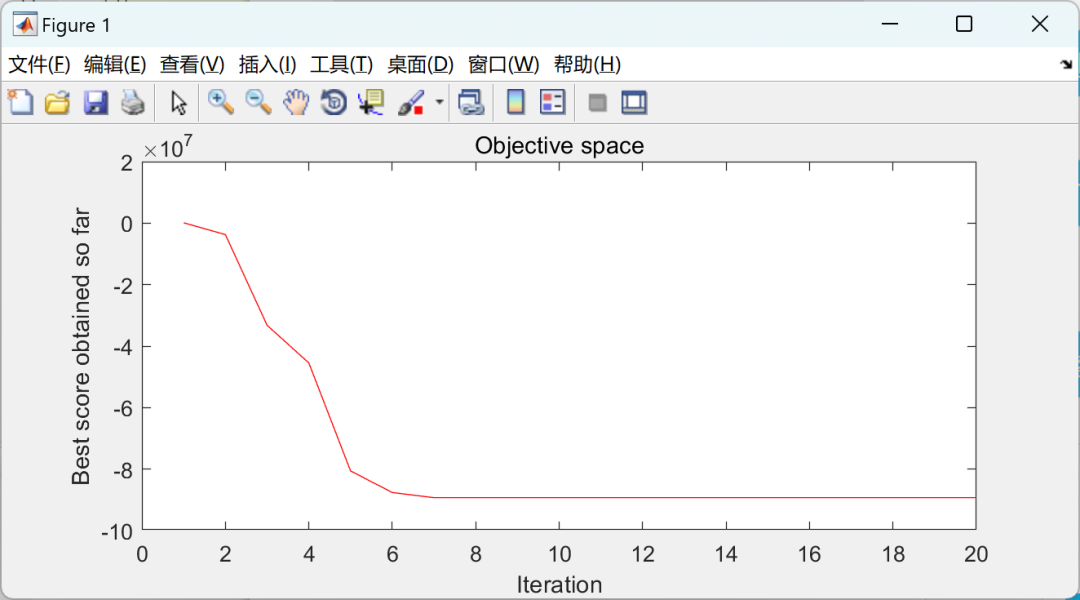
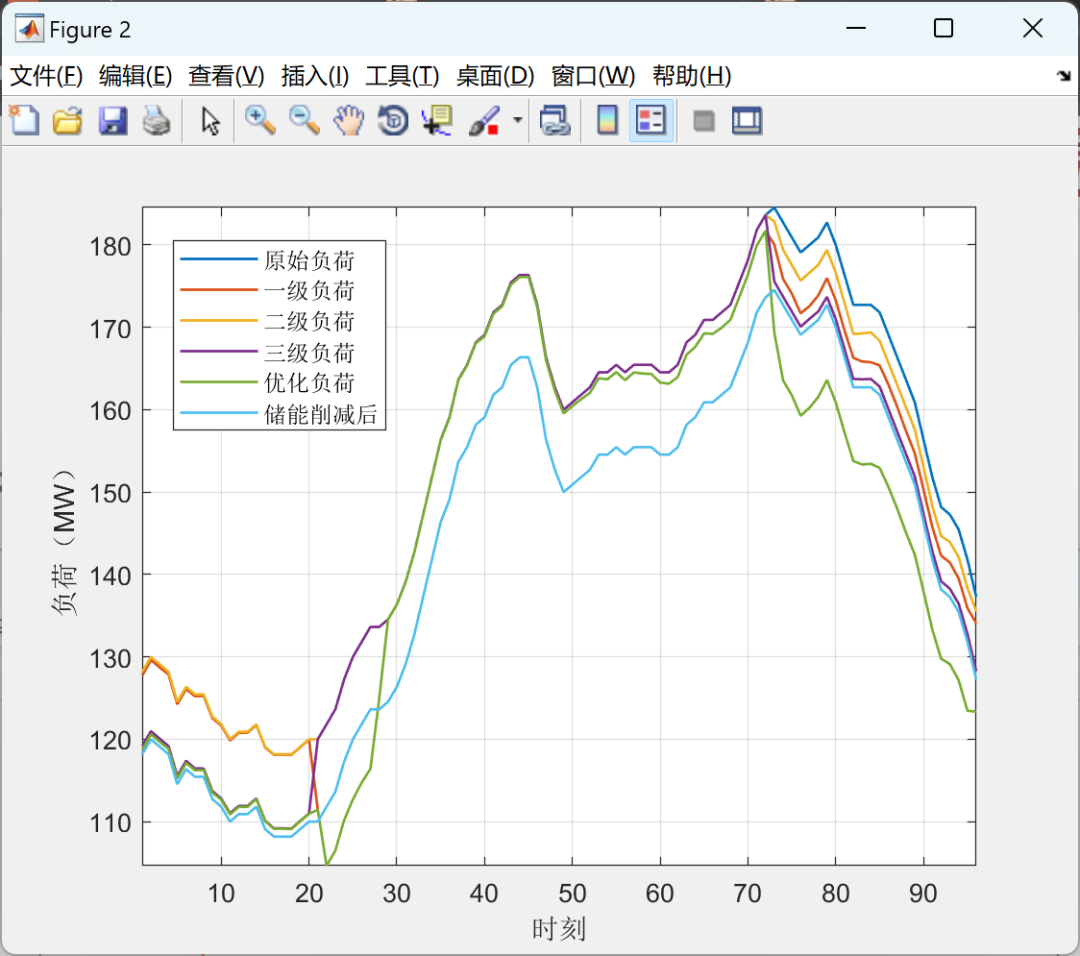
% Part of the code:
% 1st class load
% Electric vehicles
Lev1=Pev1.*Uev1-PowerEVDiso;
Lev2=Pev2.*Uev2-PowerEVDiso;
Lev3=Pev3.*Uev3-PowerEVDiso;
% Water heaters
Lrs1=Prs1.*Urs1-[zeros(1,20),P,zeros(1,44),P1];
Lrs2=Prs2.*Urs2-[zeros(1,20),P,zeros(1,44),P1];
Lrs3=Prs3.*Urs3-[zeros(1,20),P,zeros(1,44),P1];
% 2nd class load
% Washing machines
Lxy1=Pxy1-[zeros(1,72),P2];
Lxy2=Pxy2-[zeros(1,72),P2];
Lxy3=Pxy3-[zeros(1,72),P2];
% Dishwashers
Lxw1=Pxw1-[zeros(1,72),P3];
Lxw2=Pxw2-[zeros(1,72),P3];
Lxw3=Pxw3-[zeros(1,72),P3];
% 3rd class load
Lkt1=sum(Ukt1).*[P4,zeros(1,52),P5]-[P4,zeros(1,52),P5];
Lkt2=sum(Ukt2).*[P4,zeros(1,52),P5]-[P4,zeros(1,52),P5];
Lkt3=sum(Ukt3).*[P4,zeros(1,52),P5]-[P4,zeros(1,52),P5];
Lev=Lev1+Lev2+Lev3;
Lrs=Lrs1+Lrs2+Lrs3;
Lxy=Lxy1+Lxy2+Lxy3;
Lxw=Lxw1+Lxw2+Lxw3;
Lkt=Lkt1+Lkt2+Lkt3;
L1=(Lev+Lrs)/1000;
L2=(Lxy+Lxw)/1000;
L3=Lkt/1000;

figure(2)
plot(Pload','-','linewidth',1);
hold on
plot(Pload'+L1,'-','linewidth',1);
hold on
plot(Pload'+L2,'-','linewidth',1);
hold on
plot(Pload'+L3,'-','linewidth',1);
hold on
plot(Pload'+L3+L1+L2,'-','linewidth',1);
hold on
plot(Pload'+Pess,'-','linewidth',1);
hold on
% axis([1,96,0,200]);
axis tight
grid on
xlabel('Time');
ylabel('Load (MW)');
legend('Original Load','1st Class Load','2nd Class Load','3rd Class Load','Optimized Load','Storage Reduction');
');


3References
Some content in this article is sourced from the internet, and references will be noted. If there are any inaccuracies, please feel free to contact us for removal.

[1] Liu Xiaofeng, Gao Bingtuan, Jin Qing, et al. Hierarchical Scheduling Model of Residential Load Based on Non-Cooperative Game Theory [J]. Automation of Electric Power Systems, 2017, 41(14): 54-60.



4 Matlab Code and Data
Public AccountDASHU
Lychee Research Society