In the selection of processors for industrial automation, IoT devices, and embedded systems, the choice between x86 and ARM often has far-reaching implications. This is not only a matter of technical direction but also a key factor in product competitiveness and long-term viability.
We delve into the essential differences between these two architectures and their advantages and disadvantages in the “industrial battlefield,” revealing the significant value leap brought by migrating fromx86 to ARM.
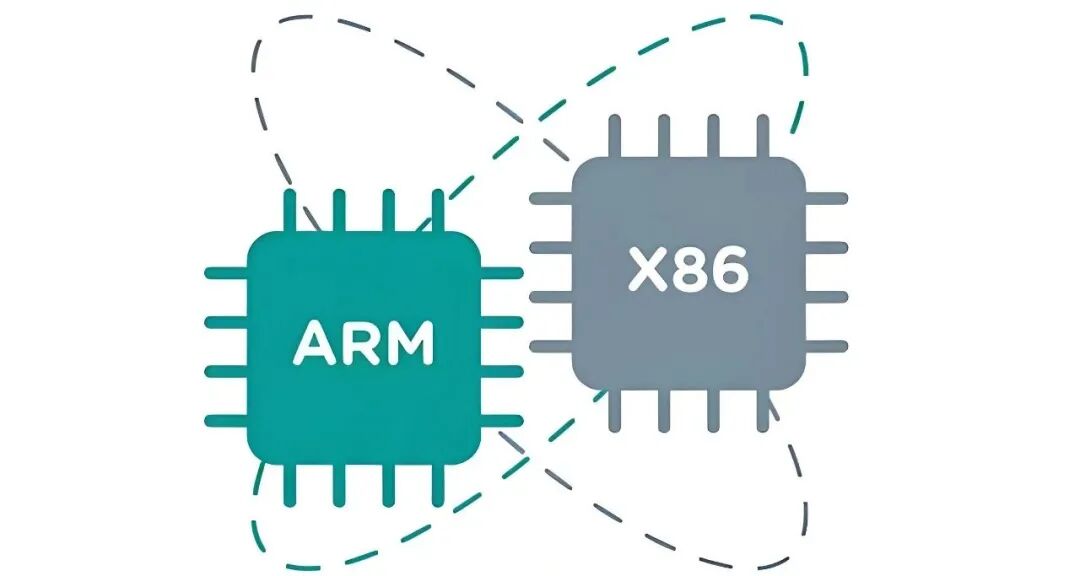
1. Architectural DNA
The foundation of the choice lies in understanding their “DNA” differences:
1. Instruction Set (ISA):
x86 (CISC – Complex Instruction Set): “Powerful” is its label. A single instruction can do more, especially in terms of compatibility within the Windows ecosystem, where it is nearly monopolistic. However, the cost is a complex design, higher power consumption, and fluctuating instruction execution times (not friendly for hard real-time applications).
ARM (RISC – Reduced Instruction Set): “Efficiency first” is the core principle. The instruction set is concise and elegant, with fast and predictable execution speeds, and efficient hardware implementation. This directly contributes to its low power consumption and high energy efficiency, which is its “killer feature.” Its potential release heavily relies on deep optimization by operating systems (Linux, RTOS) and compilers.
2. Licensing and Ecosystem:
x86: Dominated by the dual giants Intel and AMD, with vertical integration. Users are “buyers” of chips, with a relatively fixed selection.
ARM: IP licensing model. ARM provides high-quality cores (Cortex-A/R/M) and licenses them to many major manufacturers like NXP, TI, ST, and Renesas. These partners can deeply customize SoCs based on the licenses to precisely target the stringent demands of the industrial market: high reliability, ultra-low power consumption, hard real-time response, and rich interface integration. The result is unparalleled diversity and flexibility, allowing engineers to always find the “most suitable chip.”
3. Ecosystem:
x86: The ruler of the desktop and server domains, with Windows and a vast software ecosystem as its solid barrier.
ARM: The absolute leader in mobile devices, with a strong foundation and rapid growth in the embedded/industrial field. Its ecosystem is built around Linux (and industrial custom versions like Yocto), Android, and a robust lineup of RTOS (FreeRTOS, VxWorks, QNX, etc.), with a rich open-source atmosphere, mature toolchains, and comprehensive driver support —— this is indeed the fertile ground for our industrial developers.
2. The “Industrial Battlefield”
Based on their DNA, they have formed clear “battle lines” in applications:
1. The domain of x86 (when “PC-level” performance is needed):
High-performance desktops/workstations: Large CAD/CAM, video editing, and other “heavy tasks” require reliance on Windows.
General servers/data centers: Pursuing extreme general computing power, large memory, and handling virtualization/large databases.
High-performance industrial computers/edge servers: Edge nodes need to run applications close to server-level (such as complex machine vision AI, large local databases).
2. ARM’s absolute stronghold (especially fitting the industrial embedded DNA):
Mobile/IoT terminals: Smartphones, tablets, sensors, wearables—power consumption, size, and cost are lifelines.
Core of industrial automation and control: PLCs, HMIs, motion controllers, I/O modules… Here, hard real-time, ultra-high reliability, 10-15 years+ lifespan, wide temperature operation, and extreme low power consumption are required. The ARM Cortex-R (hard real-time)/M (microcontroller) series is designed for this!
Human-machine interfaces (HMI): From simple panels to complex graphical terminals, Cortex-A excels in the art of balancing performance and power consumption.
Precision instruments and data acquisition: Demanding low noise, low power consumption, and high precision.
Medical electronics, rail transportation(in-vehicle IVI/control units/rail transit), energy and power (smart meters/protection relays/new energy control), industrial networking devices (industrial routers/industrial gateways), consumer electronics (smart homes/drones)… Wherever there is a need for “always online, battery-powered, harsh environments, hard real-time, and ultra-long service life,” ARM is the natural stage!
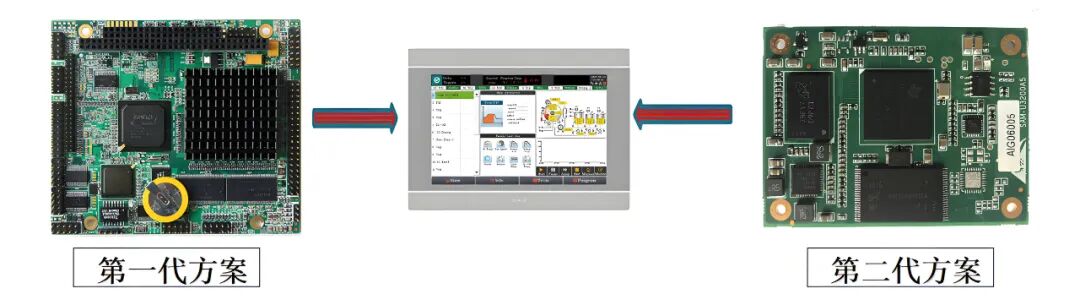
3. From x86 to ARM, the precise evolution of industrial embedded systems..
For those still using x86 industrial control boards to build devices, transitioning to ARM-based core modules is not a simple replacement but a systematic upgrade targeting industrial pain points, bringing immediate benefits:
1. Power Consumption and Heat Dissipation: Revolutionary Restructuring!
Dramatic reduction in power consumption: Under equivalent performance, ARM chips often consume only a fraction of x86.
Simplified heat dissipation: Say goodbye to large fans and bulky heat sinks! Devices become more compact and better sealed(dust and moisture resistant!), and system reliability soars.
Significant reduction in operating costs: When deployed in large numbers (such as smart meters, distributed I/O), the savings on electricity bills are astonishing.
Popularization of fanless designs: Completely eliminate fan failure points, operate silently, and withstand dust and oil.
Battery life doubled: A boon for portable/field devices.
2. High Integration& Small Size: Unlocking Design Space!
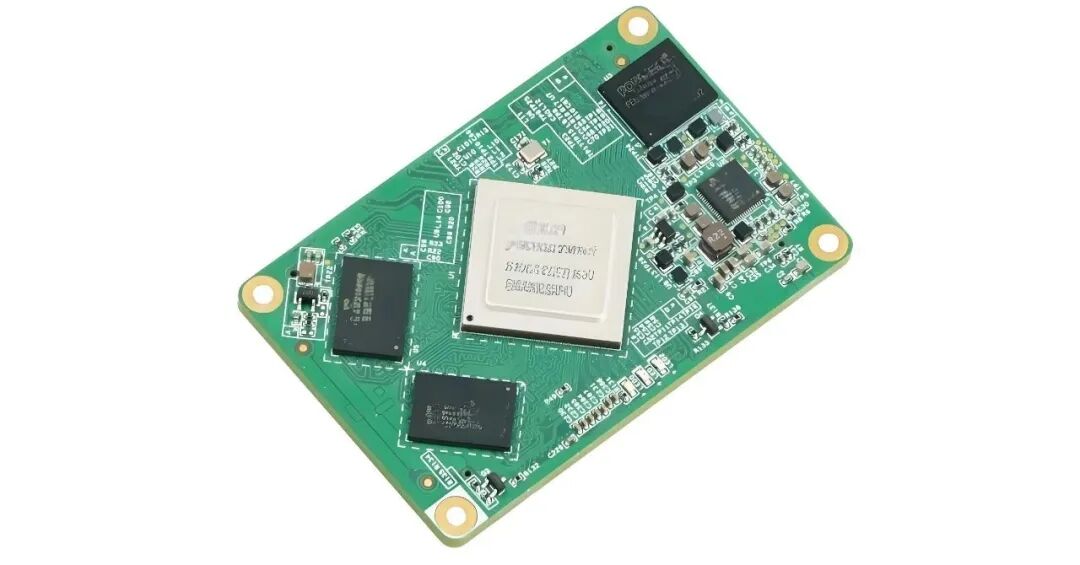
ARM SoCs are inherently highly integrated: CPU, GPU, memory controllers, and rich peripherals (USB, Ethernet, CAN, SPI, I2C, ADC…) are often combined into one. Core modules based on this can be as small as a coin, greatly saving internal space in devices and providing unprecedented flexibility in industrial design.
3. Deterministic Real-Time Performance: The Soul of Industrial Control!
Cortex-R series is tailor-made for hard real-time applications, while Cortex-M series is the benchmark for deterministic microcontrollers. Their interrupt response is extremely fast and highly predictable, which is the lifeline for critical tasks such as high-speed production line synchronization and precision robotic control. x86 faces fundamental challenges in this area.
4. Booting Like Electricity: Every Second Counts!
The ARM architecture is simple, and the boot process (Bootloader) can be optimized to achieve “second-level” or even “millisecond-level” booting. This meets the urgent need for rapid start-stop and emergency response in industrial devices.
5. Long Lifecycle& Supply Chain Resilience: A Reliable Choice!
Industrial devices often serve for 10-15 years+. ARM’s IP licensing model has nurtured many chip manufacturers to provide functionally compatible and pin-compatible alternatives, greatly mitigating the risk of supply chain disruptions caused by the discontinuation of a single chip, ensuring stable long-term supply for products.
6. Total Cost (TCO) Optimization: Cost-Effective!
When meeting mainstream industrial embedded needs (not extreme performance), ARM-based solutions (chips + peripherals) typically have better overall material costs (BOM). The low power consumption characteristics also help reduce costs for power supply, heat dissipation, and other peripherals.
7. Mature and Robust Industrial Ecosystem: Worry-Free Development!
Industrial-grade Linux (such as deeply optimized Yocto), functionally safe certified RTOS (FreeRTOS, VxWorks, QNX with excellent ARM support), powerful toolchains (GCC, LLVM, vendor SDKs), and rich drivers and middleware—have built an efficient and reliable ARM industrial software development environment.
x86 and ARM do not have an absolute superiority; the key lies in “who understands the core demands of industrial embedded systems better.”
At the forefront of industrial automation and smart devices, the ARM architecture, with its ingrained low power consumption, high energy efficiency, excellent real-time performance, ultra-high integration, compact size, ultra-long lifecycle support, and unparalleled customization flexibility, has demonstrated strong overall competitiveness.
Upgrading from x86-based industrial control boards to professional ARM core modules makes your products more reliable, smaller, more energy-efficient, faster in response, and easier to maintain over the long term. This is not only a technological iteration, but also a strategic layout for lasting core competitiveness.
Hanchuan Technology focuses on the research, design, and production of embedded core modules and operating systems. If you have ARM design or related technical discussions, please follow us and leave a message for discussion.