Technical Breakthrough: Wi-Fi Becomes a Contactless Heart Rate Monitoring Tool
Starting from the point of “achieving medical-grade monitoring with everyday Wi-Fi devices”, this technology is revolutionizing the core value of traditional wearable devices —no need for smartwatches, chest straps, or hospital monitors, as common Wi-Fi devices found in homes or offices can quietly complete heart rate monitoring. Compared to wearable smart hardware that needs to be worn closely, this contactless method not only eliminates discomfort but also breaks through situational limitations, allowing continuous monitoring even during sleep, work, and other daily activities.
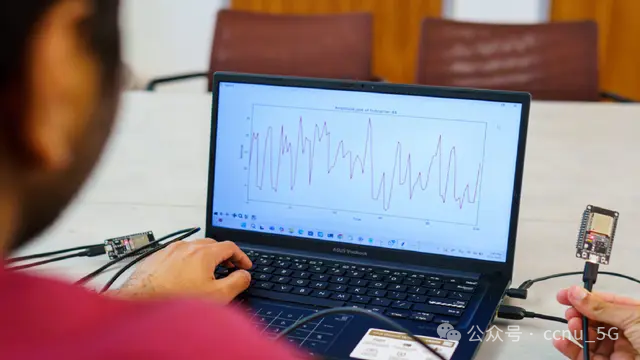
This technology, named Pulse-Fi, is an innovative achievement developed by engineers at the University of California, Santa Cruz. Its core advantage lies in transforming ordinary wireless signals into precise medical detection tools: with just a simple Wi-Fi transmitter and receiver, it can achieveclinical-grade accuracy in heart rate measurement. Remarkably, this technology utilizeslow-cost hardware and requires no special modifications to existing Wi-Fi devices, making it easy for ordinary households and medical institutions to deploy.
The emergence of Pulse-Fi greatly expands the functional boundaries of Wi-Fi routers. In the future, familiar wireless network devices may become “invisible health guardians”, continuously safeguarding the heart rate health data of family members while providing internet connectivity. This “contactless monitoring” model retains the reliability of medical-grade data while integrating the convenience of daily scenarios, offering new possibilities for remote health management and home medical monitoring.
Technical Principle: How Wi-Fi Signals Capture Heartbeats?
The “health code hidden in signal fluctuations” lies in the interaction between radio waves and the human body. When Wi-Fi signals pass through a room and encounter a human body, they experience partial absorption and scattering, similar to how water waves behave when they meet an obstacle. The tiny fluctuations in the chest caused by each heartbeat create subtle changes in these signals that are difficult to detect with the naked eye. This system captures the “signal fingerprint” of the heartbeat by analyzing the behavioral characteristics of radio waves as they propagate through space.
The core breakthrough lies in the algorithm’s precise filtering of “noise”. In daily life, human activities and electrical interference can cause chaotic fluctuations in Wi-Fi signals. The Pulse-Fi algorithm has learned to identify heartbeat signals from background noise by training on real heartbeat data collected from standard pulse oximeters, developing a “keen eye” for distinguishing heartbeat signals. The entire signal processing process takes only5 seconds, simply put, it’s like accurately discerning a friend’s voice in a noisy crowd; in other words, without any contact, the home Wi-Fi router can quietly “translate” your heartbeat data.
Test Results: Accuracy Comparable to Traditional Medical Devices
To validate the reliability of the Pulse-Fi technology, researchers conducted systematic tests on 118 participants. The large sample size ensured the universality of the results, which showed that its measurement accuracy isalmost identical to that of traditional medical monitors, laying an important foundation for the clinical application of contactless heart rate monitoring.
In terms of core performance indicators, Pulse-Fi demonstrated breakthrough performance: with only 5 seconds of signal processing time, the heart rate measurement error can be strictly controlled within0.5 beats per minute, achievingclinical-grade accuracy. Compared to traditional devices that often require several minutes of preparation time, this rapid response capability significantly enhances the practicality of daily monitoring.
Even more impressive is its strong adaptability to various scenarios. Whether participants are sitting, standing, lying down, or walking, Pulse-Fi can maintain stable high accuracy; even at a distance of up to 3 meters, the integrated machine learning model ensures that measurement performance does not decline. The study also found that extending the monitoring time can further optimize result accuracy, completely breaking the reliance of traditional devices on fixed scenarios and contact-based measurements.
Key Testing Conclusions
- Systematic testing of 118 participants verifies universality
- 0.5 beats per minute error achievedclinical-grade accuracy
- Multi-posture (sitting/standing/lying/walking) + stable measurement at 3 meters
Core Advantages: Low Cost, Contactless, Easy to Popularize
This Wi-Fi heart rate monitoring technology is reconstructing health monitoring scenarios with “three major advantages”, bringing revolutionary breakthroughs to daily health management. In terms of hardware costs, the threshold has been lowered to a level easily affordable by ordinary consumers — the core components only require an ESP32 chip (retail price $5 to $10) and a Raspberry Pi development board (about $30), compared to professional medical devices that often cost hundreds of dollars, the cost advantage is a true “democratizing innovation”.
More importantly, it completely frees users from the constraints of smartwatches, chest straps, and other wearable devices. Users do not need to wear any devices during sleep, work, or other scenarios; monitoring can be completed solely through the Wi-Fi signals in the everyday environment, greatly enhancing long-term comfort and compliance.
It is worth noting that the system’s ease of popularization overturns the traditional deployment logic of health monitoring. ExistingWi-Fi hardware in homes and offices can achieve functionality, without the need for additional specialized equipment or complex installations. Its unique advantage lies innot requiring special positioning, allowing users to move freely within the room without affecting monitoring effectiveness, and it canimprove accuracy by extending monitoring time, providing more reliable data support for hidden health risks such as nighttime heart rate abnormalities.
Technical Highlights Overview
- Hardware cost only $35-40 (ESP32 chip + Raspberry Pi)
- Completely contactless, eliminating the discomfort of wearable devices
- Compatible with existing Wi-Fi environments, plug-and-play with no additional deployment
Future Expansion: Upgrading Health Monitoring from Heart Rate to Respiratory Rate
As health monitoring scenarios extend further, the research team is expanding the technology boundaries to include respiratory rate monitoring. This new module not only adds a new dimension to health monitoring but is also expected to become a diagnostic aid for sleep disorders such as sleep apnea — unpublished early research results have shown promising prospects in this direction.
In practical applications, distance is no longer a limiting factor. The system can accurately measure respiratory rates at distances of up to 3 meters, with the key being the technological breakthrough of “machine learning models offsetting distance effects”. Researchers have clearly stated: “Distance has virtually no impact on measurement results”. This opens up new possibilities for home health monitoring.
Research Background: From Laboratory to Clinical Implementation
The research results of this groundbreaking technology have been published in the 2025 IEEE International Conference on Distributed Computing and Intelligent Systems and the Internet of Things(DCOSS-IoT), as aproof-of-concept study, with its core value being the first realization of the correlation between Wi-Fi signal fluctuations and heart rate monitoring atclinical-grade accuracy. The research team constructed experimental datasets in everyday scenarios such as libraries and combined them with neural network model training to verify the feasibility of the technology in non-contact physiological indicator monitoring, providing key academic support for the transition from laboratory theoretical research to practical medical applications.
The projectteam leader emphasized that the most significant breakthrough of this technology is that it can be deployed directly in everyday environments such as homes and offices, without any expensive specialized medical equipment. This characteristic effectively addresses the challenges of traditional monitoring solutions that depend on specific scenarios and hardware, not only lowering the technical threshold for medical health monitoring but also promoting high-precision physiological monitoring from clinical institutions to ordinary life scenarios, truly achieving the core goal of “medical-grade monitoring entering daily life”.