This year’s Apple launch event has sparked continuous discussion, not only achieving “more for less” on the product side with the release of the thinnest iPhone Air ever, but also introducing three types of self-developed chips, including the newly designed self-developed Wi-Fi 7 + Bluetooth + Thread chip N1.

So, is it too early to release the Wi-Fi 7 chip solutions at this time? Actually, it is not. It has been over three years since the first Wi-Fi 7 chip solution was released. In the field of Wi-Fi 7 chips, the true leaders are still Qualcomm, Broadcom, and MediaTek. In a previous article, we introduced MediaTek’s Wi-Fi 7 chip solutions, see Overview of MediaTek’s Wi-Fi 7 Chip Solutions, and in this article, we will discuss Qualcomm’s Wi-Fi 7 chip solutions.
Overview of Qualcomm’s Wi-Fi 7 Platform Chips
Qualcomm’s Wi-Fi 7 platform chip solutions can be divided into three series based on their release timeline:Alder (IPQ95XX): Qualcomm’s earliest flagship Wi-Fi 7 platform product (Fast Connect 7800), which was chosen by manufacturers for global launch in 2022. It features high performance and rich configuration, with one word to describe it: expensive!Miami (IPQ53XX): This is a cost-effective solution released in the second half of 2023, integrating a 2×2 2.4GHz RF module on-chip. To suppress the encroachment of MediaTek in the domestic market, Qualcomm launched a domestic version IPQ5312 (Quad-core A53 @ 1.1GHz) + QCN6402, which is extremely cheap, thus giving rise to many entry-level Wi-Fi 7 router products. Those products that advertise Qualcomm’s quad-core chips in their brochures, such as the BE3600, are basically using this solution.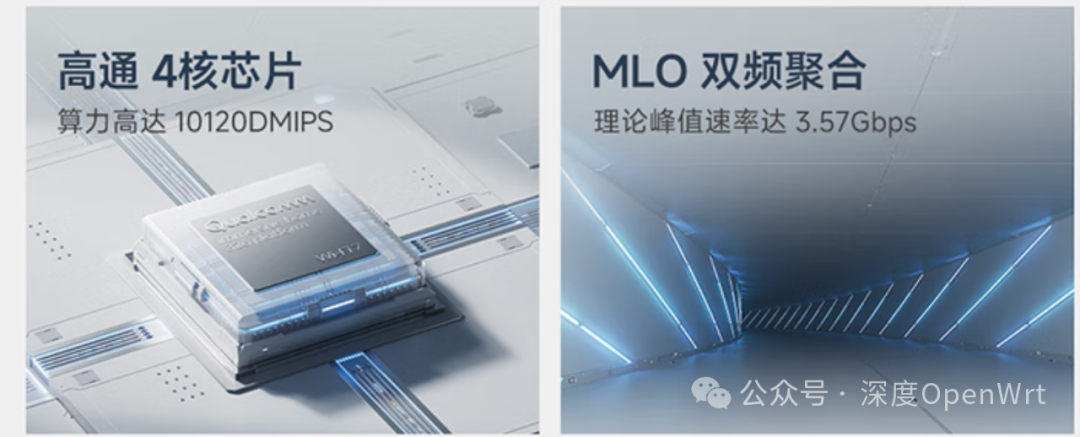 Marina (IPQ54XX): This is the main model launched at the end of 2024, positioned between Alder and Miami. However, given the current domestic consumption capacity and competitive landscape, it is estimated that products in this series will still be relatively scarce. Its specifications seem to be somewhat mediocre:
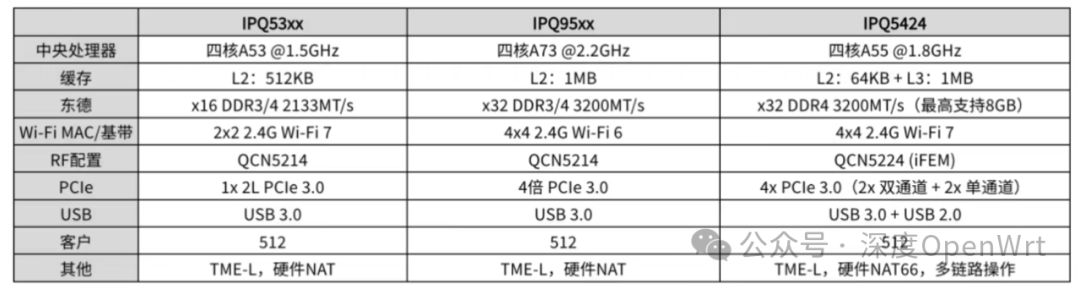 In summary, from a product positioning perspective, the order from high-end to low-end is: Alder, Marina, Miami; if we look at the order of product release, it is: Alder, Miami, Marina. This means Qualcomm’s strategy is to first develop the extremes before addressing the middle ground. However, the product planning strategy for Wi-Fi 8 will be quite different, which we will discuss in detail later.Overview of Qualcomm’s Wi-Fi 7 RF ChipsQualcomm’s Wi-Fi 7 RF chips (MAC + BB) are independent and need to be combined with Wi-Fi 7 platform chips to fully realize wireless functionality. The RF chips are also divided into three series, and we will introduce them in the order of their release:Waikiki (QCN92XX & QCN62XX): Released in 2022 alongside the Alder platform, this series consists of 4×4 RF chips for the 2.4GHz, 5GHz, and 6GHz bands. The main differences between the chips are the supported RF bands and bandwidth, with some chips being industrial and enterprise-grade.Pebble (QCN64XX): Released in 2023 alongside the Miami platform, this series consists of 2×2 RF chips for the 5GHz and 6GHz bands. The main differences between the chips are the supported RF bands and bandwidth, with the QCN6402 being specifically designed for the Chinese market, priced very cheaply, but cannot modify the country code outside of China, which needs special attention during selection, especially for those with overseas business needs.Malga (QCN52XX): This is the RF chip solution released in 2024 alongside the Marina platform, consisting of only two models, QCN5224 and QCN5214, both being 4×4 2.4GHz RF chips, with the former being iFEM and the latter being eFEM.Note that the aforementioned RF chips released alongside a specific platform are not bound to that platform; under certain conditions, customers can combine them according to their specifications.We have basically introduced the Wi-Fi 7 platform chip solutions and RF chip solutions, but we have not detailed the specifications. Considering the complete solution combination, I will now provide a detailed introduction based on Qualcomm’s recommended solutions.Alder + Waikiki Chip SolutionIn the Alder series platform, the first released models are IPQ9574 and IPQ9570, with main specifications of ARM quad-core Cortex-A73 @ 2.2GHz, 4x PCIe 3.0 Controller, supporting 2x USXGMII and 1x USXGMII-M interfaces. The biggest difference between the two is that the IPQ9574 integrates a 2.4GHz Wi-Fi 6 RF subsystem on-chip, as shown in the figure below.
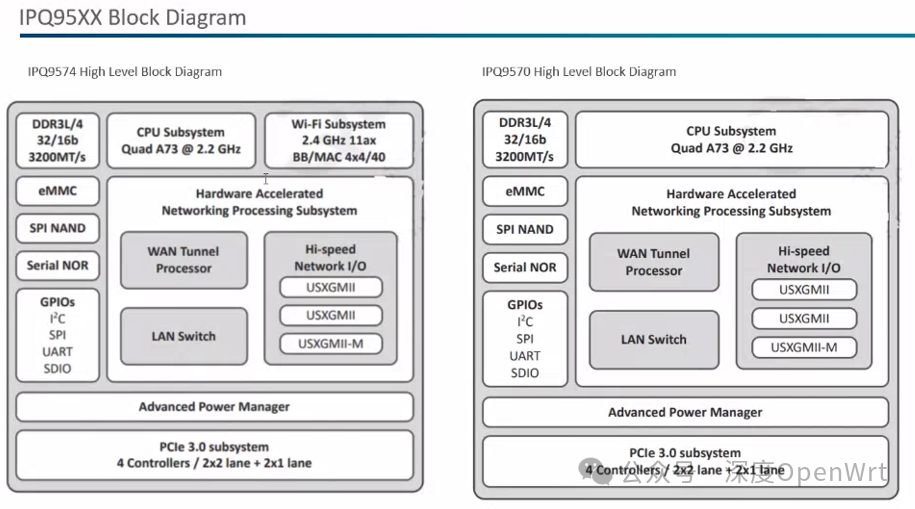 However, this is both the biggest difference and the biggest bug! It is important to note that the biggest selling point of Wi-Fi 7 is MLO, but if 2.4GHz does not support MLO, then it can only be a dual 5G or 5G + 6G combination, which still depends on the terminal’s capabilities. Therefore, if it does not support 2G + 5G MLO, this solution is basically declared unusable for MLO!On the
 <span><span>Alder</span></span> platform, three <span><span>UNIPHY</span></span> are supported, with <span><span>UNIPHY0</span></span> supporting <span><span>USXG-M</span></span> to achieve multi-port connections. If you need to connect multiple 2.5G PHYs, you must use this instance. However, it is important to note that this platform supports a maximum of 6 MACs, as shown in the rightmost diagram.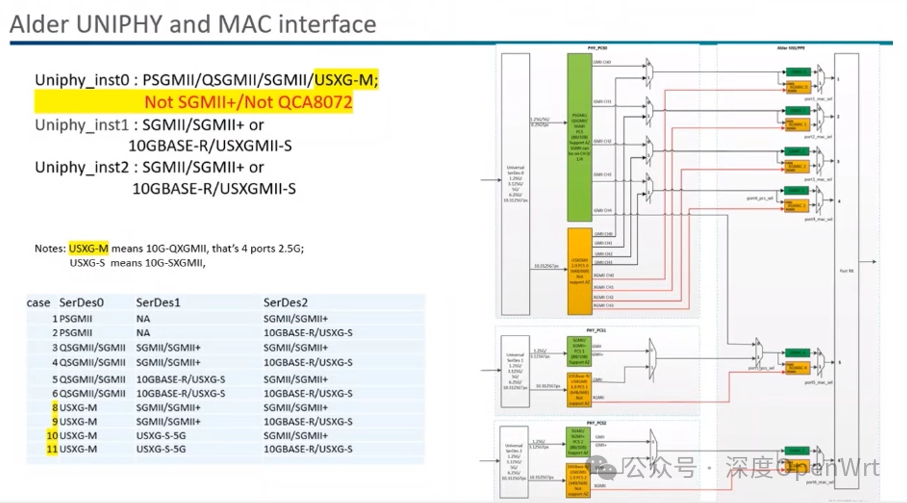
This platform supports a maximum bandwidth of <span><span>25Gbps</span></span>, and if two PHYs have already occupied 10G bandwidth, then the other PHY can only support a maximum of 5G bandwidth. The entire <span><span>IPQ95XX</span></span> series chip solutions have compatible chip packaging and pin configurations, with some differing pins being NC status.
In addition, the Alder series also includes four other models, namely:
- IPQ9554
- IPQ9550
- IPQ9514
- IPQ9510
These models differ from IPQ9574/IPQ9570 mainly in CPU frequency, whether they support 2.4GHz Wi-Fi 6, PCIe controller, and the number of USXGMII specifications. A summary of the specifications for all models is shown in the table below.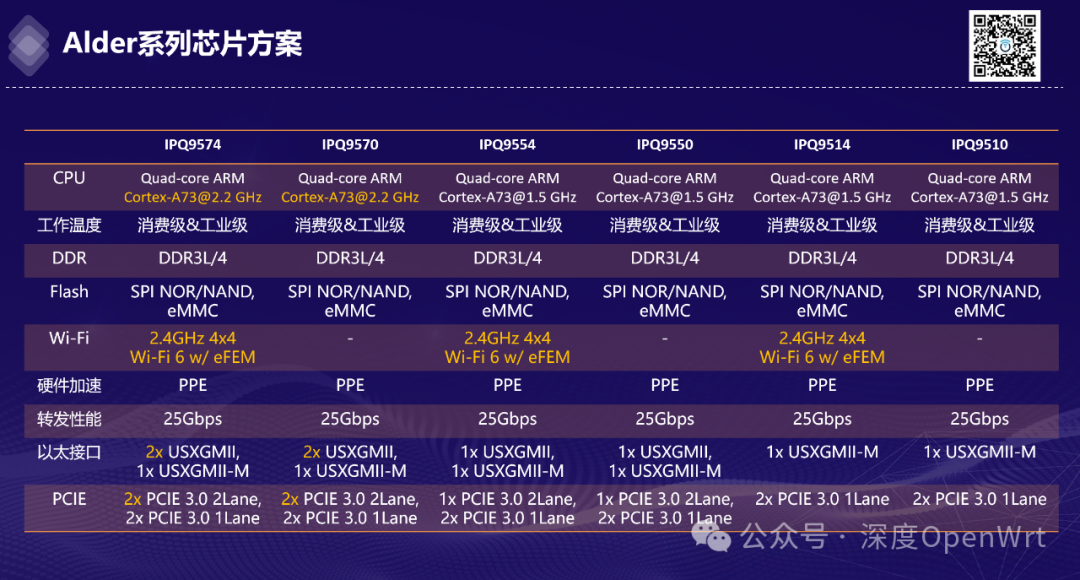 In terms of RF chips, the Waikiki series RF chips are paired with Alder, mainly including:
- QCN9274
- QCN9272
- QCN6274
- QCN6224
- QCN6214
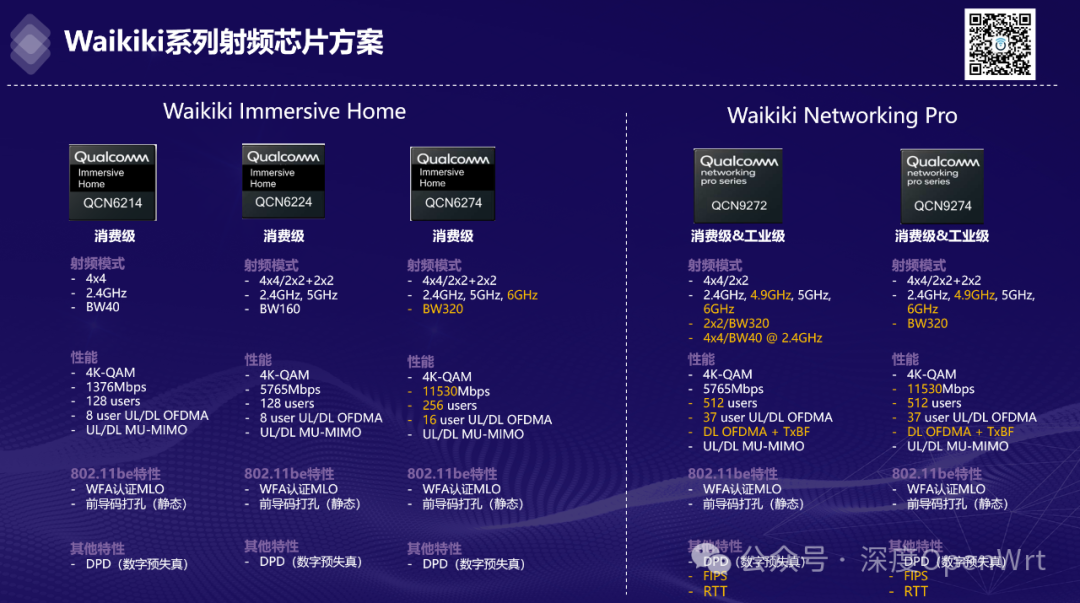
This series of RF chips mainly supports 4×4 or 2×2 + 2×2 configurations, capable of covering the entire frequency bands of 2.4GHz, 5GHz, and 6GHz, making it the flagship solution of the entire Wi-Fi 7 RF chip series, as shown in the principle block diagram below.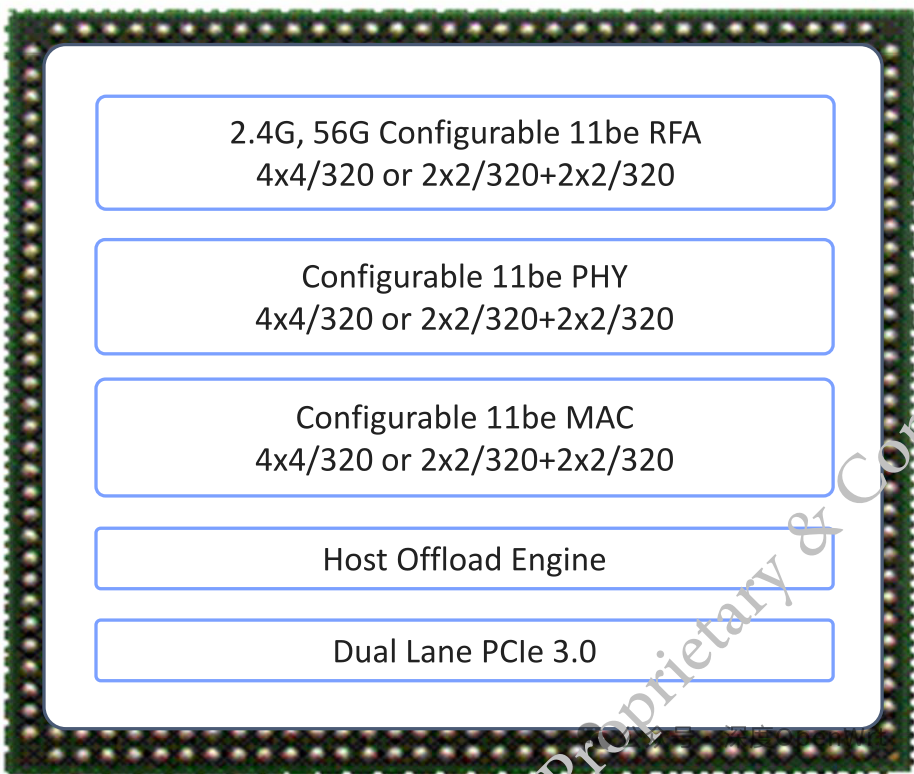 Of course, there are still many differences in specifications among these chips. A comparison is shown in the figure below.
 Miami + Pebble Chip SolutionThe Miami (IPQ53XX) series is Qualcomm’s second batch of Wi-Fi 7 platform solutions, characterized by the on-chip integration of a 2.4GHz Wi-Fi 7 RF, addressing the pain point of the Alder series only integrating a 2.4GHz Wi-Fi 6. Additionally, the IPQ53XX series has a clear cost advantage and offers two CPU configurations: Qual-Core CA53 @ 1.5GHz and Qual-Core CA53 @ 1.1GHz, allowing users to choose between performance and power consumption. The principle block diagram of IPQ53XX is shown below:
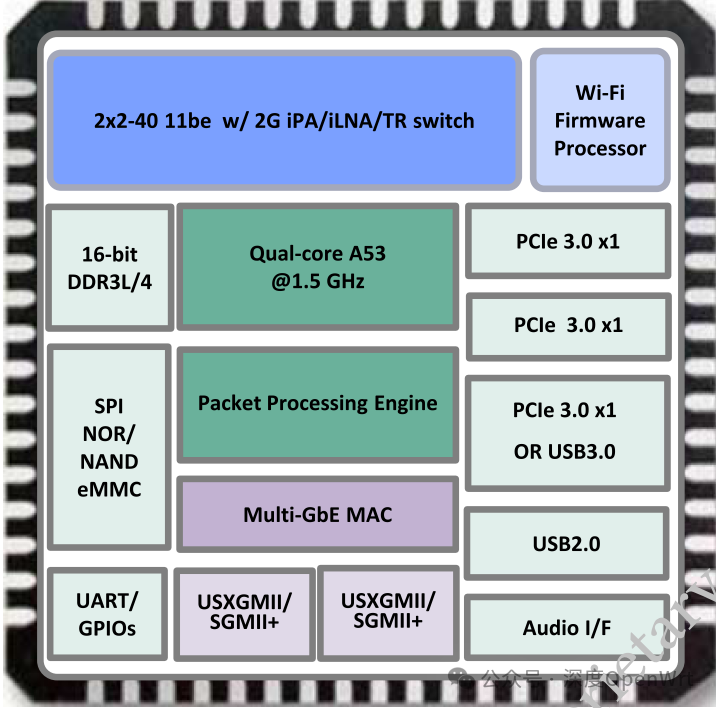 Note that the 2.4GHz Wi-Fi 7 RF integrated on the IPQ53XX includes a complete iFEM module (PA + LNA + TR-SW), so it can work without additional analog components; while the Alder series’ 2.4GHz Wi-Fi 6 only integrates MAC + BB, requiring an additional RFIC chip to function properly. In addition, the 2.4GHz Wi-Fi 7 RF also supports an optional eFEM interface mode; however, one drawback is that the 2.4GHz RF only supports 1K-QAM. The summary of the Miami series chip specifications is as follows:
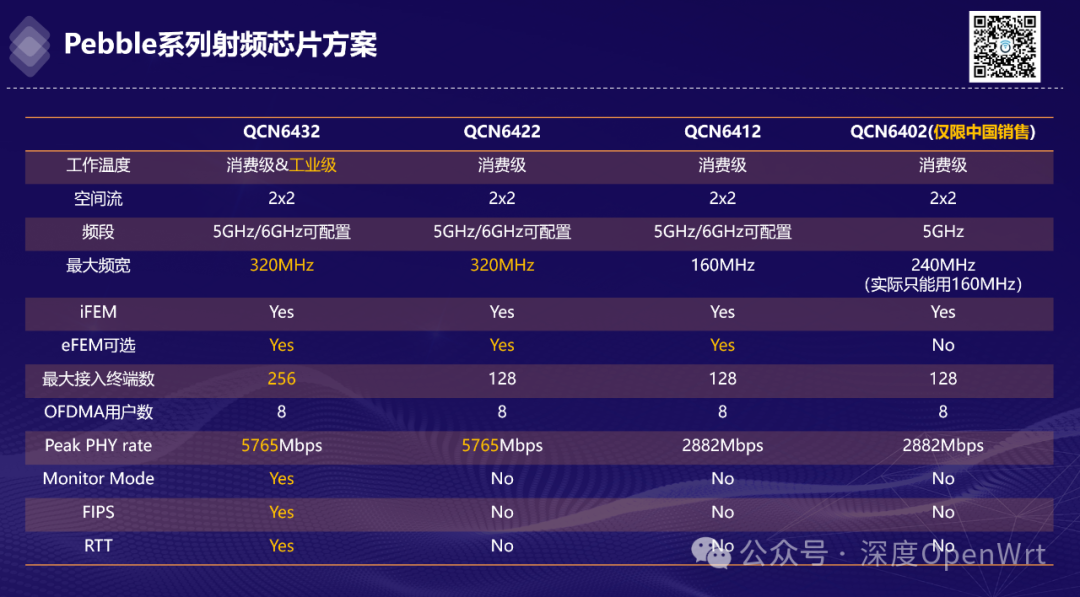
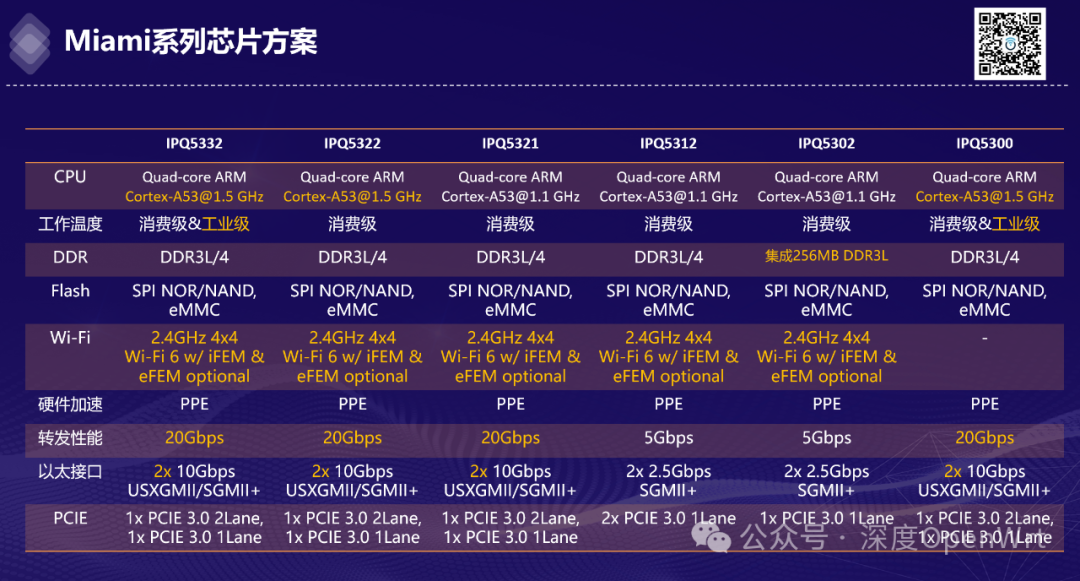 In terms of RF chips, the recommended pairing for Miami is the Pebble series, which consists of 2×2 RF chips for the 5GHz/6GHz bands. The main differences between the chips are the supported RF bands and bandwidth, with the QCN6402 being a chip specifically designed for the Chinese market, which needs special attention during selection. The principle block diagram of Pebble is shown below:
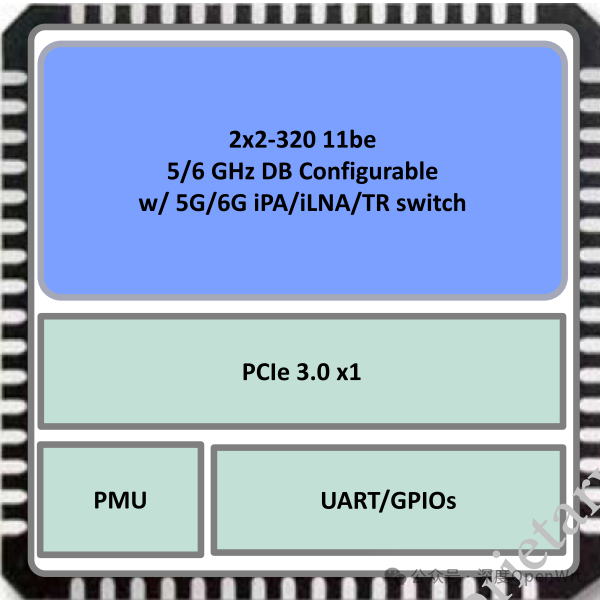 Pebble series RF chip SKU parameter list summary is as follows:
 Marina + Malga Chip Solution
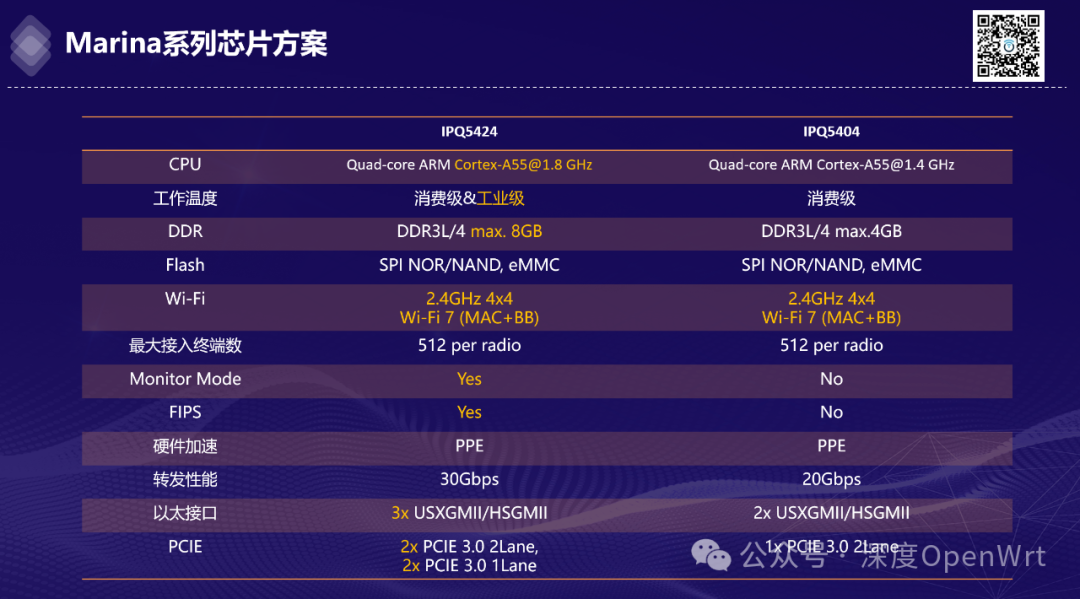
At the end of 2024, Qualcomm launched the IPQ54x4 series platform for high-end wireless network devices, paired with QCN9274 and QCN5224 RF chips, creating a complete tri-band solution that meets Wi-Fi 7 standards. Through a SoC and RF separation architecture, the IPQ54x4 series not only achieves flexibility in hardware design but also provides high integration, high throughput, and security feature support, widely used in routers, Mesh APs, 5G FWA, and fiber gateways.
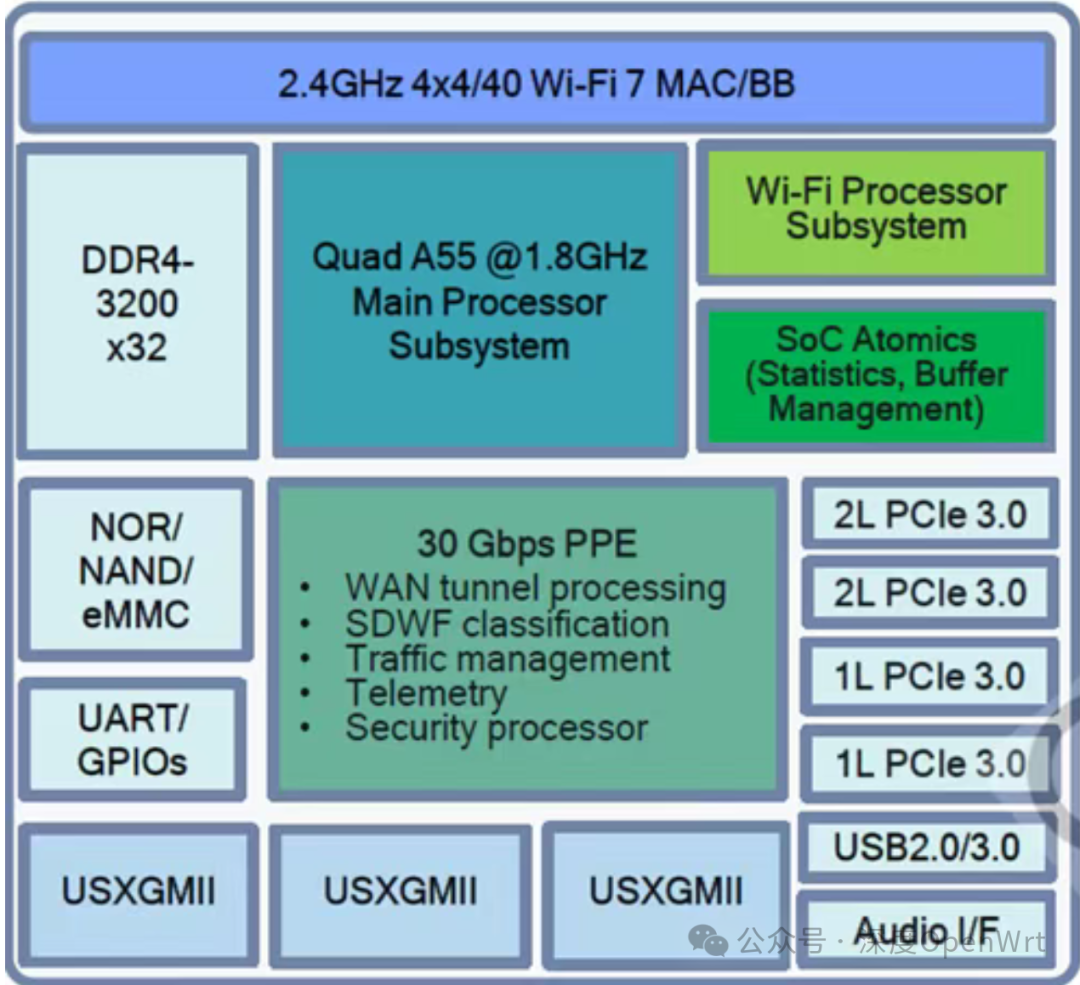 Note: You may have noticed that Alder’s forwarding performance is 25Gbps, while Marina claims to support a maximum of 30Gbps PPE forwarding performance, indicating a significant improvement in packet processing performance in the new products, which can fully utilize the performance of the three USXGMII interfaces.Marina features a quad-core Cortex A55 core, which shows a significant performance improvement compared to Miami’s quad-core processor at the same frequency, as shown in the reference below:
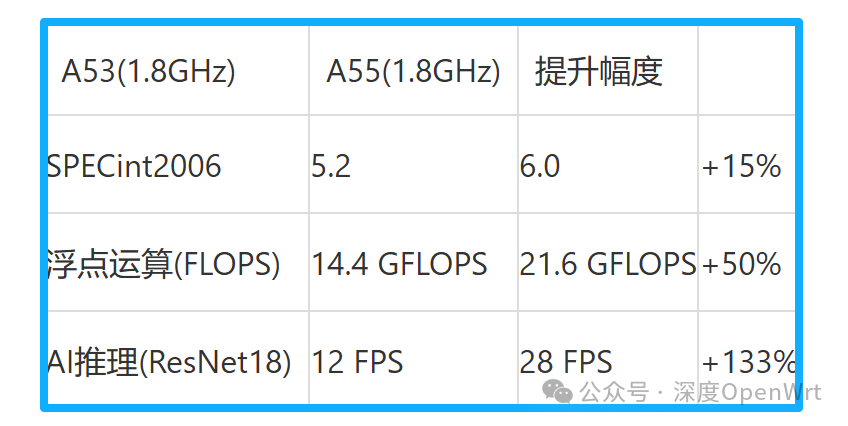 It can be seen that in various performance indicators, the Cortex A55 core has a significant performance improvement.In terms of RF, it integrates a 2.4GHz 4×4 Wi-Fi 7 (MAC + BB), thus requiring additional configuration of the corresponding RFIC to function properly. Detailed specifications comparison is shown below:
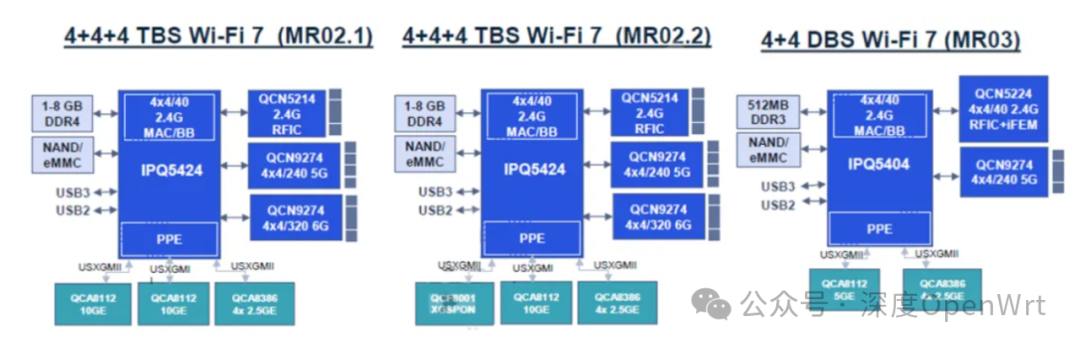
 Since the Marina series 2.4GHz RF functionality is incomplete, Qualcomm has launched the accompanying Malga (4×4) RFIC chip solution, consisting of two models: QCN5224 (iFEM) and QCN5214 (eFEM), with detailed solutions shown in the figure below.
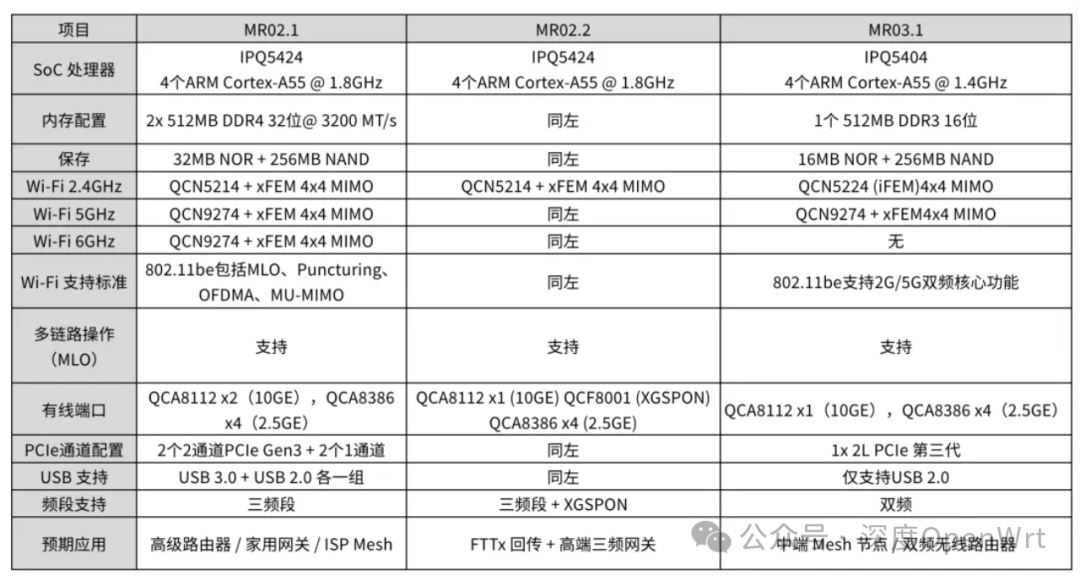
 At the same time, Qualcomm has provided three reference designs for the Marina series chip solutions:
 In conclusion, the entire Qualcomm Wi-Fi 7 chip solution has been introduced. It can be seen that Qualcomm provides a comprehensive range of solutions for customers, offering many choices in both CPU and RF aspects, whether competing on performance with high-end enterprise solutions or on cost with highly cost-effective customized models for the Chinese market, there is always a suitable option for you~